Minimum vs ideal floor space for rabbits and guinea pigs, with practical layouts, storage tips, and common sizing mistakes to avoid.
Rabbit Cove
7 Safe (and 3 Risky) Hideouts for Rabbits and Guinea Pigs
Not all hideouts are created equal. Here are 7 safe hideouts for rabbits and guinea pigs, plus 3 common options that can be risky due to chewing, toxins, weight, or entrapment.

Chloe Miller
Chloe Miller is a dedicated small-pet enthusiast and experienced foster parent who has spent over a decade caring for rabbits and guinea pigs. Through her hands-on work with local animal rescues, she shares practical, compassionate advice on housing, nutrition, and daily enrichment to help small pets thrive. When she isn't designing custom indoor enclosures, Chloe can be found coaxing shy rescues out of their shells with fresh cilantro.
Published
October 22, 2026
Updated
October 22, 2026
A good hideout is more than decor. For rabbits and guinea pigs, it is a stress buffer, a nap zone, and sometimes the place they go to feel brave enough to eat their hay in peace. The tricky part is that most small pets explore the world with their mouths. If a hide is easy to chew, easy to tip, or has an opening that can snag a head or hip, it can go from cozy to dangerous fast.
Below are my go-to safe hideouts (both store-bought and homemade), plus a short list of popular options I avoid in foster setups. I am writing this for rabbits and guinea pigs. Some of the principles also apply to other small pets, but always double-check species-specific needs (especially for animals that are more heat- or humidity-sensitive).
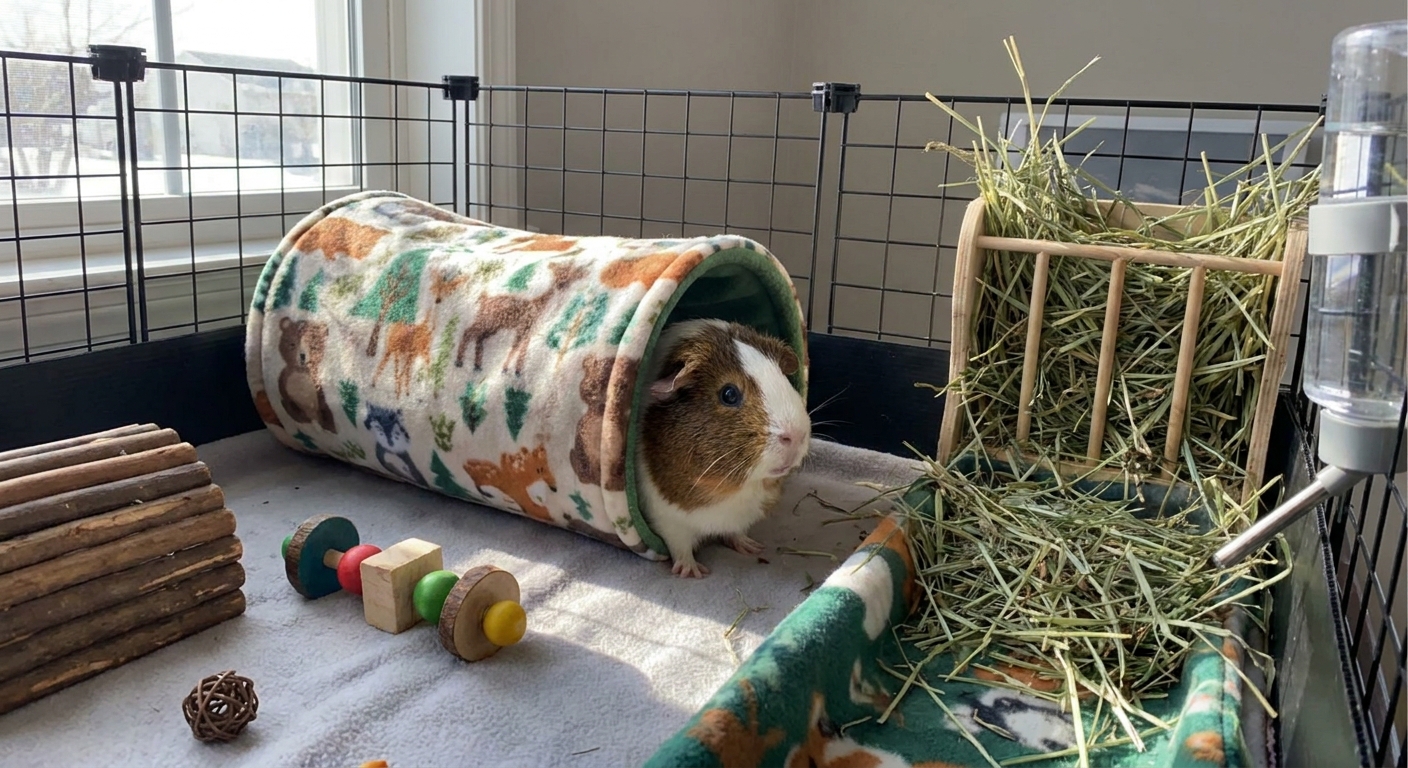
What makes a hideout safe?
- Two exits when possible so no one gets cornered, especially in bonded pairs or groups.
- Stable and tip-resistant with a low center of gravity.
- No trapping points like narrow windows, slats, or decorative cutouts that can catch a head, jaw, shoulders, or hips.
- Chew-safe materials with no toxic finishes, glues, or mystery coatings.
- Cleanable by design because damp hides quickly become a urine sponge and a concentrated ammonia zone.
- No hardware in reach like staples, exposed fasteners, Velcro, or hot-glue blobs. If it can be picked off, it can be swallowed.
Size note: If your pet has to squeeze, it is not a “snug den,” it is a stressor. For guinea pigs, the hide should allow a full turn-around. For rabbits, think “sprawl space,” especially for seniors or larger breeds.
7 safe hideouts (my favorites)
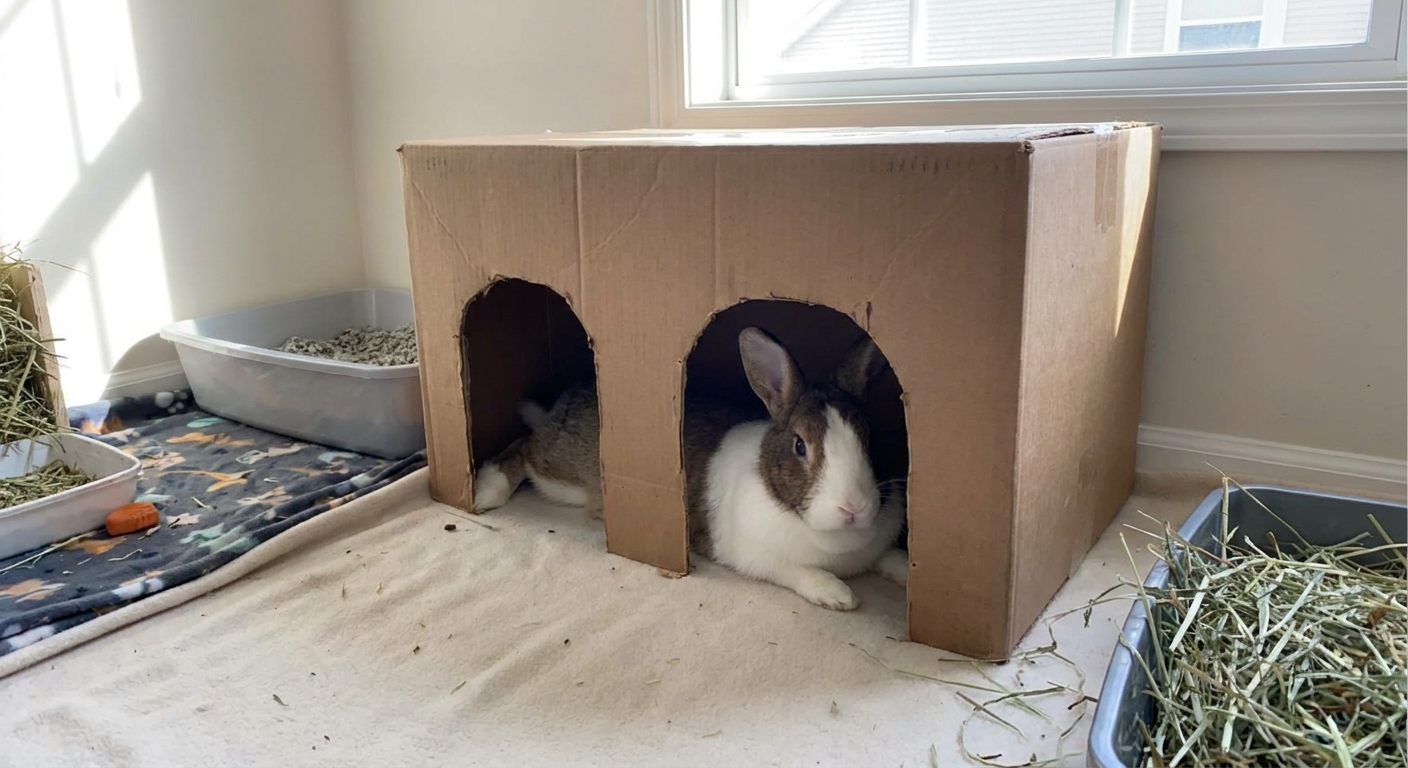
1) Plain cardboard boxes (with two doors)
Cardboard is the foster-home classic for a reason. It is cheap, replaceable, and most rabbits and guinea pigs find it instantly comforting.
- Best for: Both rabbits and guinea pigs, especially shy newcomers.
- How to make it safer: Cut two doorways (one on each side). Remove all packing tape, shipping labels, and every staple.
- Watch-outs: If it gets damp or heavily soiled, toss it. Mold and ammonia are not “character.”
2) Fleece draped over a bent grid or stool (no strings)
This is my favorite “instant hide” when a new foster is pancaking in the corner. A simple canopy creates cover without creating a hard object to crash into.
- Best for: Guinea pigs and calm rabbits in pens.
- How to do it: Drape fleece over a C&C grid bent into a low arch, or over a sturdy, low plastic step stool placed upside down.
- Watch-outs: Avoid towels with loose loops and anything with dangling strings, fringe, or accessible Velcro. Those are snag hazards and can be ingested.
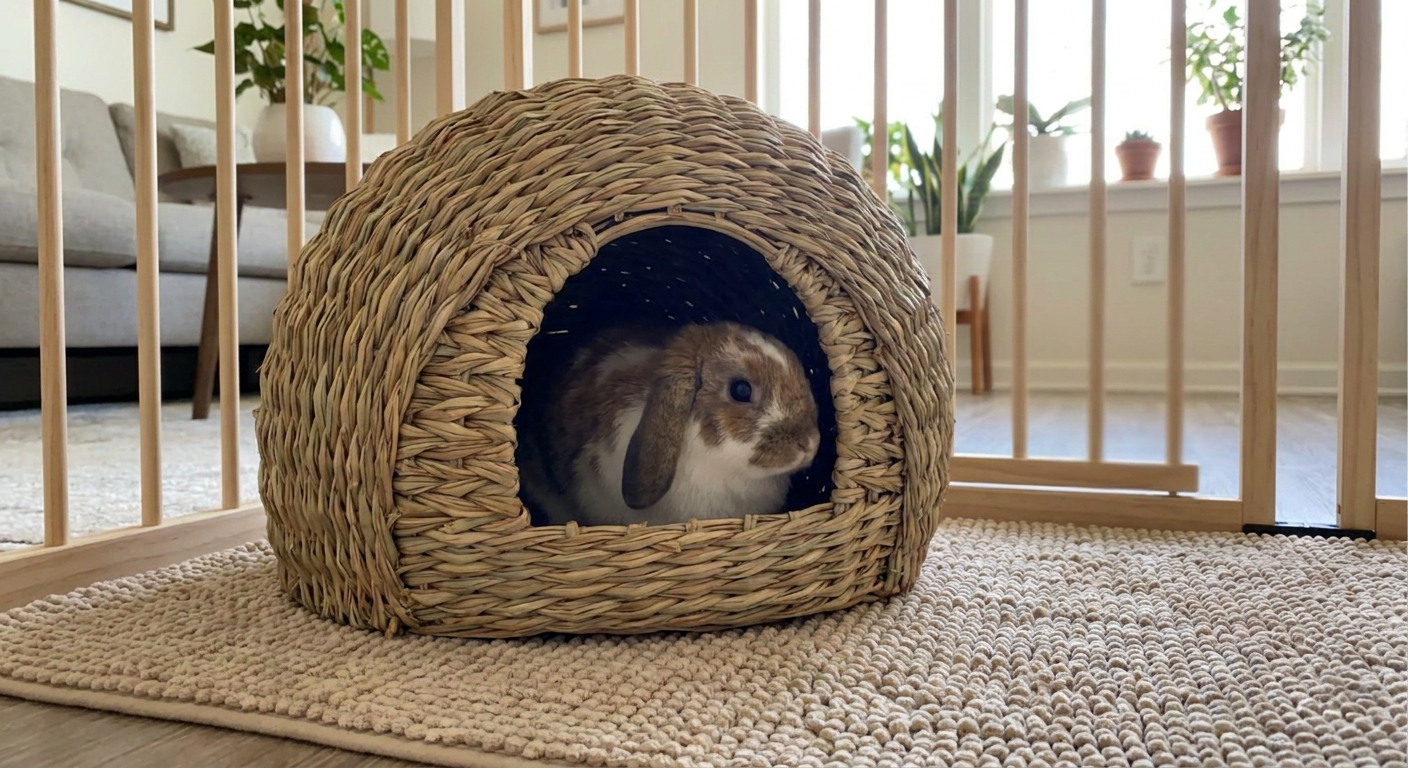
3) Untreated seagrass or water hyacinth huts (simple weave)
Natural woven huts can be great because chewing is expected, and these fibers are generally a safer choice than plastic for many pets. They also “breathe,” which helps in warmer rooms.
- Best for: Rabbits who love to redecorate and guinea pigs who like a semi-dark hide.
- What to look for: Untreated fiber, tight weave, and a wide doorway without little decorative windows.
- Watch-outs: Small nibbles are usually manageable, but if your pet is eating large amounts (not just chewing), remove it and switch to cardboard or a hard-sided hide. Replace when the structure collapses or the doorway becomes ragged and pokey.
4) Soft fabric cozy caves (guinea pigs only)
A well-made fabric cave can be a wonderful, washable option for guinea pigs. For rabbits, I am much pickier because many rabbits will chew and swallow fabric, especially bored adolescents.
- Best for: Guinea pigs.
- What to look for: Sturdy stitching, no zippers inside the chewing zone, and a design that holds its shape so it will not collapse.
- Watch-outs: If your guinea pig chews fleece, switch to cardboard or a hard-sided hide. For rabbits, skip fabric caves unless you have a proven non-chewer and you are supervising how it holds up.
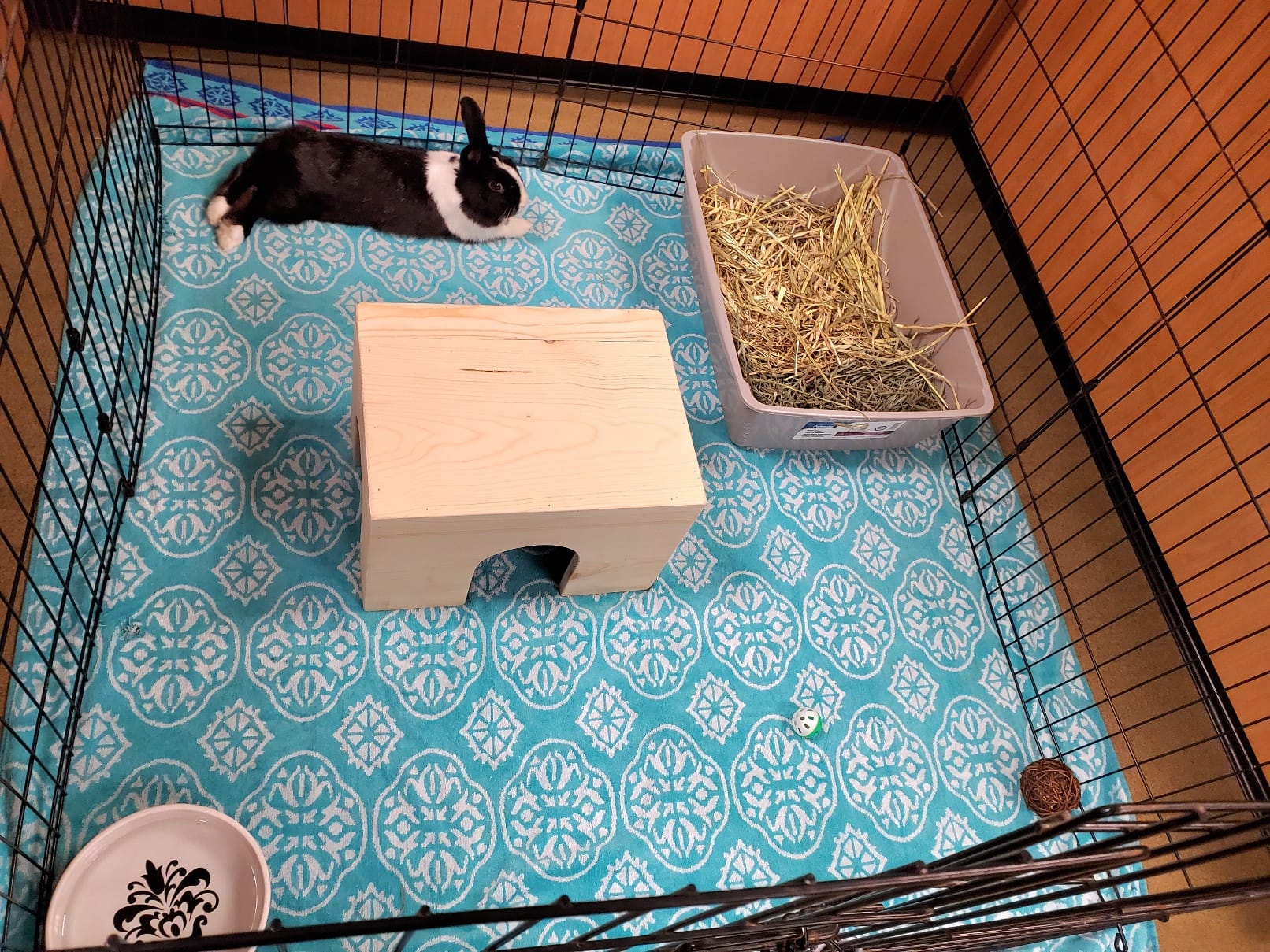
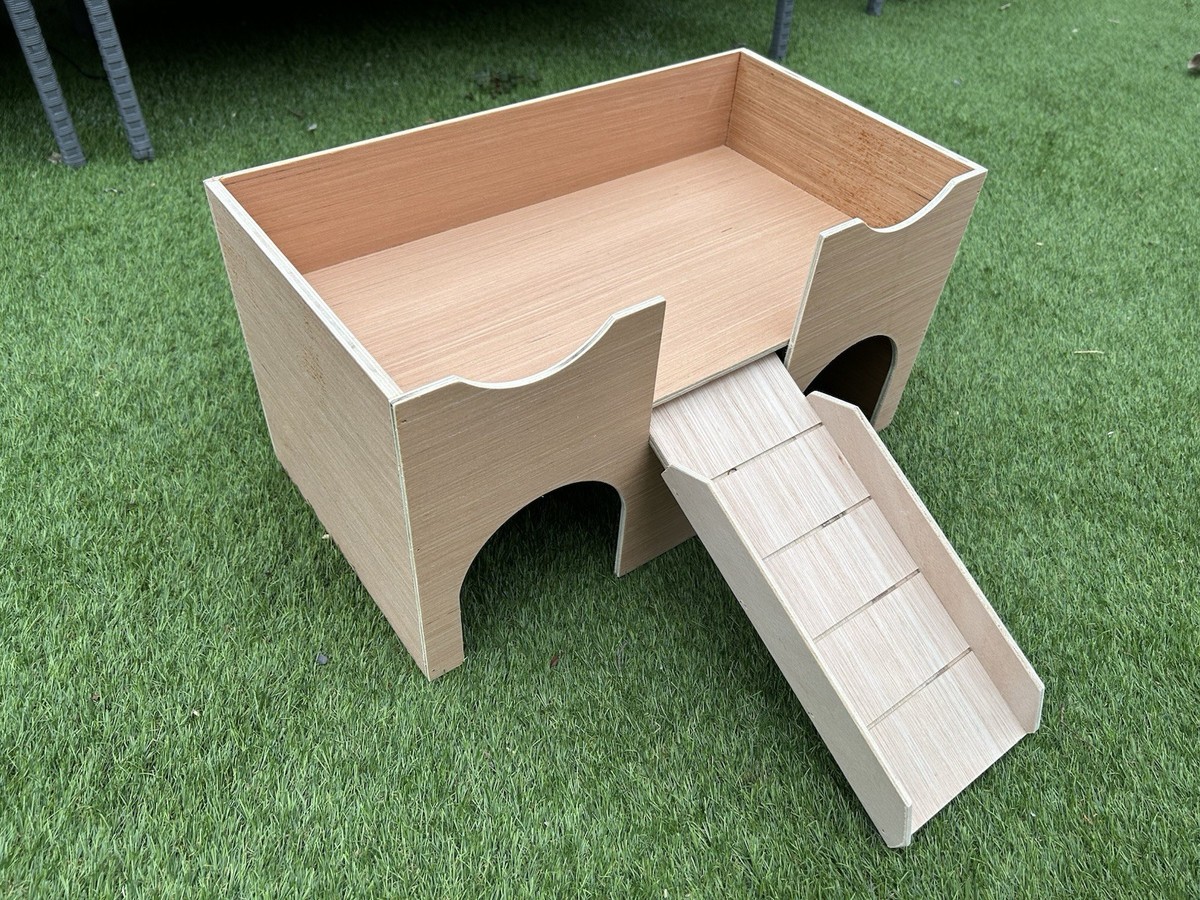
5) Wood hideouts made from kiln-dried pine or untreated poplar (simple build)
A basic wooden house can be safe and long-lasting, and it can double as a perch for guinea pigs. The key is the finish and the design.
- Best for: Both species, when truly untreated and easy to inspect.
- What to look for: No paint, no stain, no “antique” look, no strong odor, and no visible glue blobs. Wide doorway and smooth edges.
- Watch-outs: Avoid cedar and heavily aromatic softwoods. Also avoid hides with narrow side windows that can act like head traps. For rabbits, check for sharp corners as chewing progresses.
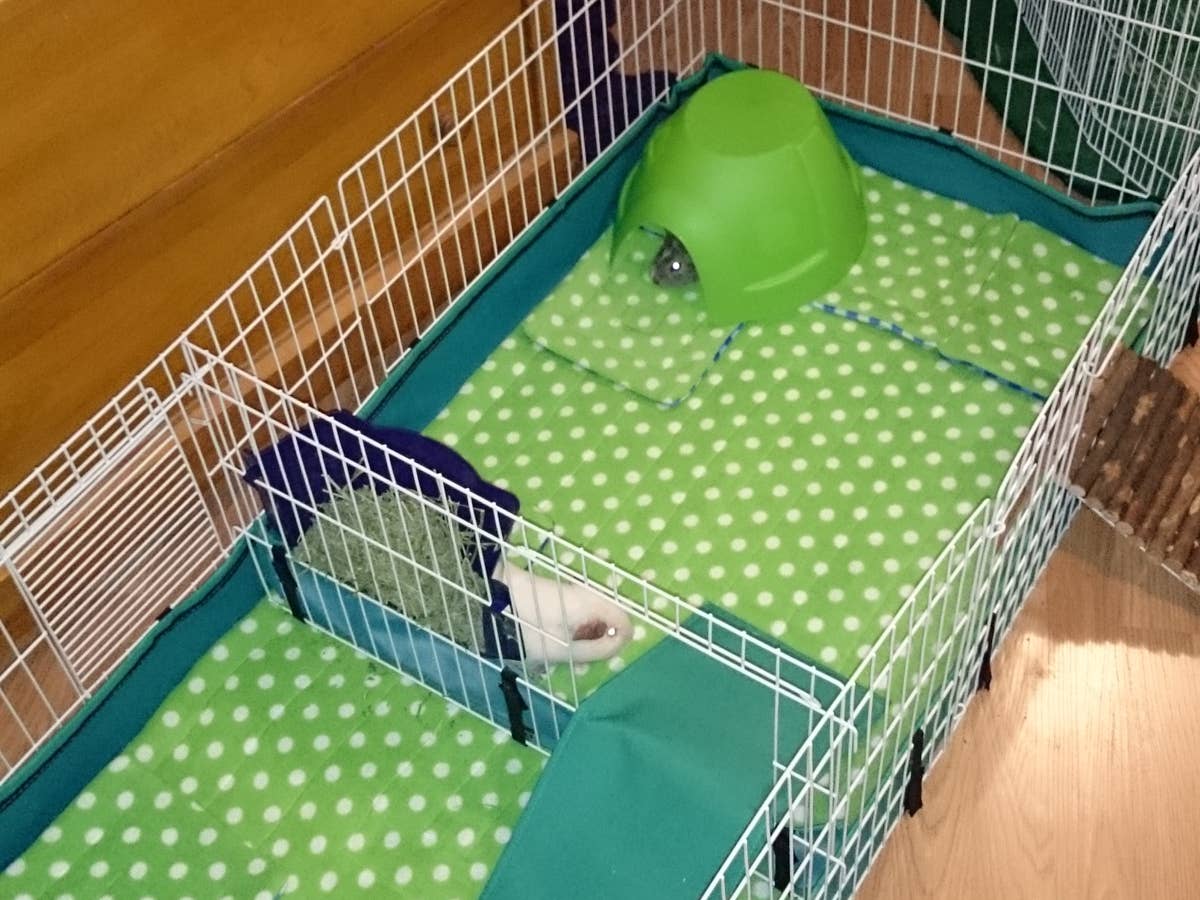
6) Sturdy plastic step stools or igloos (wide doorway)
Hard plastic can be a practical choice for messy pigs and rabbits who are not heavy chewers. It cleans easily and does not absorb urine like wood.
- Best for: Guinea pigs and rabbits that do not chew plastic.
- What to look for: Thick, sturdy, non-brittle plastic, a wide entry, smooth interior, and ventilation holes that are not large enough to trap a foot, toe, or nail.
- Watch-outs: If your rabbit chews plastic, remove it. Ingested plastic can contribute to GI problems and is not worth the risk.
7) DIY coroplast privacy corner (for C&C setups)
If you already use a C&C setup, coroplast is an underrated material for hides. It is lightweight, wipeable, and can be cut into roomy, open-ended shelters.
- Best for: Guinea pigs and rabbits in x-pens with a coroplast base.
- How to design it: Make a three-sided cover or a tunnel with both ends open. Round corners and smooth any sharp cut edges.
- Watch-outs: Some rabbits will chew coroplast edges. If yours does, cover edges with untreated kiln-dried wood strips or switch to cardboard.
3 risky hideouts (common problems)
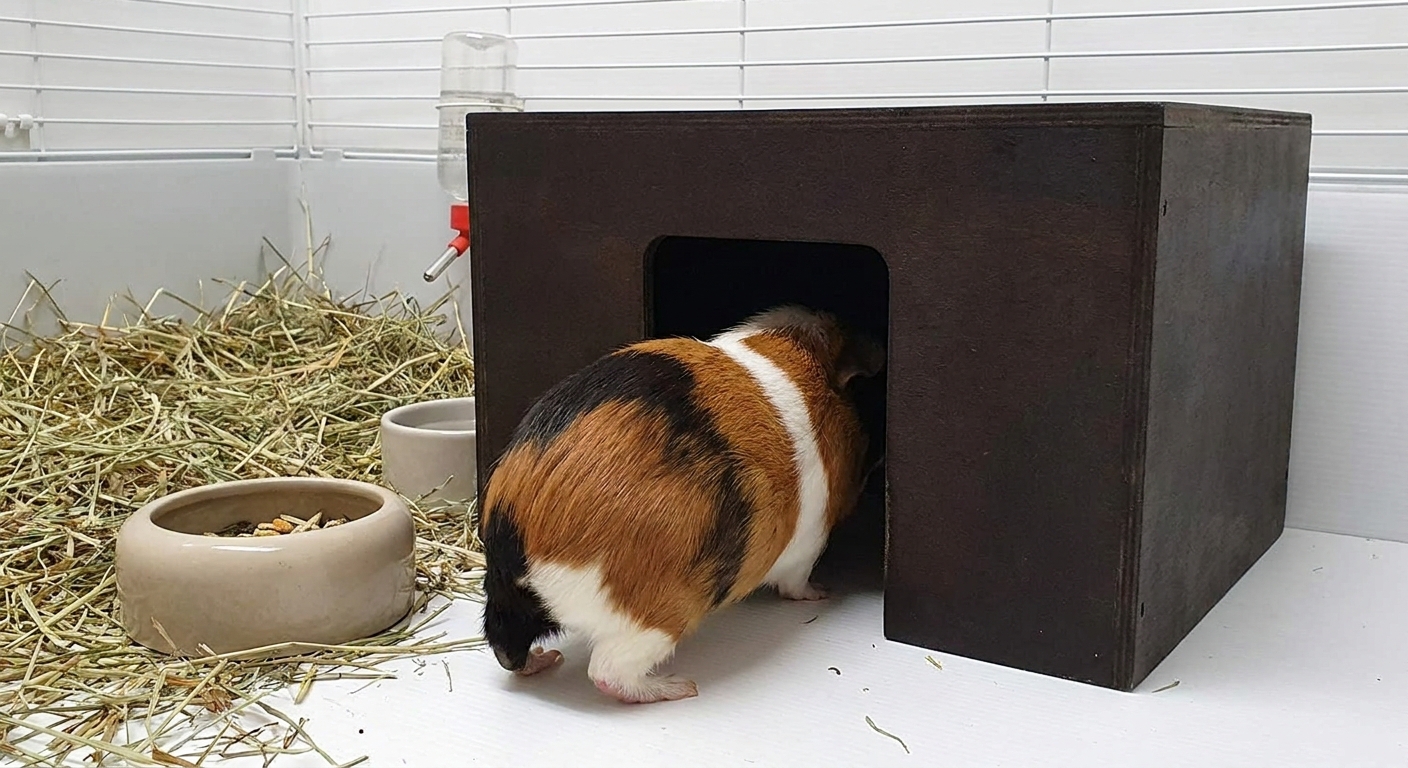
1) Treated, painted, or fragranced wood houses
These are often marketed as cute cottages. The problem is that rabbits and guinea pigs chew. If the hide has paint, stain, varnish, or unknown sealants, you are gambling with what they ingest.
- Why it is risky: Potential toxins and irritants, plus increased splintering as the coating chips.
- Safer swap: Plain untreated wood, cardboard, or a woven seagrass hut.
2) Wire, barred, or slatted hides (trap risk)
Anything with evenly spaced bars or slats can become an entrapment hazard. I have seen guinea pigs wedge faces into gaps trying to reach hay, and rabbits can catch toes or nails when they panic.
- Why it is risky: Heads, jaws, feet, toes, and nails can snag. A frightened animal can injure itself quickly.
- Safer swap: A solid-sided box with a smooth, wide doorway and no side windows.
3) Heavy ceramic caves (weight and placement issues)
Ceramic hides can be easy to wipe down, and many people use ceramic tiles or crocks as cooling options. The risk is less about ceramic as a material and more about weight, edges, and where the hide sits.
- Why it is risky: A heavy hide can chip floors, bruise toes if dropped during cleaning, or shift on uneven surfaces. Some designs have hard lips that can bump faces in a scramble. Temperature depends on the environment. Ceramic can stay pleasantly cool, but it can also warm up if placed in direct sun or near a heat source.
- Safer swap: If you want easy cleaning, use a low plastic step stool (if not chewed) or a lightweight wooden hide that sits flat. If you use ceramic, choose a low, stable piece with a wide opening and place it on a grippy mat.
Quick safety check
- Doorway test: Your pet should be able to enter, turn, and exit without brushing the sides. Size for adult hips and shoulders, not baby size.
- Two-exit test: For pairs or groups, aim for two exits or at least a very wide entrance. In multi-pet setups, I plan on one hide per animal, plus one extra.
- Chew test: Assume it will be chewed. If you would not want a mouthful of that material in your pet, do not use it.
- Stability test: Push it gently from the top. If it wobbles, skip it or secure it.
- Cleaning test: If you cannot easily wipe it or replace it, it will become a smell sponge.
Placement tips
Most rabbits and guinea pigs prefer hides that feel like part of the flow of the habitat.
- Put one hide near hay so nervous pets can eat while feeling covered.
- Avoid dead ends for bonded pairs or groups. Cornering sparks squabbles.
- Offer one open hide and one enclosed hide (for example, a canopy plus a box). Different moods, different real estate preferences.
- Rotate, do not clutter. Too many objects in a small space can reduce running room, which is its own kind of stress.
- Think about potty zones. If a hide sits over a favorite toilet corner, choose something wipeable or easily replaced so it does not turn into a permanent damp spot.
FAQ
Do rabbits and guinea pigs need hideouts?
Yes. Guinea pigs are prey animals that typically feel safest with multiple hides. Rabbits also benefit from at least one secure resting spot, especially in busy homes or around other pets.
Is it okay if my rabbit chews the hide?
Chewing is normal. The question is whether the material is safe to chew and whether the hide becomes sharp or unstable as it is renovated. Cardboard and untreated grass huts are usually the easiest options to manage. If you see actual swallowing of non-food materials (fabric, plastic, thick chunks of fiber), swap the hide for something simpler.
How many hideouts should I provide?
For guinea pigs, I like at least one hide per pig, plus one extra, with more than one exit when possible. For rabbits, one or two roomy options in their main area is usually plenty, as long as they still have space to run and flop.