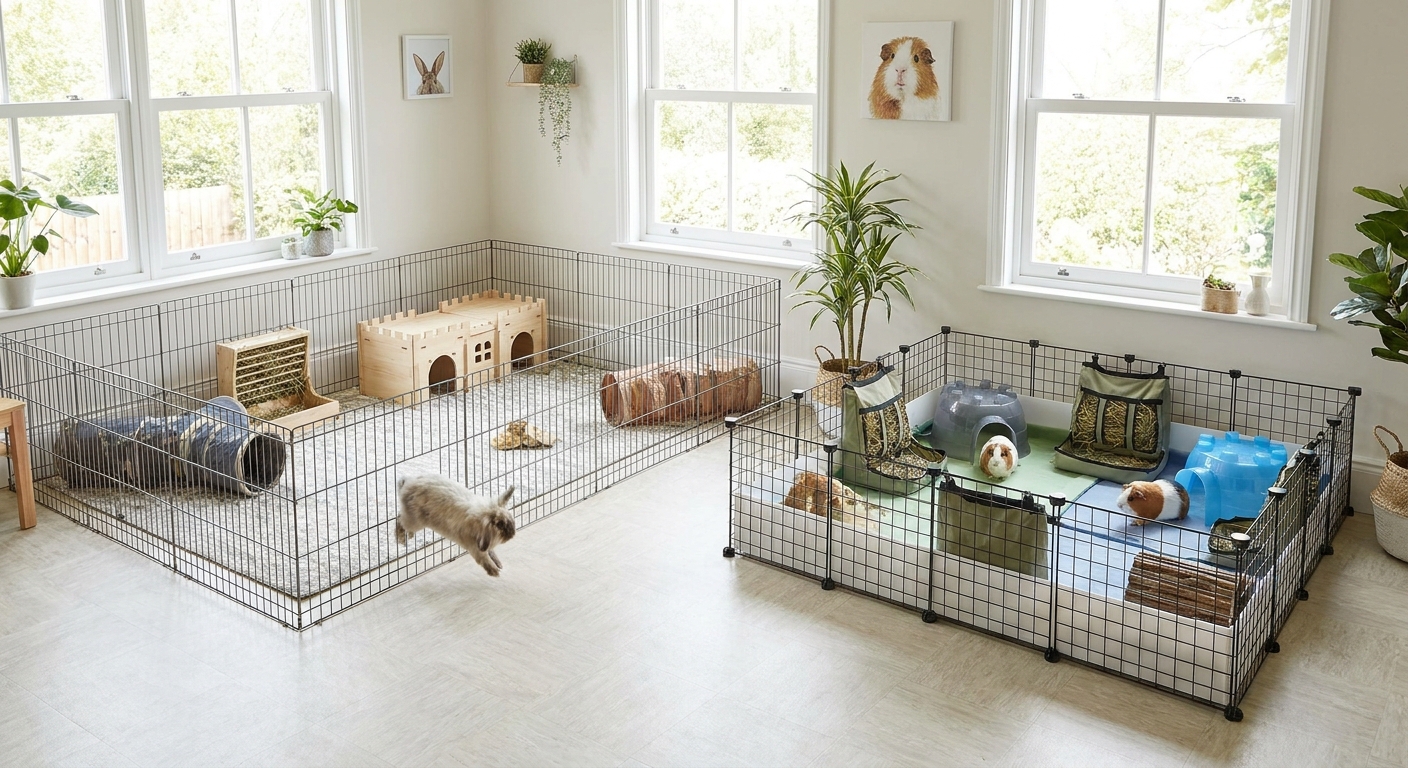
A practical room setup plan for keeping rabbits and guinea pigs safe in the same space with separate habitats, secure barriers, and routines that reduce stress.
Rabbit Cove
Bonding Rabbits or Guinea Pigs: Step by Step
Bonding two rabbits or two guinea pigs takes planning, patience, and the right setup. Follow this step-by-step guide for safe introductions, quarantine, body language, and knowing when they are ready to share a home.

Chloe Miller
Chloe Miller is a dedicated small-pet enthusiast and experienced foster parent who has spent over a decade caring for rabbits and guinea pigs. Through her hands-on work with local animal rescues, she shares practical, compassionate advice on housing, nutrition, and daily enrichment to help small pets thrive. When she isn't designing custom indoor enclosures, Chloe can be found coaxing shy rescues out of their shells with fresh cilantro.
Published
October 22, 2026
Updated
October 22, 2026
Bonding is one of those topics where pet store advice is often wildly optimistic. “Just put them together and they will work it out” is how you end up separating a fur tornado or treating bite wounds at midnight.
The good news: with the right prep and a calm, step-by-step approach, many rabbits and guinea pigs can learn to live together peacefully. The goal is not “tolerating.” The goal is a relationship that looks relaxed: shared meals, comfortable proximity, and normal, easy body language.
One important truth up front: not every pairing will work, even if you do everything “right.” Sometimes it is a pace issue. Sometimes it is a compatibility issue. Your job is to protect both animals while you find out which it is.
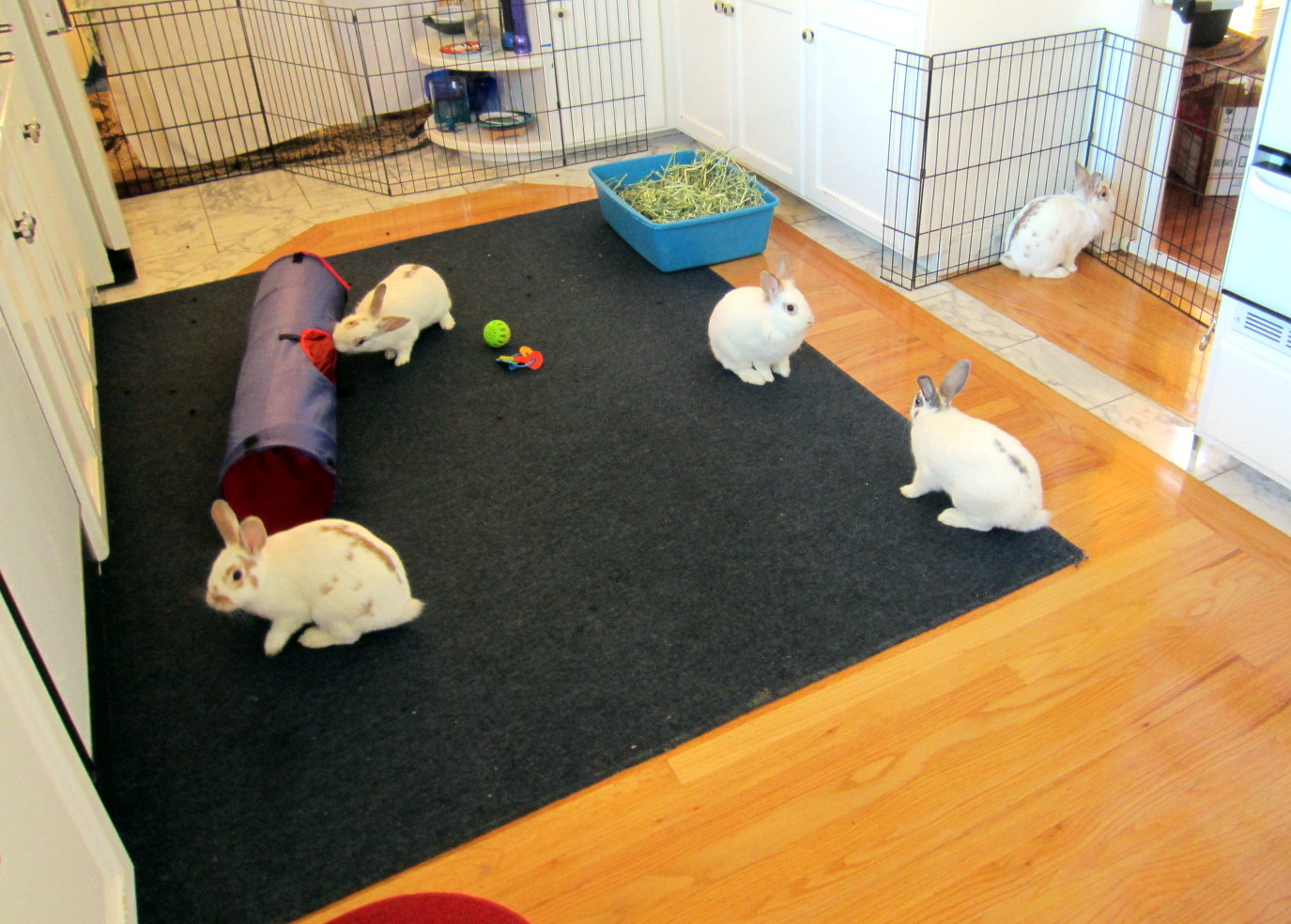
Before you start
Bonding basics
- Same species only. Rabbit with rabbit, guinea pig with guinea pig. Never cross-species bond attempts.
- Why same species matters. They communicate differently, have different needs, and rabbits can seriously injure guinea pigs with a single kick or bite.
- Bonding is a process, not a single meeting. Even “love at first sight” pairs need time to prove stability.
- Safety comes first. Prevent injuries and extreme stress, even if it means slowing down.
Rabbits vs. guinea pigs
- Rabbits are territorial and can escalate quickly. True bonding is essential before cohabitation.
- Guinea pigs often do best with a compatible friend, but they still need careful intros. Their squabbles can look dramatic (chattering teeth, rumblestrutting), and that can be normal. Deep bites are not normal.
When bonding is not a good idea
- Unaltered rabbits. Please do not attempt full bonding before spay or neuter. Hormones make stable bonding unlikely and fights more likely.
- Medical instability. If either pet is recovering from surgery, has chronic pain, or is not eating normally, pause bonding and talk to your exotics vet.
- Severe aggression or repeated injurious fights. Some individuals need a different partner, a different pace, or hands-on help from a rescue with bonding experience.
Step 1: Set up for success
Health check and quarantine
If your new rabbit or guinea pig came from a shelter, rescue, pet store, or another home, do a quarantine in a separate room. This protects your existing pet and gives you time to spot sneezing, mites, fungal issues, diarrhea, or appetite changes.
A practical range for many homes is 2 to 3 weeks (sometimes up to 4 weeks, depending on exposure risk). If you are unsure what is appropriate for your region and situation, ask your exotics vet.
- Rabbits: watch for runny nose, watery eyes, head tilt, GI slowdown, and parasites. Ask your vet about appropriate screening for your region.
- Guinea pigs: monitor for respiratory symptoms, ringworm, lice or mites, and weight loss. Weigh daily at first.
Spay and neuter timing (rabbits)
For rabbits, plan to wait for hormones to settle after surgery. Many rescues recommend roughly 4 to 6 weeks post-spay or neuter before serious bonding work. Some rabbits mellow sooner, some take longer.
Also note: a recently neutered male can still be fertile for up to about 4 weeks. Keep males separated from unspayed females until your vet confirms the safe window has passed.
One more rabbit reality: baby rabbits can seem “instantly bonded,” then hit puberty and everything changes. If you are pairing young rabbits, be prepared to slow down and possibly re-bond once they mature.
Gather your bonding supplies
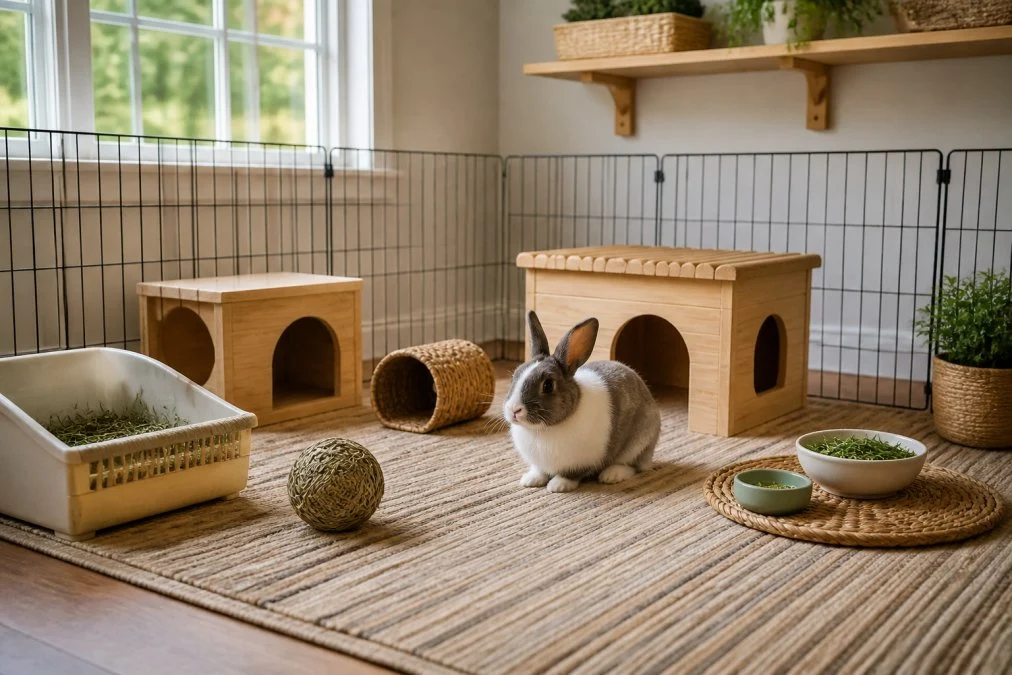
- A truly neutral space (more on that next)
- Two piles of hay and a plate of greens to encourage calm, side-by-side eating
- Thick towel or oven mitts for safe separation
- Dustpan, piece of cardboard, or a pet gate panel to gently block and redirect
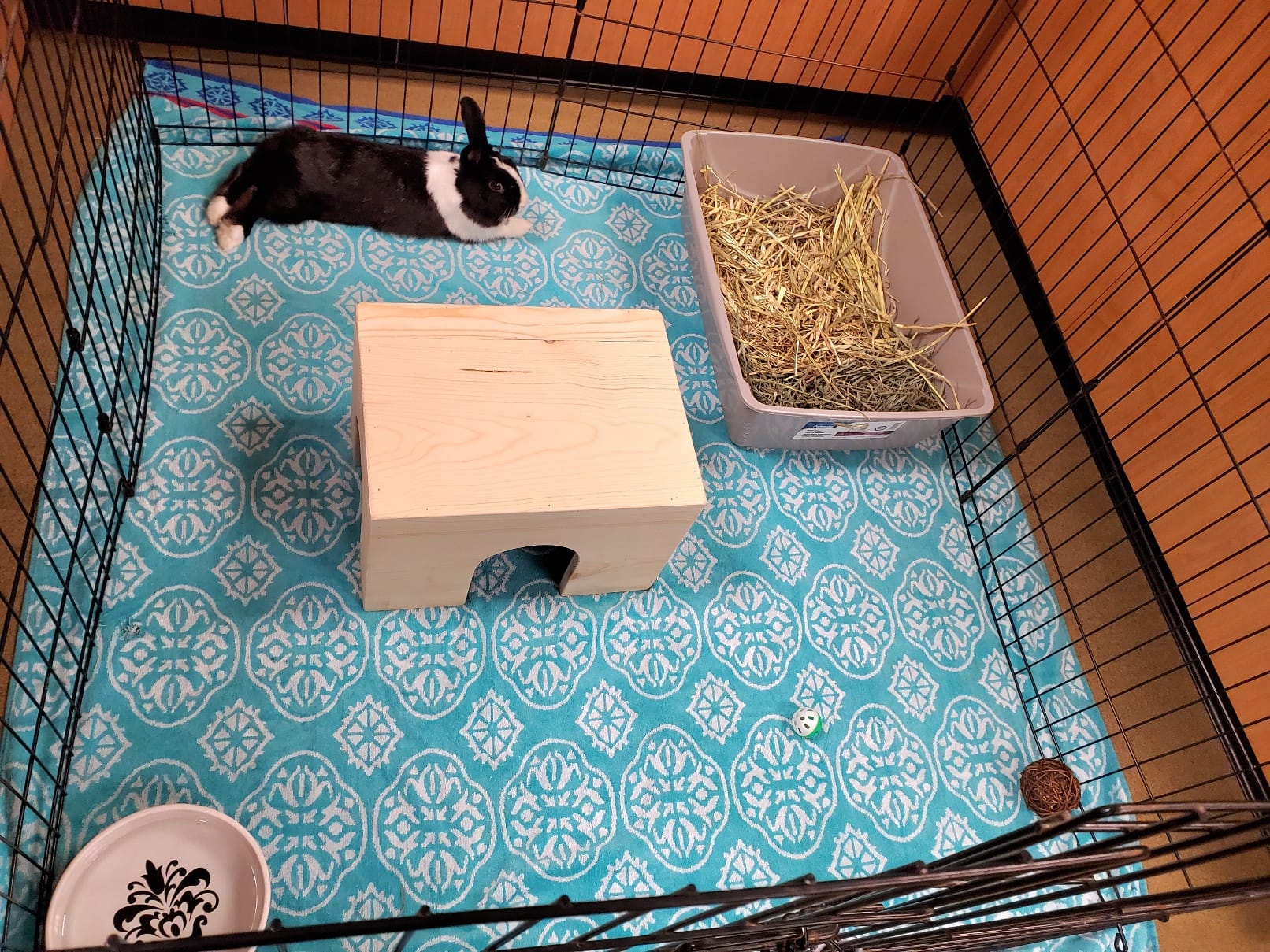
- Non-slip surface (fleece, yoga mat, bath mat) to reduce scrambling and panic
- Water available (especially for longer sessions)
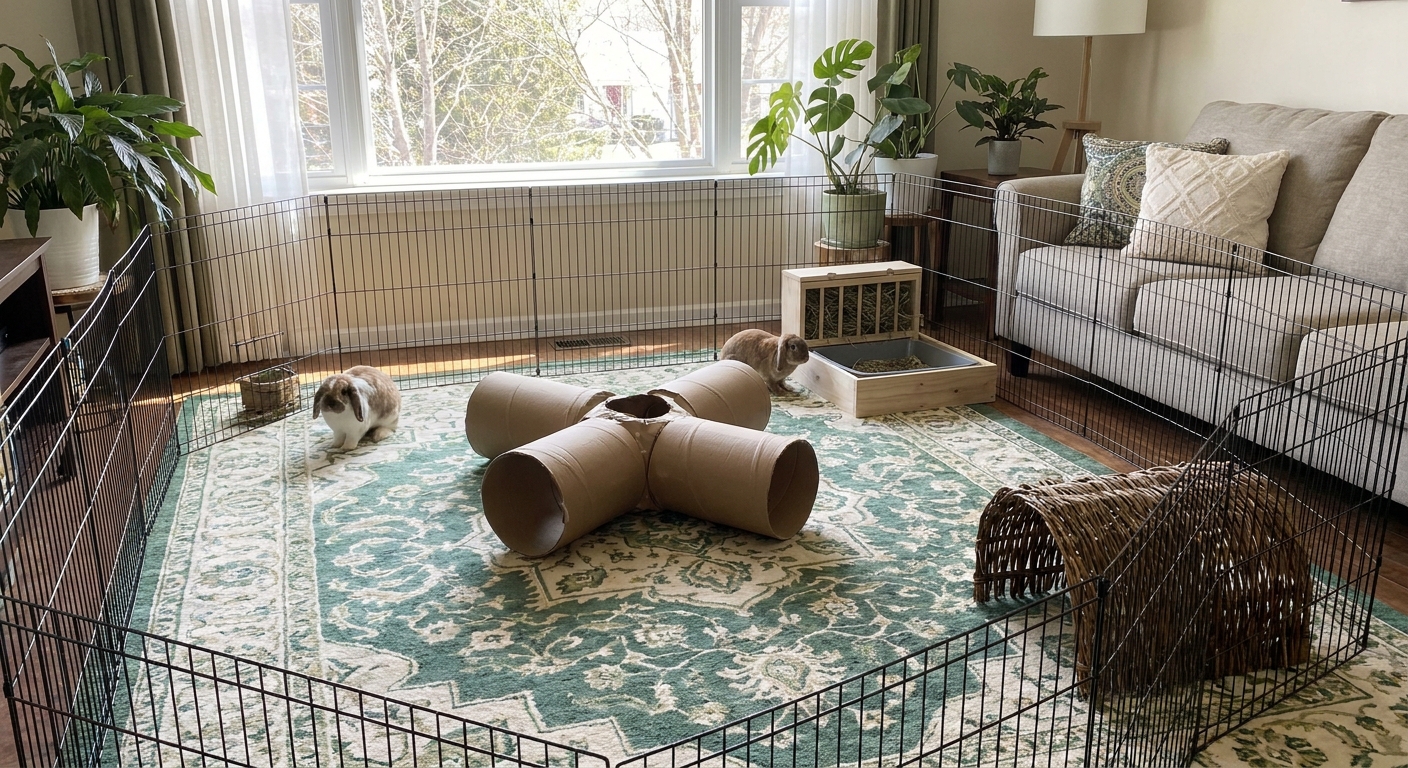
- Pen panels for gradually increasing shared space
- A backup plan. Have two secure, separate enclosures ready in case a session goes badly and you need immediate separation housing.
Pick truly neutral territory
Neutral means: neither animal has lived there, played there, or claimed it as “theirs.” For most homes that is a bathroom, hallway, laundry room, or an exercise pen set up in a new location.
Clean the space first. For rabbits especially, remove lingering scent with vinegar and water on hard surfaces. Vinegar is great for urine scale, but it is not a disinfectant. After cleaning, rinse and dry so the area is not damp or strongly scented.
Step 2: Pre-bonding
Pre-bonding is the low-drama stage where everyone learns, “I can smell you nearby and nothing bad happens.” It reduces the intensity of first face-to-face meetings.
How to pre-bond
- Side-by-side housing: keep them in separate enclosures with a safe gap. For rabbits, a double barrier helps if one is nippy through bars.
- Swap items daily: litter boxes (cleaned), hides, fleece pads, and toys so scents become normal.
- Swap spaces: rotate who gets time in which pen area, but do not let them meet yet.
- Feed “together”: offer meals at the same time on opposite sides of the barrier.
What you want to see
- Relaxed posture near the barrier
- Eating normally when the other is close
- Curiosity without lunging, bar-biting, or frantic pacing
How long does pre-bonding take?
Commonly 1 to 2 weeks, sometimes longer. If either pet is still acting like the other is a personal insult, keep pre-bonding going.
Step 3: First face-to-face
Your first introduction session should be supervised, short, and set up to prevent chasing. Think 10 to 20 minutes. End on a neutral or positive note, not after a blowup.
Set the scene
- Use a small neutral area so they cannot build speed
- Add two hay piles and scatter a few favorite greens
- Sit on the floor within arm’s reach
What to expect in rabbits
- Sniffing is normal.
- Mounting can be normal dominance behavior, even female to female. It becomes a problem if it is relentless or if the mounted rabbit panics.
- Nipping can happen. Repeated biting, boxing, or tornado spinning is not acceptable.
What to expect in guinea pigs
- Rumblestrutting, teeth chattering, nose-offs can be normal.
- Mounting and chasing can happen during hierarchy sorting.
- Raised hackles, lunging, or deep bites mean you should intervene.
How to intervene safely
Never put bare hands into a fight. Use a towel, oven mitts, or a flat object like cardboard to separate. Once separated, take a breath, let them settle, and decide whether to end the session or reset after a short cool down.
If anyone is bitten, limping, or acting “off,” stop and assess. Rabbits in particular can spiral quickly when stressed. Not eating, fewer poops, hunched posture, or hiding hard after a session is a reason to contact your vet promptly.
Step 4: Build time and space
Bonding is usually a ladder. You climb it by increasing either duration or space, but not both at once.
A simple progression
- Short sessions daily in neutral space (10 to 20 minutes)
- Longer sessions (30 to 60 minutes) once body language softens
- Expanded neutral area using pen panels
- Several-hour hangouts with shared hay and multiple “boring” activities
- All-day supervised time when you can be home and attentive
- Overnight trial only when daytime has been consistently calm
Keep resources plentiful
Resource guarding is a common trigger. Set up “more than enough” of everything.
- Rabbits: multiple litter boxes, multiple hay stations, multiple water bowls, at least two hide options that have two exits.
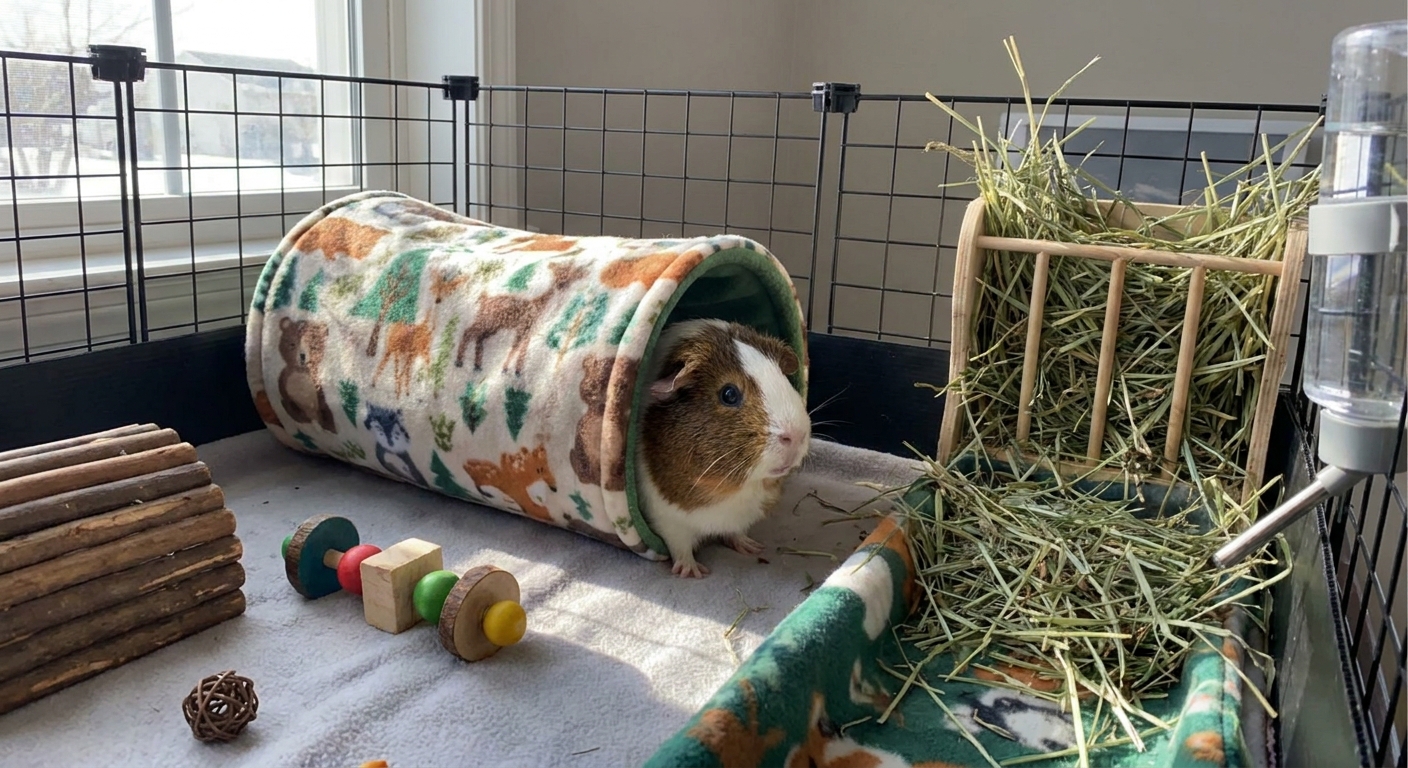
- Guinea pigs: at least two of each hide, and choose hides with more than one opening so nobody gets trapped and bullied.
Step 5: Read body language
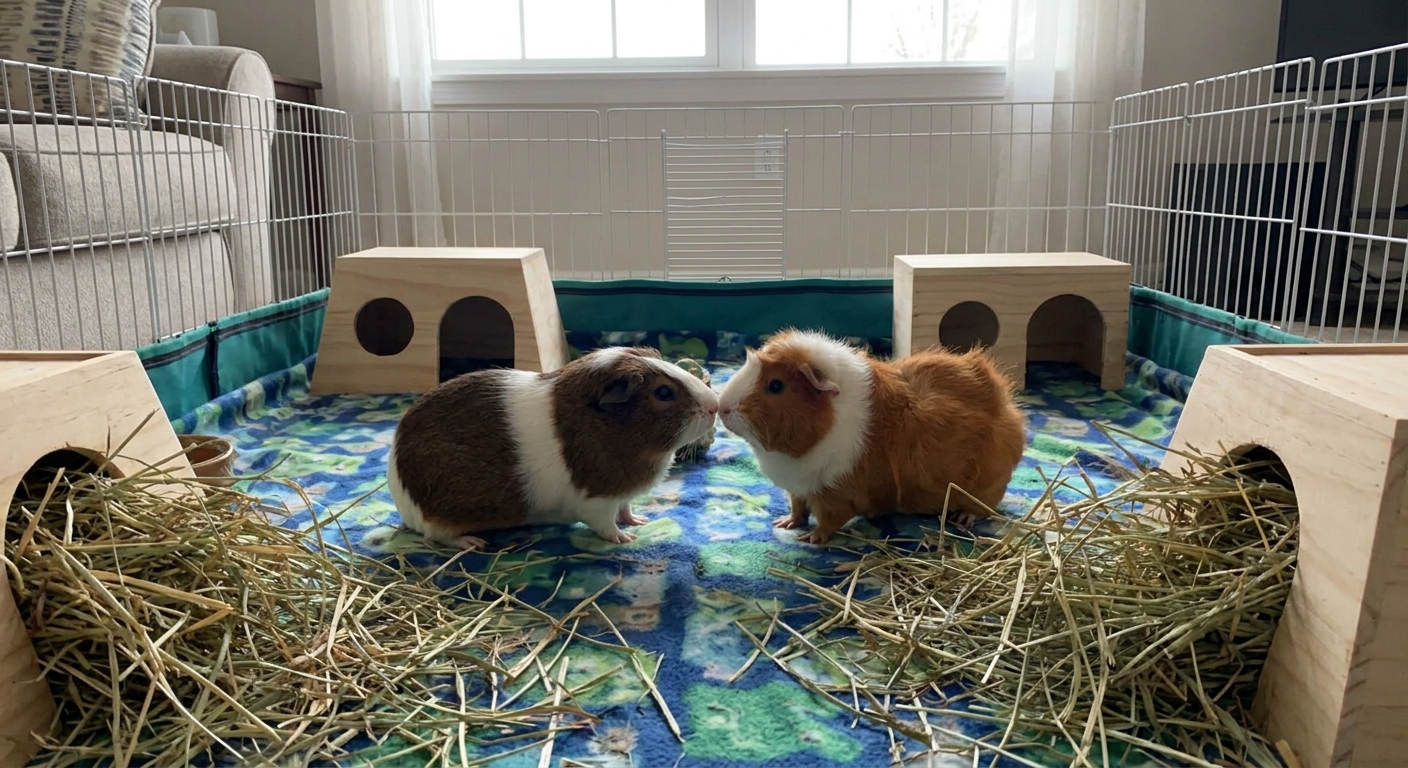
I always tell fosters: ignore the “cute moments” for a second and watch the feet, the eyes, and the tension level. Bonding success is mostly about how quickly they recover from stress.
Green flags
- Eating hay close together
- Relaxed loafing or splooting (rabbits), relaxed sitting (guinea pigs)
- Grooming self calmly in the other’s presence
- Brief disagreements that resolve in seconds
- Mutual grooming (rabbits) or peaceful nose touches (guinea pigs)
Yellow flags
- Repeated mounting that does not stop with gentle redirection
- Persistent low-level chasing
- One pet staying frozen, wide-eyed, or constantly trying to escape
- Teeth chattering in guinea pigs that escalates instead of settling
Red flags
- Circling that speeds up into a tornado (rabbits)
- Boxing, lunging, biting that breaks skin
- One animal being pinned and screaming (rabbits) or shrieking repeatedly (guinea pigs)
- Blood, punctures, or intense fear
A note on stress bonding
You may hear about using car rides, laundry machines, or other stressors to “force” bonding. In rescue settings, mild, carefully controlled stress can sometimes interrupt a fight cycle, but it is not a beginner tool. You want calm association more than “we survived something scary together.”
Also, laundry-machine bonding is especially risky. It can lead to overheating, falls, and panic injuries. It is not something I recommend trying at home.
One more nuance: mutual grooming is lovely, but it is not required. Some stable rabbit pairs do not groom much, and that can still be a solid bond if everything else is relaxed.
Step 6: Move in together
When are they ready?
Look for consistency. A single peaceful session is not a bond. These are the signs I look for before I let a pair truly move in together:
- Multiple long sessions (several hours) with no serious incidents
- They can rest near each other without tension
- They share hay and water without guarding
- Minor squabbles end quickly and do not spiral
- You can step a few feet away and they remain calm
Deep clean and reset home base
Even if you plan for them to live in an enclosure that belonged to one of them, treat it like new:
- Remove everything
- Wash hard surfaces with vinegar and water (great for urine scale), then rinse and dry
- Launder fleece and bedding
- Rearrange the layout so it feels unfamiliar
- Add multiple litter boxes and multiple hay stations
First 48 hours
This is where you earn your bonding stripes. Plan to be home and watching frequently.
- Expect some mild re-checking of hierarchy
- Keep the space a bit smaller at first, then expand after stability
- Feed lots of hay and keep routines predictable
- If tension rises, temporarily reduce space and increase supervision rather than “letting them sort it out”
Species-specific tips
Rabbit tips
- Use litter boxes as calm stations. Rabbits often settle when they are munching hay in a box.
- Watch the rear-end mounting. Mounting from behind is usually safer. Mounting the face can trigger a bite. Redirect quickly.
- Do not rush semi-neutral spaces. A living room where one rabbit free-roams is not neutral, even if you vacuumed.
- Pairs often bond more smoothly than trios. Trios can work, but they are harder to stabilize.
Guinea pig tips
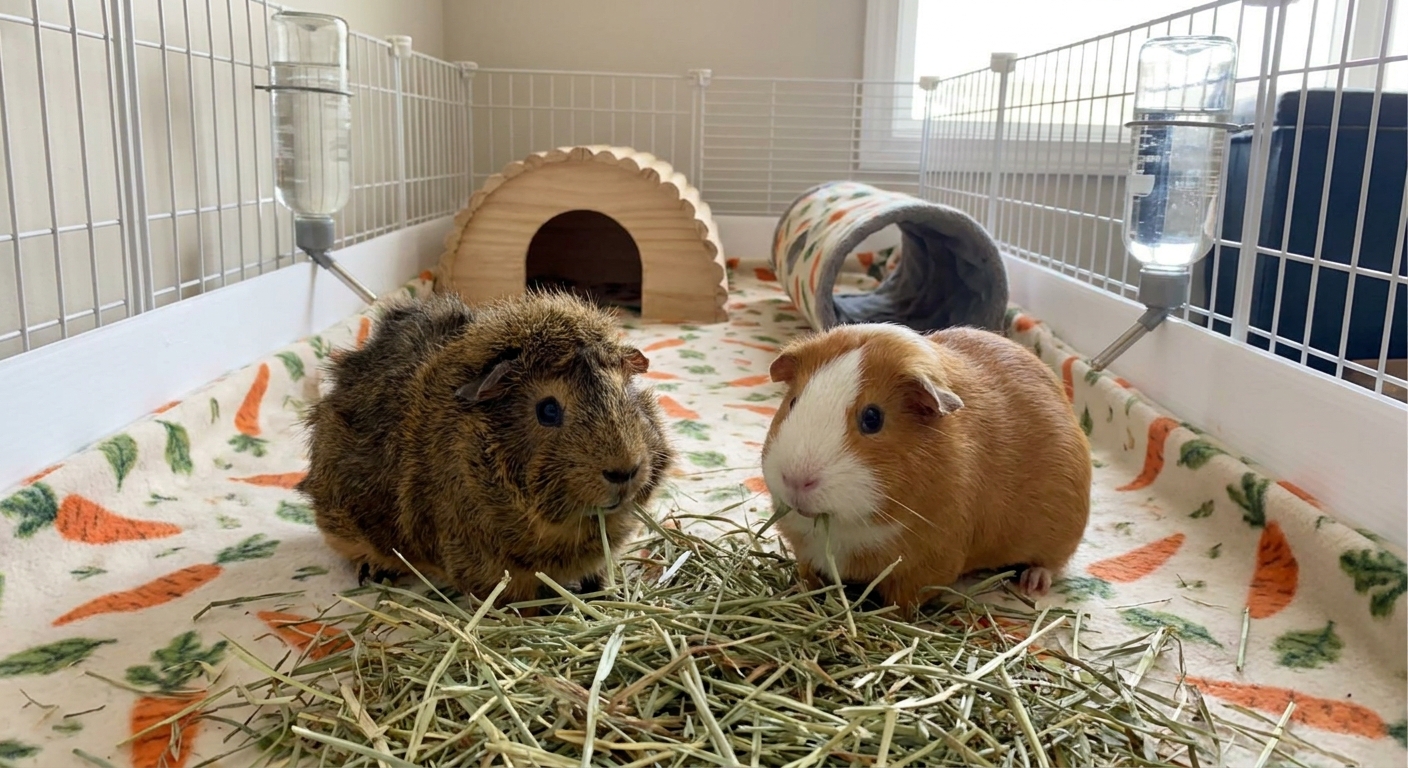
- Go big on space. Many “bonding problems” are actually “not enough square footage.”
- Offer hay like it is your job. Multiple hay piles reduce guarding and keep mouths busy.
- Avoid single-exit pigloos. Trapping is a common spark for fights.
- Some drama is normal. A little rumblestrutting is basically pig small talk.
- Boar pairings can be harder. Some boar combos, especially two very dominant personalities, may not be a match even with perfect setup.
Guinea pig intro checklist
- Use a large neutral floor space (bigger is better)
- Put hay everywhere and offer veggies to keep them grazing
- Use only multi-exit hides and add at least two
- Avoid cornering by keeping the layout open
- Before moving in together, do a full cage reset: deep clean, fresh bedding or fleece, and a rearranged layout
Common problems
Chasing that will not stop
Try: shrinking the space slightly, adding more hay piles, and ending sessions before either animal gets “amped.” Increase frequency of shorter sessions.
One animal is terrified
Try: more pre-bonding, shorter sessions, and pairing introductions with high-value greens. Check that the timid pet has traction and is not slipping around.
Constant mounting (especially rabbits)
Try: gentle redirection with a hand-held barrier, brief “reset” breaks, and making sure neither rabbit is still hormone-driven. If it escalates to nips and panic, slow way down.
Great in neutral space, fights at home
Try: a deeper clean, a full rearrange, and temporarily reducing territory. Add duplicate resources everywhere. Territorial disputes are not stubbornness. They are instinct.
Biting through bars during pre-bonding
Try: increasing the gap with a double barrier or moving pens farther apart. “Seeing each other” is not worth injuries.
FAQ
How long does bonding take?
It varies wildly. Some pairs click in a week. Others need a month or more of steady, careful work. If you are seeing gradual improvement, you are on the right track. If you are seeing repeated escalation, pause and rethink the setup and pace.
Can two females bond? Two males?
Yes. For rabbits, spay or neuter is key regardless of sex. For guinea pigs, boars can live happily together, but they often need more space, more hides with two exits, and a keeper who does not panic over normal dominance chatter.
Should I separate after every scuffle?
Separate for safety if there is a real fight, fear, or biting. If it is a mild disagreement that ends quickly, it can be better to redirect and continue so they learn to recover together. The skill you are building is “tension happens, then it passes.”
When can I leave them alone?
When you have had multiple long, calm sessions with no escalation, they have successfully shared a fully reset enclosure, and their disagreements (if any) are brief and non-injurious. If you are not sure, keep supervising. Caution is cheaper than an emergency vet visit.
When should I call a vet?
Call promptly for any bite wound, puncture, limping, shocky behavior, or signs of stress. For rabbits, not eating or a drop in poops after a bonding session is a big deal and should be treated as urgent.
A gentle final word
Bonding asks a lot of you: time, observation skills, and the ability to breathe through a little drama without overcorrecting. But when it works, it is pure magic. Watching a formerly lonely rabbit flop next to their partner, or seeing a timid guinea pig start to popcorn because they finally feel safe, is the best kind of payoff.
If you get stuck, do not take it as failure. It usually just means the setup needs adjusting, the pace needs slowing, or the match is not quite right. Your job is not to force friendship. Your job is to create the conditions where it can grow.