Minimum vs ideal floor space for rabbits and guinea pigs, with practical layouts, storage tips, and common sizing mistakes to avoid.
Rabbit Cove
Designing a Shared Room for a Rabbit and a Guinea Pig
Set up a rabbit and guinea pig in the same room safely with separate enclosures, smart layout choices, species-specific diets, calm introductions, and simple rules that prevent stress and injuries.

Chloe Miller
Chloe Miller is a dedicated small-pet enthusiast and experienced foster parent who has spent over a decade caring for rabbits and guinea pigs. Through her hands-on work with local animal rescues, she shares practical, compassionate advice on housing, nutrition, and daily enrichment to help small pets thrive. When she isn't designing custom indoor enclosures, Chloe can be found coaxing shy rescues out of their shells with fresh cilantro.
Published
October 22, 2026
Updated
October 22, 2026
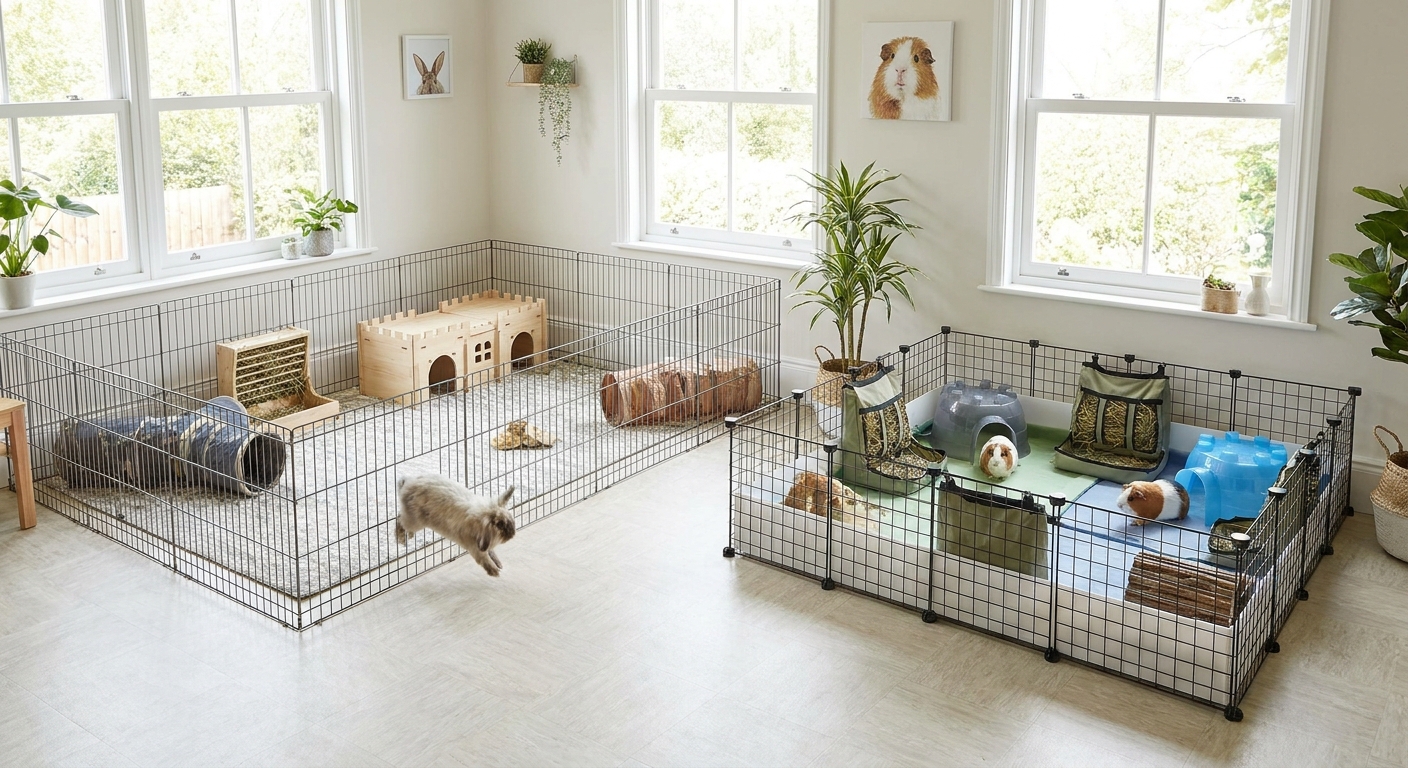
Rabbits and guinea pigs are both gentle little herbivores, so it is tempting to assume they will make perfect roommates. In real life, the safest and kindest setup is separate homes in the same room, with enough distance and barriers that nobody can nip toes through bars or steal the other species’ food.
Non-negotiables: no direct contact, no shared floor time, and no access to each other’s food through bars.
I foster both, and I love a “shared room” when it is designed like a tiny studio apartment complex: everyone gets their own secure unit, their own diet, their own cleaning routine, and they can still enjoy the comfort of hearing and smelling another calm animal nearby.
Why they should not cohabitate
You will see stories online of rabbits and guinea pigs sharing a pen. Sometimes it looks peaceful until it suddenly is not. The risk is not just “they might not get along.” It is that their bodies, instincts, and daily needs do not match up.
- Size and power mismatch: a rabbit kick, lunge, or even an excited binky can injure a guinea pig.
- Different communication: they do not read each other’s signals well, which can create stress or escalation.
- Diet conflicts: guinea pigs need daily vitamin C and often eat pellets formulated differently than rabbit pellets. Rabbits should not be snacking on guinea pig food, especially mixes with seeds or colored bits.
- Toes and noses through bars: curious animals can bite through wire grids if spacing is wrong.
- Shared supplies spread problems: shared tools, hay bins, or careless hand hygiene can spread things like mites or fungal issues faster.
So the goal is not “make them friends.” The goal is shared room, separate habitat, zero opportunities for contact injuries.
Room basics
Pick the right room
- Temperature: aim for a comfortable, steady range around 60 to 75 F, with extra caution as you approach 80 F, especially in humidity. Guinea pigs overheat easily, and rabbits can struggle in hot, stuffy rooms too. If your home runs warm, use cooling tiles, frozen water bottles wrapped in a towel, and a fan pointed across the room, not directly at an enclosure.
- Quiet traffic: avoid the hallway sprint track. Both species relax faster in a predictable space.
- Ventilation: hay and bedding create dust. Good airflow helps everyone’s lungs, including yours.
- No predator access: keep out cats, dogs, ferrets, and curious toddlers unless you are actively supervising.
Protect the flooring
Even the tidiest hay connoisseur will fling stems like confetti.
- Use a large waterproof mat under each enclosure (vinyl chair mats, washable rug protectors, or a single large piece of vinyl flooring work well).
- Add washable rugs or fleece runners in rabbit free-roam zones for traction. Slippery floors can cause sore hocks and skids.
Separate but adjacent
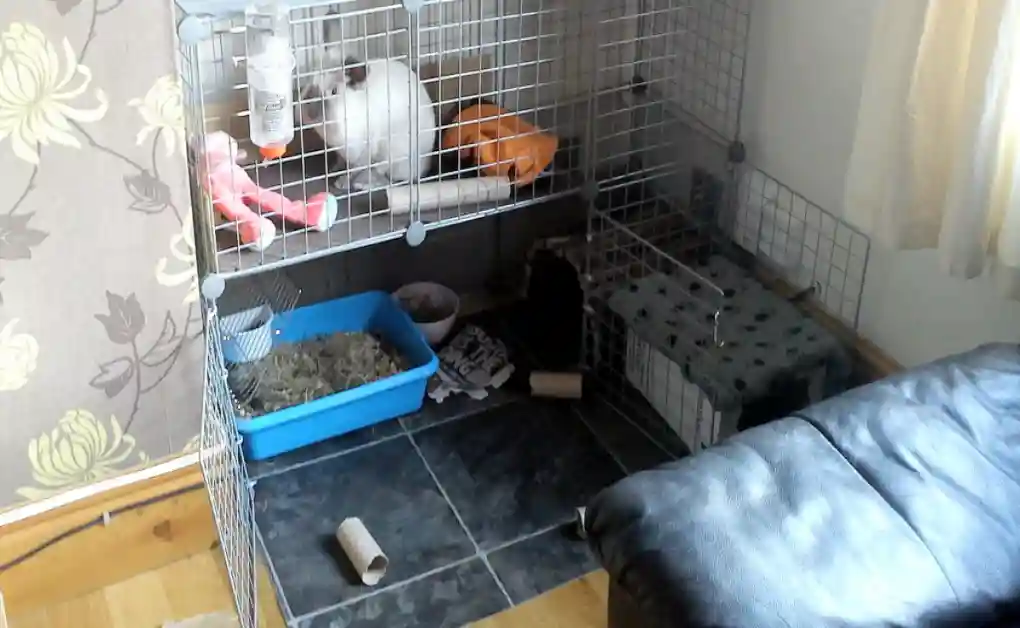
Think in zones. Your rabbit gets a pen or free-roam area. Your guinea pig gets a secure cage with a lid option if needed. They can be in the same room and even see each other, but they should not be able to touch through any barrier.
Distance and barriers
- No nose-to-nose contact through bars. If your rabbit pen uses exercise pen bars, keep the guinea pig habitat far enough away that nobody can reach through.
- Buffer space: my personal baseline is at least 12 inches between enclosures. That number is not magic. It depends on bar spacing, whether either enclosure can slide, and how determined your rabbit is about sticking its face anywhere it fits. More is better.
- Solid barrier option: if either pet seems stressed by visual contact, place a solid panel (coroplast, acrylic, or a replaceable sheet of cardboard) along the side facing the other enclosure.
Enclosures that work
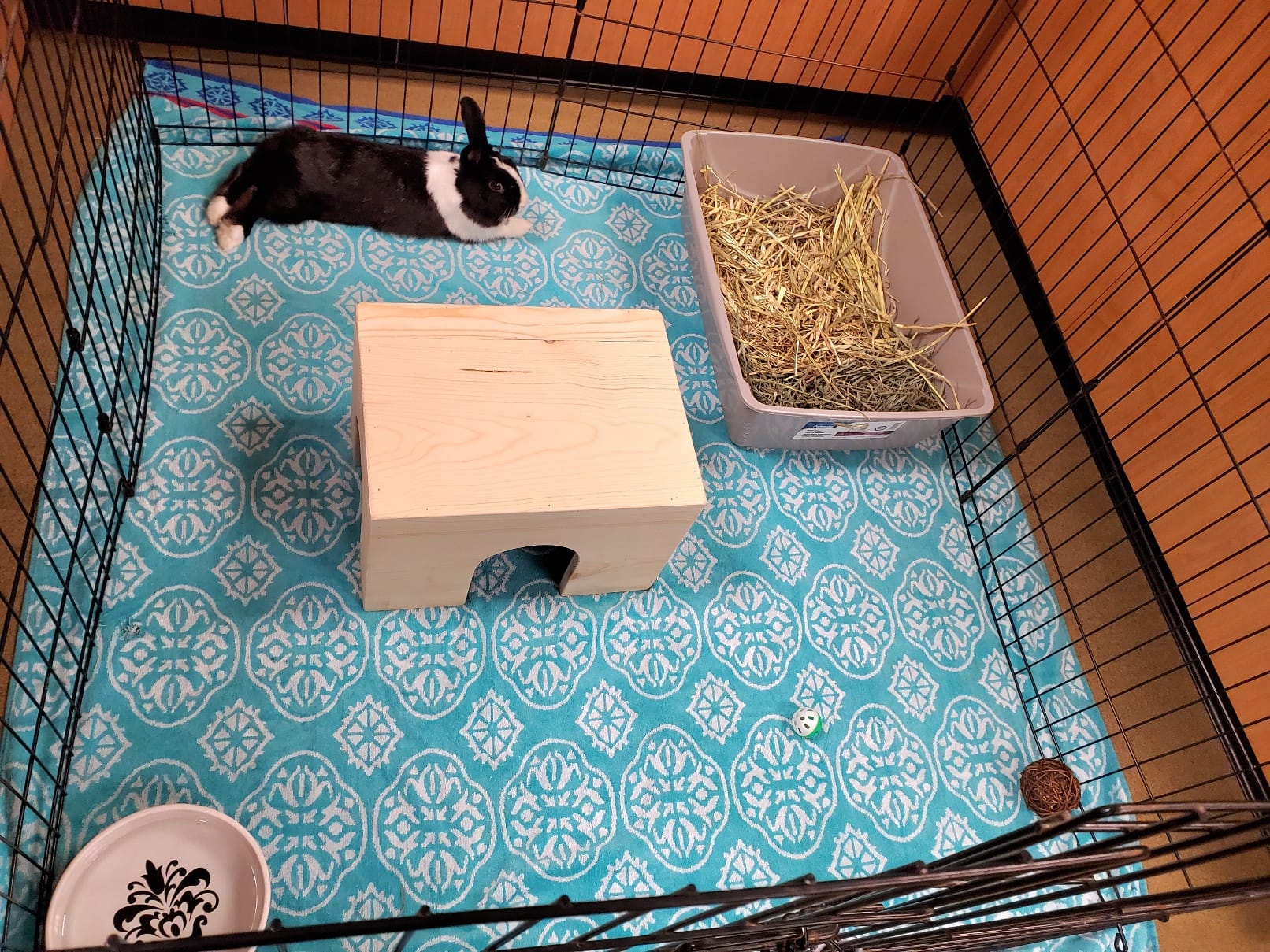
For rabbits: an exercise pen with a roomy base, or a dedicated bunny-proofed area. Most adult rabbits need a footprint that allows full stretches and a few hops even when you are asleep or out.
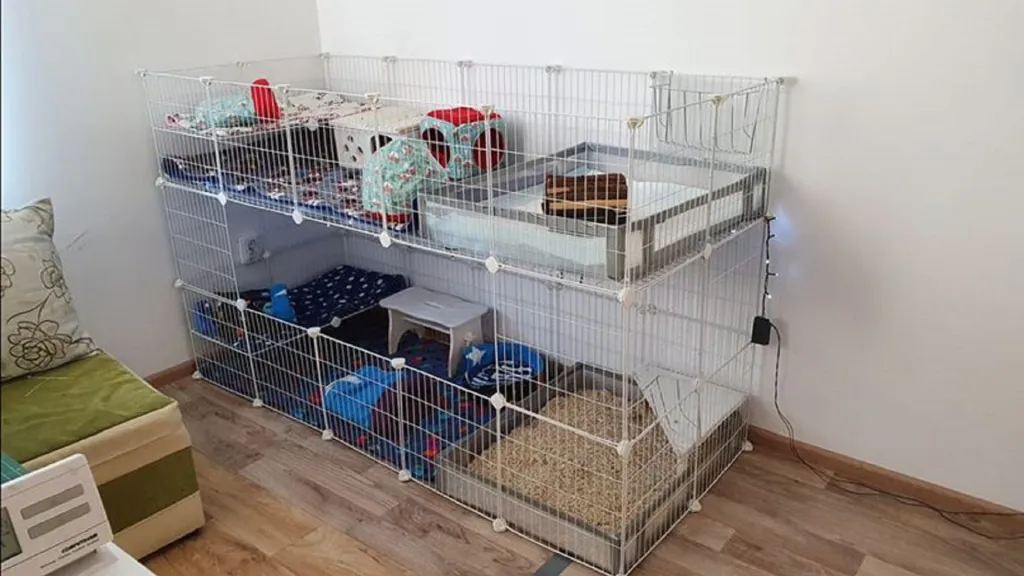
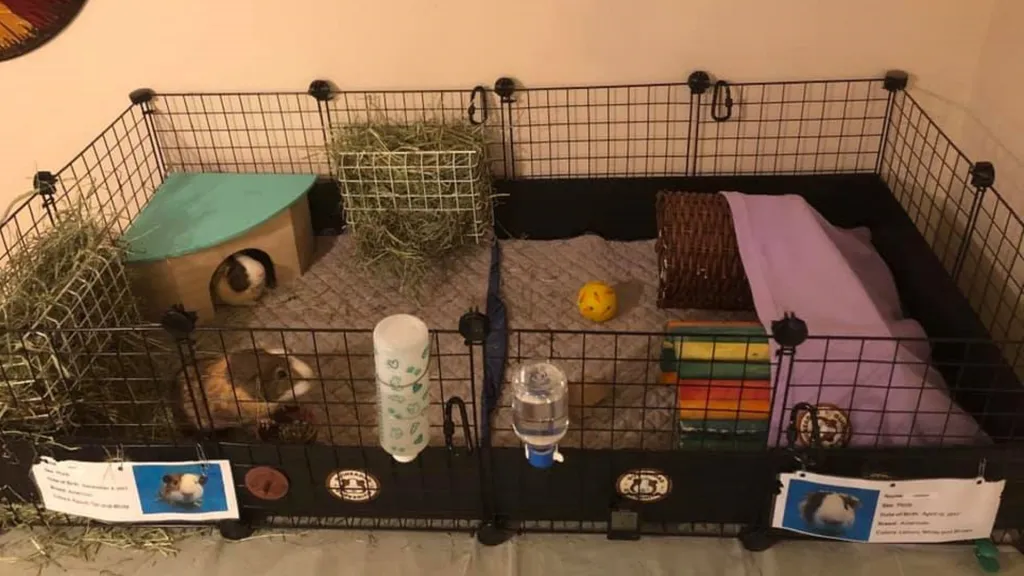
For guinea pigs: a C&C cage is my favorite because you can size it properly and keep ventilation excellent. As a general comfort baseline, many rescues recommend at least 8 square feet for one guinea pig and 10.5 square feet for two, with bigger always appreciated.
For grids, the practical rule is simple: small enough that a guinea pig cannot wedge its head through, and positioned so a rabbit cannot access toes. Many people use smaller-opening grids for guinea pigs (often sold as 12x12 style grids) rather than wider openings (often sold as 14x14 style grids). Always confirm the actual square opening size before you buy, especially if you have young pigs.
Layout for calm
Put the guinea pig habitat on a stand
This one change prevents a lot of issues. A rabbit at floor level can run along the outside of a guinea pig cage, bump it, or investigate too intensely.
- Use a stable stand that does not wobble.
- Keep the cage high enough that the rabbit cannot reach it, but not so high you dread cleaning it.
- If your pig cage is floor-based, create a “no-go” perimeter with an extra x-pen ring or low barrier that the rabbit cannot press against.
Split up the “busy areas”
Both rabbits and guinea pigs have a high-traffic zone where they eat and poop the most.
- Face hay stations away from each other if possible. It cuts down on food obsession and fence pacing.
- Put hides and tunnels where each pet can retreat to a back corner and feel unseen.
Plan human access
If you cannot comfortably reach every corner, cleanup will slip. And when cleanup slips, smells and flies move in like they pay rent.
- Leave a clear path for a vacuum and a laundry basket.
- Make sure doors swing fully open and lids can be removed without bumping the other setup.
Daily essentials in one room
Hay: same ingredient, different delivery
Both species thrive with unlimited grass hay, but their hay stations should be separate and designed for their bodies.
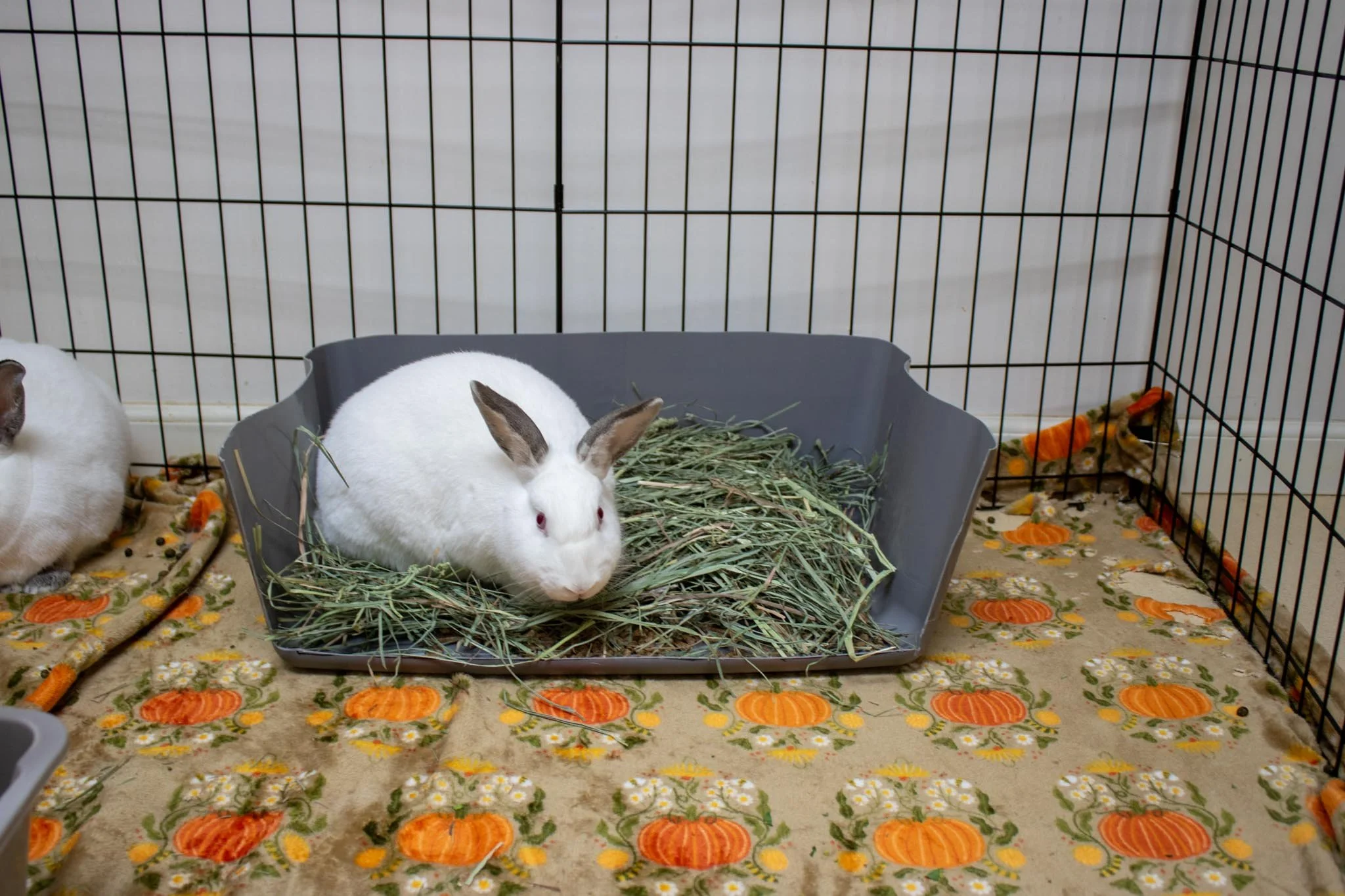
- Rabbit hay: large pile in a litter box or hay rack plus a generous foraging scatter in a dig box.
- Guinea pig hay: easy-access pile or rack that does not encourage climbing into a dangerous height. Many pigs love hay in a low tray.
In a shared room, hay drifts. I keep a handheld broom nearby and accept that I now live in a hay-themed snow globe.
Pellets and vitamin C
- Guinea pig pellets should be plain, timothy-based (for adults), and stored in a bin that the rabbit cannot access.
- Vitamin C: guinea pigs need daily dietary vitamin C. Offer bell pepper or other high C veggies. Avoid vitamin C water drops because dosing is unreliable and it can reduce water intake.
- Rabbit pellets should also be plain and measured. Many adult rabbits do best with limited pellets and lots of hay and leafy greens.
Important: feed them in their own enclosures with doors closed. Food stealing causes the fastest “but they seemed fine!” problems.
Litter and bedding
Rabbits often do well with a litter box setup, while guinea pigs usually use full-cage bedding or fleece systems.
- Rabbit litter: paper-based litter or wood stove pellets in the box, topped with hay. Avoid clumping cat litter.
- Guinea pig bedding: fleece with absorbent layers, paper bedding, or kiln-dried aspen. Avoid cedar and avoid non kiln-dried pine due to aromatic oils.
Safety details people miss
Bar spacing and chew zones
Guinea pig feet and noses are tiny, and rabbits are surprisingly good at finding “just one little bite” through a grid.
- If you use C&C grids, choose spacing that is appropriate for guinea pigs and consider a coroplast inner lip high enough to prevent nibbling through.
- For rabbits, make sure the pen is tall enough to discourage hopping out. If your rabbit is a jumper, use a covered pen or a taller option.
Electrical cords and air hoses
A shared pet room often has fans, air purifiers, and extra lamps. Rabbits are professional cord inspectors.
- Use cord covers or run cords behind furniture.
- Keep surge protectors off the floor or fully enclosed.
Air quality
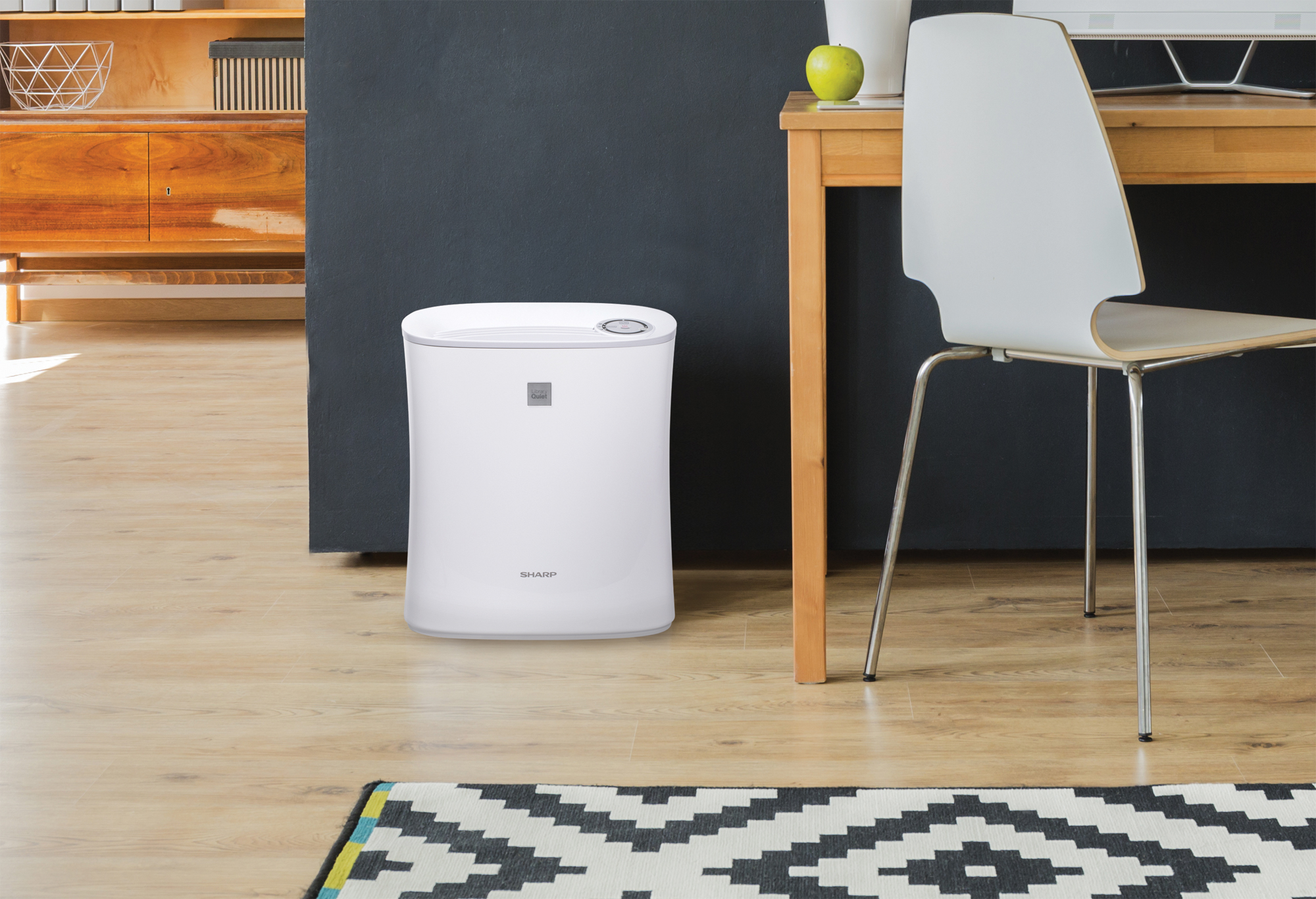
- Use a HEPA air purifier if you can. It helps with hay dust and dander.
- Vacuum frequently around hay areas.
- Skip scented candles, plug-ins, and strong cleaners in the pet room.
Move-in without stress
Even though they will not be cohabitating, moving into a shared space is still a change. Go slow and keep the first days boring.
Step by step
- Set up both habitats fully before either pet enters the room: water, hay, hides, litter or bedding, and a familiar item that smells like them.
- Let one species settle first for a day if possible, especially if one is timid. I often settle guinea pigs first since they spook easily.
- Supervise the first visual contact from a distance. Watch for lunging at bars, teeth chattering in pigs, or obsessive fence running in rabbits.
- Add a visual barrier if either pet seems stressed. Calm is the goal, not forced “getting used to it.”
- Keep routines consistent for feeding and cleaning times for the first week.
Calm vs stress
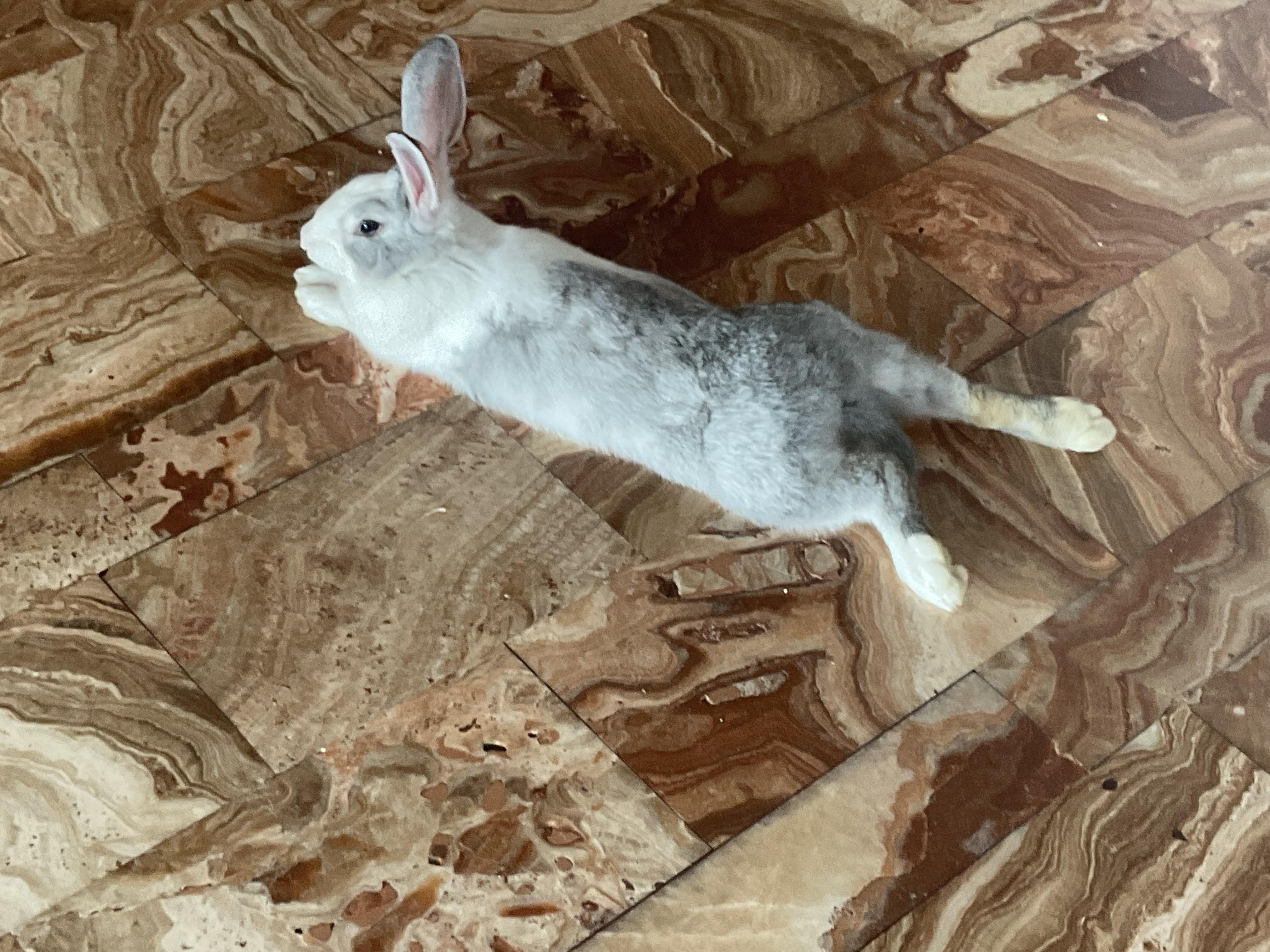
- Calm: rabbit explores, then flops, grooms, or eats normally. Guinea pigs resume hay munching, popcorn, or settle into hides without constant freezing.
- Stress: rabbit charges at the cage, bites bars, paces nonstop, sprays, or refuses food. Guinea pig teeth chatters, stops eating, alarm squeals whenever the rabbit passes, or freezes so often it is basically a statue.
Noise can be part of the stress picture. If your rabbit is thumping at the pig cage or your pigs are doing repeated alarm calls, increase distance and add a solid side panel. Sometimes the “shared room” works best when they can hear each other but not see each other.
Daily management
Clean smarter
- Rabbit zone: scoop litter boxes daily, refresh hay, and wipe any urine overspray on mats.
- Guinea pig zone: spot clean daily and do a full bedding change on a schedule that keeps ammonia down. Fleece systems usually need frequent pad swaps.
In a shared room, odors build faster. If you can smell ammonia, it is time to adjust the routine.
Separate exercise time
Even with adjacent housing, I recommend separate out-of-enclosure time.
- Let the rabbit free-roam while guinea pigs stay safely in their cage.
- Then secure the rabbit in the pen and bring guinea pigs out into a pig-safe play area (or use a playpen) with low hides and tunnels.
This avoids chasing, accidental stepping, and the rabbit deciding the guinea pig is a very strange moving toy.
Setups that work
Setup A: Rabbit floor pen, pigs elevated
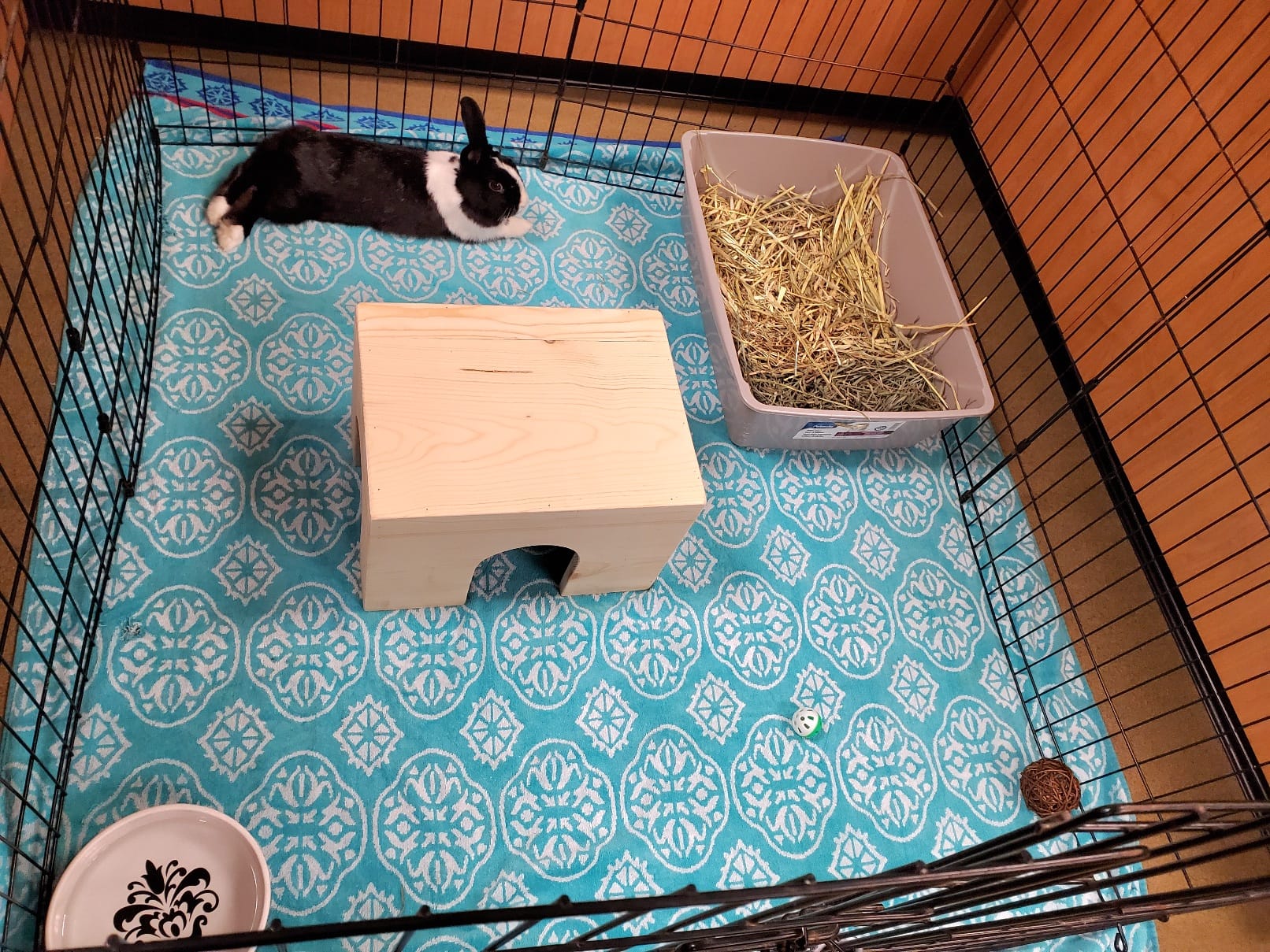
- Rabbit: large x-pen with litter box, water bowl, hay, and a couple hides.
- Guinea pigs: C&C cage on a sturdy table along the opposite wall.
- Bonus: a small bookshelf between them can act as a visual break.
Setup B: Two zones and a walkway
- Rabbit zone on one side, guinea pig zone on the other.
- A clear walkway in the middle makes cleaning faster and reduces jostling.
Setup C: Same wall with a divider
- Works for small rooms.
- Place both habitats along one wall with 12 to 24 inches between them.
- Add a solid divider panel between the two ends that face each other.
Health and emergency planning
Quarantine new arrivals
If you are adding a new rabbit or guinea pig, quarantine in a separate room first. This protects everyone from mites, fungal issues, and respiratory infections that can spread before symptoms are obvious.
Do not share tools
I keep two small cleaning caddies and do not share brushes, dustpans, or nail clippers between species without washing and disinfecting.
Know your vet plan
Accidents, GI slowdowns, and “why is nobody eating” moments never schedule themselves politely. Before you call your shared room finished, know who your exotics vet is, how to reach an after-hours clinic, and keep a carrier ready for each pet.
If a nip or kick happens, separate immediately and call your vet. Small wounds can hide under fur, and guinea pigs in particular can go downhill quickly if they stop eating.
Track appetite and droppings
In a shared room, it is easy to assume “someone” ate the lettuce. Make it trackable.
- Serve measured portions.
- Notice who is finishing hay.
- Learn each species’ normal poop patterns so you spot problems early.
FAQ
Can rabbits and guinea pigs be friends?
They can be tolerant neighbors, and some appear affectionate. But because of the injury risk and miscommunication, I do not recommend trying to bond them or letting them share floor time. Safe adjacency is the sweet spot.
Is it okay if they can see each other?
Often yes, as long as both are calm and there is no possibility of contact through bars. If either pet shows stress, use a visual barrier and increase distance.
Do I need two air purifiers or one?
One good HEPA purifier sized for the room is usually enough. Place it where it can pull dusty air from the hay zones without blowing directly into an enclosure.
What is the biggest mistake in a shared room?
Letting “just a little interaction” happen through cage bars or during floor time. Most injuries happen in seconds, even with animals that seemed fine for weeks.
Quick checklist
- Enclosures are secure, species-appropriate, and cannot be accessed through bars.
- There is a buffer space and, if needed, a solid divider.
- Food is stored safely and fed separately with doors closed.
- Flooring is protected and non-slip for rabbit traction.
- Cords are covered and fans are not blowing directly at pets.
- You have a cleaning routine you can actually keep up with.
- You have an exotics vet plan and two ready carriers.
If you build your shared room around safety and calm, you will get the best part of multi-species living: two very different little personalities doing their own thing, peacefully, while you sip coffee and pretend hay is a home decor choice.