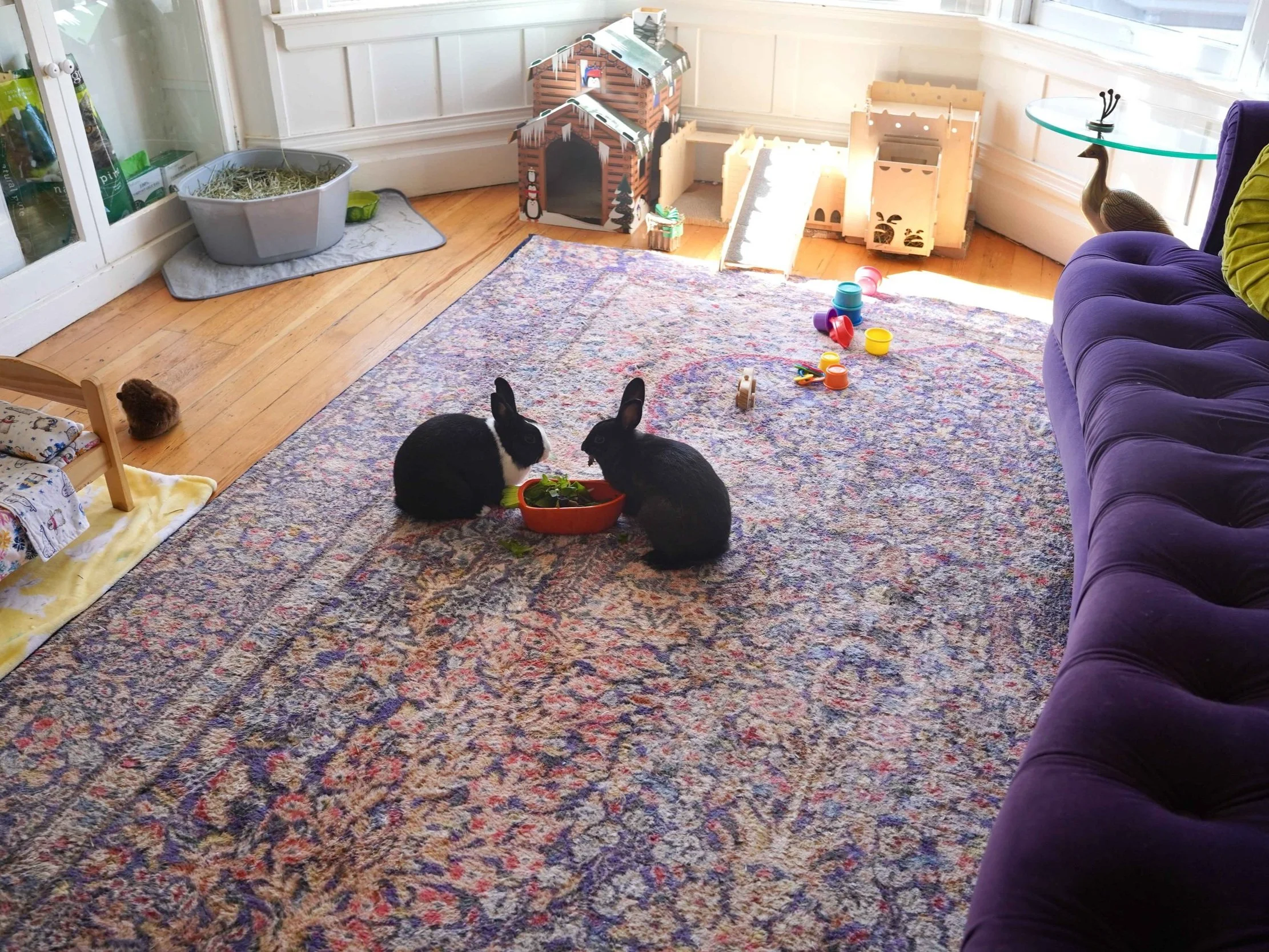
A room-by-room, rabbit-safe bunny-proofing guide covering cords, baseboards, rugs, plants, toxins, furniture, and common hazards in free-roam homes.
Rabbit Cove
Indoor Playpen Setup for Rabbits and Guinea Pigs
Build a safe, enriching indoor playpen for daily exercise with tunnels, dig boxes, foraging stations, and chew-safe toys. Simple layouts for rabbits and guinea pigs.

Chloe Miller
Chloe Miller is a dedicated small-pet enthusiast and experienced foster parent who has spent over a decade caring for rabbits and guinea pigs. Through her hands-on work with local animal rescues, she shares practical, compassionate advice on housing, nutrition, and daily enrichment to help small pets thrive. When she isn't designing custom indoor enclosures, Chloe can be found coaxing shy rescues out of their shells with fresh cilantro.
Published
October 22, 2026
Updated
October 22, 2026
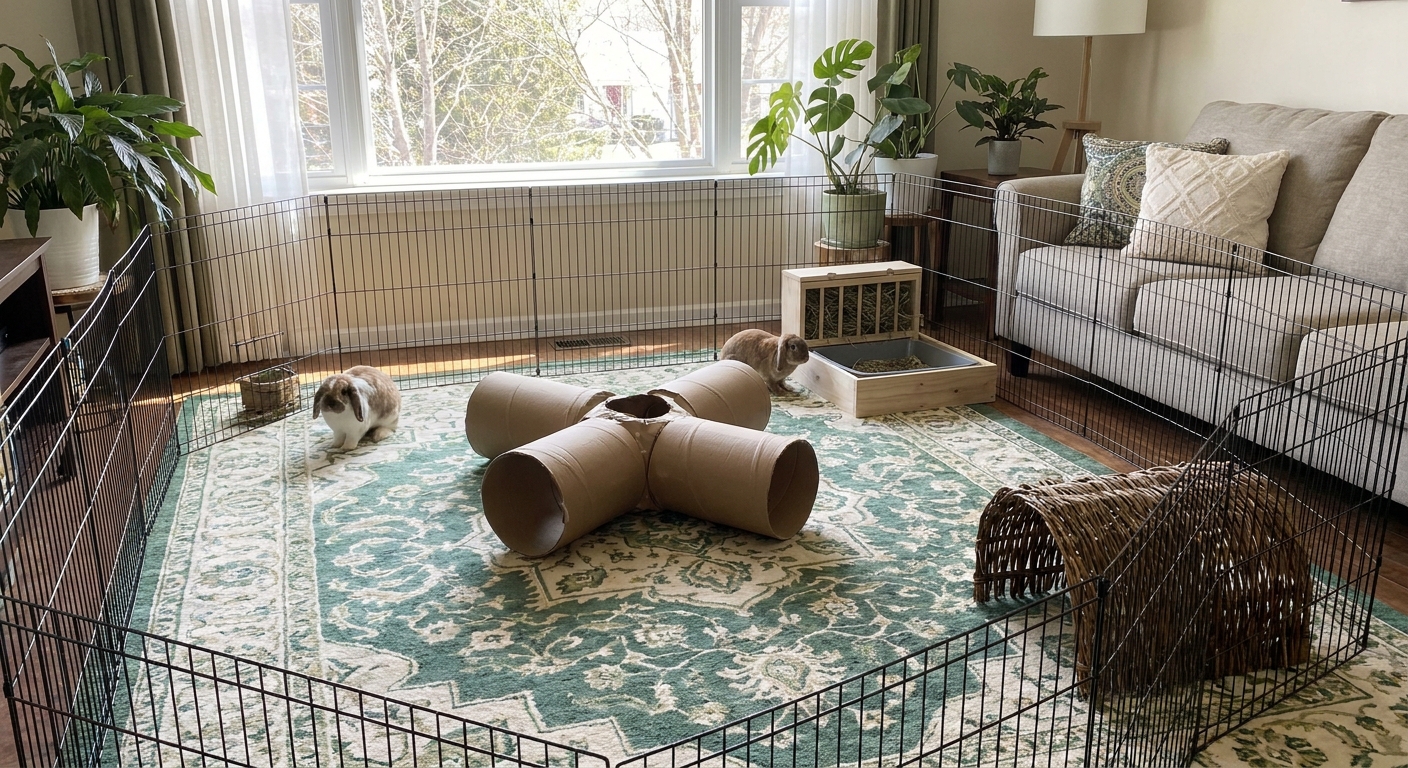
Daily floor time is where the magic happens. A good indoor playpen is not just “more space.” It is a mini world that invites running laps, binkies, popcorning, sniffing, digging, and that very serious work of rearranging toys to their exact standards. The goal is simple: a safe area that makes exercise feel like play, every day.
Before you start: safety first
I love enrichment, but I love it most when it does not end with an emergency vet trip. Spend five minutes doing a quick hazard sweep before you build.
- Block access to cords. Use cord covers, route cords behind furniture, or keep the pen well away from outlets and lamps. Assume a rabbit or guinea pig can reach anything they can see.
- Remove toxic plants and risky items. Common houseplants like pothos, philodendron, and lilies are not playpen decor. Also clear coins, rubber bands, foam, and anything small enough to swallow.
- Check flooring. Slippery floors can cause slips, strained joints, and trouble getting traction, especially for seniors or mobility-challenged pets. Add grip with a rug, a yoga mat under a sheet, or washable fleece over non-slip pads.
- Mind the temperature. Heat risk matters for both species, and guinea pigs are especially sensitive. Aim for a comfortable room range around 65 to 75°F (18 to 24°C) when you can, and keep the pen away from sunny windows and heat vents. Extra caution for long-haired rabbits, flat-faced breeds, and stuffy rooms.
- Supervision level matters. “Bunny-proofed” is a spectrum. For a brand-new setup, supervise until you know what your pet tries to chew or climb.
- Do not mix species. Rabbits and guinea pigs should not share a playpen or be housed together. Their communication styles, strength, and health needs do not match, and injuries can happen fast.
- Plan for other pets. If you have cats or dogs, use taller, sturdier panels and keep the playpen in a room where you can control access. “Friendly” is not the same as “safe.”
Pick the right pen
Pop-up vs. permanent
Both can work beautifully. Choose based on your schedule and your pet’s habits.
- Temporary pen (sets up in minutes) is great for apartments, shared spaces, or pets who free roam at other times.
- Permanent pen works well for building routines and for guinea pigs who should not be roaming the house unsupervised.
Recommended sizes
Bigger is always better, but here are realistic starting points for daily exercise pen time that still allow actual movement. Permanent housing minimums can be different, and many rescues recommend going larger, especially for guinea pigs.
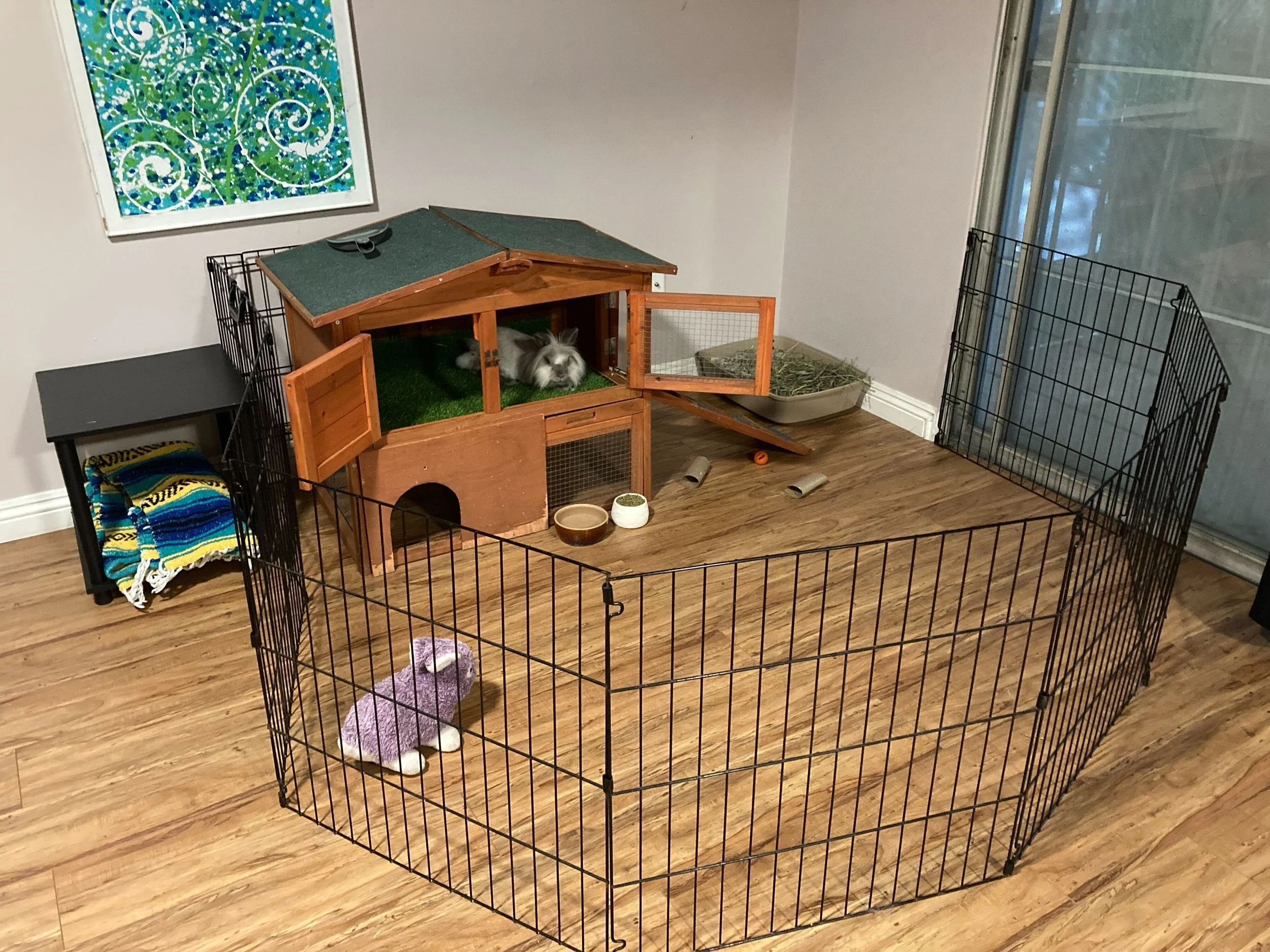
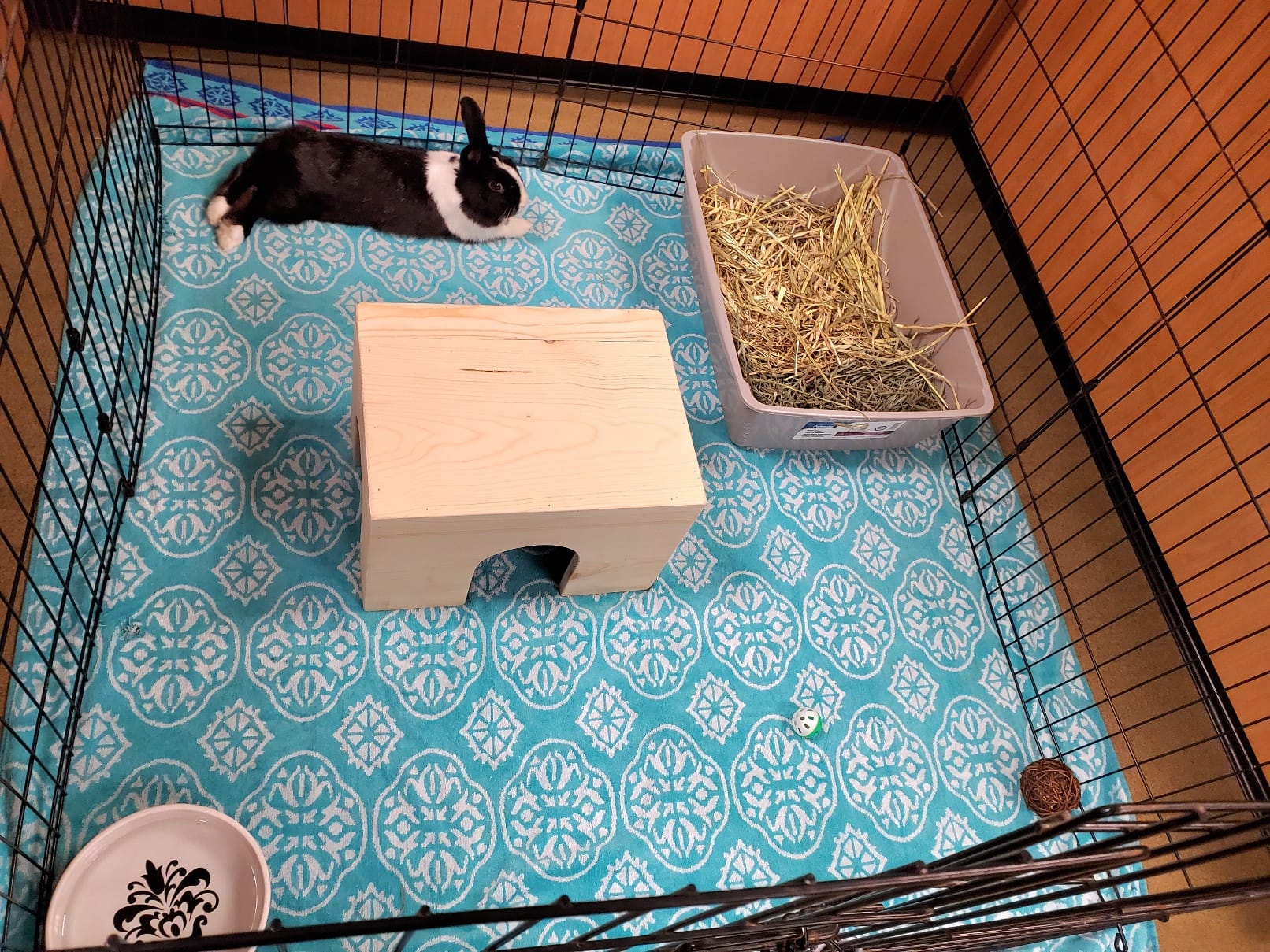
- One rabbit: aim for at least 4 ft x 6 ft for daily playpen time.
- Bonded rabbits: 5 ft x 7 ft or larger, especially if they like to chase and play.
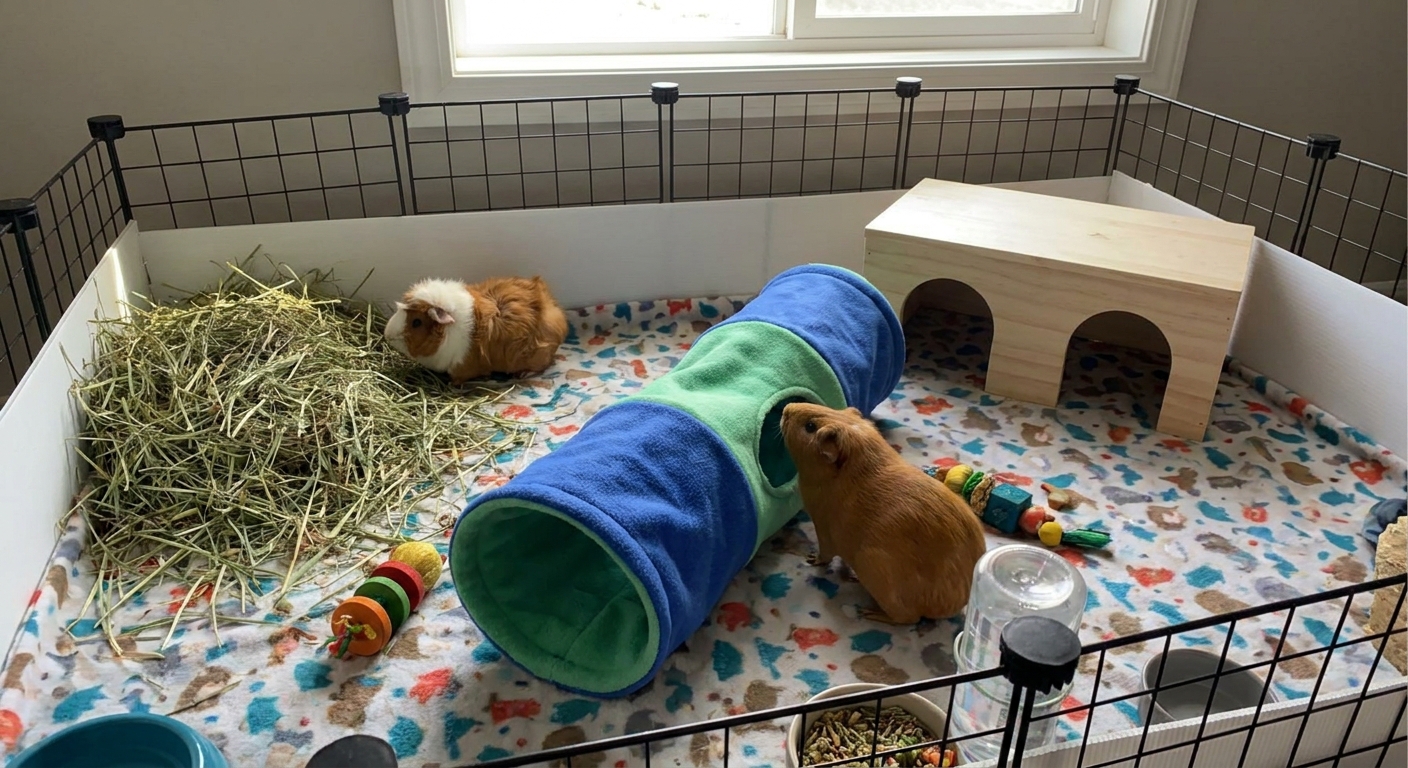
- Two guinea pigs: a 2x4 C&C footprint (about 27 in x 56 in) as a minimum exercise area, with more space whenever possible. Guinea pigs do best with long “run lanes.”
Wall height: For rabbits, use sturdy exercise panels, typically 30 to 36 inches tall. Many 24-inch x-pens are jumpable for motivated rabbits, and 42-inch panels are often a better choice for athletic jumpers. If yours is a climber or a launch-pad enthusiast, go taller or use a fully roofed option. For guinea pigs, 12 to 18 inches can work, but taller panels help keep out kids and other pets.
Flooring that works
A playpen should be easy to clean and hard to destroy. The “best” base is the one you will actually use daily.
- For rabbits (especially chewers): a low-pile rug or indoor-outdoor rug is durable and provides traction. If you need waterproofing, put a waterproof mat or tarp underneath, then fully cover the edges so there is no accessible plastic to chew.
- For guinea pigs: fleece over absorbent pads works well for floor time. If your pigs are enthusiastic pee artists, add a washable waterproof layer under the fleece.
- For hardwood protection: use a large clear chair mat (the kind for office chairs) under a rug. It is a lifesaver during litter training.
Pro tip: If your rabbit insists on pulling up corners, anchor edges with heavy ceramic tiles, a seagrass mat, or a second rug layered on top.
Create zones
The easiest way to make a playpen enriching is to stop thinking of it as one empty square. Think of it as a tiny neighborhood with destinations.
1) Hay and forage
Hay is the ultimate enrichment for rabbits and guinea pigs. Place a hay pile or hay rack in one corner, then add scatter-feeding so they have to move.
- Stuff hay into paper bags made from plain, uncoated paper (avoid heavy inks, coatings, or laminated and glossy finishes), with the top loosely folded.
- Hide a few pellets or small pieces of leafy greens inside hay “nests.”
- Use a snuffle mat made for small pets, or a shallow box filled with hay and crumpled paper.
Note: For guinea pigs, keep treats conservative and focus on hay. Their digestive systems thrive on consistency.
2) Hides and rest
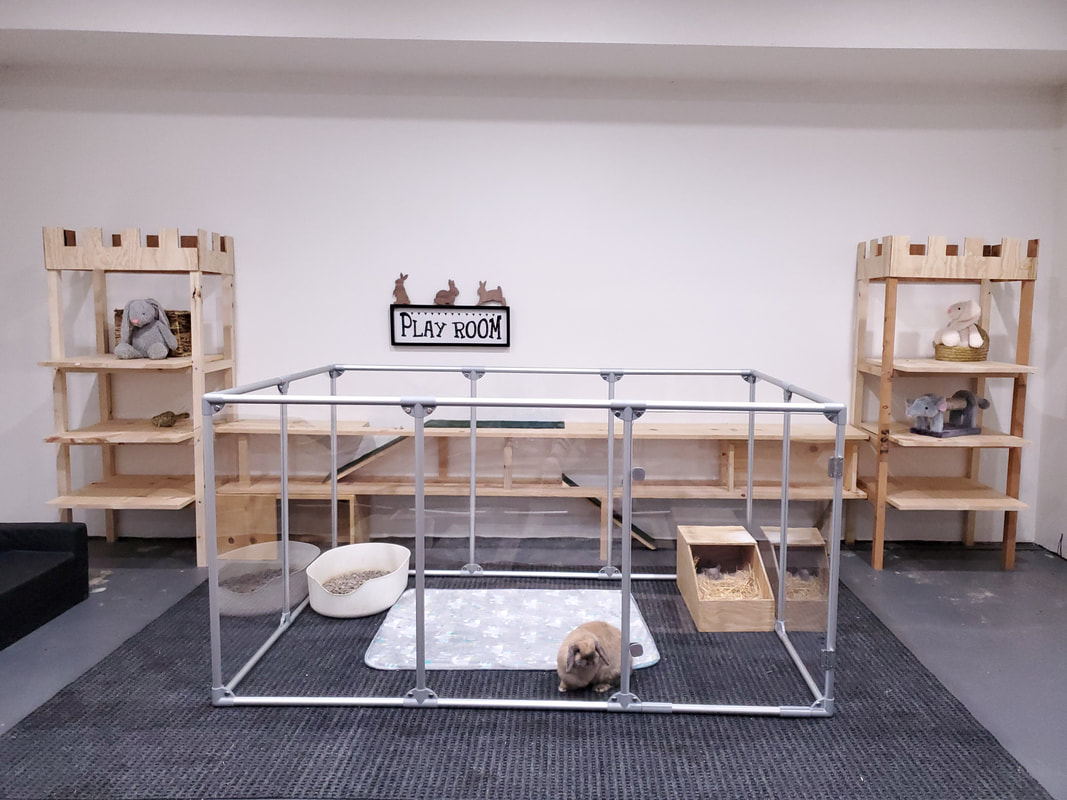
Prey animals relax when they have cover. At least one hide per animal is ideal, plus an extra in shared spaces to reduce squabbles.
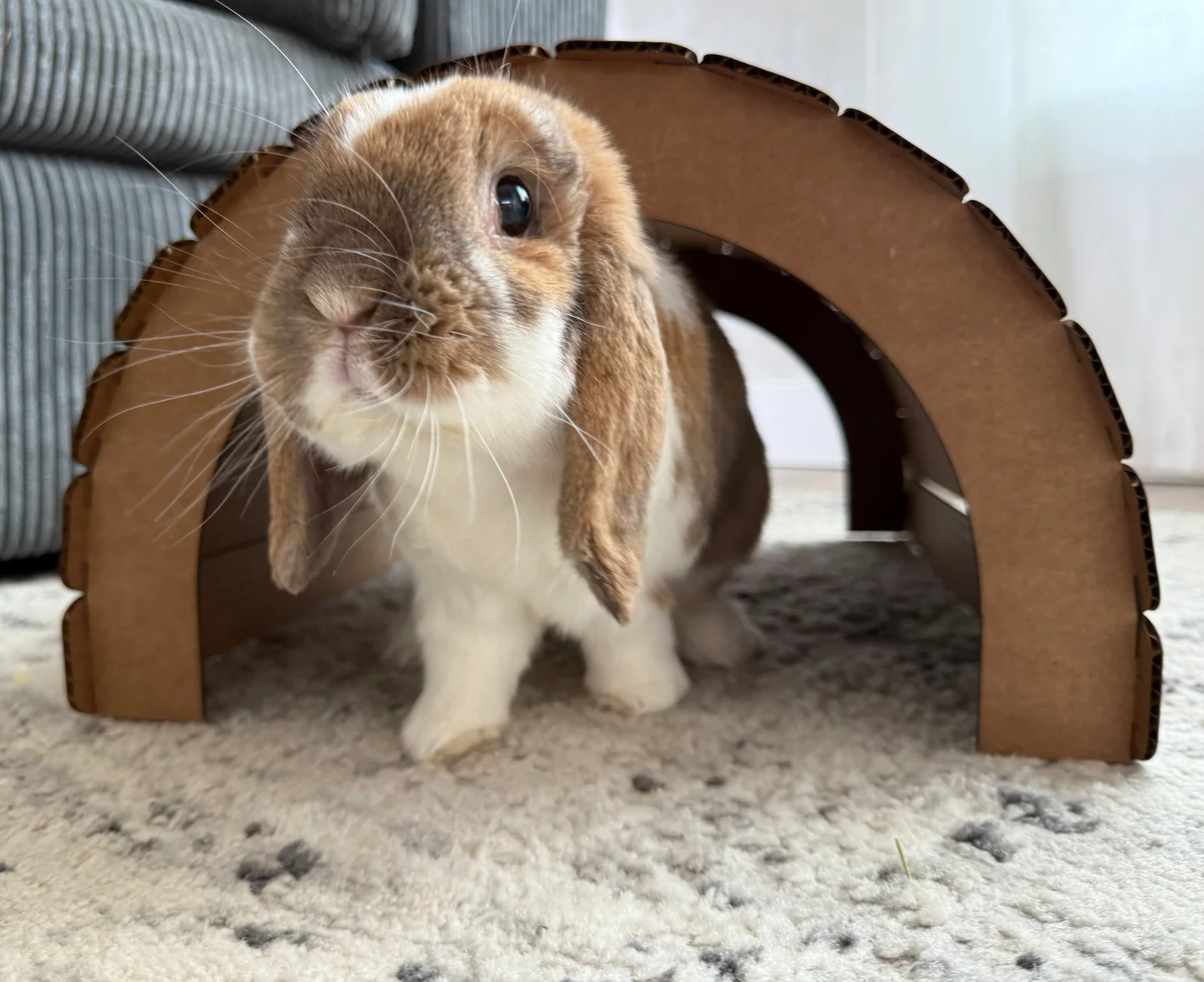
- Rabbits: cardboard “cat house” boxes, large tunnels, or a low stool they can duck under.
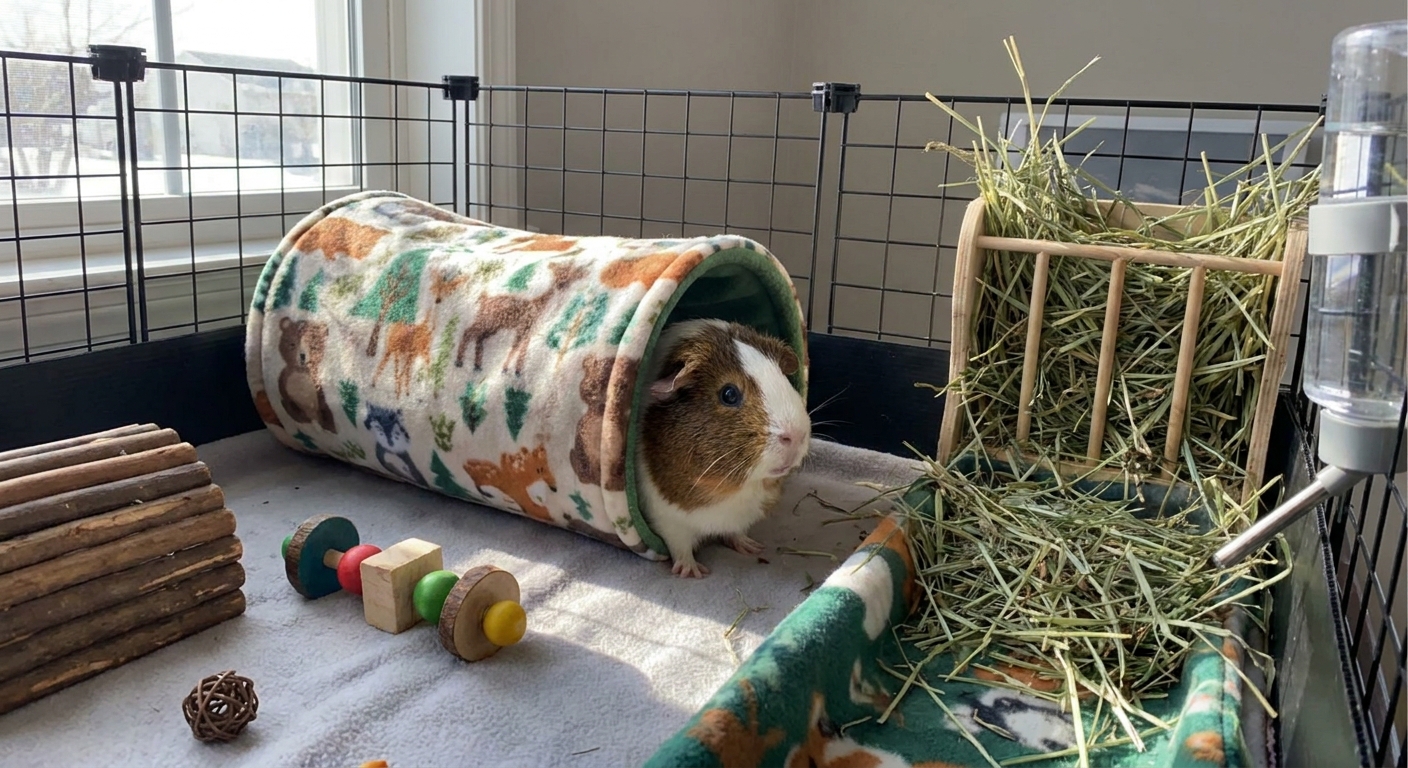
- Guinea pigs: fleece forests, wooden hideys with two exits, or bent grid tunnels.
Choose hides with two entrances whenever possible, especially for pairs. Nobody likes being trapped in a dead-end tunnel by an overly enthusiastic roommate.
3) Movement lane
Leave at least one clear “runway” so your rabbit can build speed and your guinea pig can do those adorable quick laps. Too many obstacles in the middle can make the space feel cramped.
- Push heavier items to the edges.
- Create a loop path: hide to tunnel to hay station to another hide.
- For guinea pigs, long straight paths encourage confident exploring.
4) Dig and shred
Digging is normal, satisfying behavior. Give it a legal outlet and you will save your carpet’s dignity.
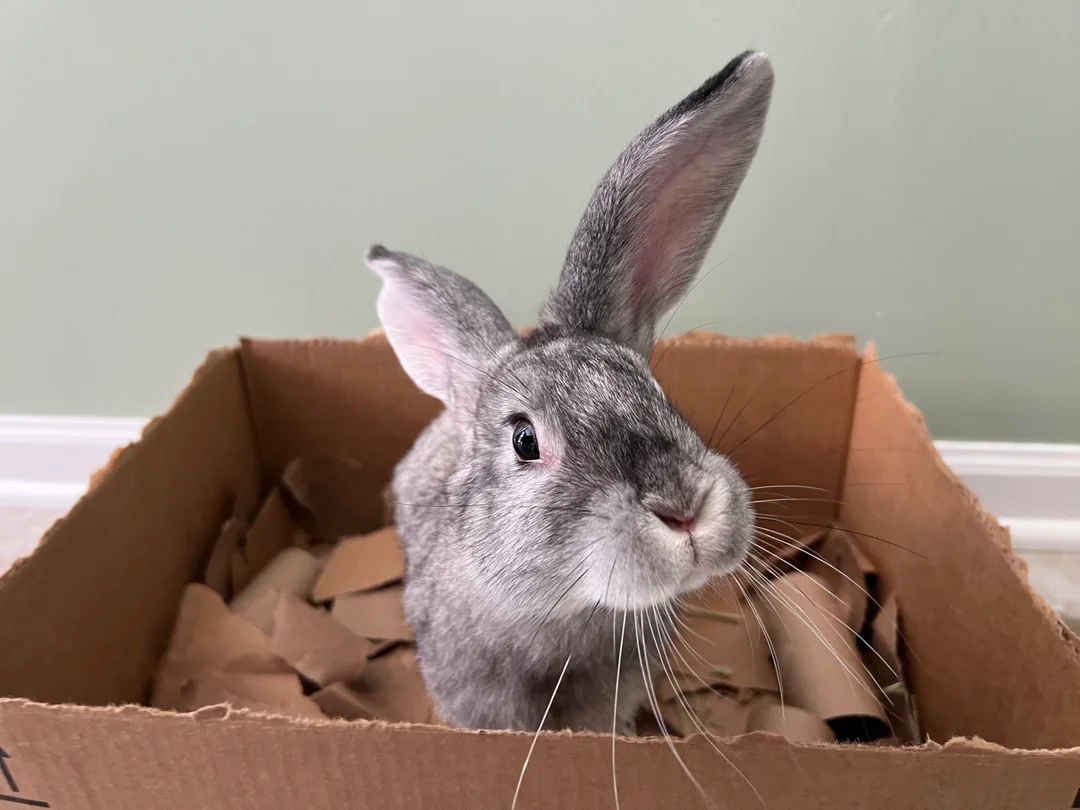
- Easy rabbit dig box: a shallow storage bin or sturdy cardboard box filled with shredded paper, torn plain cardboard, and a layer of hay. Hide a few pellets inside.
- Guinea pig “rooting” box: a low box with crumpled paper and hay. Skip anything dusty.
- What to avoid: clumping cat litter, potting soil, sand, or anything that could be inhaled or eaten in large amounts.
Tunnels and toys
Rabbits and guinea pigs explore with their mouths. That is not “being naughty.” That is their user manual. Choose items you are comfortable with them nibbling.
Great add-ins
- Cardboard tunnels (plain, uncoated, minimal ink and adhesive)
- Paper bags (handles removed, plain uncoated paper)
- Seagrass mats for chewing and digging
- Untreated willow balls, rings, and baskets
- Applewood sticks and other rabbit-safe wood chews
- Fleece “busy” items for guinea pigs like soft tunnels and cuddle cups (inspect for loose threads)
Use caution or skip
- Fabric with loops or fringe: can snag nails or be swallowed.
- Soft rubber and foam: many pets chew and ingest pieces.
- Pine or cedar shavings: aromatic oils can irritate airways. Not a playpen toy.
- Wire-bottom anything: painful feet and high injury risk.
If you are unsure: Ask yourself two questions. “If they chew this, can it break into sharp pieces?” and “If they swallow a bit, is it likely to cause a blockage?” When in doubt, stick to hay, cardboard, and known safe chews.
Setup steps
- Choose the location. Pick a low-traffic corner where they can relax, but not so isolated they feel left out.
- Lay down your base. Waterproof layer if needed (fully covered and edges protected), then rug or fleece for traction.
- Assemble the pen. Make it sturdy and square. Secure panels with clips or zip ties so it does not “accordion” when bumped.
- Add two hides. Place one at each end to create confidence and a natural route between them.
- Set up hay and water. For rabbits, a heavy water bowl is usually better than a bottle. For guinea pigs, many do well with a bottle plus a bowl, depending on mess levels.
- Place tunnels along the edges. This encourages movement while keeping the center lane open.
- Add a dig box and one chew station. Start simple. You can always add more once you see what they love.
- Finish with forage. Scatter a small portion of pellets or herbs in 5 to 10 tiny “find it” spots.
Then, sit on the floor with them. Not hovering, just being part of the room. Some rabbits will immediately redecorate. Some guinea pigs will freeze for a minute, then begin the slow, brave sniff-tour. Both are normal.
Time and routine
Consistency beats intensity. Many rabbits do best with a few hours of out-of-enclosure time daily, and guinea pigs benefit from regular floor time sessions that fit your home and their confidence level. Start with 20 to 30 minutes for shy pets and scale up, especially for young, energetic animals. Seniors and pets with arthritis may prefer shorter sessions with extra traction and more rest stops.
Species tweaks
For rabbits
- Chew-proof the perimeter. Many rabbits test baseboards, furniture legs, and the pen itself.
- Provide something to “own.” A cardboard box with two doors or a low platform can become a confidence anchor.
- Watch jumping and climbing. Some rabbits will use a hide as a launch pad. If you see that behavior, lower the “step stools” or increase pen height.
For guinea pigs
- Prioritize cover. Add more hides than you think you need. A guinea pig who feels safe moves more.
- Avoid heights and jumps. For floor-time playpens, keep everything on one level. In permanent habitats, very low, wide platforms and gentle ramps can work for some pigs, but for playpens, simpler is usually safer.
- Offer frequent hay stations. A couple of mini hay piles encourage wandering and reduce resource guarding.
Cleaning made easy
Enrichment is easier to maintain when cleanup is quick.
- Daily: shake out rugs or fleece, sweep up hay, refresh water bowls, and remove any damp spots.
- Every few days: swap tunnels or cardboard pieces that are getting soft or heavily soiled.
- Weekly: wash textiles, wipe hard surfaces with a pet-safe cleaner, and rotate toys so the space feels “new” again.
Rotation trick: Keep a small bin of tunnels and chews and only put out a few at a time. The “new toy” effect works on rabbits and guinea pigs just as well as it works on toddlers.
Common issues
“My rabbit only sits in one corner.”
Start with more cover. Add a hide near that corner, then place hay a little farther away so they have a reason to move. Confidence comes first, cardio comes later.
“My guinea pigs seem scared of the tunnel.”
Try a wider tunnel or a fleece tunnel with a more open feel. Sprinkle hay through it like a trail, and let them approach at their own pace.
“Everything turns into a litter box.”
Rabbits often choose one favorite corner. Place a litter box there and reward good aim. For guinea pigs, accept that floor time can be messy, then choose washable layers and do quick spot cleans.
“They chew the pen bars.”
Bar chewing is often boredom or frustration. Add more foraging tasks, increase playtime length if possible, and ensure their main housing is spacious and enriching too. If it continues, consider a different barrier style or add a cardboard bumper along the inside edge where they chew.
Quick checklist
- Secure pen with safe height and no gaps
- Traction flooring (rug, fleece, mats)
- Hay available and at least one forage activity
- At least one hide per pet, ideally with two exits
- A tunnel or covered path
- A legal dig or shred option
- Chew-safe items you are comfortable replacing
- Fresh water and a comfortable room temperature
If you have those pieces, you are not just offering “exercise time.” You are giving your rabbit or guinea pig a daily adventure that supports their body, brain, and sense of safety. And yes, it also makes them pleasantly tired, which is one of my favorite forms of enrichment.