What to clean with (and what to skip) for rabbit and guinea pig habitats: gentle commercial options, DIY vinegar recipes, and how to use enzyme cleaners safely.
Rabbit Cove
Choosing an Air Purifier for Hay Dust and Dander
Hay dust and pet dander can make rabbit and guinea pig homes sneezy. Learn how to choose a HEPA air purifier, size it by CADR, place it safely, and maintain it for better indoor air quality.

Chloe Miller
Chloe Miller is a dedicated small-pet enthusiast and experienced foster parent who has spent over a decade caring for rabbits and guinea pigs. Through her hands-on work with local animal rescues, she shares practical, compassionate advice on housing, nutrition, and daily enrichment to help small pets thrive. When she isn't designing custom indoor enclosures, Chloe can be found coaxing shy rescues out of their shells with fresh cilantro.
Published
October 22, 2026
Updated
October 22, 2026
If you share your home with rabbits or guinea pigs, you already know the truth: hay is non-negotiable, and hay dust is… enthusiastic. Add normal pet dander plus shed fur and you can end up with itchy eyes, a tickly throat, and that fine layer of “why is everything beige?” on nearby surfaces.
A good air purifier can make a real difference for humans and for small pets, especially in homes where the hay station lives indoors. The key is choosing the right kind of purifier, sizing it correctly, and using it in a way that is safe around curious noses and determined nibblers.
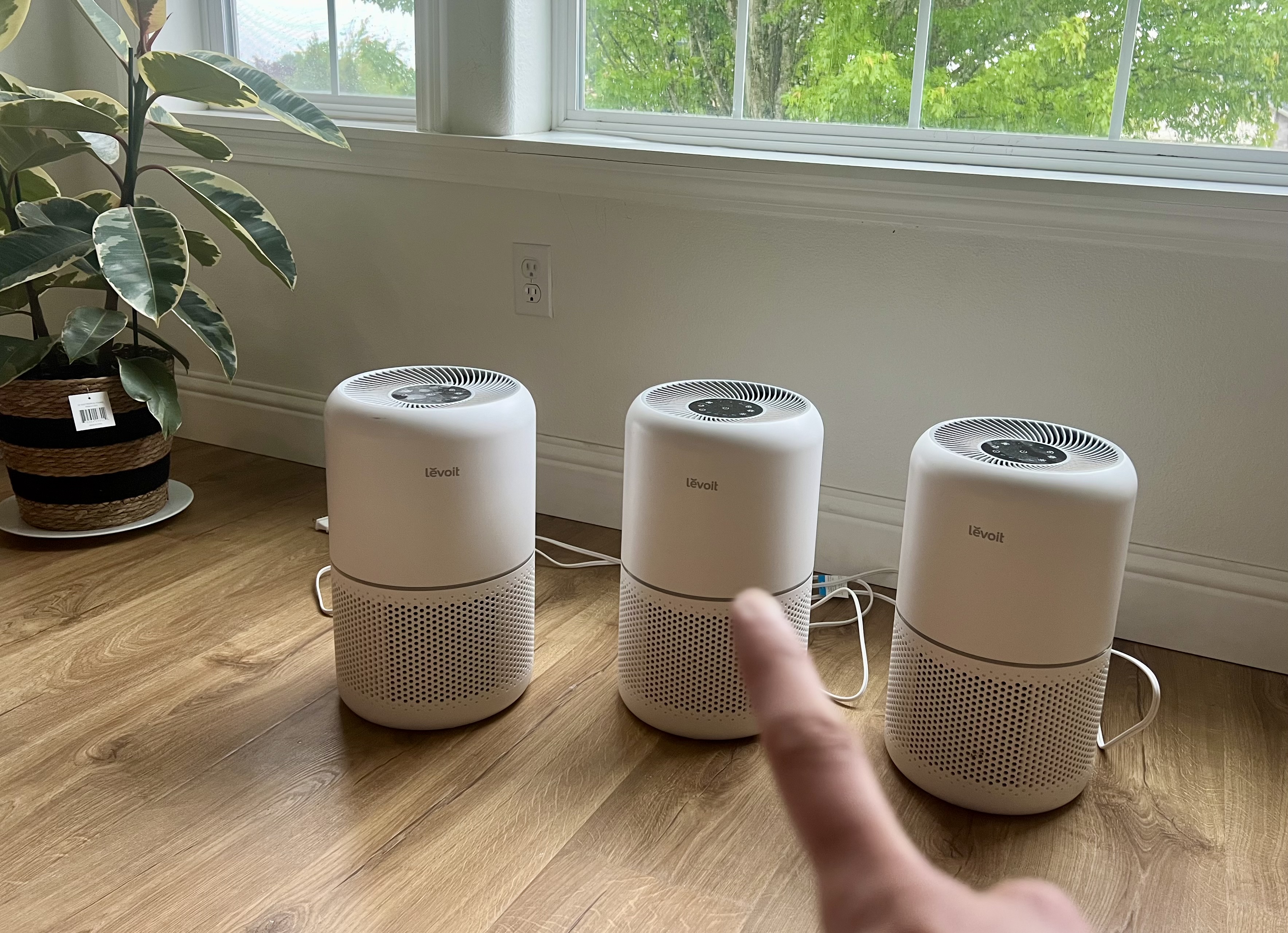
What an air purifier can and cannot do
Air purifiers help by pulling room air through filters that capture particles. For rabbit and guinea pig households, the most relevant particles are:
- Hay dust (fine plant particles that get kicked up during refills and enthusiastic burrowing)
- Dander (tiny skin flakes)
- Fur (larger particles, often caught by pre-filters)
They are not a replacement for good husbandry. You will still need regular litter box changes, spot-cleaning, and smart hay storage. And most purifiers do not remove gases well unless they include a meaningful amount of activated carbon. Thin “carbon sheets” can take the edge off mild smells, but deeper carbon beds or canisters are what you want for stronger odor control.
Even then, an air purifier is not a fix for ammonia odor from soiled litter. If you smell it, cleaning and better litter habits come first.
The must-have: true HEPA
For hay dust and dander, look for a purifier that uses true HEPA filtration, but read the fine print. “True HEPA” is not regulated wording everywhere, so I like to see one of these specifics:
- H13 or H14 (EN 1822 / ISO 29463), or
- An explicit claim like 99.97% at 0.3 microns (a common HEPA benchmark in the U.S.)
In real-life terms, this usually means fewer floaty specks in sunbeams and less “hay sneeze” when you walk past the feeding area.
What to look for on the product page
- HEPA details (H13/H14 or a clearly stated efficiency spec).
- A model that lists CADR (Clean Air Delivery Rate) for smoke, dust, and pollen, or at least one CADR value plus a recommended room size.
- Replacement filters that are easy to find and not wildly expensive.
What to treat as marketing fluff
- “HEPA-like”, “HEPA-type”, or “HEPA-style”. These can be better than nothing, but they are not the same as HEPA.
- Ionizers or plasma features that do not clearly state ozone-free operation and do not let you fully disable them.
Skip ozone and be cautious with ionizers
Rabbits and guinea pigs can be sensitive to airborne irritants, and many vets recommend avoiding ozone exposure around small animals. For that reason, I recommend skipping purifiers that intentionally generate ozone or have ionizing features you cannot fully disable. Some machines advertise “fresh air” or “activated oxygen” style wording. That can be a red flag.
If you are considering a unit with an ionizer, choose one where the ionizer is off by default, can be turned off permanently, and where the manufacturer clearly states it does not produce harmful ozone.
How to size a purifier
Most people underbuy and then wonder why nothing changes. Sizing matters more than fancy features.
CADR, ACH, and an easy formula
CADR tells you how much filtered air a purifier delivers (usually in cubic feet per minute). ACH is air changes per hour, or how many times the purifier can cycle the room’s air in an hour.
For allergy relief in a hay zone, many people do well around 4 to 6 ACH, depending on sensitivity, how drafty the room is, and how much source control you are doing.
Here is the quick math:
Target CADR (cfm) ≈ Room volume (ft³) × Desired ACH ÷ 60
Example: A 12×12 ft room with 8 ft ceilings is 1,152 ft³. If you want 5 ACH, 1,152 × 5 ÷ 60 ≈ 96 cfm. In practice, going a bit higher gives you wiggle room for real-life conditions and lets you run a quieter setting.
If your rabbits or guinea pigs live in an open-concept space, treat the “room” as the whole connected area, not just the enclosure corner. When in doubt, buy a size up and run it on a quieter, medium setting most of the day.
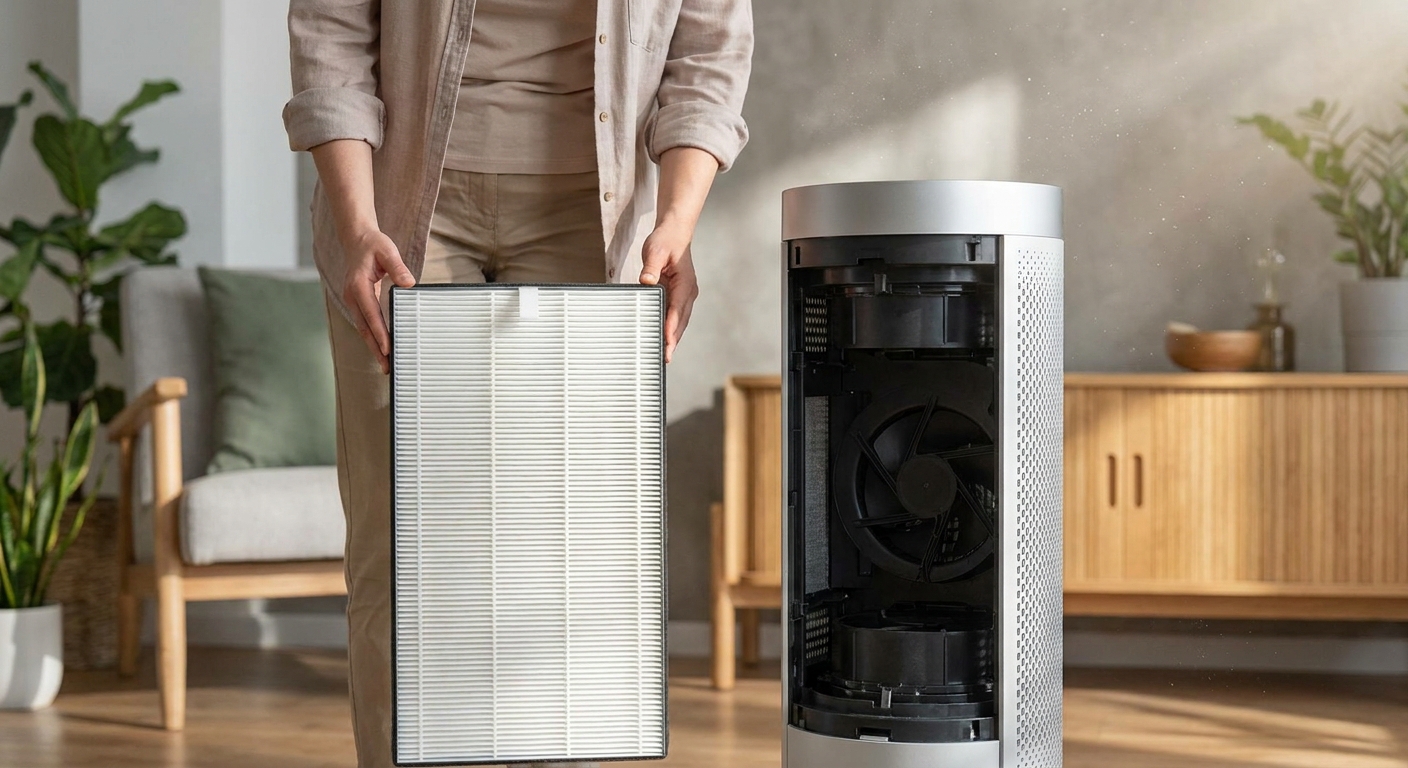
Filters that matter
Washable pre-filter (highly recommended)
Hay dust includes bigger particles that will clog a purifier faster than typical household dust. A washable pre-filter catches the fuzz and chaff early, extending the life of the main HEPA filter.
If your model uses a thin mesh sleeve as the pre-filter, plan to vacuum it gently every week or two, and wash it if the manufacturer allows.
HEPA main filter
This is the workhorse for fine particles like dander and the smaller fraction of hay dust. Replacement cost and availability matter here because you will be changing it regularly in a hay-heavy home.
Activated carbon (nice to have, with realistic expectations)
Carbon helps with some odors and VOCs, but only if there is enough of it. A token “carbon layer” can reduce light smells, but it will not fix a litter box that needs attention. Think of carbon as bonus support, not the main solution.
Placement
Air purifiers work best when they can pull in dusty air before it spreads through the whole house, but they also need to be safe around pets.
Good placement options
- Near the hay station, a few feet away, with plenty of clearance on all sides per the manual.
- In the room where hay is stored if you keep bales or big boxes indoors.
- In the bedroom if your allergies spike at night. Many people do best with one unit near the pets and a smaller one where they sleep.
Keep it bunny- and pig-safe
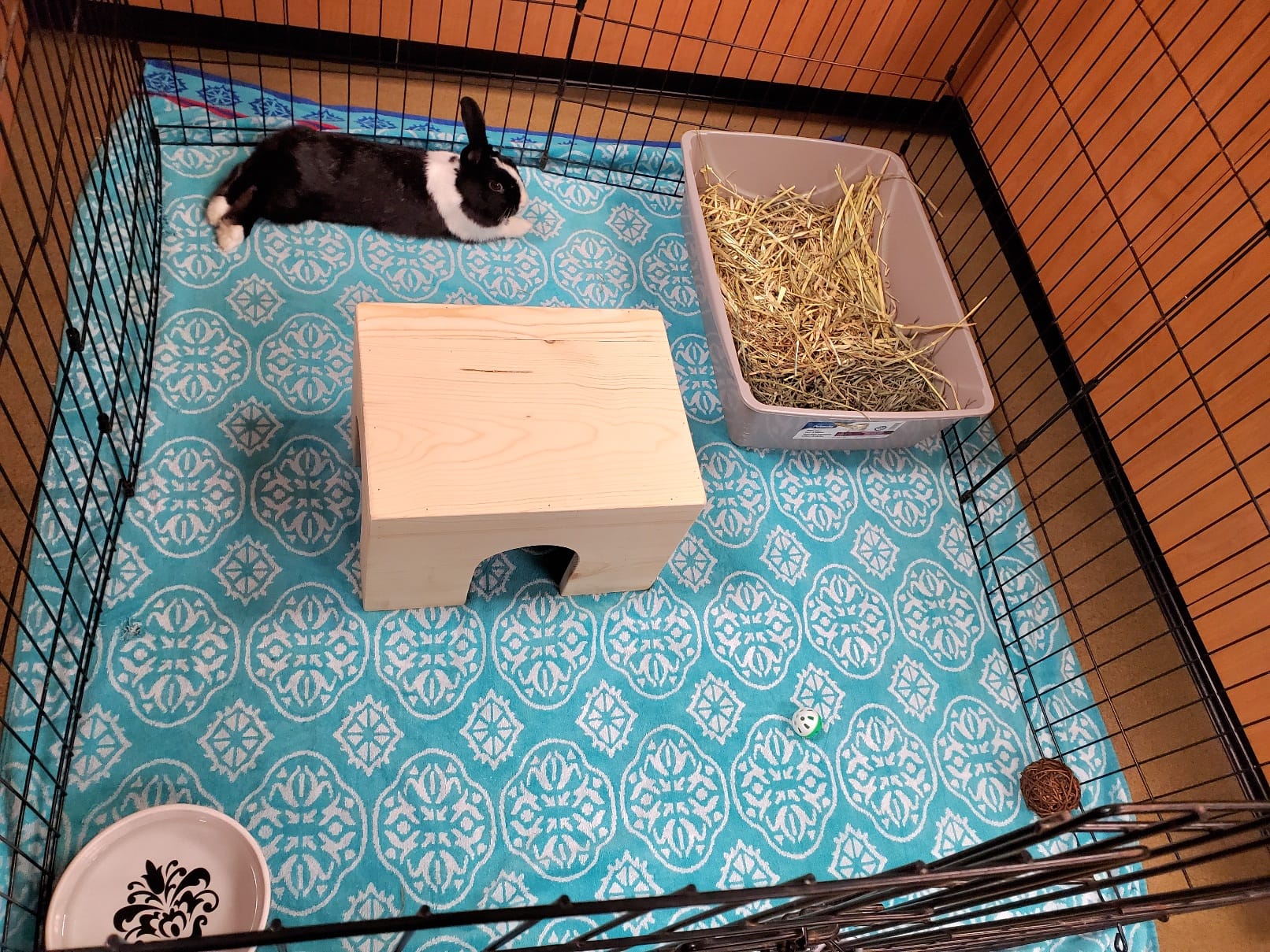
- Prevent chewing. If your pets are free-roam, place the purifier behind an exercise pen panel or on a sturdy surface where cords are not accessible.
- Avoid blowing directly into the enclosure. Gentle circulation is fine, but a constant draft can be uncomfortable.
- Do not put it inside the cage. Purifiers need airflow and clearance, and you do not want a pet climbing on it or blocking an intake.
Noise and real life
Many purifiers only reach their best CADR on higher settings, which can be loud. If you will not run it because it is annoying, it is not the right model for your home.
- Look for a quiet low and medium setting you can tolerate for long stretches.
- Auto mode can be helpful, but sensors may not respond consistently to every kind of pet and hay particle. If you use auto mode, watch how it behaves during and after a hay refill and adjust if it stays too low.
- Sleep mode is great for bedrooms, but check whether it still moves enough air to matter.
Maintenance that keeps it working
In a rabbit or guinea pig home, maintenance makes or breaks the results. The goal is to keep airflow strong so the purifier can actually cycle the room air.
My practical schedule
- Weekly: Vacuum the intake grille and pre-filter area (with the unit off). If the pre-filter is washable, clean it as directed and let it dry fully before reinstalling.
- Monthly: Check the main filter for visible discoloration and dust loading. Many units have a timer light that is not perfectly tailored to hay dust, so use your eyes too.
- Every 3 to 12 months: Replace the HEPA filter as needed. Homes with heavy hay use often land on the shorter end.
Tip from someone who has cleaned more hay corners than I can count: keep a small handheld vacuum near the hay storage bin and do a quick pass after refilling racks. Less airborne dust means the purifier spends its power cleaning the room, not fighting a dust cloud you just created.
Reduce hay dust at the source
The cleanest air comes from a one-two punch: better hay handling plus HEPA filtration.
- Choose lower-dust hay when possible. Second-cutting timothy is often a bit softer and less stemmy than first-cutting. Orchard grass can be gentler for some allergy-prone humans. Quality varies by brand and batch.
- Use a hay bag or covered rack. Containing the “excavation” reduces how much chaff becomes airborne.
- Store hay in a closed bin with a lid rather than an open cardboard box.
- Refill slowly. It sounds silly, but dumping hay in fast is basically making your own dust storm.
- For very sensitive humans: Consider a well-fitting mask during hay refills and shake-outs. Some allergies flare most during handling, not just from what is floating afterward.
Also: keep hay dry, discard anything that smells musty, and use normal ventilation when weather allows. Irritation is often a mix of particles, humidity, and whatever else is going on in the room.
One big unit or two small ones?
If you have pets in one primary room, a single appropriately sized unit can be enough. If hay is stored in one area but pets live in another, or if allergies hit hardest at night, two smaller units can be more effective.
- One larger unit: often better CADR per dollar and fewer filters to buy.
- Two smaller units: better coverage across rooms and more flexibility if you rearrange enclosures.
Quick checklist
- HEPA details are clear (H13/H14 or a stated efficiency claim)
- CADR listed and appropriate for your room size and ACH goal
- Washable or sturdy pre-filter for hay dust
- Ionizer and ozone-generating functions avoided or fully disabled
- Replacement filters are affordable and consistently available
- Noise level on the setting you will actually use is tolerable
- Safe placement plan that prevents chewing and cord access
- No essential oils added to the purifier (not a good mix for small pet lungs)
FAQ
Will a HEPA purifier help with hay allergies?
It often helps significantly, especially with the fine dust and plant particles that float in the air after refills. It will not remove allergens that are already settled into fabrics and carpets, so pair it with regular vacuuming and a contained hay setup. If you react most during handling, a mask during refills can be a game-changer.
Is it safe to run an air purifier around rabbits and guinea pigs?
Generally yes, if it is a standard mechanical filtration unit with HEPA and no ozone-generating feature. Place it so pets cannot chew cords or block intakes, and avoid aiming airflow directly into the enclosure.
Do I need carbon filters for odor?
Carbon can help a little, but it is not a substitute for cleaning. If you smell ammonia, increase litter box changes, review litter choice, and improve ventilation. Consider carbon as extra support, not the main fix.
How many hours a day should I run it?
For allergy relief, longer is better. Many households run purifiers 24/7 on a low or medium setting, then bump to high for 30 to 60 minutes after hay refills or sweeping.