Proven spot-cleaning routines, deep-cleaning schedules, and pet-safe cleaning products that control odors without irritating sensitive noses.
Rabbit Cove
Litter Box Setup for Rabbits and Guinea Pigs
Set up a litter box your rabbit or guinea pig will actually use. Learn which pan to choose, what litter is safe, how to pair it with hay, and where to place it for fast, reliable potty habits.

Chloe Miller
Chloe Miller is a dedicated small-pet enthusiast and experienced foster parent who has spent over a decade caring for rabbits and guinea pigs. Through her hands-on work with local animal rescues, she shares practical, compassionate advice on housing, nutrition, and daily enrichment to help small pets thrive. When she isn't designing custom indoor enclosures, Chloe can be found coaxing shy rescues out of their shells with fresh cilantro.
Published
October 22, 2026
Updated
October 22, 2026
If you want reliable litter box habits, your setup has to match what rabbits and guinea pigs already do naturally: graze and poop at the same time, usually in a preferred corner. The good news is you don't need fancy gadgets or harsh training. You need the right pan, safe litter, easy hay access, and smart placement. That's the whole “secret.”
Step 1: Pick the right litter pan
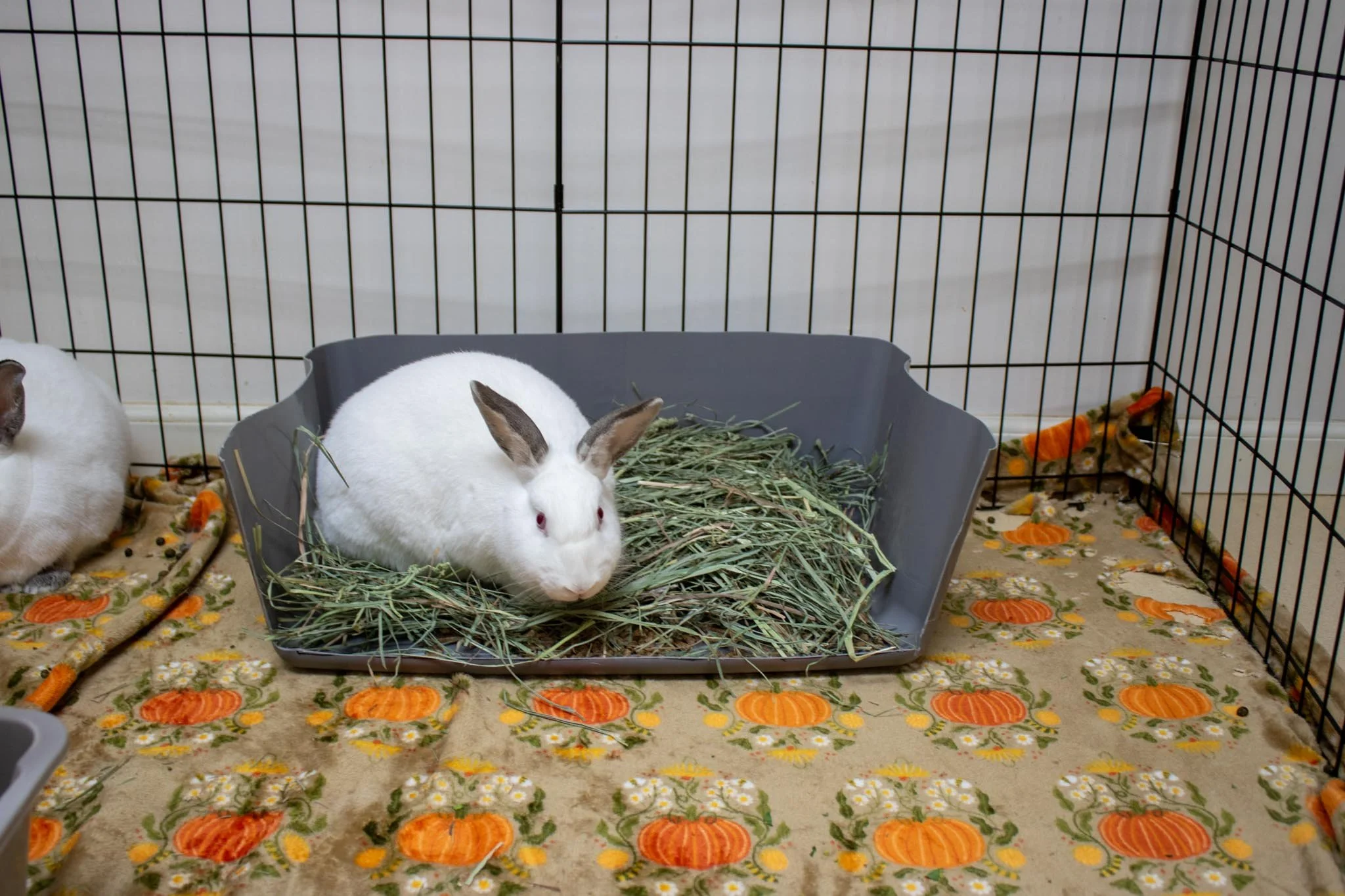
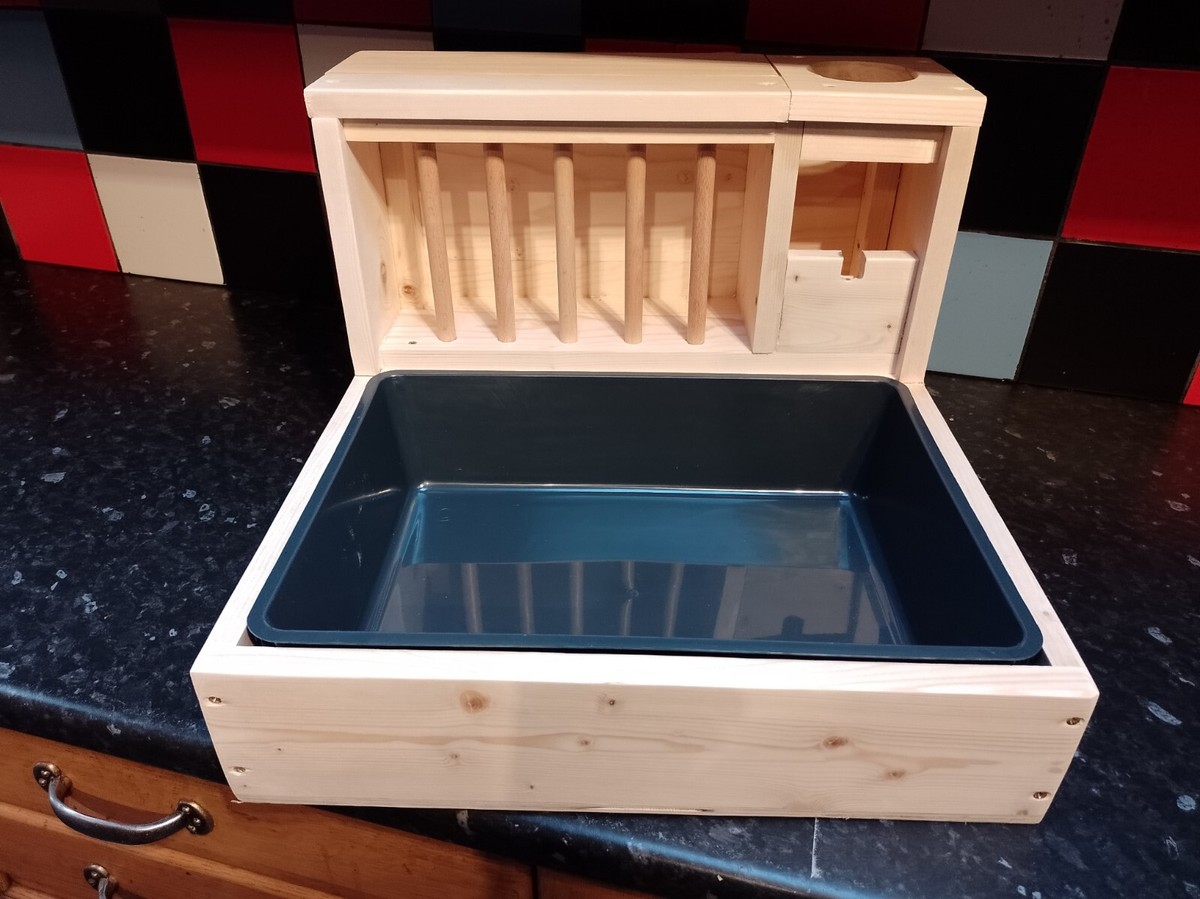
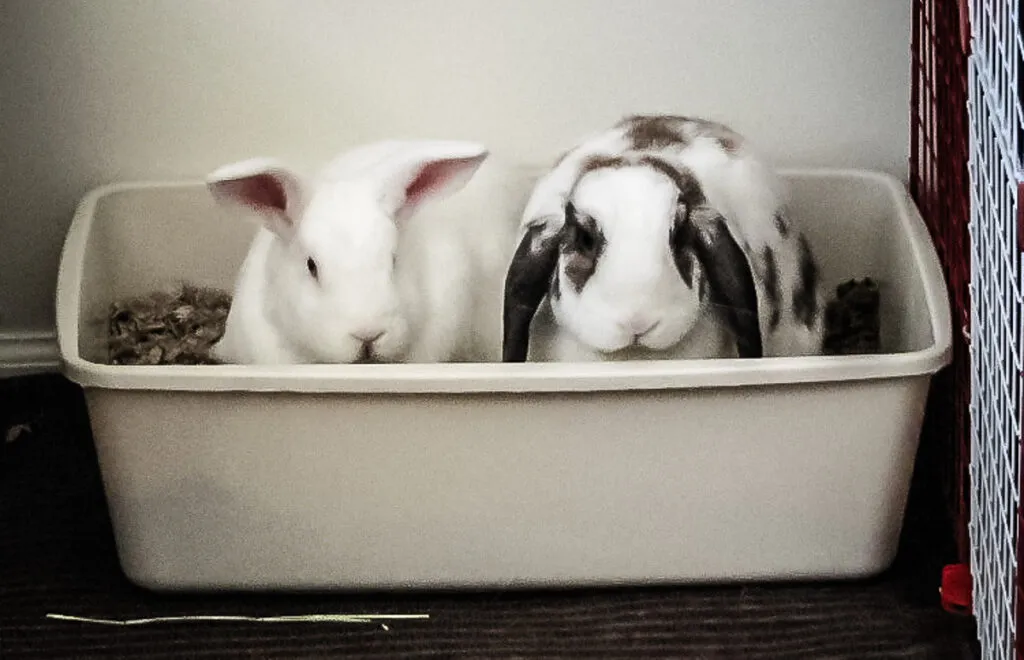
Your litter box should be easy to enter, hard to tip, and big enough that your pet can sit comfortably without balancing on the edge. When a pan is too small, you get the classic problem: the back half is in, the front half is out, and somehow all the pee lands on the floor.
For rabbits
- Size: Choose a pan large enough for a full turn-around and a relaxed loaf. Many medium rabbits do best with a roomy cat litter pan. Most corner pans are simply too small for medium and large rabbits.
- Height: Low entry helps seniors, arthritic rabbits, or anyone who hates stepping over a tall lip.
- Stability: Heavier plastic pans are harder to fling around.
For guinea pigs
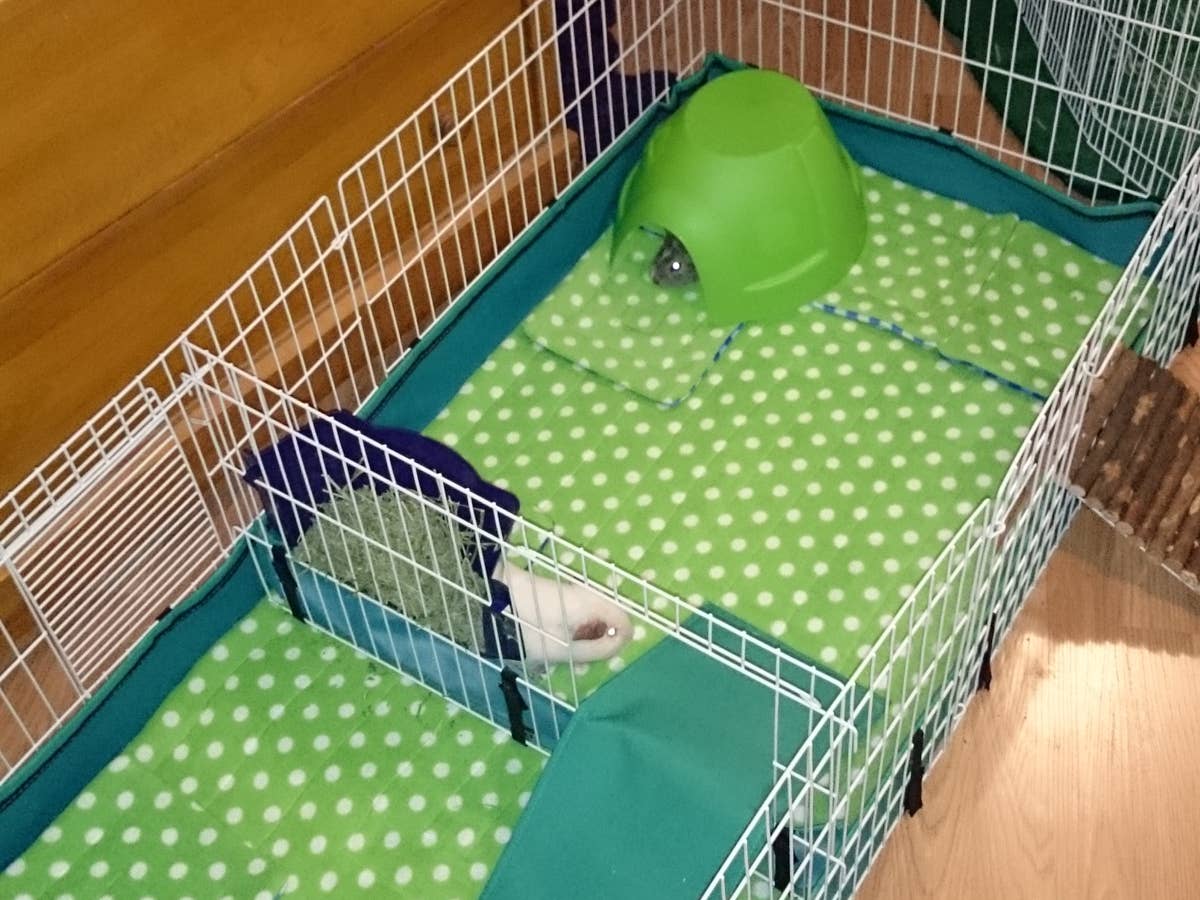
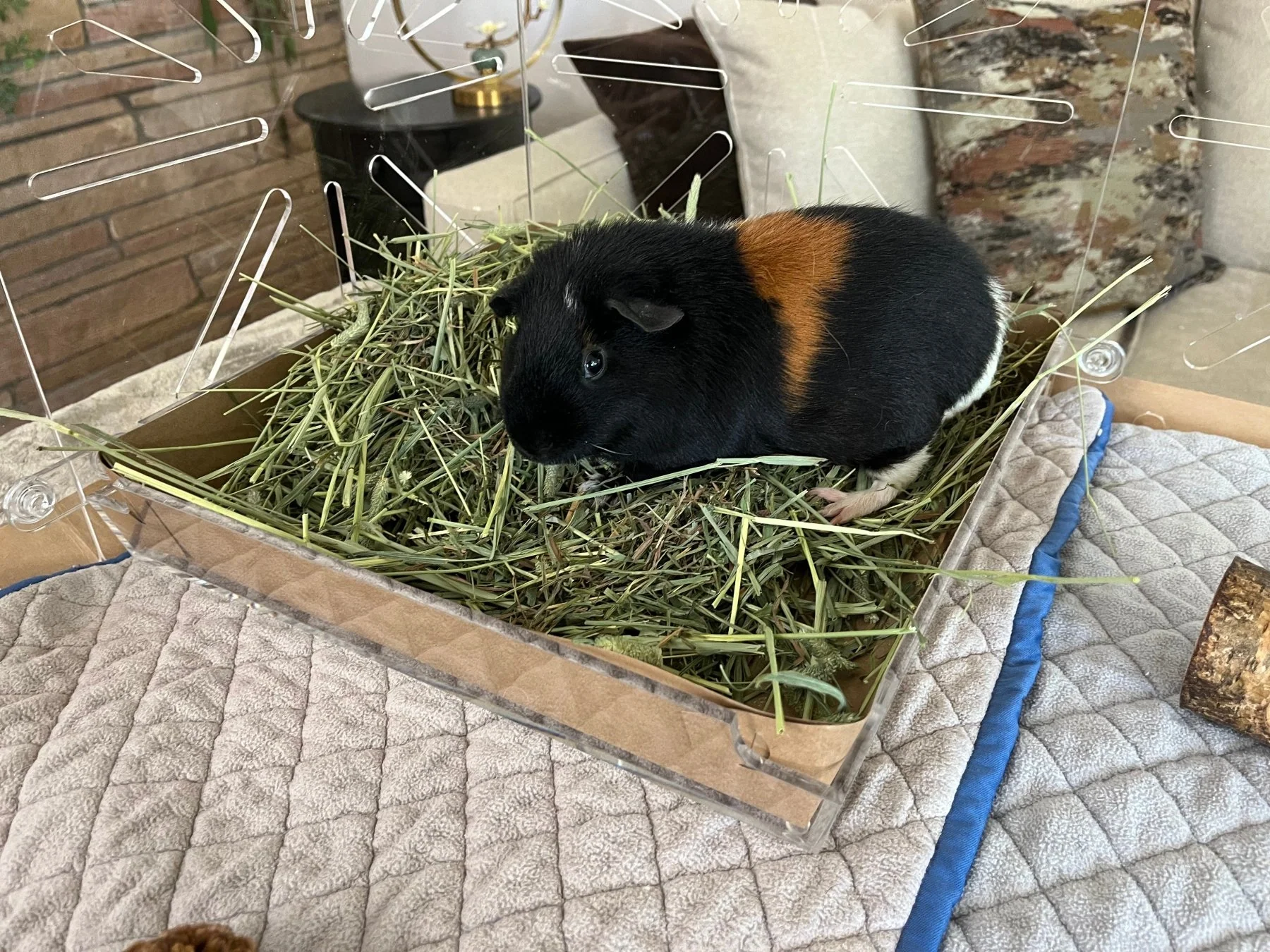
Some guinea pigs use a “kitchen area” more reliably than a traditional litter box. If you're setting up a pan anyway, go for a low, wide tray that fits under or beside a hay pile.
- Size: Wide and shallow beats small and deep. Piggies like room for two to snack together.
- Accessibility: A very low edge prevents awkward climbing and reduces mess.
Avoid wire grates. They can trap toes and put pressure on sensitive feet. Comfort drives consistency.
Step 2: Choose safe, absorbent litter
Rabbits and guinea pigs spend a lot of time close to their litter area, so safety matters. You want something absorbent for urine odor control, low dust for delicate airways, and unlikely to cause harm if a curious nibbler samples a little. (Still, discourage eating litter by keeping hay abundant and boredom low.)
Good options
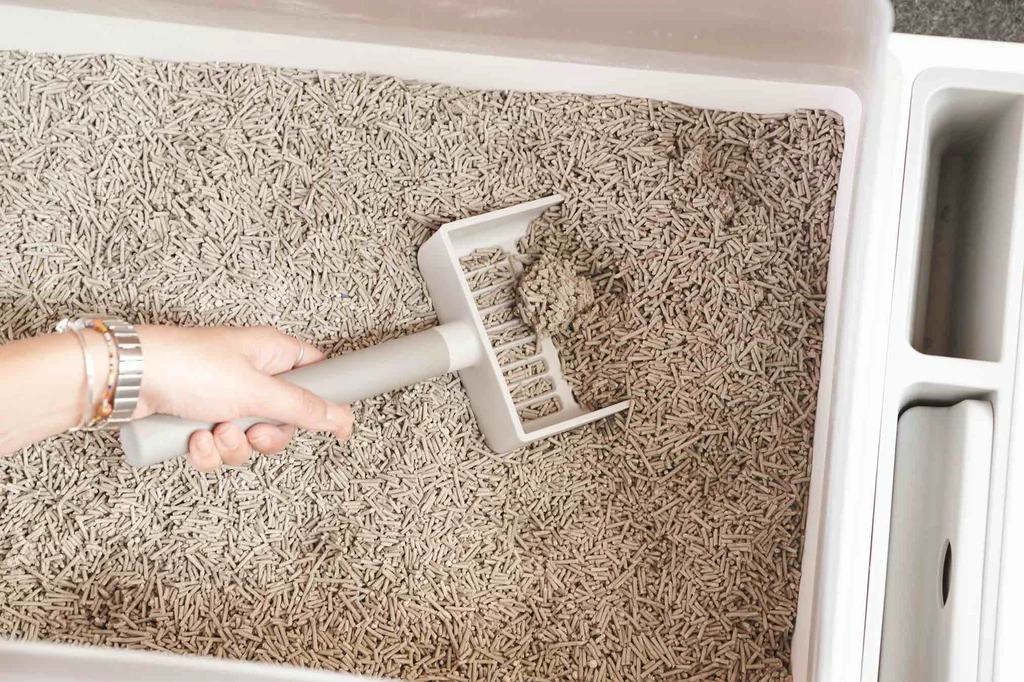
- Paper-based pellets (compressed paper): absorbent and generally low dust.
- Aspen shavings (kiln-dried): a common choice that’s typically better tolerated than aromatic softwoods.
- Kiln-dried pine (only kiln-dried, unscented): used by many owners and rescues. If you notice irritation or strong odor, switch to paper or aspen.
- Fleece or towels for a “kitchen zone” (especially for guinea pigs): works well when changed often and paired with an absorbent layer underneath (like an absorbent pad).
What to skip
- Clumping clay litter: not safe if ingested and can be very dusty.
- Silica crystal litter: often dusty, and ingestion is a risk.
- Scented litters: added fragrances can irritate sensitive noses.
- Clumping plant litters (corn, wheat, cassava, etc.): can clump when wet and aren’t a great choice for animals that might nibble.
- Cedar and other strongly aromatic softwoods: commonly irritating for small pets.
How deep? For rabbits, a thin, even layer is usually enough. Too deep encourages digging and can spill over the edges. For guinea pigs in a kitchen tray, you may need a bit more absorbency to keep feet dry, either a slightly thicker layer or an absorbent underlayer. For rabbits that love to redecorate, less is often more.
Step 3: Add hay on purpose
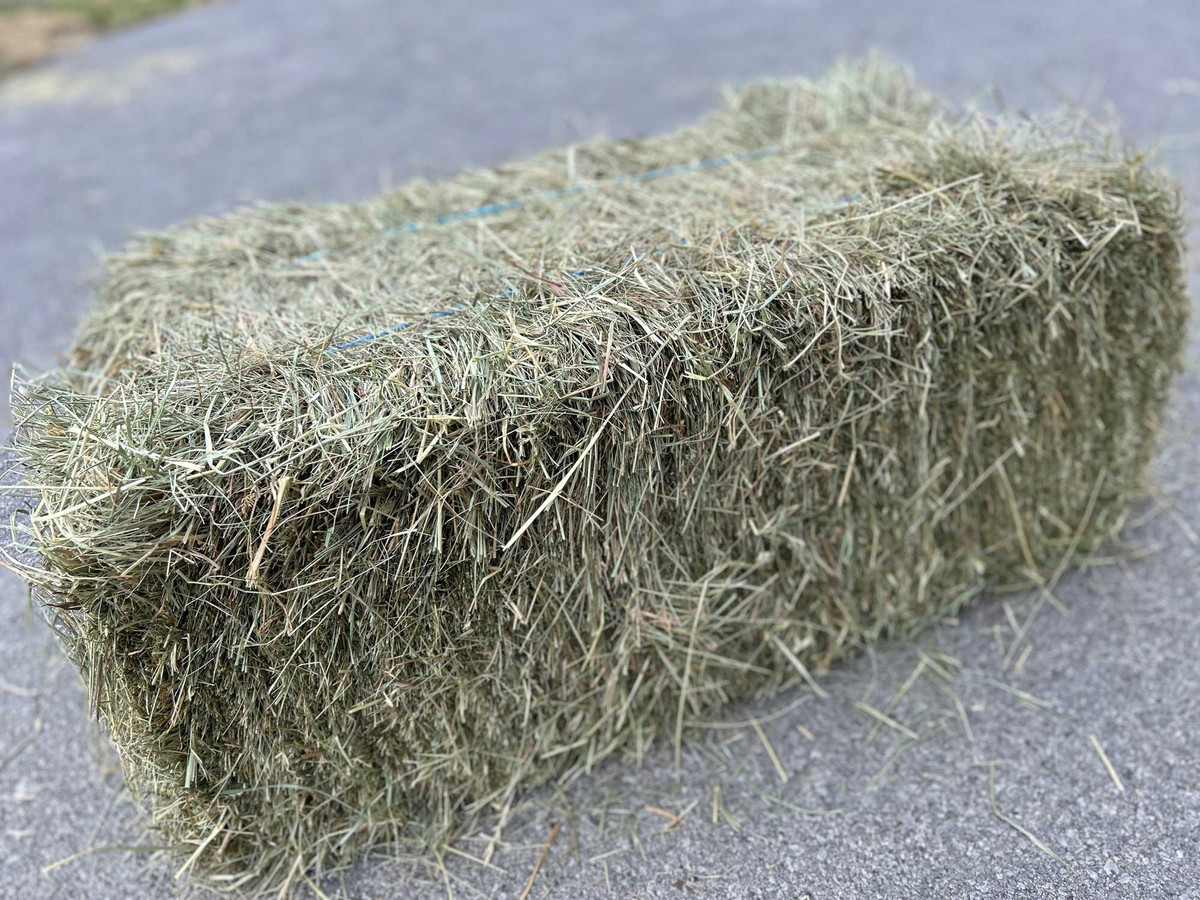
If there's one trick that makes potty training feel almost unfair, this is it: put hay directly next to or above the litter pan. Rabbits and guinea pigs graze constantly, and many will poop while they eat. You're not teaching a weird new behavior. You're placing the bathroom exactly where the snack bar is.
Best ways to offer hay at the box
- Hay rack mounted above the pan: keeps hay cleaner and draws them into the box.
- Hay in a basket or bin attached to the side: easy to refill and encourages “feet in the box” grazing.
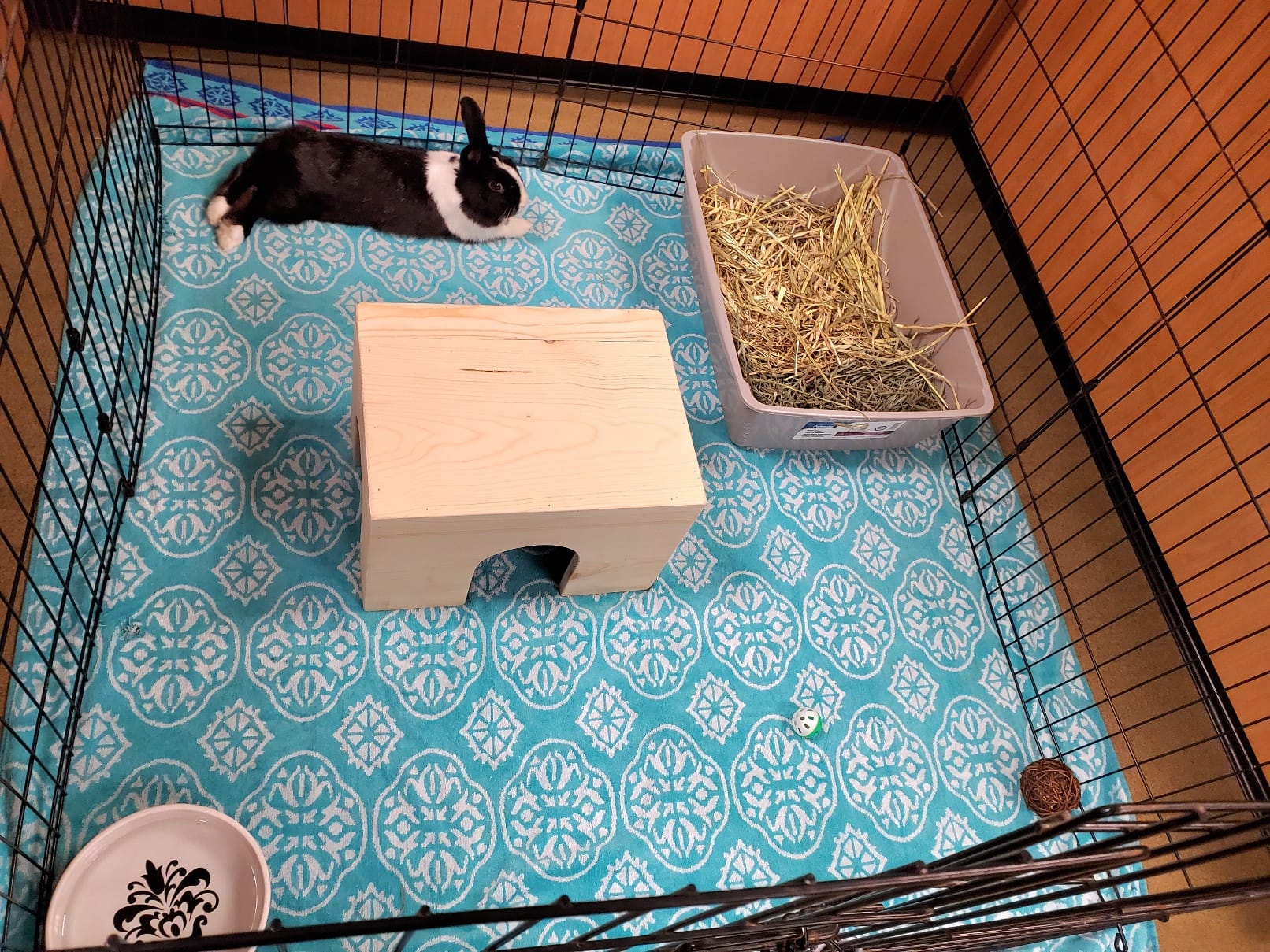
- A generous hay pile at one end of a large pan: simple and very effective, especially during training.
Tip from my foster room: If your rabbit insists on yanking hay out and spreading it like festive confetti, don't take it personally. Use a larger pan and accept that some hay will end up in the box. That's still a win.
Step 4: Put it where they go
Strategic placement is the difference between “my rabbit isn't getting it” and “oh wow, this is working.” Your pet already has a preferred potty corner, even if it's currently the worst possible corner for you.
How to pick the spot
- Find the chosen corner: consistent puddles or clustered droppings tell you where they want to go.
- Start there: put the litter box in that exact location first, even if it isn't your dream layout.
- For guinea pigs: place the “kitchen” where they naturally hang out and eat, typically a sheltered side of the enclosure.
If you're using a large pen or free-roam space, start with one box in the main corner they use most. Once habits are solid, you can add a second box in a secondary area they frequent.
Step 5: Make it the easy choice
Litter training is easier when the “right choice” is effortless.
- Make the box the comfiest bathroom spot: stable footing, roomy pan, fresh hay.
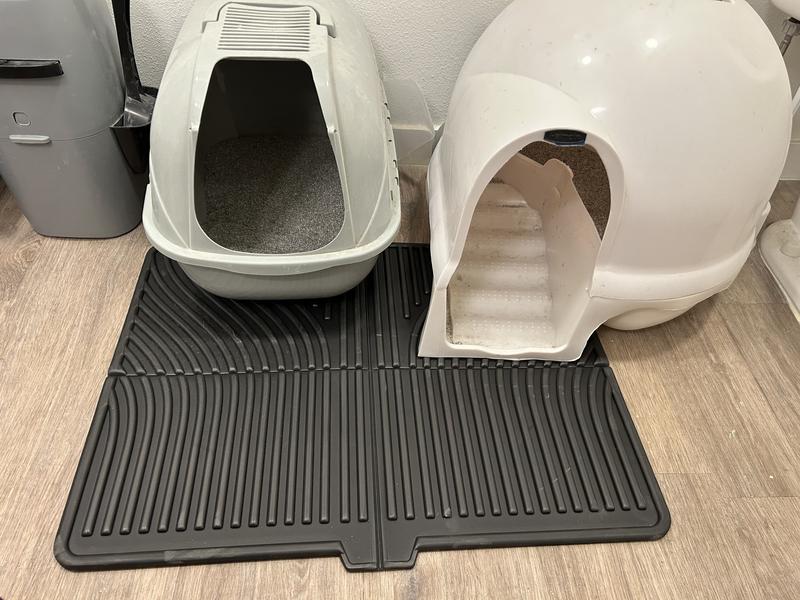
- Use a waterproof mat under the pan: it saves your floor during the learning phase and catches kicked litter.
- Make nearby flooring less tempting: if there's a plush rug next to the box, many rabbits will pick the rug. Block access temporarily or cover it with a washable layer.
For rabbits that like to back up to pee, a higher back wall, or placing the pan snugly into a corner, helps keep urine inside the box.
Step 6: Reinforce with calm cleanup
You don't need to scold, chase, or “show them” the mess. With prey animals, stress makes everything harder. Instead, use calm repetition and smart cleanup.
If you find poop outside the box
- Pick up the droppings and drop them into the litter box.
- If it's a scatter of normal dry pellets, treat it like a reminder, not a crisis. Young rabbits especially can be a little… generous.
If you find pee outside the box
- Blot it up and place the soiled paper towel (or a small piece of soiled bedding) into the litter box to move the “pee scent” to the correct spot.
- Clean the accident area with an enzyme cleaner so it doesn't smell like a future bathroom.
For guinea pigs: Many won't be perfectly box-trained the way rabbits can be. Aim for “most mess contained in the kitchen zone,” not perfection. A well-designed kitchen area still makes cleaning dramatically easier.
Step 7: Keep it clean and inviting
Rabbits and guinea pigs have strong preferences about cleanliness. A box that's too dirty becomes the box they stand next to while peeing. Very on brand.
A simple cleaning rhythm
- Daily: remove wet spots and refresh hay.
- Every 1 to 4 days: dump and replace litter, wipe the pan. Timing depends on pan size, litter type, and how many pets are using it.
- Weekly deep clean: wash the pan with hot water and a small amount of mild soap, then rinse well and dry.
Skip strong fragrances. Clean is good. Perfumed is suspicious.
Good to know: hormones and “extra” poops
Spay and neuter help
Unspayed and unneutered rabbits, especially adolescents, often mark territory with urine and droppings. Litter habits usually improve after spay or neuter, along with a lot of other quality-of-life benefits. If you're struggling with a suddenly messy teen rabbit, it might not be you. It's the hormones.
Cecotropes are normal
Rabbits make two types of droppings. The dry round pellets belong in the box. The softer, shiny clustered droppings (cecotropes) are usually eaten directly from the bunny, often at night or early morning. Seeing an occasional cecotrope isn't “litter failure.” If you see lots of uneaten cecotropes, that can point to diet imbalance, weight issues, pain, or mobility problems, and it's worth a vet discussion.
Troubleshooting
“My rabbit sits next to the box and pees.”
- Try a bigger box. This fixes more issues than you'd think.
- Move the hay so they must step into the box to eat.
- Check that the box edge isn't too high or wobbly.
“My rabbit digs and throws litter everywhere.”
- Use a thin litter layer and a heavier pellet style that's harder to fling.
- Try a pan with higher sides, or place the pan inside a larger plastic tray to catch mess.
- Add more enrichment outside the box (tunnels, chew toys, foraging) so the box isn't the main “activity area.”
“My guinea pig ignores the litter box.”
- Switch to a kitchen zone approach: a wide tray with hay, plus absorbent bedding or pads.
- Place it where they already eat and rest. Piggies love routine and cover.
- Use multiple small kitchen areas if you have a large enclosure or a herd with strong opinions.
“They suddenly stopped using the box.”
First, consider health. Any sudden litter habit change can signal pain or illness.
- Rabbits: watch for straining, fewer or smaller poops, appetite changes, or messy urine. Reduced fecal output can be a sign of GI stasis, which is an emergency. Call an experienced exotic vet promptly.
- Guinea pigs: watch for squeaking while peeing or pooping, blood in urine, reduced appetite, or hunching.
If you see symptoms or the change is abrupt, contact an experienced exotic vet promptly.
Quick checklist
- Large, stable pan with easy entry
- Safe, low-dust absorbent litter (or a lined kitchen zone for guinea pigs)
- Hay placed directly above or next to the pan
- Box positioned in the already-chosen potty corner
- Enzyme cleaner for accidents
- Cleaning routine that keeps the box inviting
Once the setup is right, most rabbits catch on quickly, even if you still get the occasional stray pellet. Guinea pigs are more about containment than perfect training, and that's okay. Either way, you'll spend less time scrubbing and more time doing the important work, like negotiating with a tiny herbivore who insists cilantro is the only food group.