Proven spot-cleaning routines, deep-cleaning schedules, and pet-safe cleaning products that control odors without irritating sensitive noses.
Rabbit Cove
Pet-Safe Cage Cleaning Supplies and Enzyme Odor Eliminators
A rabbit and guinea pig safe guide to non-toxic cage cleaners, simple vinegar mixes, and enzyme odor eliminators that clean without harsh fumes or respiratory irritation.

Chloe Miller
Chloe Miller is a dedicated small-pet enthusiast and experienced foster parent who has spent over a decade caring for rabbits and guinea pigs. Through her hands-on work with local animal rescues, she shares practical, compassionate advice on housing, nutrition, and daily enrichment to help small pets thrive. When she isn't designing custom indoor enclosures, Chloe can be found coaxing shy rescues out of their shells with fresh cilantro.
Published
October 22, 2026
Updated
October 22, 2026
Ask any rabbit or guinea pig person what “deep cleaning day” smells like, and you will get the same answer: too much. Harsh fumes can be more noticeable near the floor, right where our little herbivores live, and both rabbits and guinea pigs can have sensitive respiratory systems. The good news is you can absolutely keep an enclosure sanitary without reaching for bleach, phenolic pine disinfectants, or heavily fragranced sprays.
This guide walks through pet-safer commercial cleaners, my go-to DIY vinegar solutions, and how enzyme odor eliminators fit into a healthy routine. The goal is simple: clean enough to prevent illness, gentle enough to keep noses and lungs happy.
What “pet-safe” means
With small pets, “non-toxic” is only half the story. Rabbits and guinea pigs can react to:
- Strong fumes that irritate airways (ammonia, bleach, heavy fragrance, aerosol sprays).
- Residue left behind on plastics, coroplast, litter boxes, and cage liners that gets ingested during grooming.
- Essential oils that are marketed as natural but can be irritating or unsafe when inhaled or licked.
My rule of thumb from fostering: choose cleaners you can rinse completely, that dry without perfume, and that do not make your eyes water. If it is harsh for you at human standing height, it is much harsher at bunny nose level.
Tools that speed up cleaning
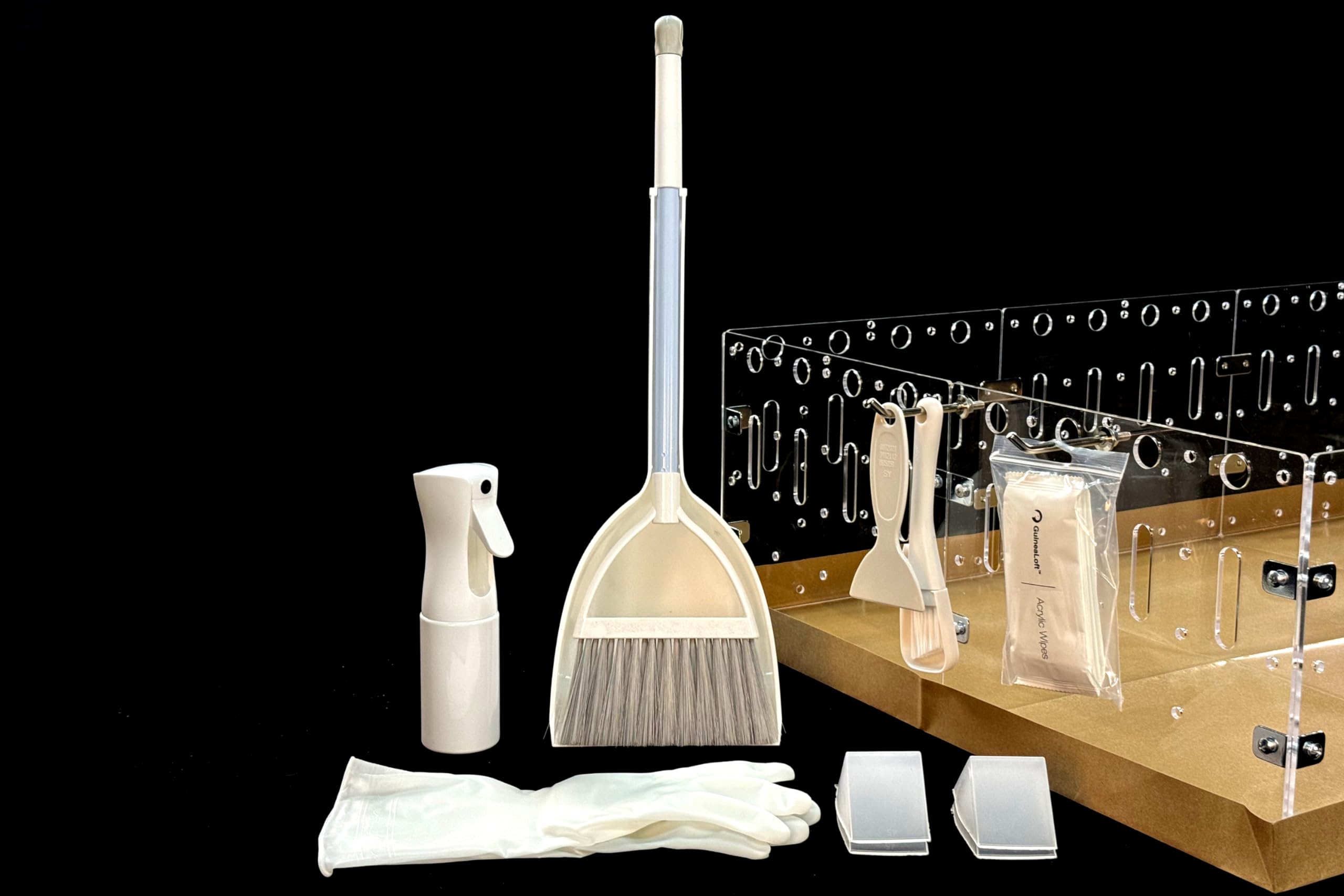
Before we even talk liquids, a few tools do most of the work. Cleaner choice matters, but mechanical cleaning is what actually removes urine scale, stuck hay, and biofilm.
- Microfiber cloths or washable rags for wiping coroplast, grids, and plastic trays.
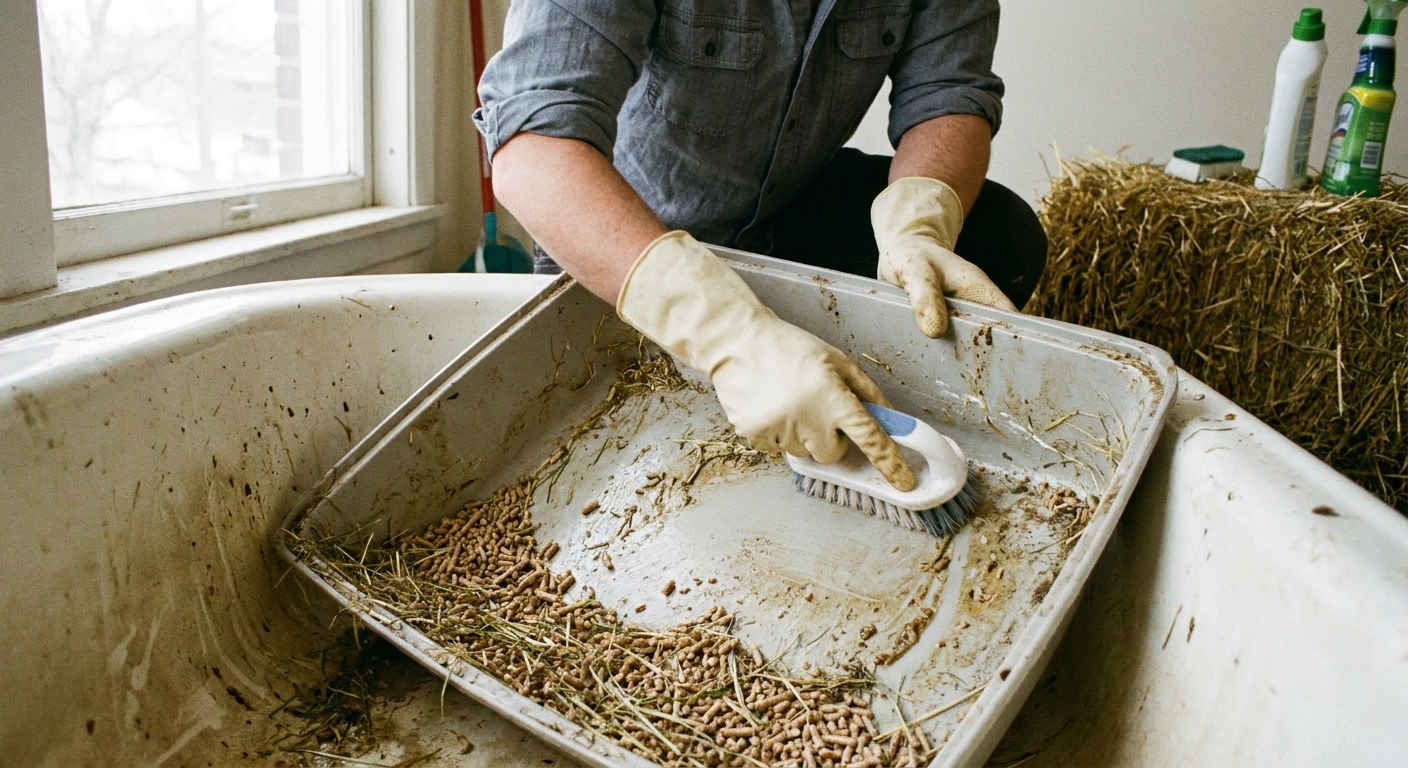
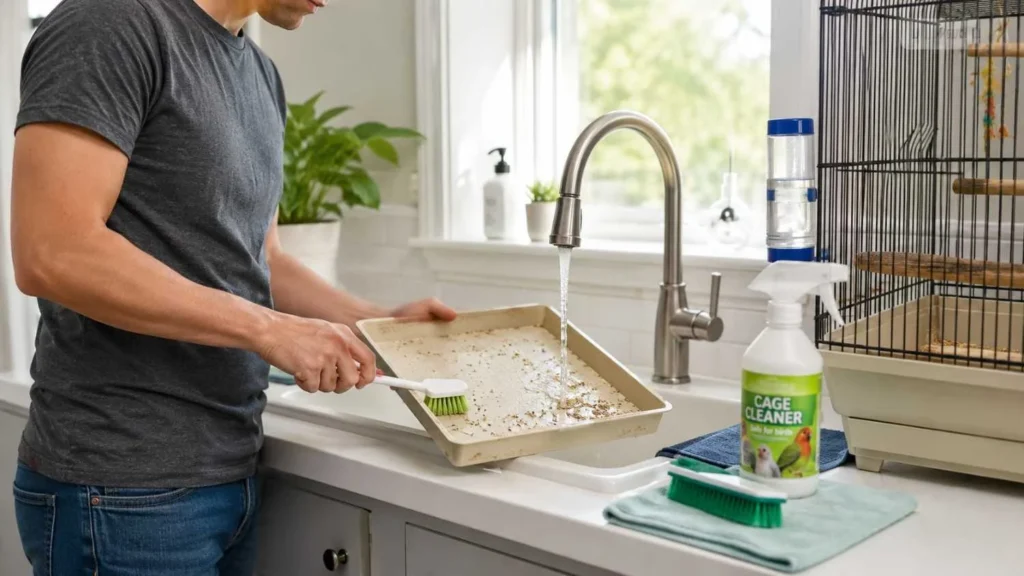
- A dedicated scrub brush for litter boxes and corners.
- A plastic scraper for dried-on pee spots (an old gift card works in a pinch).
- Unscented dish soap for greasy residue (rare, but it happens with pellet dust and veggie splatter).
- Gloves if you have sensitive skin or are dealing with heavy urine buildup.
- Ventilation: open a window, run a fan, and let the habitat dry fully before pets go back in.
DIY vinegar solutions
White distilled vinegar is inexpensive, effective for most day-to-day messes, and especially helpful for breaking down mineral deposits from urine. It is not a hospital-grade disinfectant, but it is excellent for routine maintenance when paired with good scrubbing and thorough drying.
All-purpose wipe-down spray
Mix: 1 part white vinegar + 1 part water in a spray bottle.
Use it for: coroplast bases, plastic hideys, cage grids, tile, and litter box exteriors.
How to use: Spray, let sit 2 to 5 minutes, scrub if needed, then wipe and rinse with water. Dry completely.
Urine scale and crusty corners
Mix: straight vinegar (undiluted) for stubborn mineral buildup.
How to use: Soak the area or spray heavily, let sit 10 to 15 minutes, then scrub. Rinse well. Repeat if needed.
Vinegar safety notes
- Do not use vinegar on natural stone (like marble) or some unsealed surfaces.
- Skip scented vinegar. Added fragrances are not worth it in a small-pet home.
- Never mix vinegar with bleach (that can create toxic chlorine gas).
Commercial cleaners that are usually safer
Sometimes you want something premixed and consistent. When I shop for a commercial cleaner for rabbit and guinea pig habitats, I look for these traits:
- Fragrance-free or very low fragrance
- No aerosols (pump spray is easier to control and less irritating)
- No essential oil blends marketed for “fresh scent”
- Clear rinse instructions (and I rinse anyway)
Best uses
- Weekly wipe-downs when you are short on time.
- Plastic accessories like hay racks, pellet bowls, and litter scoops.
- High-touch areas like cage doors, grid edges, and around water bottle drips.
What to avoid
Labels can be vague. I personally avoid:
- Phenolic disinfectants (including some pine-type products). If you are unsure, check the active ingredients and skip anything phenol-based.
- Heavy perfumes that linger after drying.
- Disinfectant foggers or any “air sanitizing” sprays used inside the habitat.
- Anything that leaves a coating or “shine” on plastics.
Enzyme odor eliminators
If vinegar is my daily driver, enzymes are my foster intake cleanup tool. Enzyme cleaners do not just mask odor. They break down organic messes that cause lingering smell, especially urine.
Where enzymes shine
- Accidents outside the litter area on tile, sealed floors, or washable rugs.
- Porous items that trap smell (fabric liners, fleece, absorbent pads, some wood if it is sealed).
- Repeat offenders where a rabbit keeps marking the same corner again.
How to use enzymes
Enzymes work best when you use them the way the label expects. In general:
- Blot first. Remove as much urine as possible before applying.
- Saturate the area enough that it reaches what soaked in.
- Give it time. Many enzyme products need 10 to 15 minutes or longer. Read the label and do not rush it.
- Do not stack products right away. Strong acids, alkalis, and disinfectants can reduce enzyme activity depending on the formula. If you need to switch methods, rinse with water first and follow the product directions.
- Rinse and dry any surface your pet can lick, then let it fully air out before your rabbit or guinea pig returns.
Choosing an enzyme cleaner
Many enzyme products are marketed for cats and dogs, which is fine. The key is how you use it: good ventilation, thorough rinsing, and no added fragrances. If the product has a strong perfume, I keep looking.
Do you need to disinfect?
Most healthy, stable homes do not need to disinfect constantly. Routine cleaning, dry bedding, and good litter habits prevent the majority of problems.
When disinfection matters:
- After illness (especially if your vet suspects a contagious issue).
- Between foster animals or new introductions.
- After a confirmed parasite or fungal problem under veterinary guidance.
If you need true disinfection, the safest plan is to ask your rabbit-savvy or exotics vet what they recommend for your specific situation, then follow dilution, contact time, and rinsing instructions carefully. If you want examples to ask about, some vets recommend accelerated hydrogen peroxide products or dilute chlorhexidine for certain situations. Product choice is only half the battle. Contact time and complete drying are what make disinfection effective.
Litter and bedding basics
Cleaner choice helps, but odor and respiratory irritation often start with bedding. For rabbits and guinea pigs, I prioritize low-dust, unscented options and skip anything perfumed.
- Paper-based bedding can work well if it is truly low dust and changed often.
- Wood pellets (like kiln-dried pellet litter) are popular for litter boxes because they lock in moisture. Avoid softwood shavings marketed for fragrance.
- Fleece systems rely on absorbent layers underneath. The key is frequent swaps and getting everything fully dry between uses.
Whatever you use, dampness and trapped urine are what create the smell. More absorbency and more frequent changes beat stronger chemicals almost every time.
Routines that prevent odor
Odor usually means urine is sitting too long, absorbency is too low, or airflow is poor. A simple schedule helps more than any miracle spray.
Daily (5 to 10 minutes)
- Spot-clean poops and wet hay.
- Swap any damp fleece or pads.
- Quick wipe of obvious wet corners with diluted vinegar.
Every 2 to 4 days
- Dump and wash litter boxes.
- Replace litter and top with fresh hay.
- Wipe coroplast where urine splashed or pooled.
Weekly
- Full habitat reset: remove accessories, wash, rinse, dry.
- Check hideys and tunnels for pee spots.
- Launder liners on hot if fabric allows, with fragrance-free detergent.
Quick note on laundry: Skip fabric softener and strongly scented boosters. They can leave residue and irritate sensitive noses. If you battle lingering urine smell in fleece, an enzyme laundry additive used as directed can help, followed by an extra rinse cycle.
Common cleaning mistakes
- Cleaning with the pets still inside the enclosure. Even “safe” products can be irritating up close. Move them to a playpen or carrier in another room.
- Not rinsing. Residue is a bigger risk than most people realize because rabbits and guinea pigs groom everything, including their feet after walking on a damp surface.
- Overdoing fragrance. If you can smell “spring rain,” your rabbit can smell it far more intensely.
- Mixing products. Vinegar plus bleach is dangerous. Enzymes plus harsh disinfectants can waste both products and create stronger fumes.
- Putting bedding back before everything is dry. Moisture trapped under liners is an odor factory and can contribute to skin issues like sore hocks.
Quick FAQ
Is diluted vinegar safe around rabbits and guinea pigs?
Used carefully, yes. Spray onto the surface, let it work, then rinse and dry. I avoid spraying into the air or near faces. The smell fades quickly once dry.
Can I use bleach to clean a rabbit or guinea pig cage?
I do not use bleach for routine cleaning. If a vet-directed situation requires it, follow strict dilution and contact-time instructions, keep pets far away, ventilate well, rinse thoroughly, and allow complete drying before reintroducing animals.
Are essential oil cleaners safe?
I skip them. “Natural” does not always mean gentle for small-pet lungs, and oils can leave residue. Fragrance-free is the safer lane.
Why does my cage still smell after I clean it?
Usually it is one of three things: urine scale on the base or litter box, dampness trapped under liners, or a porous item (like a fabric hide) holding odor. Try a deeper vinegar soak for mineral buildup, improve drying and airflow, and use an enzyme cleaner on porous problem spots.
What is the safest way to handle strong odors?
Remove the source, increase absorbency (better litter or more frequent changes), and improve ventilation. Odor sprays that mask smell tend to add respiratory irritants without fixing the underlying issue.
Simple starter kit
If you want a minimal setup that covers 95 percent of real-life mess:
- White distilled vinegar
- Spray bottle (labeled clearly)
- Microfiber cloths
- Scrub brush dedicated to litter boxes
- Unscented dish soap
- Fragrance-free enzyme cleaner for accidents
Clean does not have to mean chemically loud. With a few gentle supplies and a steady routine, you can keep habitats hygienic, keep odor under control, and keep your rabbit or guinea pig breathing easy.