A practical, welfare-first comparison of fleece liners and paper bedding for rabbits and guinea pigs, including cost, odor control, maintenance, and health c...
Rabbit Cove
Keep Your Rabbit or Guinea Pig Enclosure Fresh Longer
Cut cage odors fast with smart spot-cleaning, a simple deep-clean schedule, and truly pet-safe cleaners. Fresh air, dry bedding, and happy lungs for rabbits and guinea pigs.

Chloe Miller
Chloe Miller is a dedicated small-pet enthusiast and experienced foster parent who has spent over a decade caring for rabbits and guinea pigs. Through her hands-on work with local animal rescues, she shares practical, compassionate advice on housing, nutrition, and daily enrichment to help small pets thrive. When she isn't designing custom indoor enclosures, Chloe can be found coaxing shy rescues out of their shells with fresh cilantro.
Published
October 22, 2026
Updated
October 22, 2026
If you have ever walked past your rabbit or guinea pig enclosure and thought, How can something so small create a smell so big? you are not alone. Odor is usually not a “your pet is gross” problem. It is almost always a moisture + ammonia + not-quite-right setup problem.
The goal is not to perfume the cage. Rabbits and guinea pigs can have sensitive respiratory systems, and strong scents can irritate them quickly. The goal is to keep things dry, ventilated, and easy to spot-clean so waste does not sit long enough to turn into stink.
Why enclosures start to smell
Most “cage smell” comes from a few predictable sources:
- Wet spots that soak into bedding, fleece, or wood and stay damp.
- Ammonia from urine, especially in poorly ventilated areas or in enclosed plastic-bottom cages.
- Hay dust + moisture creating a musty smell in corners.
- Hidden mess under liners, behind hideys, or in a favorite pee corner.
- Infrequent full changes where the base layer is never fully reset.
Once you address moisture and airflow, your cleaning routine becomes easier, not harder.
The daily 5-minute spot-clean routine
I fostered for years, and here is the honest truth: deep cleans help, but daily spot-cleaning is what keeps an enclosure smelling fresh. You are interrupting odor before it forms.
For rabbits
- Scoop litter boxes 1 to 2 times a day (more often for bonded pairs). Remove saturated litter and the surrounding material where urine is concentrated.
- Refresh hay in the litter area. Toss hay that is damp or sitting in the litter.
- Wipe the “pee edge” if your rabbit tends to miss the box. A quick wipe with a damp paper towel (or pet-safe wipe) prevents buildup.
- Pick up stray poops from sleeping areas. Dry poop does not smell much, but it gets crushed into fabric and builds a barn-like smell over time.
For guinea pigs
- Spot-clean pee pads or fleece “kitchen” areas where they spend the most time. Remove the wet pad and replace it, do not just flip it.
- Scoop poops at least once daily (twice is even better). A small dustpan and brush dedicated to the cage is a game changer.
- Remove damp hay from hay piles and corners.
- Check under hideys where airflow is poor and moisture collects.
My favorite mindset: you are not “cleaning the whole cage.” You are hunting for wetness and removing it.
A deep-clean schedule that works
How often you deep-clean depends on your setup and how many pets you have. These ranges keep most homes smelling normal even in summer.
Rabbits
- Litter box refresh: Top off or fully replace litter every 2 to 4 days for one rabbit, every 1 to 3 days for pairs (varies by box size).
- Full litter box scrub: Weekly is ideal for most households.
- Enclosure reset: Every 1 to 2 weeks: wash rugs and mats, wipe down baseboards or pen panels, and check corners.
Guinea pigs
- Fleece liner change: Every 2 to 4 days for one to two pigs, every 2 to 3 days for larger groups (more often if you notice dampness).
- Kitchen area refresh: Often daily to every other day if you use pads or a litter tray.
- Full enclosure clean: Weekly is common for most C&C cages, sometimes twice weekly for heavy soakers or humid climates.
If you are cleaning constantly and it still smells, that usually means something in the setup is trapping moisture or urine is soaking into an unsealed surface.
Pet-safe cleaners that work
Skip the heavy fragrances. “Fresh linen” is not a goal, and scented cleaners can irritate sensitive noses. You want cleaners that lift urine residue and rinse clean.
Safe go-to options
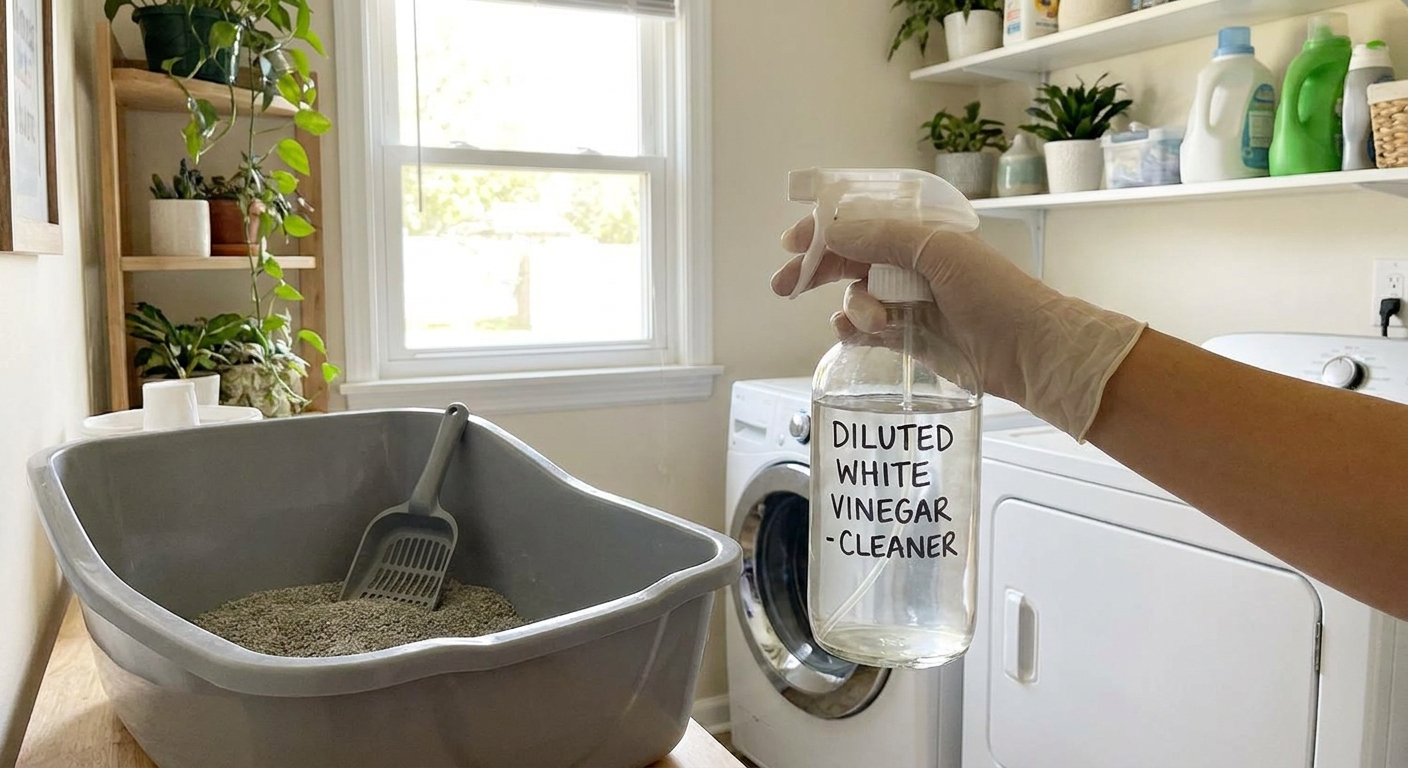
- White vinegar + water (1:1) for mineral buildup like urine scale on plastic boxes and hard surfaces. The vinegar smell fades as it dries.
- Unscented dish soap + hot water for grime, water bottles, and stubborn residue.
- Enzyme cleaner (unscented if possible) for urine that has soaked into seams, fabric edges, or corners. Enzymes target organic residue that causes lingering odor. Follow label directions and wipe away any residue.
- Pet-safe disinfectant only when needed, for example after illness or parasites, and only if it is labeled safe for small animals when used correctly. Ventilate well and let surfaces dry completely.
What I avoid in rabbit and guinea pig areas
- Bleach fumes in routine cleaning. Bleach is effective but harsh, and mixing mistakes can be dangerous. If you use it for medical disinfection, do so carefully, dilute properly, rinse thoroughly, and fully air out.
- Strong essential oils and heavily scented sprays. Many are respiratory irritants.
- Ammonia-based cleaners, which can worsen the urine smell problem and irritate lungs.
- Powdered deodorizers that become airborne dust.
Setups that stay fresher
You can clean perfectly and still fight odor if the habitat design is working against you. These changes reduce smell by reducing dampness.
Improve ventilation
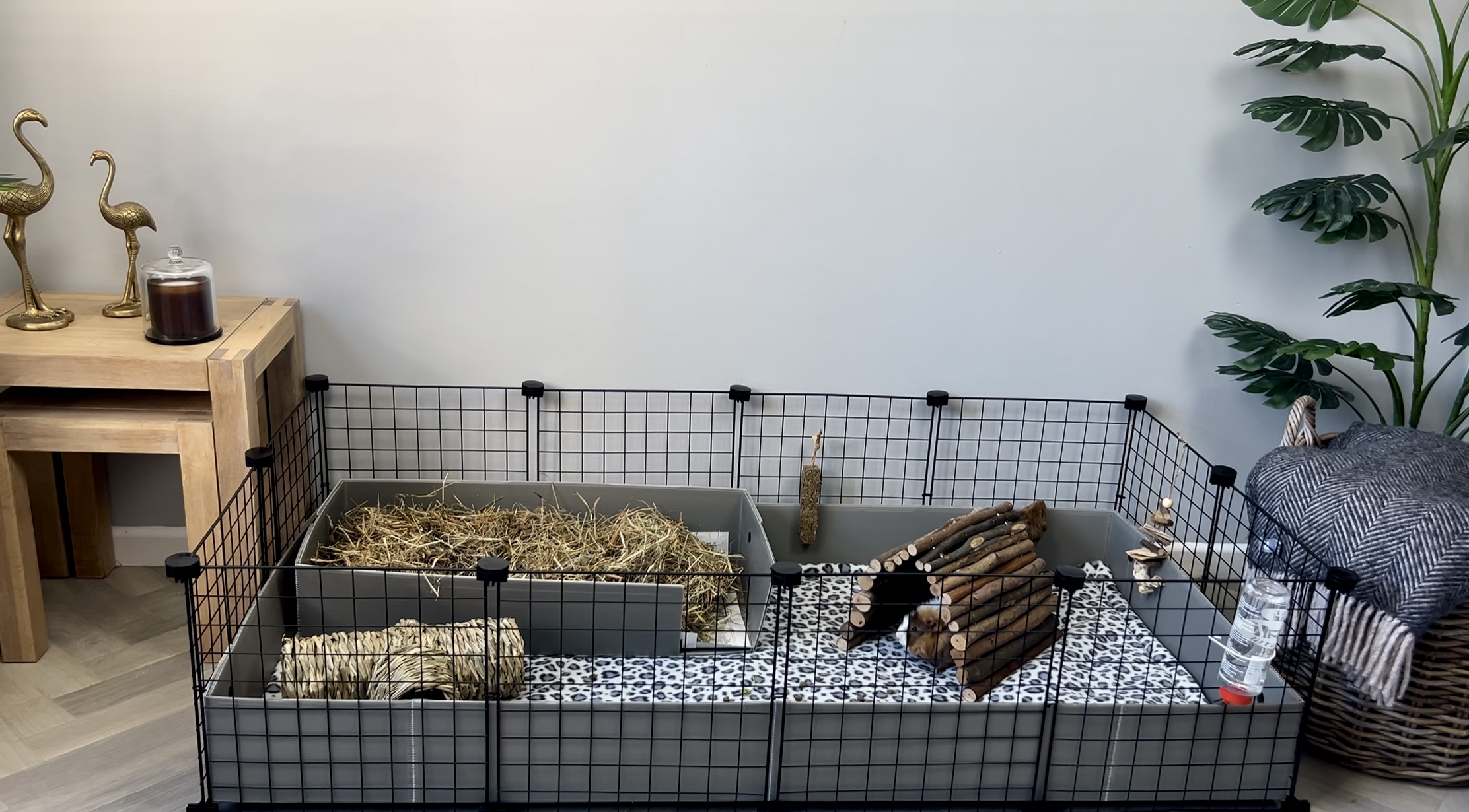
- Choose open pens or C&C style enclosures over enclosed plastic cages with tiny vents.
- Keep the enclosure off carpet if possible, or use a waterproof barrier under it. Carpet holds odor stubbornly.
- Place the habitat where air moves, but not in a draft. Stagnant corners get musty.
Give urine a designated landing zone
Smell improves dramatically when pee is concentrated in one easy-to-clean spot.
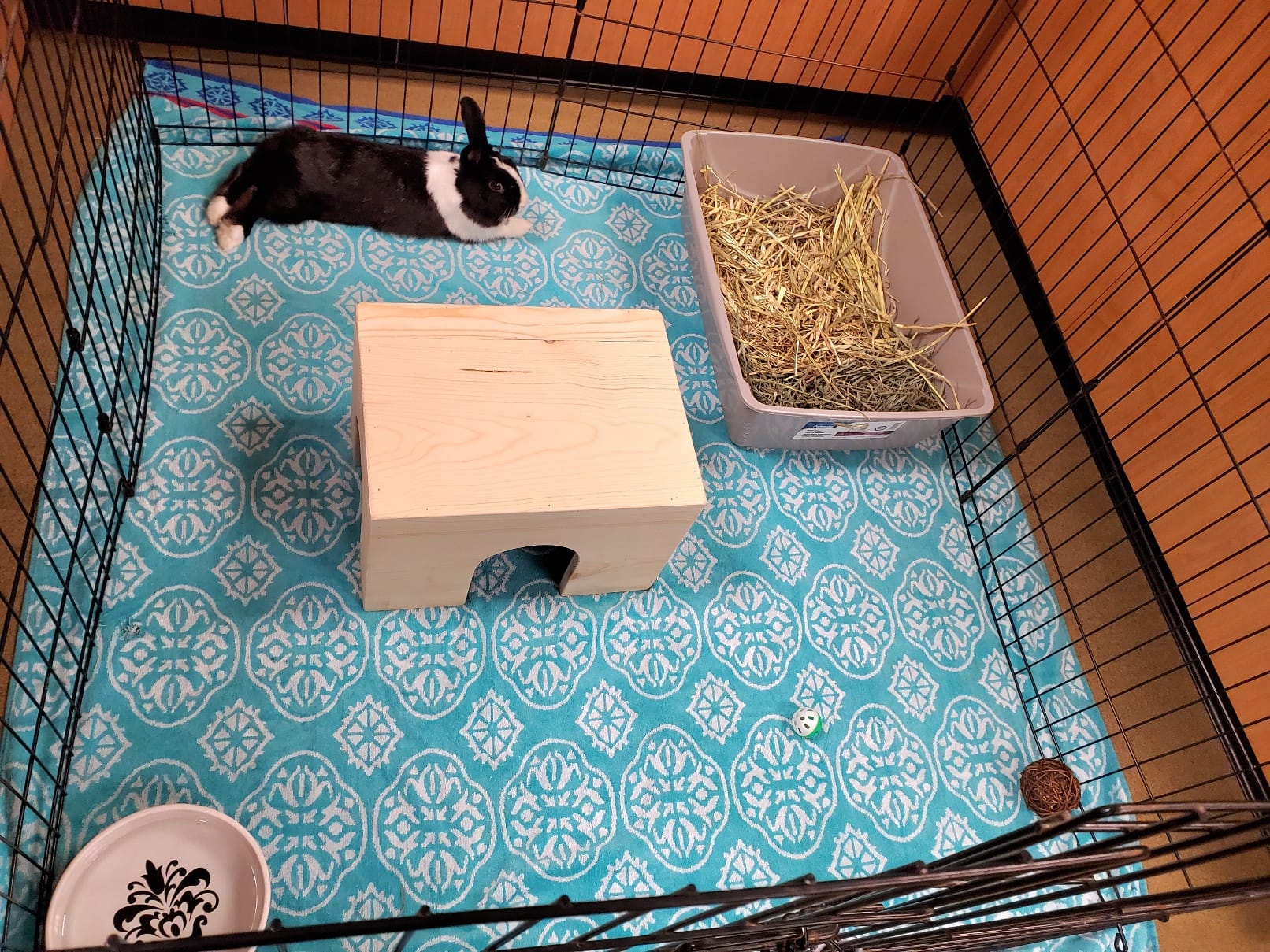
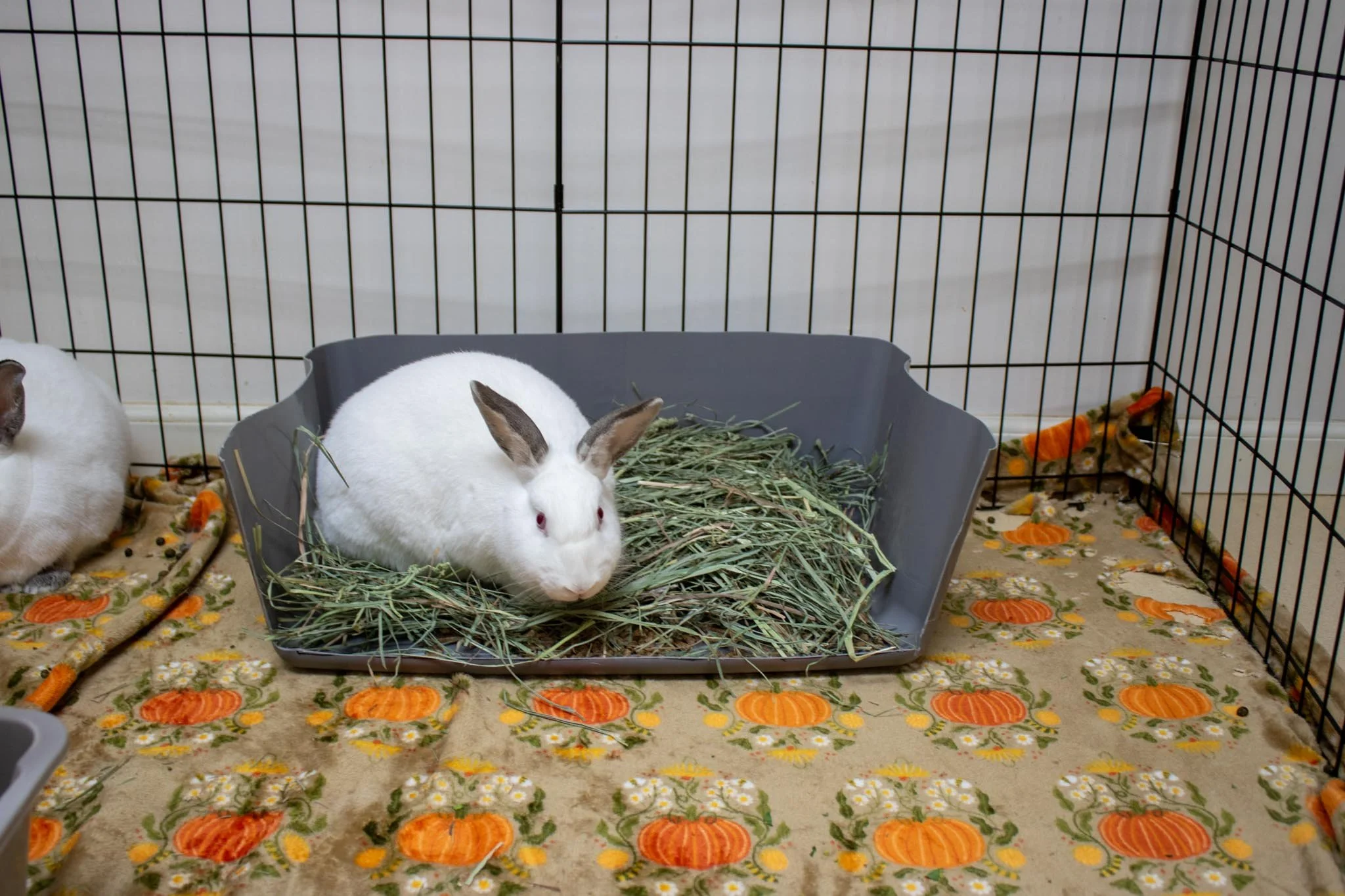
- Rabbits: Use a large litter box. Bigger than you think. Many rabbits like to sit fully inside while eating hay.
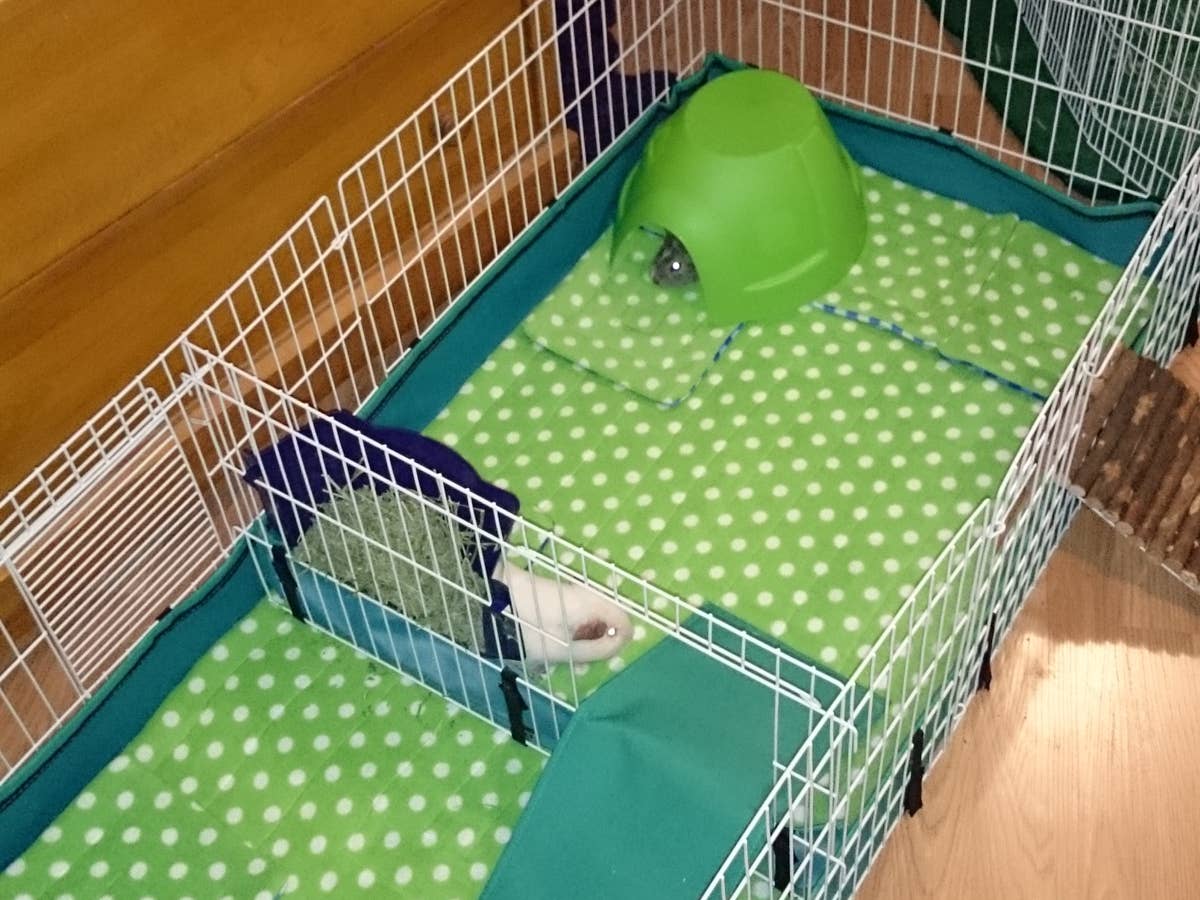
- Guinea pigs: Create a “kitchen” with a tray or coroplast area lined with absorbent pads or bedding under the hay.
Use truly absorbent materials
The best odor control is dryness.
- Rabbit litter boxes: Paper-based litter is absorbent and low dust. Many people also use pelleted litters marketed for small animals (for example paper pellets or kiln-dried pine pellets made for pets).
- Avoid clumping clay litter for rabbits and guinea pigs. It is dusty and unsafe if ingested.
- Avoid crystal or deodorizing cat litters in small-pet habitats. Added fragrances and dust are not worth the risk.
- Fleece systems: Make sure you have a wicking top (fleece) with an absorbent layer underneath (U-Haul pad, cotton towels, or purpose-made pads). If it smells quickly, the absorbent layer is likely saturated or not wicking well.
- Wood shavings: Cedar is widely discouraged because of aromatic oils. Pine can be debated. Many rescues recommend avoiding aromatic softwoods, while some sources consider kiln-dried pine acceptable. If you use it, choose low-dust kiln-dried products marketed for small animals and watch closely for sneezing or irritation. Aspen is generally less aromatic.
- Guinea pig bedding note: Many owners prefer fleece to reduce dust, while others like paper bedding for convenience. Either can work if it stays dry and is changed often.
Deep-clean without stress
Some rabbits take offense at major rearranging. Many guinea pigs are certain the vacuum is a predator. A calm routine helps.
Step-by-step deep clean
- Move pets to a safe holding area with hay and water. Keep it familiar, like a playpen section or a carrier in a quiet room.
- Remove all fabric and bedding. Shake hay and debris into a trash bag.
- Wash fabric warm or hot based on manufacturer guidance. Use an unscented detergent and skip fabric softener. Softener coats fibers and reduces absorbency.
- Scrub litter boxes and trays with hot water and dish soap, then finish with a vinegar rinse if you have urine scale.
- Wipe enclosure surfaces with vinegar-water or a pet-safe cleaner, then wipe with clean water if residue remains.
- Dry everything completely before reassembly. Trapped moisture is instant odor.
- Reset with a familiar layout. Keep a hidey and a favorite item in the same general spot.
Odor hot spots and fixes
It smells like urine right after I clean
- Check for urine scale in litter boxes or corners. Use vinegar, let it sit a few minutes, then scrub.
- Make sure urine is not soaking into wood, baseboards, or carpet. Add a waterproof barrier or move the enclosure.
- For fleece setups, the absorbent layer may be overdue for replacement or clogged with detergent residue. Do an extra rinse cycle and avoid softener.
- If the smell is coming from soft surfaces, use an enzyme cleaner where urine has soaked in, not vinegar alone.
My rabbit litter box is the main smell
- Go bigger on the box size and litter depth.
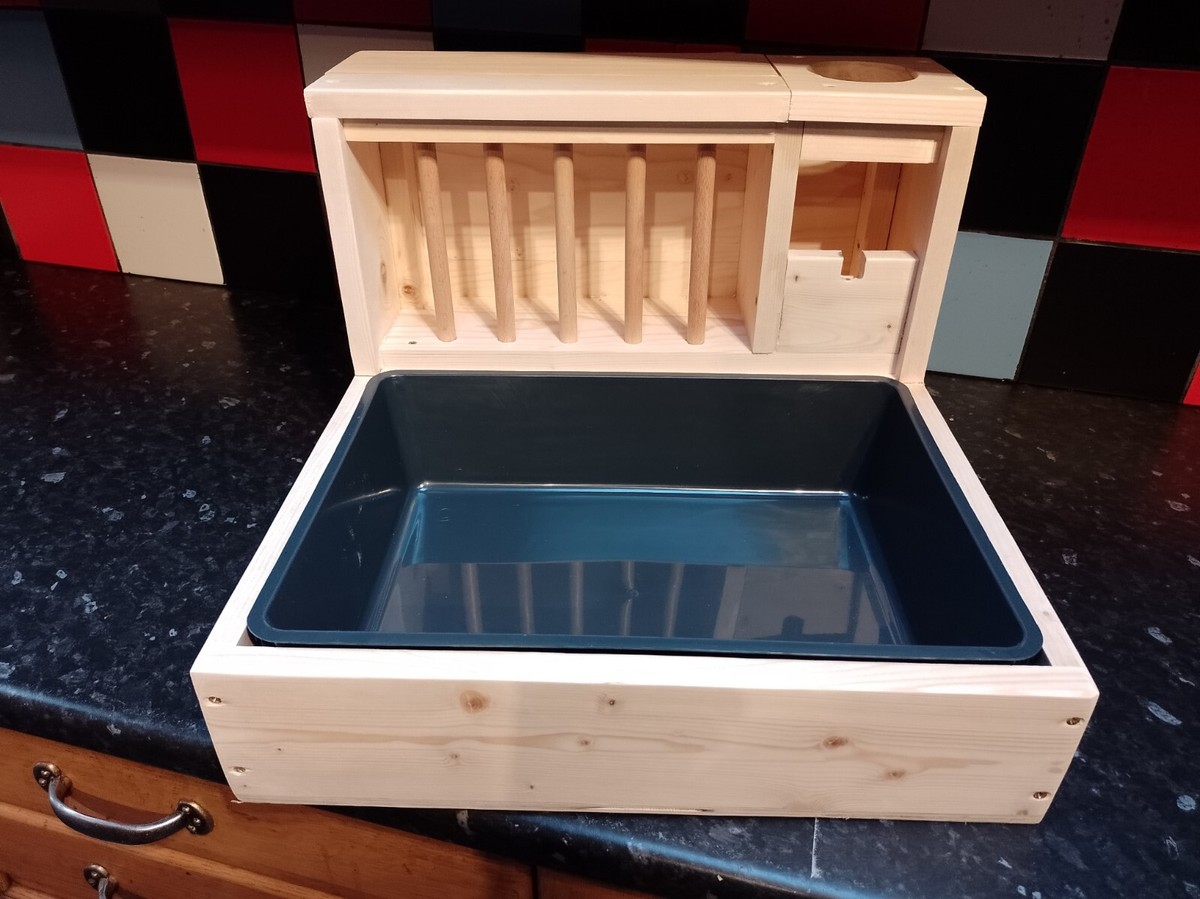
- Add hay in a way that encourages litter box use, like a hay rack positioned so they eat while inside the box.
- Switch to a more absorbent litter if you are using a thin layer or a product that stays damp.
- Keep in mind intact rabbits and adolescents can mark more, and that can raise odor. Spaying or neutering often helps with spraying and strong urine smell.
The guinea pig cage smells musty
- That is often damp fabric. Increase liner change frequency and improve airflow under hideys.
- Use a dedicated kitchen area so wet hay does not spread across the whole cage.
- Check water bottles for slow leaks that soak one spot.
- Some boars have a stronger musky scent than sows. Regular spot-cleaning and washing fabric items usually keeps it manageable.
What not to do
- Do not use air fresheners near the enclosure. Masking odor does not solve it, and scented chemicals can irritate lungs.
- Do not rely on baking soda where pets can access it. It can irritate if inhaled as dust, and ingestion in significant amounts is not safe.
- Do not stretch fleece liners past the point of dampness. If it feels even slightly wet where they sit, odor will follow.
- Do not use dusty bedding. Dust plus scent is a respiratory double hit.
A simple routine to copy
If you want a straightforward plan, here is a routine I recommend to new foster homes:
Daily
- Scoop poops and remove wet spots
- Refresh hay and check for damp hay piles
- Quick wipe of any splash zones
Twice weekly
- Replace fleece liners or refresh bedding (more often for multiple pigs or humid weather)
- Wash pee pads and kitchen pads
- Wipe down plastic trays and high-traffic corners
Weekly
- Full litter box scrub (rabbits) or full cage reset (many guinea pig setups)
- Wash hideys and fabric tunnels
- Check the floor underneath the enclosure
Once you are consistent, the smell issue usually shrinks to a quick daily maintenance job, not a Saturday afternoon crisis.
When odor is a health issue
A normal enclosure has a mild hay and animal smell. A sharp ammonia smell is a sign to change something in the setup or routine, but also pay attention to your pet.
- Rabbits: If you notice a sudden change in urine smell plus sludge, blood, straining, accidents, or a wet bottom, contact a rabbit-savvy vet.
- Guinea pigs: If you notice blood in urine, crying while peeing, strong new odor with reduced appetite, or wetness around the rear, call an experienced exotics vet.
FAQ
Can I use vinegar around rabbits and guinea pigs?
Diluted white vinegar is commonly used for small-pet cleaning because it helps break down mineral buildup like urine scale. Keep pets away while spraying, wipe or rinse if surfaces stay damp, and let everything dry before they return. For soaked-in urine odor, enzymes usually work better than vinegar alone.
Is it normal for a rabbit or guinea pig enclosure to smell at all?
A mild hay and animal smell is normal. A sharp ammonia smell or persistent mustiness usually means wetness is sitting too long, ventilation is poor, or something is absorbing urine underneath.
Why does my cage smell worse in summer?
Heat and humidity speed up odor. In warm months, increase spot-cleaning, swap liners more often, and make sure airflow is good. A small fan aimed near the enclosure (not directly at pets) can help move air through the room. Keep cords out of reach and make sure pets can move away from the airflow so they do not get chilled.
What is the best way to keep odors down with multiple pets?
Scale up your pee zones. More litter boxes for rabbits and a larger kitchen area for guinea pigs makes a bigger difference than scrubbing everything harder.