From bar-biting to baseboard damage, boredom behaviors are fixable. Spot the signs, rule out medical issues, and redirect chewing and digging with safe enric...
Rabbit Cove
Crepuscular Pets and Nighttime Zoomies
Rabbits and guinea pigs often get busiest around dawn and dusk, plus short wake-ups overnight. Learn why cages get loud at night and how to reduce zoomies noise without fighting their natural rhythms.

Chloe Miller
Chloe Miller is a dedicated small-pet enthusiast and experienced foster parent who has spent over a decade caring for rabbits and guinea pigs. Through her hands-on work with local animal rescues, she shares practical, compassionate advice on housing, nutrition, and daily enrichment to help small pets thrive. When she isn't designing custom indoor enclosures, Chloe can be found coaxing shy rescues out of their shells with fresh cilantro.
Published
October 22, 2026
Updated
October 22, 2026
If you have ever been jolted awake by a dramatic bar-rattle, a water bottle clank, or what can only be described as a tiny herd of horses doing laps, you have met the crepuscular lifestyle. Rabbits and guinea pigs often hit their busiest, most energetic stretches around dawn and dusk. That timing is perfect in the wild. In our homes, it can feel like your pets formed a band and scheduled rehearsals for 1:47 a.m.
The good news is that nighttime zoomies and cage noise are usually normal. The even better news is that you can often reduce the chaos without trying to force your pets into a human sleep schedule.
What crepuscular means
Crepuscular animals are often most active at dawn and dusk. Rabbits are commonly described this way, though individuals vary and some domestic rabbits skew more toward late evening and overnight activity depending on the home and routine.
Guinea pigs are a little different. Many show dawn and dusk peaks, but they are also well known for being polyphasic, meaning they wake up in short bursts around the clock for snacks, social check-ins, and short zooms.
In practical terms, that often looks like:
- A burst of energy right when you are making coffee or brushing your teeth
- Another burst right after dinner
- Random snack breaks and short activity windows overnight
It is not that they “stay up all night” like a hamster might. It is more like they take multiple mini-shifts, with the biggest shifts landing when your house is quiet.
Why they get loud at night
Noise is usually a mix of normal behaviors plus a few home setup issues that amplify it.
Rabbits: binkies, digging, and rearranging the universe
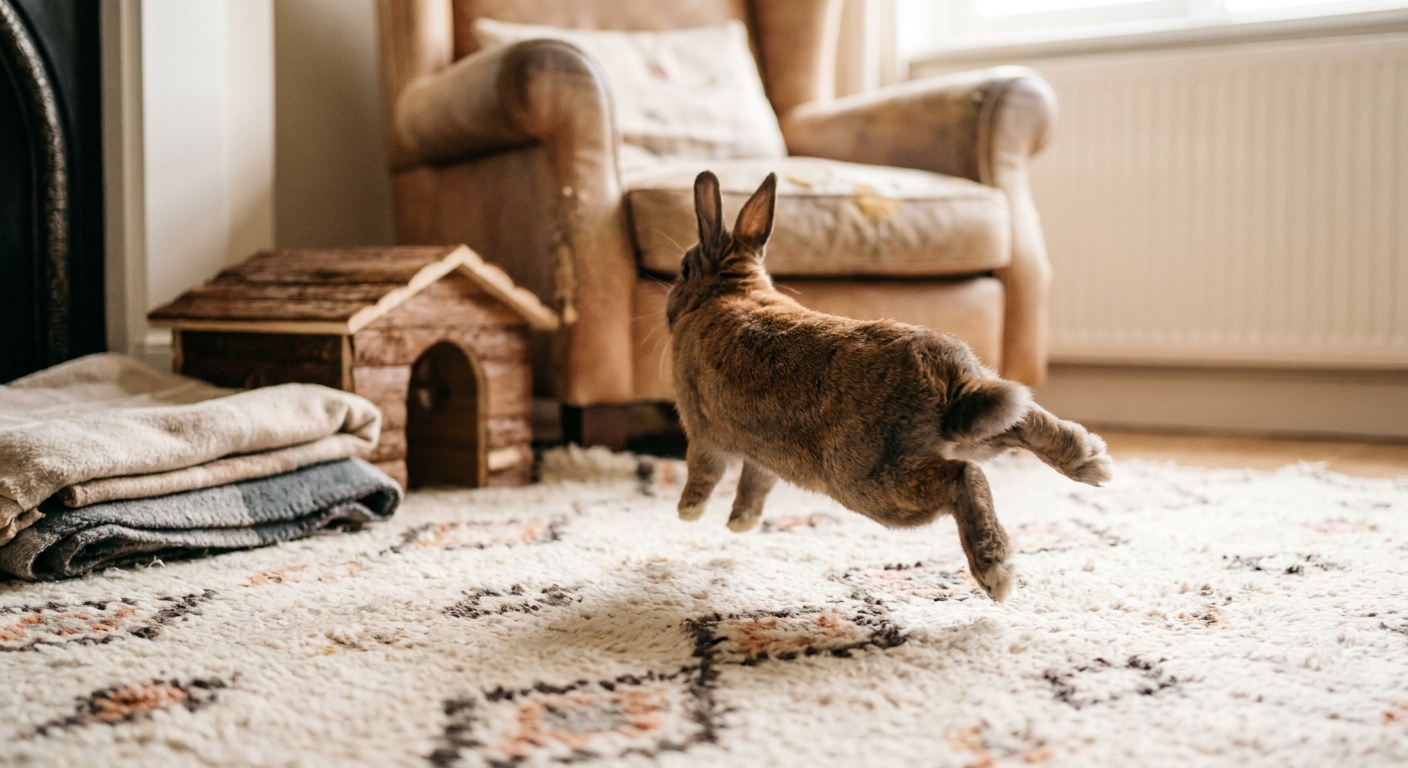
Rabbits tend to express energy with sprints, turns, binkies, and digging. If they are confined, understimulated, or slipping on the floor, that energy goes somewhere, often into:
- Pen shaking or bar biting (frustration, excitement, or “let me out”)
- Digging in litter boxes (especially if the litter is too light or the box is too small)
- Tossing bowls (because physics is fun)
- Thumping (startle, annoyance, or “something changed and I do not approve”)
Guinea pigs: rustling, zooming, and midnight salad requests
Guinea pigs are less likely to do dramatic aerial maneuvers, but they are very talented at producing noise with small objects:
- Hay rustling that somehow sounds like a person unwrapping a crunchy snack
- Pellet dish scraping across coroplast or plastic
- Water bottle clicking (often louder at night because your house is quieter)
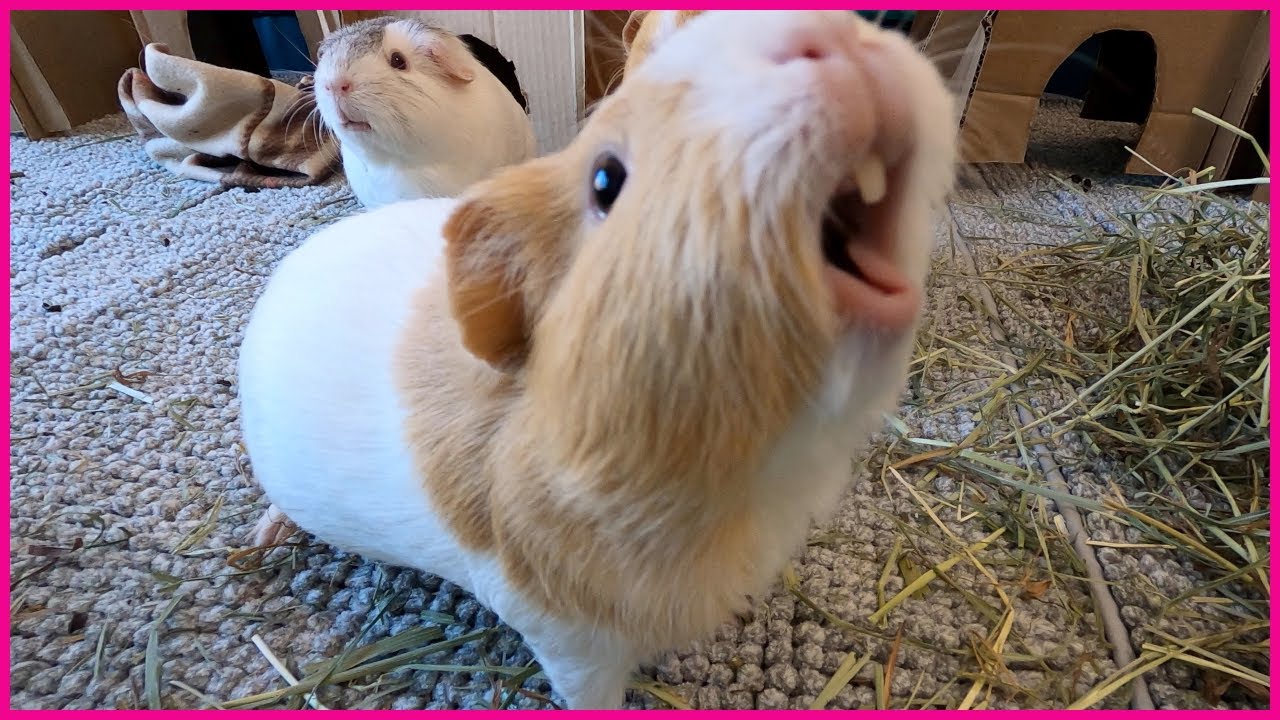
- Wheeking because they heard a refrigerator door in a different zip code
The quiet house effect
At night, everything else calms down. That makes normal pet sounds feel 10 times louder. A single nail tap on a pen panel can sound like a full renovation project at 2 a.m.
Rule out real problems first
I never want to treat noise as “just annoying” if it is actually a clue. Check these before you start soundproofing your life.
For rabbits
- Tooth pain or gut discomfort: sudden restlessness, reduced appetite, smaller poops, hiding, or loud tooth grinding paired with other pain signs can signal a problem. (Soft tooth purring can be contentment, so context matters.) Call a rabbit-savvy vet promptly for appetite changes.
- Unfixed hormones: intact rabbits can be more restless, territorial, and prone to destructive late-night activities. Spay and neuter often improves overall settle-down ability.
- Predator stress: a barking dog, a roaming cat staring into the pen, or outdoor smells through an open window can cause thumping and frantic movement.
- Slippery flooring: if zoomies happen on slick floors, rabbits may scramble, skid, and panic-thump. Adding traction can make nights quieter and safer.
For guinea pigs
- Bullying at night: you may hear chasing, teeth chattering, or sudden squeals. Reassess space, hidey availability, and whether the group is truly compatible.
- Hunger gaps: pigs should have hay 24/7. If hay runs out overnight, you can get a very vocal complaint department.
- Illness clues: lethargy, not eating, weight loss, or persistent crying should always override “noise management.”
If appetite, droppings, and social behavior look normal, you are likely working with healthy crepuscular chaos. That is manageable.
Set up a quieter habitat
The goal is not to stop natural activity. It is to remove the loudest, most preventable sources of clanking, scraping, and rattling.
Swap noisy gear for quieter options
- Bowls: use heavy ceramic crocks with a wide base. For rabbits who toss bowls, try a crock that mounts to a panel at a low height. For guinea pigs, wide ceramic bowls are harder to flip.
- Water: if bottle clicking keeps you up, consider a heavy water bowl for rabbits and many guinea pigs, as long as you can keep it clean and tip-resistant. With guinea pigs, watch for wet bedding, and double-check that everyone is actually drinking. If you use bottles, choose a higher-quality sipper and mount it firmly so it cannot swing.
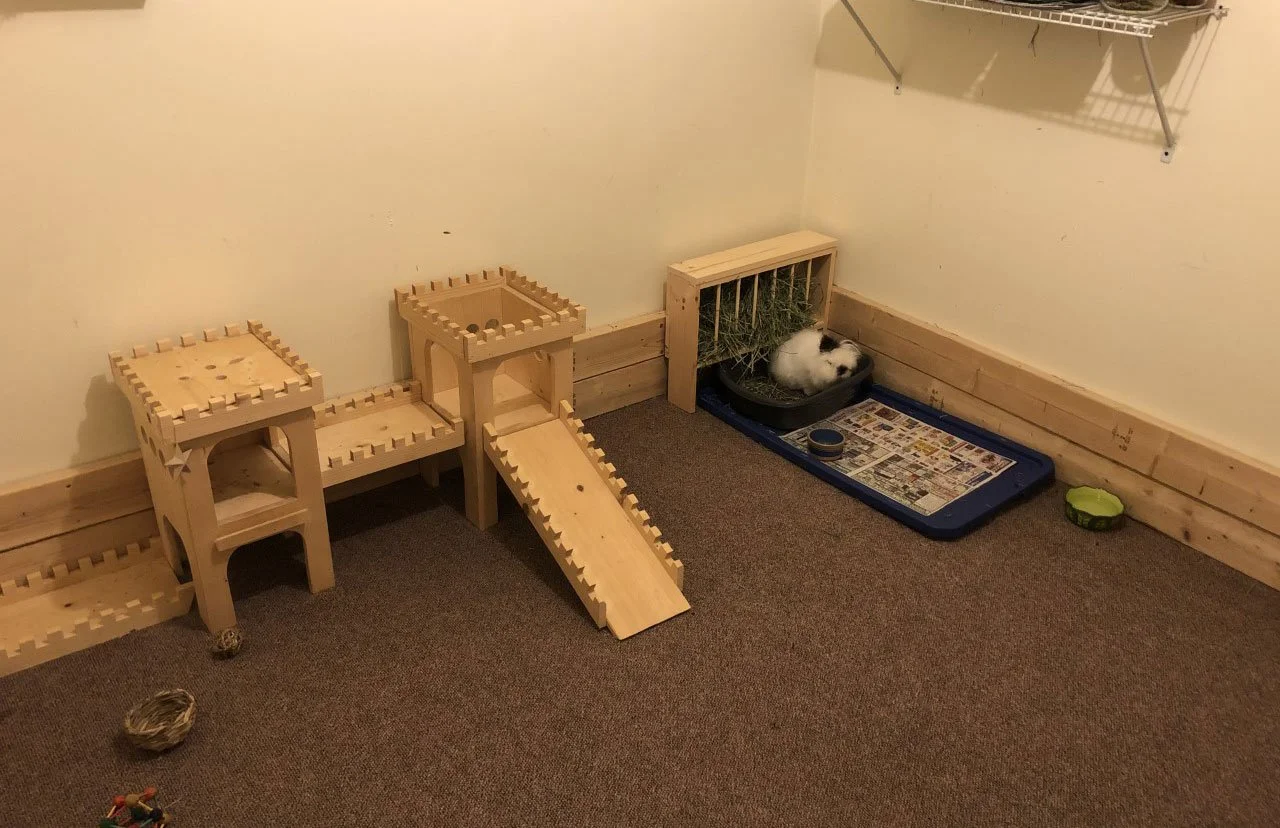
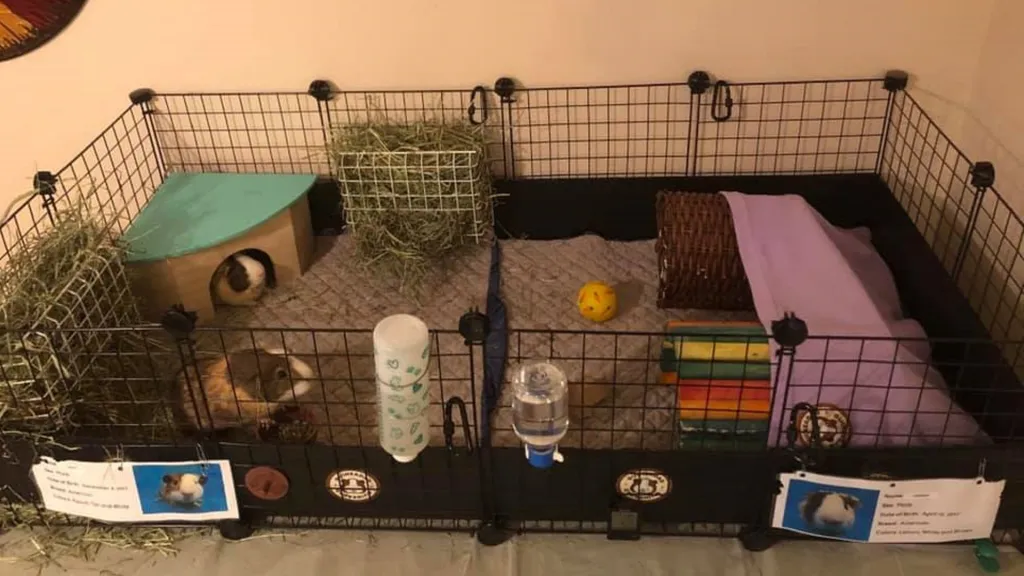
- Hay: a hay feeder that sits securely reduces dramatic midnight hay explosions. Roomy hay racks or hay boxes that do not clang against metal bars help a lot.
Stabilize the pen
- Add zip ties or sturdy connectors at multiple points so panels do not flex and chatter.
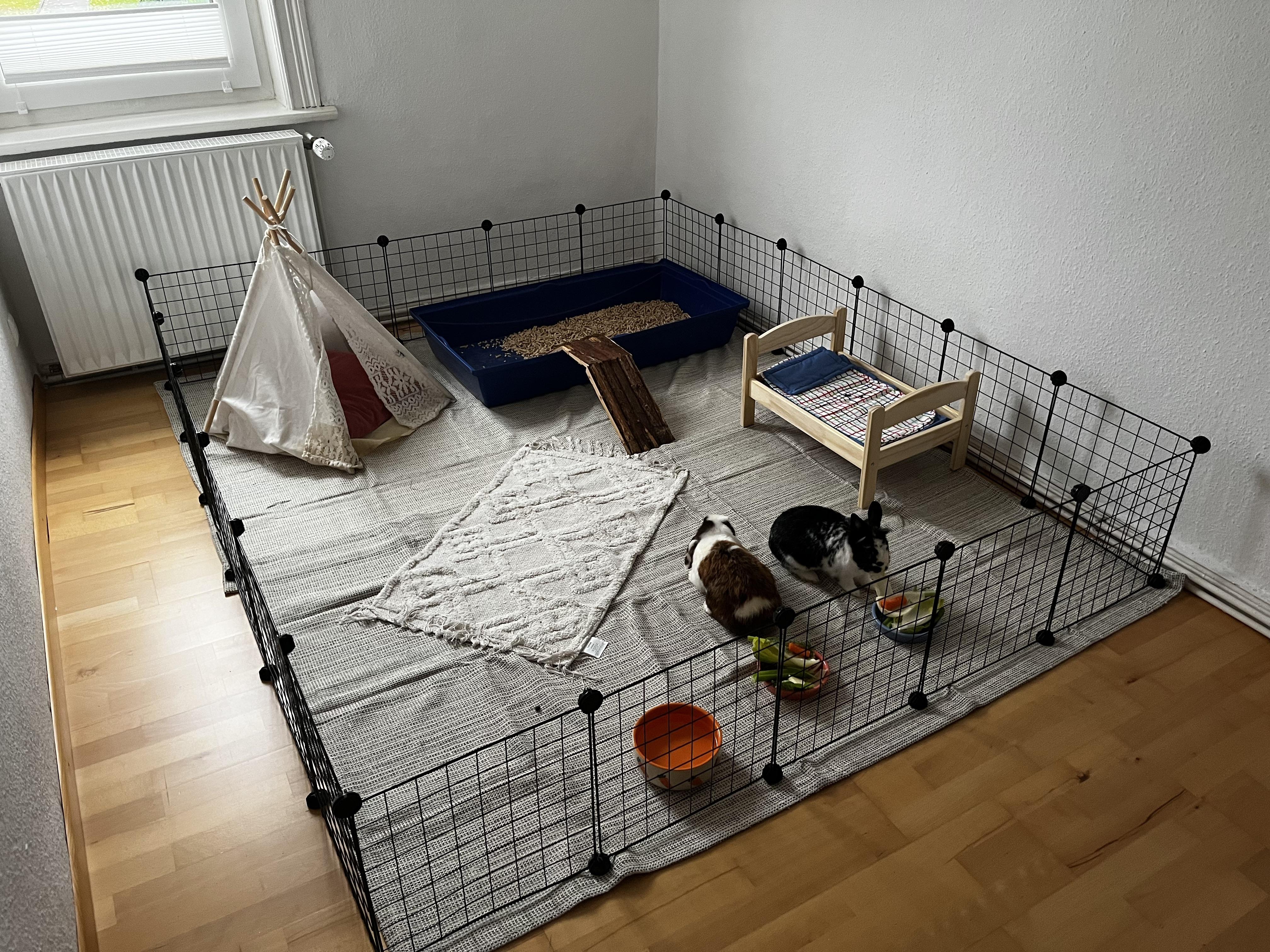
- If the pen sits on hard flooring, place it on a low-pile rug or mat to reduce vibration transfer.
- For C&C style builds, reinforce long runs so they do not bow when a rabbit leans or pushes.
Use quieter bedding and litter
For rabbits, litter boxes can be a major noise source if your rabbit likes to dig.
- Use a large, stable litter box with higher sides and enough space to turn comfortably.
- Top litter with a thick layer of hay. It muffles digging and keeps feet comfortable.
- If your rabbit is an enthusiastic excavator, add a dig box elsewhere so the litter box is less exciting.
For guinea pigs in C&C cages, fleece over absorbent layers often reduces scraping noises compared to loose bedding that gets kicked into plastic corners. If you prefer paper bedding, go deeper than you think you need so the coroplast floor is not exposed and echoing.
Use planned energy outlets
A tired brain is often quieter than a bored brain. The trick is offering enrichment that fits their species so they can do natural behaviors earlier in the evening, rather than inventing a 3 a.m. renovation plan.
Evening routine for rabbits
- Big play window: aim for at least 1 to 3 hours of free roam or a large exercise area in the evening.
- Traction for zoomies: add rugs, runners, or foam mats so sprinting does not turn into slipping, scrambling, and thumping.
- Forage dinner: scatter a portion of greens or pellets (if fed) so they have to search and move.
- Digging outlet: a dig box with shredded paper, hay, or safe soil-free filler can redirect digging away from the litter box.
- Chew options: willow, apple sticks, seagrass mats, untreated cardboard. Chewing is calming and time-consuming.
Evening routine for guinea pigs
- Floor time: even 20 to 40 minutes in a secure play area can take the edge off the late-night sillies.
- Forage scatter: hide small piles of hay in multiple spots, or tuck herbs into a paper bag with the handles removed.
- Hideouts with two exits: reduces squabbles and frantic running that sounds like a stampede.
- Space and buddies: adequate cage size and compatible pairs or groups (guinea pigs are social animals) make a noticeable difference in overnight tension and noise.
Consistency helps. Many pets start anticipating your routine and shift their biggest activity window toward the times you regularly interact with them.
Where the enclosure sits
If you are losing sleep, the simplest fix can be strategic placement.
Best compromise spots
- Living room or office where evening activity is normal, but the space still gets quiet overnight
- Not the kitchen, if fridge sounds trigger wheeking
- Not a high-traffic hallway, where late-night footsteps keep them alert
If the enclosure is in your bedroom
I get it. Sometimes space is tight and the bedroom is the only option. If so:
- Use a white noise machine or fan to mask intermittent clanks
- Choose quiet accessories (bowls instead of bottles if appropriate, stable hay boxes, reinforced panels)
- Keep lighting consistent and dim at night so their “evening peak” does not stretch into “party until sunrise”
Respond without rewarding noise
This part is tricky because we are human, we are tired, and we love them. But attention is powerful.
If your rabbit rattles the pen to get you up
- Do not rush over immediately with a treat. That can teach “shake bars, summon snacks.”
- Check basics before bed: hay topped up, water fresh, litter box clean, a chew available.
- Reward quiet: during the day, approach and offer attention or a tiny treat when they are settled, not when they are demanding.
If your guinea pig wheeks all night
- Confirm hay is unlimited. Hunger wheeks are real.
- Reduce trigger sounds: crinkly bags, late-night fridge runs, and squeaky cabinet doors can set off a chorus.
- Feed greens earlier so the biggest excitement wave happens when you are awake.
Safety exception: if you hear a sudden scream, repeated panic thumps, prolonged frantic scrambling, persistent teeth chattering, or a squeal-fight that does not resolve quickly, check immediately. Quiet training is not worth ignoring a possible injury, illness, or real fear episode.
Quiet night checklist
- Hay topped up enough to last until morning
- Water refreshed and secured so it cannot clang
- Heavy bowls that do not slide
- Enclosure reinforced so panels do not rattle
- Evening exercise and foraging done
- Rugs or mats down for traction (and less thump-noise)
- Lighting dim and consistent
- White noise on if you are a light sleeper
FAQ
Will my rabbit ever sleep through the night?
Many rabbits do settle into longer quiet stretches, especially with good exercise, enrichment, and a predictable routine. But most will still have at least a little dawn and dusk activity. Think “quiet roommates” more than “stuffed animal.”
Why does my guinea pig make noise at 3 a.m.?
Often it is a combination of normal wake-ups, hay munching, and responding to tiny household sounds. Guinea pigs also tend to nap and wake in short cycles, so some overnight noise is normal. If the noise is frantic or paired with reduced eating, weight loss, or hiding, get a health check.
Is it okay to cover the cage at night?
For guinea pigs, a light cover can reduce drafts and visual stimulation, but it must be breathable and never trap heat. For rabbits, covering can make some feel safer and others feel trapped. If you try it, keep it partial, well-ventilated, and watch behavior closely. Make sure they cannot pull fabric into the enclosure to chew, and never cover in a way that limits airflow or raises temperature.
Are zoomies a sign my pet is unhappy?
Most of the time, no. Zoomies and popcorns are often signs of energy and joy. The goal is to provide enough space and safe outlets so that joyful energy does not turn into destructive, noisy frustration.
Takeaway
Your rabbit or guinea pig is not plotting to ruin your sleep. They are following rhythms that have kept small prey animals alive for a very long time, plus a few modern habits like “hey, the house is quiet, time to do laps.” When you meet those rhythms with roomy housing, evening enrichment, traction under fast feet, and quieter habitat choices, the late-night racket usually drops from “home renovation” to “soft munching and the occasional celebratory sprint.”