A practical, compassionate guide to common guinea pig and rabbit vocalizations, what they mean, and what to do next.
Rabbit Cove
Small Pet Body Language: Binkies, Popcorning, and Thumps
Learn what your rabbit or guinea pig is really saying with binkies, popcorning, thumping, teeth chattering, ear positions, and more. Spot happiness, fear, annoyance, and pain fast.

Chloe Miller
Chloe Miller is a dedicated small-pet enthusiast and experienced foster parent who has spent over a decade caring for rabbits and guinea pigs. Through her hands-on work with local animal rescues, she shares practical, compassionate advice on housing, nutrition, and daily enrichment to help small pets thrive. When she isn't designing custom indoor enclosures, Chloe can be found coaxing shy rescues out of their shells with fresh cilantro.
Published
October 22, 2026
Updated
October 22, 2026
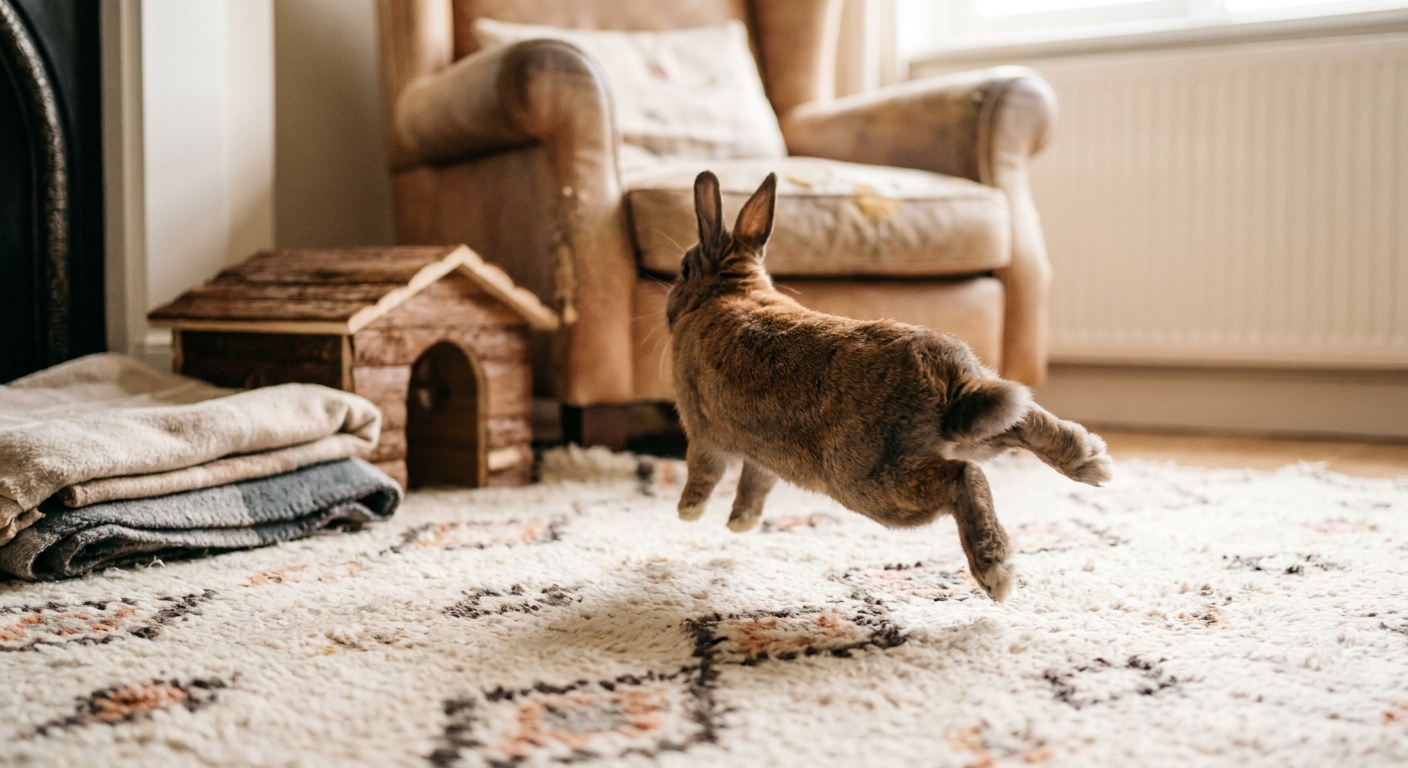
If you’ve ever watched a rabbit fling themselves into the air like a furry acrobat or seen a guinea pig launch straight up for no apparent reason, you have already met the headline behaviors: binkies and popcorning. They are adorable, yes. They are also real communication.
Small pets do not “act out” the way we often assume. They signal. Once you learn the signals, daily care gets so much easier. You know when to give space, when to offer reassurance, and when to stop everything and call your exotic vet.
One important note before we decode the greatest hits: body language is always a whole-body story. A thump plus wide eyes plus a frozen posture means something very different than a single thump followed by a relaxed flop.
Read the whole picture first
When I am assessing a foster, I do a quick “scan” from nose to tail. This works for rabbits and guinea pigs with only slight tweaks.
- Movement: freezing, creeping, zooming, or normal strolling?
- Posture: relaxed and stretched out, or tight and tucked?
- Eyes: soft and half-lidded, or wide and prominent?
- Ears: neutral, pinned back, or swiveling like satellite dishes?
- Breathing: calm, or fast with heaving sides?
- Sound: quiet, purring, tooth clicking, squealing?
If you only remember one thing: sudden stillness + tension is often fear or pain. “Cute quiet” can be a red flag in prey animals.
Rabbit body language
Binkies
What it looks like: A leap with a twist, head flick, or back-feet kick. Sometimes it is a full airborne spin. Sometimes it is a tiny hop with attitude.
What it means: Joy, excitement, and confidence in the environment. In foster terms, binkies are the “this place feels safe enough to be silly” stamp of approval.
What to do: Enjoy it. If binkies happen right after you change flooring, add a new rug, or expand space, you probably made an upgrade your rabbit appreciates.
Zoomies
What it looks like: Sprinting laps, often with sharp turns, sometimes with binkies mixed in.
What it means: Energy release, excitement, or “I feel good.” Evening zoomies are classic, especially in younger rabbits.
What to do: Make the runway safe. Good traction, no loose cords, and no slick floors where they wipe out and strain something.
Thumping
What it looks like: A firm stomp of one back foot, sometimes repeated like a tiny drum solo.
What it means: Usually alarm or frustration. In the wild it is a warning signal. In your home it can be triggered by a sudden sound, an unfamiliar smell, a new person, or a disagreement about bedtime.
Context clues that change the meaning:
- Thump + frozen body + wide eyes: fear. Reduce noise and movement, offer a hide, and give space.
- Thump + charging the pen door: frustration or “I want out now.” Consider more free-roam time and enrichment.
- Thump + repeated, plus hiding and refusing food: stress that can spiral into gut slowdown. Monitor closely.
What to do: Do a quick safety check, then lower stimulation. If thumping starts suddenly and continues with appetite changes, treat it as an urgent “something is wrong” message and get same-day guidance from a rabbit-savvy vet.
Flopping
What it looks like: A rabbit drops onto their side like someone turned off the power button.
What it means: Deep relaxation and trust. Many rabbits only flop when they feel safe in that spot.
What to do: Let them be. This is not the moment to pick them up for cuddles, no matter how kissable they look.
Loafing vs. pain posture
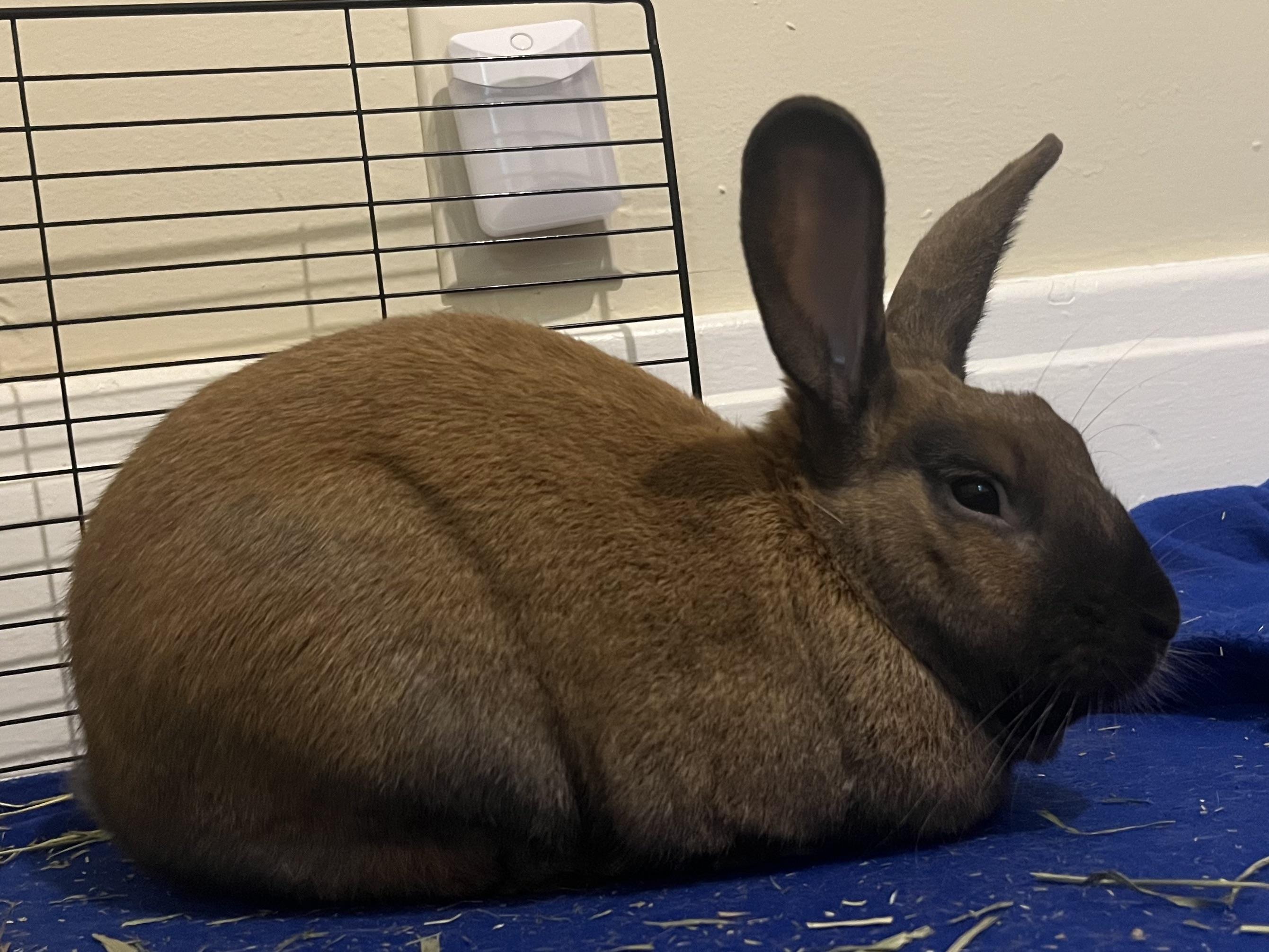
Loaf: Feet tucked under, body rounded, eyes soft, ears neutral. A comfortable resting posture.
Hunched pain posture: Tight belly, tense shoulders, reluctant to move, eyes can look “hard” or wide, sometimes with pressing the belly to the ground.
What to do: If your rabbit is hunched and not eating, assume this needs same-day exotics advice. Rabbits can go downhill fast with GI slowdown or dental pain, and the early window matters.
Teeth purring vs. grinding
Teeth purring: A soft, gentle tooth vibration when being petted. Relaxed body, melted posture.
Teeth grinding: Louder, more forceful. Often paired with a tense body and reduced appetite. This can signal pain.
What to do: If it is loud grinding, stop and assess. Check for other signs like hiding, hunched posture, and not eating. Call your rabbit-savvy vet if you suspect pain.
Ear positions
- Neutral or softly angled: calm.
- Swiveling, “radar ears”: alert, listening, unsure. Not necessarily bad, just attentive.
- Pinned back tight: fear, irritation, or about to lunge. Watch the rest of the body.
- One ear up, one ear out: often relaxed curiosity, especially in lops with expressive “half-mast” ears.
Nudging, circling, and honking
What it looks like: Nose nudges, circling your feet, and sometimes a little “oink” or honk sound.
What it means: Can be affection and excitement, but it is also common in rabbits that are hormonal or feeling territorial.
What to do: If it is paired with spraying, mounting, or aggression, discuss spay or neuter timing with your vet. If it is gentle and social, respond with calm attention and a treat-based training session.
Chinning and splooting
Chinning: Rubbing their chin on objects is normal scent marking. It is usually a confident “this is mine” message, not a problem behavior.
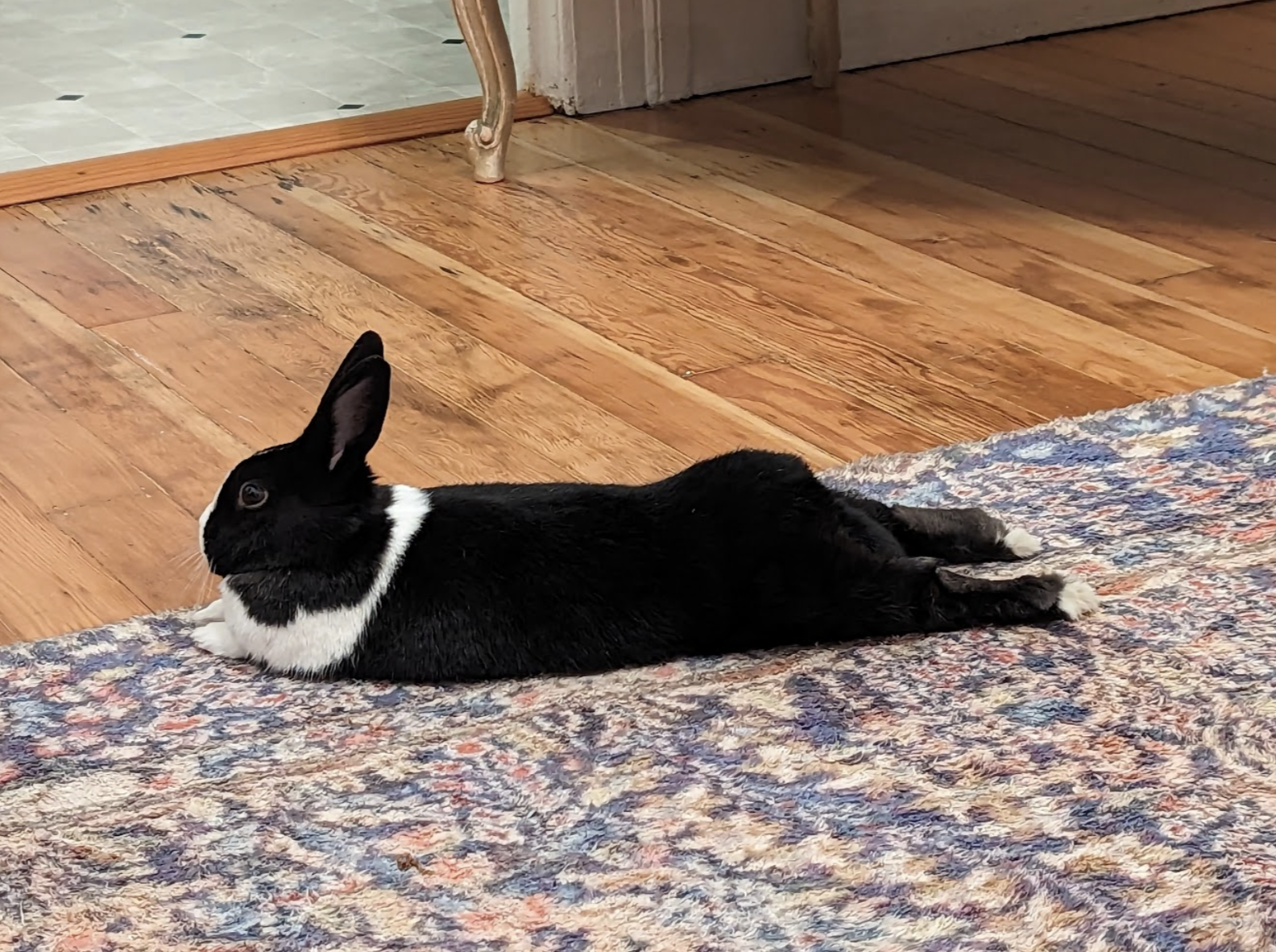
Splooting: Stretching out with back legs kicked behind them often signals comfort and good temperature regulation. If a rabbit suddenly refuses to move out of a stretched posture, or seems weak or painful, that is different and worth a vet call.
Guinea pig body language
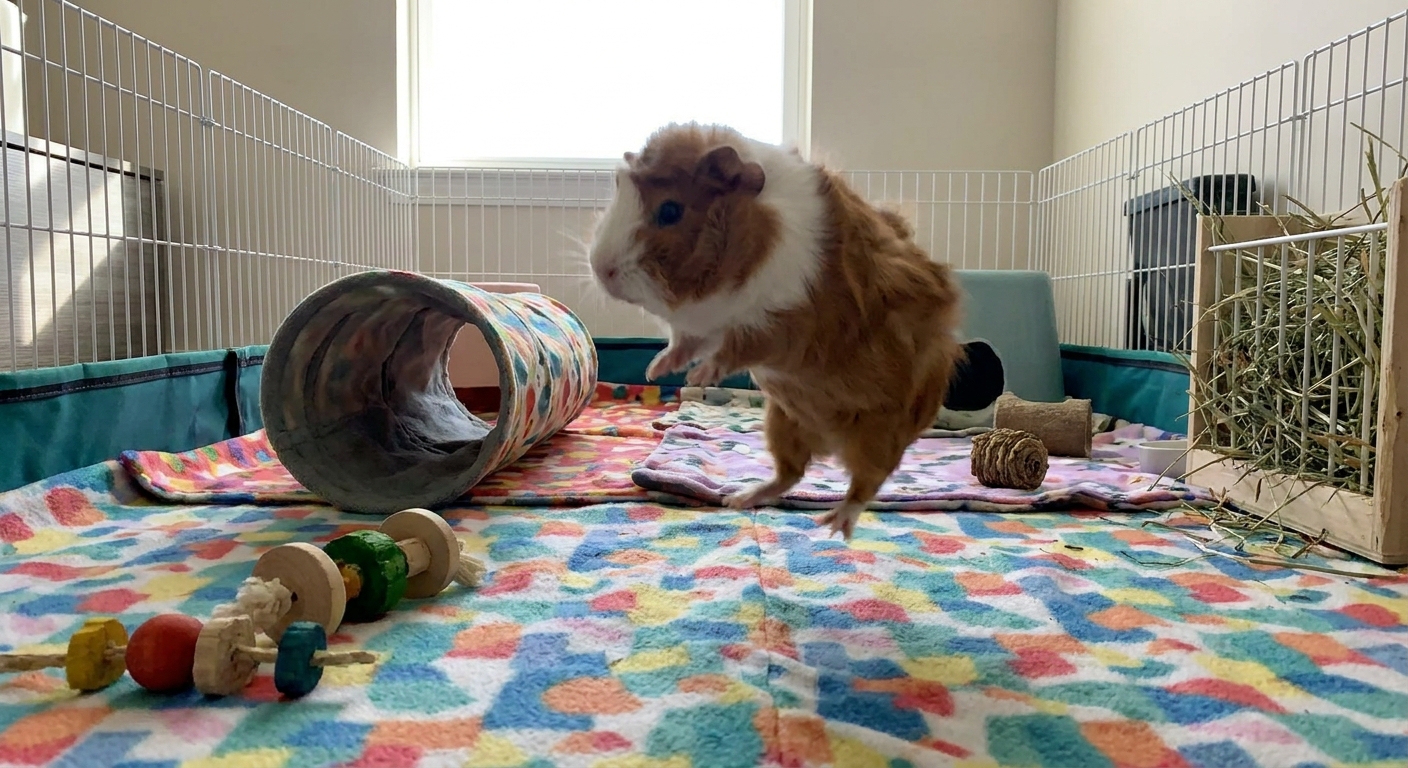
Popcorning
What it looks like: Sudden jumps straight up, often with a twist, like popcorn kernels popping.
What it means: Happiness and excitement, especially in younger pigs. You will often see it during floor time, after a cage clean, or when the salad plate arrives.
What to do: Celebrate quietly. If popcorning happens in a very bare enclosure, it can also be pent-up energy. Add more space and enrichment.
Wheeking
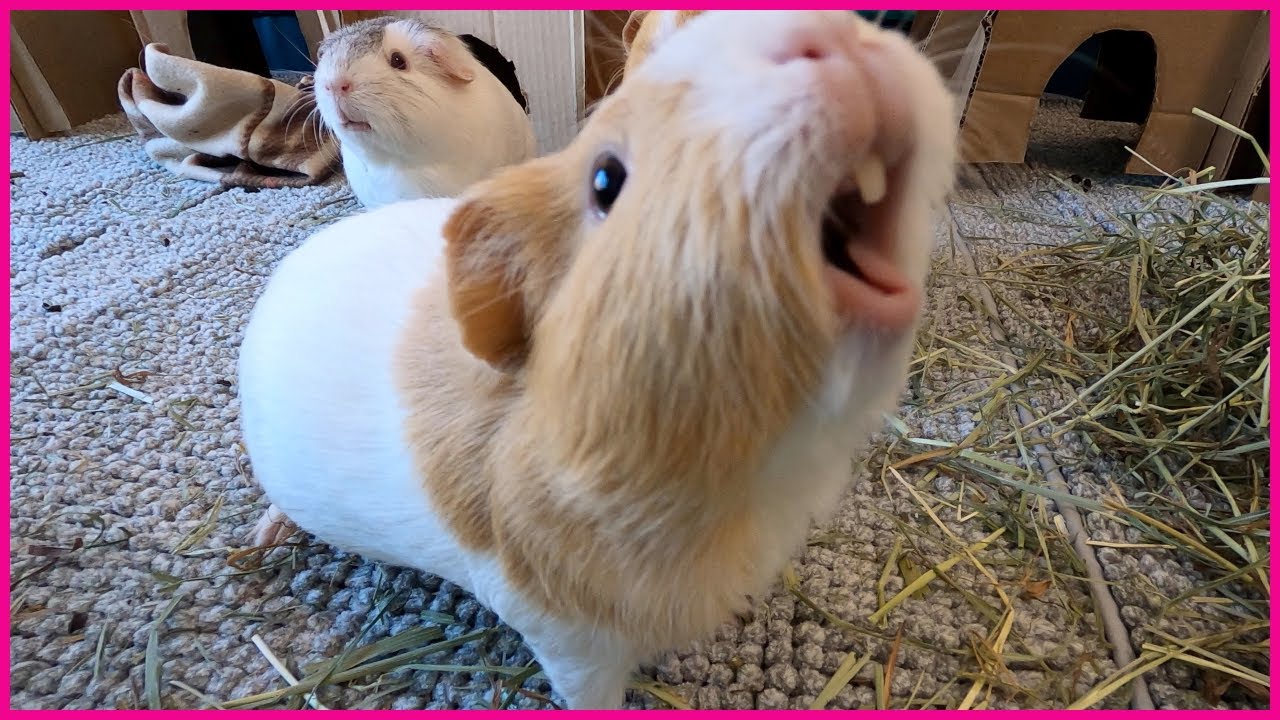
What it sounds like: The classic loud “WHEEK WHEEK” that somehow carries through walls.
What it means: Anticipation, usually food or routine. Many guinea pigs learn the sound of the fridge, a produce bag, or the footsteps of their favorite human.
What to do: Keep the routine predictable. If wheeking suddenly changes to distressed screaming, treat it as urgent.
Rumbling and the rumble strut
What it looks like: A low vibrating rumble while slowly strutting, hips swaying.
What it means: Dominance, courtship, or social negotiation. In pairs or herds, this can be normal communication.
What to do: Monitor. If it stays at posturing and everyone keeps eating, it is often fine. If it escalates to teeth chattering and lunging, you may need to separate temporarily and reassess introductions.
Teeth chattering
What it looks/sounds like: Rapid clicking teeth, often with a stiff posture.
What it means: “Back off.” It is a serious warning.
What to do: Do not put your hand between guinea pigs who are chattering at each other. Interrupt with a towel barrier, a piece of cardboard, or by creating space so nobody can corner anyone. If you need to break focus, try a calm diversion like fresh hay on the opposite side of the enclosure. Sudden loud noises can spook pigs and make things worse, so save them for true emergencies only.
Freezing
What it looks like: Completely still, low to the ground.
What it means: Fear response. Guinea pigs freeze first, then bolt if they decide they cannot hide.
What to do: Reduce noise, and offer more cover. You can drape a breathable light blanket over part of the enclosure to help a timid pig feel less exposed, but keep airflow wide open, avoid trapping heat, and remove anything they can chew or get tangled in. Also offer multiple hides with at least two exits so a timid pig cannot be trapped by a bolder roommate.
Purring
Guinea pigs can make a soft purr-like sound, but the meaning depends on tone and body posture.
- Low, relaxed purr while being gently petted: contentment (often with a still body).
- Deeper, stronger purr with stiffness: annoyance or warning.
What to do: If the body stiffens or the pig turns their head to nip, stop petting and give space.
Barbering and chirping
Barbering: One guinea pig may chew another’s fur (or overgroom themselves), leaving uneven patches. Sometimes it is dominance or boredom, sometimes it is stress. Make sure there is plenty of space, multiple hay piles, and more than one hide with two exits.
Chirping: Rare, high-pitched “bird-like” chirping can happen during high arousal or stress. If chirping is new and your pig also seems unwell (not eating, puffed up, breathing changes), call an exotics vet.
Quick cheat sheet
If you are standing at the pen thinking, “Is this cute or concerning?”, these patterns help.
Happy rabbit
- Binkies and zoomies with loose, fluid movement
- Flopping or stretching out fully
- Soft eyes, normal breathing
- Gentle tooth purring during pets
- Eating and grooming normally after a startle
Happy guinea pig
- Popcorning and exploring with confidence
- Casual chatting, quiet “brrr” sounds
- Eating hay while you are nearby
- Approaching the front for treats without freezing
Annoyed or overstimulated
- Rabbit: ears pinned back, tail up, quick head flicks away from your hand, lunging at the dustpan like it insulted their ancestors
- Guinea pig: stiff body, warning purr, teeth chattering, head tosses
What helps: Shorter handling sessions, more choice-based interaction (let them approach you), and enrichment that burns energy without pestering them.
Terrified or highly stressed
- Rabbit: frozen statue posture, wide eyes, repeated thumps, rapid breathing, bolting into corners
- Guinea pig: prolonged freezing, frantic darting, panicked screaming
What helps: Quiet the room, dim lights, offer a hide, and avoid chasing or grabbing. For rabbits, traction matters. Sliding on floors adds panic. For guinea pigs, cover and multiple exits provide fast relief.
Possible pain or illness (both species)
- Not eating or eating much less
- Hunched posture or reluctance to move
- Grinding teeth (especially loud in rabbits)
- Hiding more than usual and acting “shut down”
- Changes in poop size, quantity, or absence of poop
- Labored breathing, head tilt, or discharge from eyes or nose
What to do: Call an exotics veterinarian and ask for same-day advice. With rabbits, appetite changes and reduced poop output are urgent. With guinea pigs, any breathing difficulty or refusal to eat is also urgent. When in doubt, I would rather you be “overcautious” than miss the early window where treatment is simpler.
Common mix-ups
My rabbit hates me because they thump
Thumping is often about the environment, not you. A new smell, a neighbor’s dog, a door slamming, or a poorly timed vacuum can trigger it. If the thumping happens when you approach, check whether you are leaning over (predator silhouette) or moving too fast.
My guinea pig is quiet so they are calm
Some pigs are quiet, but silence plus freezing is not calm. Calm looks like chewing hay, grooming, or slow exploring. A terrified pig looks like a decorative statue.
Teeth sounds are always happy
Rabbit tooth purr can be blissful. Loud tooth grinding can be pain. Guinea pig purring can be content, or it can be “please stop.” Always pair the sound with posture and appetite.
What to do now
If you see fear
- Stop moving and stop reaching into the space
- Turn your body sideways and lower yourself
- Offer a hide, a tunnel, or a box with two exits
- Use calm, predictable routines for feeding and cleaning
If you see frustration or boredom
- Rabbits: add digging boxes, cardboard castles, foraging mats, and more run space
- Guinea pigs: increase cage size, add multiple hay stations, rotate tunnels and paper bags (plain, no inks or coatings), and ensure hides do not create dead-end traps
If you suspect pain
- Do not wait for it to “pass”
- Keep them warm and quiet
- Document what you see: appetite, poops, posture, and any new behaviors
- Call your exotics vet and describe symptoms clearly
Body language FAQ
Do rabbits binky when they are scared?
True binkies are usually joy. What people sometimes label a “scared binky” is actually a startled jump or frantic twist while bolting away. If your rabbit leaps and then runs to hide with wide eyes, interpret it as fear, not celebration.
Why does my rabbit thump at night?
Rabbits are crepuscular, so they are more alert at dawn and dusk. Night thumps can be triggered by outdoor noises, shadows, or even a household routine change. Add a night light for very timid rabbits, close curtains, and make sure there is a secure hide.
Is popcorning always a good thing?
Most of the time, yes. A pig who popcorns and then continues exploring and eating is showing excitement. If the enclosure is very small, you may see “bounce energy” that looks like popcorning but is really restlessness. Space, hay variety, and floor time help.
My guinea pig chatters teeth when I try to pick them up. What now?
Assume they are saying “no thank you.” Work on trust first: hand-feeding, lap time inside a cuddle sack, and gentle lifts that fully support the body. Also rule out pain, especially if the reaction is sudden or new.
When should I worry about a rabbit sitting still?
If stillness comes with not eating, a hunched posture, or fewer poops, worry now and seek same-day exotics guidance. If stillness is paired with relaxed posture and normal eating, it is probably rest. Appetite and poop output are your best reality check.
Learning body language is one of the kindest things you can do for a rabbit or guinea pig. It turns guesswork into understanding. And once you start noticing the tiny cues, you will realize they have been talking to you the whole time. We just needed to learn the accent.