A room-by-room, rabbit-safe bunny-proofing guide covering cords, baseboards, rugs, plants, toxins, furniture, and common hazards in free-roam homes.
Rabbit Cove
Boredom in Rabbits and Guinea Pigs: Signs and Chewing Fixes
Learn the red flags of an under-stimulated rabbit or guinea pig and how to reduce destructive chewing, cage-biting, and digging with safe enrichment that works.

Chloe Miller
Chloe Miller is a dedicated small-pet enthusiast and experienced foster parent who has spent over a decade caring for rabbits and guinea pigs. Through her hands-on work with local animal rescues, she shares practical, compassionate advice on housing, nutrition, and daily enrichment to help small pets thrive. When she isn't designing custom indoor enclosures, Chloe can be found coaxing shy rescues out of their shells with fresh cilantro.
Published
October 22, 2026
Updated
October 22, 2026
If your rabbit is rattling the pen like a tiny construction crew or your guinea pig is suddenly acting like the cage bars personally offended them, boredom is often the real culprit. Destructive chewing and frantic digging are rarely “bad behavior.” They are usually normal instincts pointed at the wrong target, especially when space, routine, and enrichment are a little too predictable.
The good news is that you can often turn those behaviors around without punishment. The goal is simple: meet the need underneath the behavior, then make the “good choice” easier than the destructive one. Just keep in mind that medical issues, housing limits, or unresolved stress can slow progress, so it is okay if your fix is a mix of management and gradual improvement.
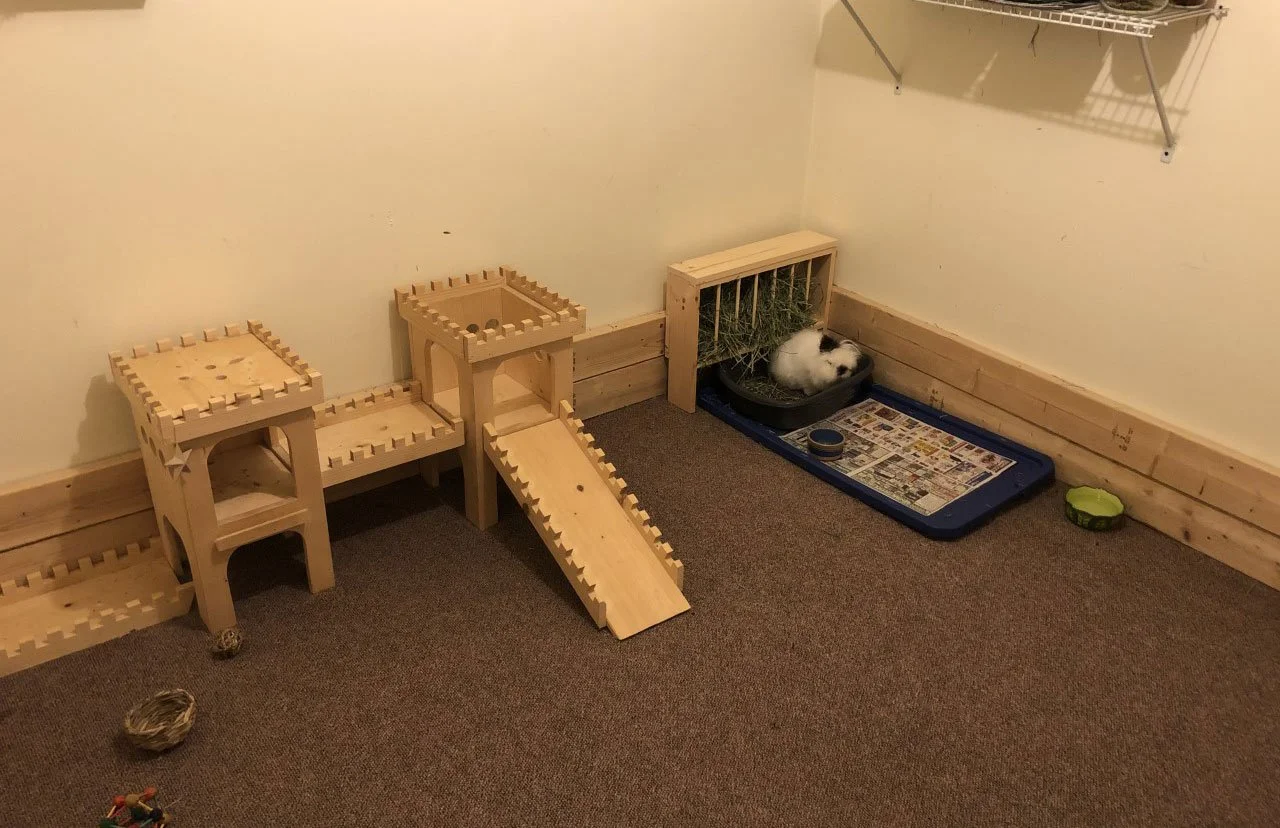
What boredom looks like
Boredom is not just “having nothing to do.” For rabbits and guinea pigs, it can show up as restlessness, attention-seeking, and repetitive habits that help them cope with an environment that feels too small, too plain, or too predictable.
Common boredom signs in rabbits
- Bar-biting or rattling on pens and cages, especially at the same times each day.
- Baseboard, carpet, and furniture chewing, often focused on one favorite spot.
- Digging obsessively at carpet, blankets, the litter box corner, or under furniture.
- Repetitive pacing along a fence line or circling a small area.
- “Fine, I will redecorate” behavior like dumping bowls, flipping hideouts, or tossing litter.
- Over-grooming or pulling fur can sometimes be stress or boredom related and deserves a vet chat.
Common boredom signs in guinea pigs
- Constant bar chewing or persistent climbing at the same wall of the enclosure.
- Harassing cagemates from sheer restlessness (chasing, rumble-strutting more than usual, being extra pushy).
- Frantic food-seeking, especially around routine feeding times, can be boredom, anticipation, competition, or under-feeding. It can also be a health clue (dental discomfort, pregnancy, pain), so watch for other changes.
- Repetitive routes like running the same loop with no exploration.
- Shutting down, hiding all day, and moving very little can also be under-stimulation or low confidence.
Quick reality check: a sudden behavior change can also signal pain or illness. If chewing or agitation appears out of nowhere, appetite changes, droppings look different, or your pet seems stiff or hunched, book an exotics vet visit first.
Why bored pets chew and dig
Chewing and digging are not optional hobbies for small herbivores. They are hardwired.
- Rabbits explore with their mouths, chew to manage ever-growing teeth, and dig as an instinctive nesting and burrowing behavior. If they do not have acceptable outlets, they will pick outlets for you.
- Guinea pigs are forage brains. They thrive on grazing, exploring, and moving between cover. Bar chewing is often a sign that the setup is too small, too empty, too predictable, or stressful, or that they have learned “biting bars makes humans appear.”
The fix is not “stop chewing.” The fix is provide better things to chew and better ways to spend their time, then block access to the risky stuff while the habit fades.
Rule out the sneaky stuff
I know it is tempting to jump straight to toys, but these three factors decide whether enrichment works or fails.
1) Pain and health issues
Dental discomfort, urinary issues, arthritis, mites, and GI upset can all make a rabbit or guinea pig restless, nippy, or destructive. Any combination of decreased appetite, smaller poops, weight loss, drooling, wet chin, or sensitivity when touched means it is time for a vet check.
2) Diet basics: hay is non-negotiable
Unlimited grass hay is your number one boredom buffer because it takes time to eat and supports gut movement.
- Rabbits: unlimited timothy, orchard, or other grass hay (alfalfa only for young rabbits or specific vet-guided cases).
- Guinea pigs: unlimited grass hay plus a daily vitamin C source (typically via fortified pellets and produce).
If the hay rack is empty for long stretches, you will often see more bar chewing and general chaos.
3) Space and layout
Enrichment cannot fully compensate for cramped housing. As a baseline, aim for:
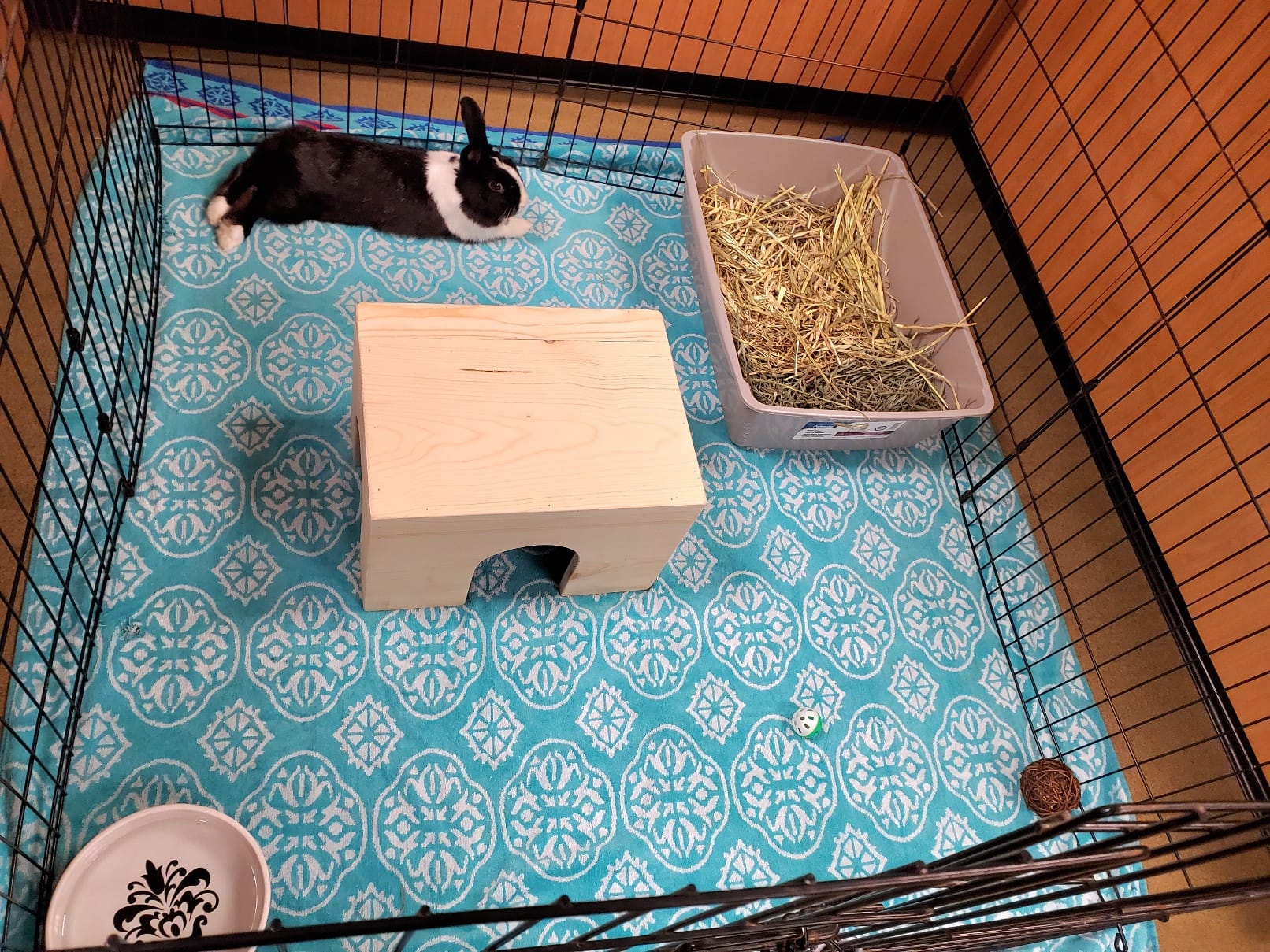
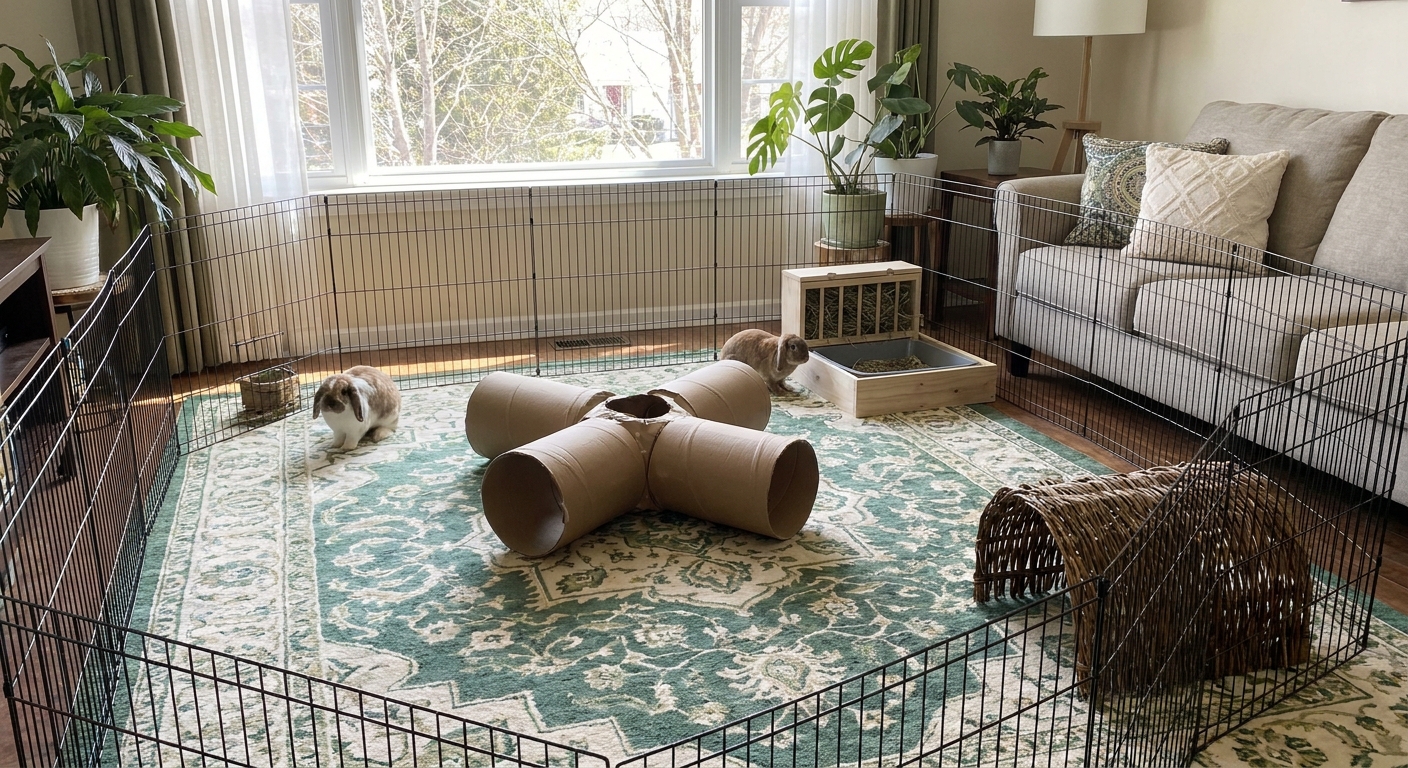
- Rabbits: roomy x-pen or bunny-proofed room time daily. “Cage-only living” almost always creates frustration behaviors.
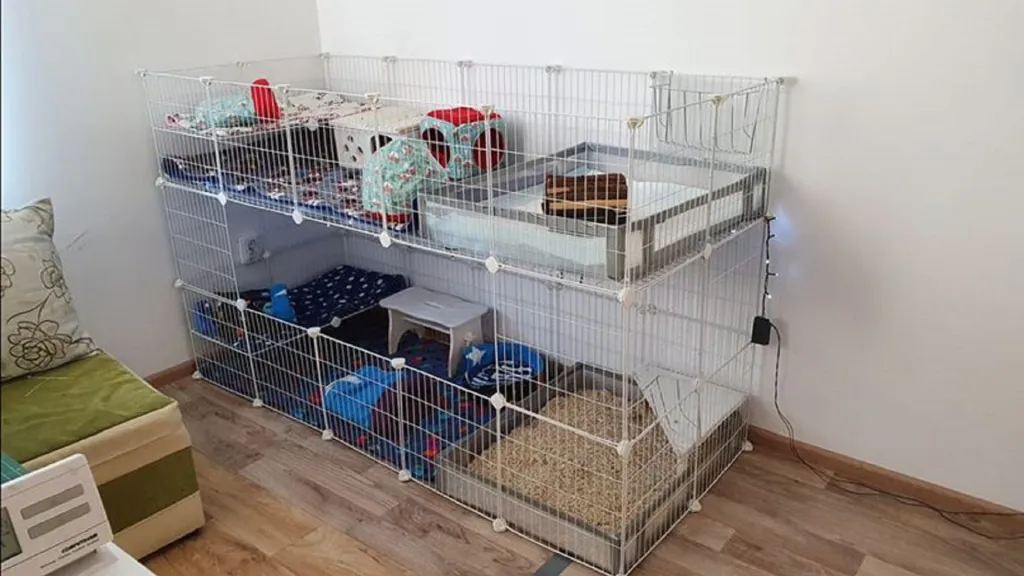
- Guinea pigs: large C&C style enclosure with long run space. Many “starter cages” trigger bar chewing because there is nowhere to go.
If you are not sure what “big enough” means, check updated, species-appropriate minimums from reputable welfare organizations and rescues. Standards change as we learn more, and bigger is nearly always easier on behavior.
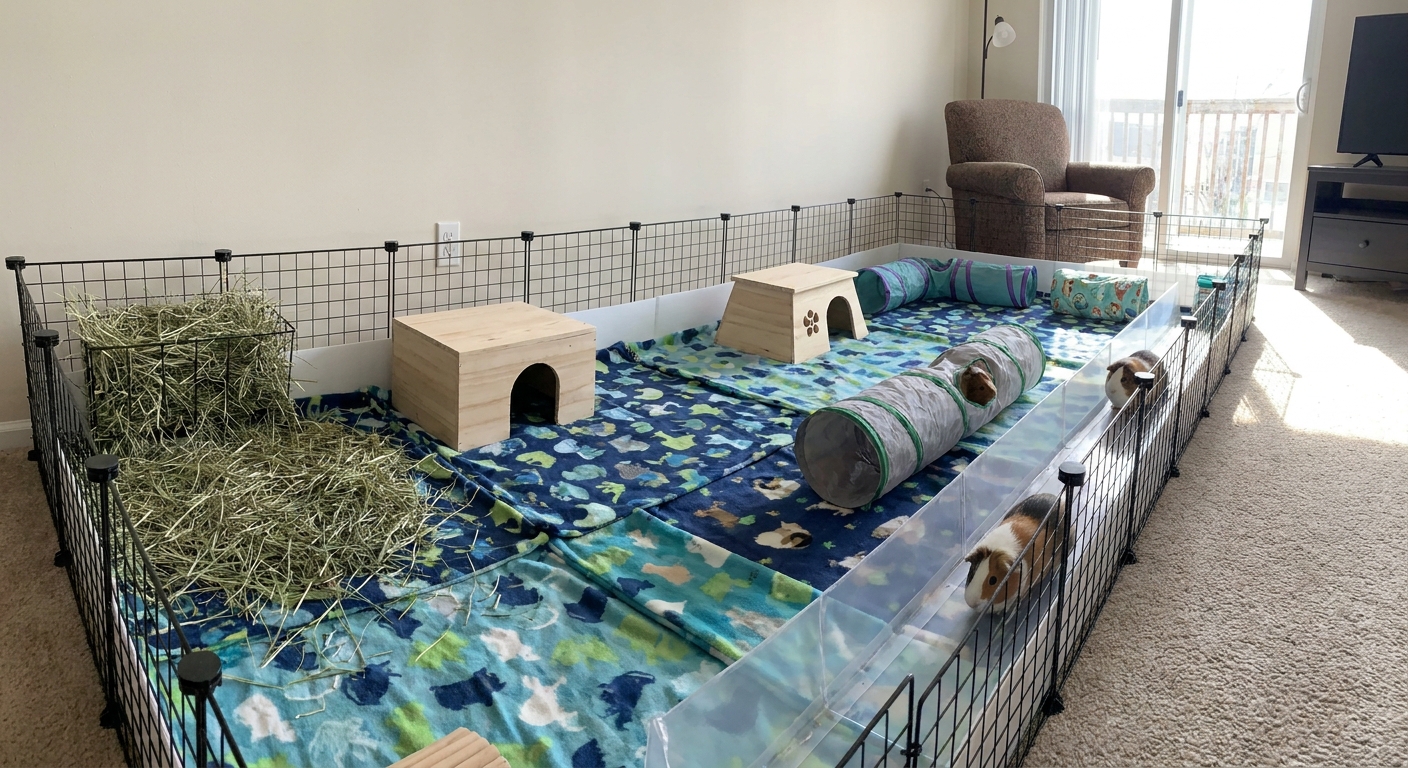
Stop destructive chewing
Think in layers: block access, offer better outlets, and reward the choice you want.
Step 1: Pet-proof the damage zones
- Baseboards and door frames: cover with clear plastic baseboard guards, untreated wood corner protectors, or NIC grids zip-tied as a barrier.
- Cords: always use cord protectors and route cords out of reach. One curious bite is all it takes. If a cord gets chewed, unplug it and replace it. Do not tape-and-hope.
- Carpet corners: block access with a heavy tile, a grass mat, or a low barrier and provide a dig option nearby.
- Pen bars: add a visual blocker on the problem side (coroplast panel, fleece drape clipped safely) and increase out-of-pen time.
Blocking is not “giving in.” It is management. You cannot train while your pet is actively self-rewarding by chewing the same spot all day.
Step 2: Provide chew options that compete
Not all chew toys are equally satisfying. These tend to work best because they shred nicely, smell interesting, and feel good on the teeth.
- Hay-based chews: woven hay balls, hay cubes, hay mats.
- Wood chews: untreated applewood, willow sticks, aspen.
- Commercial pine chews (use care): if you choose pine, stick to pet-labeled chews that are kiln-dried and resin-free, and make applewood, willow, or aspen your everyday staples.
- Cardboard: plain boxes, paper towel tubes (cut a slit lengthwise so no heads get stuck), brown packing paper.
- Foraging chews: stuff a cardboard tube with hay and a few herbs so chewing equals rewards.
Avoid: painted or varnished wood, cedar, pine or “mystery wood” that is not clearly pet-safe, pine cones from outside, and anything with metal staples or glue seams your pet can access. Even store-bought pine cones should be pet-labeled and heat-treated.
Shredding cardboard and paper is normal, but keep an eye on swallowing. If your pet is eating large amounts of cardboard, seems gassy, or poops change, pull the item and talk to your vet.
Step 3: Redirect in the moment
If you catch the behavior, do a calm interrupt and swap.
- For rabbits: place a chew in front of the mouth, then reward with a tiny herb piece when they switch targets.
- For guinea pigs: offer hay or a chew right at the bars, then reward with a small, diet-appropriate veggie nibble when they turn away from bar biting. Keep treats consistent with their usual diet to avoid tummy drama.
Try not to chase, clap, or startle. Startling can increase stress, and stressed animals chew more, not less.
Step 4: Reduce “bar biting gets attention”
This one is big with guinea pigs. If every bar chomp makes you appear with snacks, they learn fast.
- Feed on a schedule.
- Pre-load the habitat with hay before veggies so the first wave of anticipation has a healthier outlet.
- Wait for a pause in bar chewing, then approach and reward calm behavior.
- Put the hay in multiple locations so they can choose foraging instead of demanding.
Stop digging
Digging is normal. The trick is giving a “yes” option that feels better than the “no” option.
Dig box ideas for rabbits
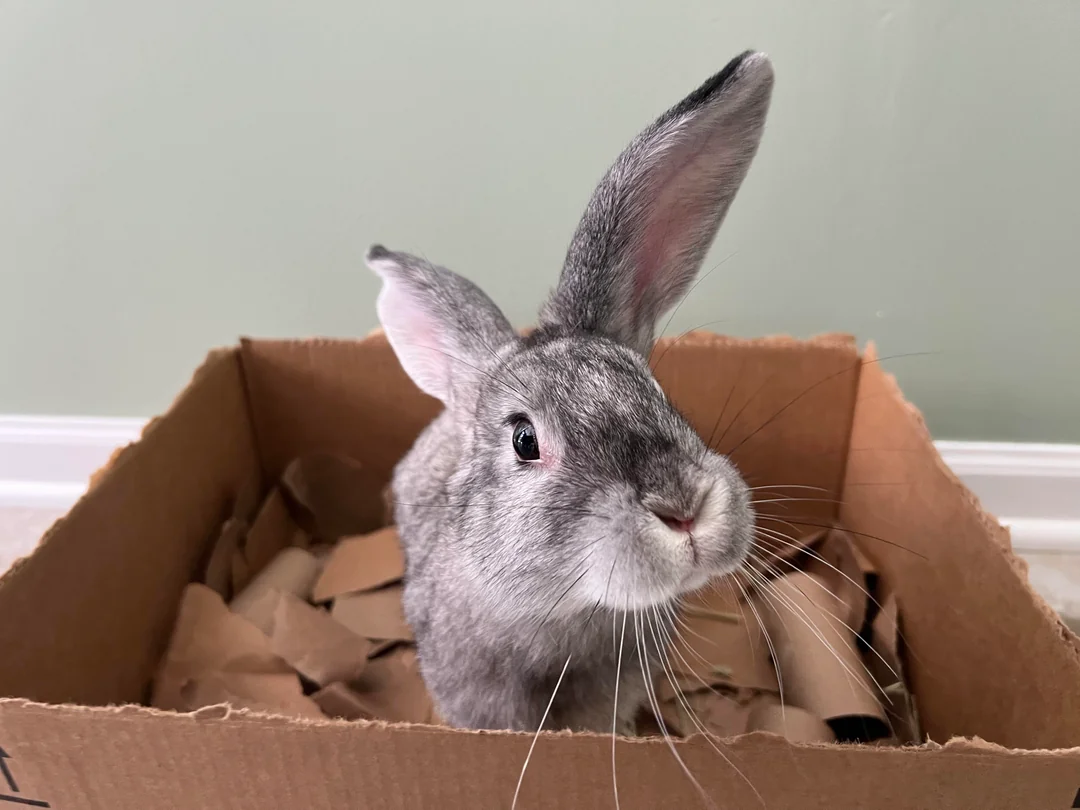
- Shredded paper box: a deep cardboard box filled with plain shredded paper and a handful of hay.
- Towel box: a storage bin or box lined with old towels with pellets sprinkled between folds for foraging.
- Soil-free option: a box of hay and crumpled brown paper, plus a couple of willow balls to toss.
Place the dig box right next to the spot they keep targeting. Rabbits are very location loyal.
Digging and nesting in unspayed females
If a female rabbit is digging, pulling fur, and building nests, hormones may be driving the intensity. Spaying often helps enormously, and it dramatically reduces the risk of uterine cancer. If you see repeated false pregnancies, talk to your rabbit-savvy vet.
Enrichment that works
When I am fostering, I aim for three enrichment types daily: movement, foraging, and problem solving. You do not need expensive gadgets. You need variety and rotation. If you live in an apartment or your space is tight, small layout changes and foraging games can still make a big difference.
Foraging upgrades
- Scatter feed: toss pellets in a snuffle mat or across fleece so they have to search.
- Hay stations: 2 to 4 hay piles around the enclosure, each near cover.
- Herb hunt: hide cilantro, parsley, or romaine in paper bags or under tunnels.
- Cardboard puzzle: fold paper over a few pellets inside a small box so they have to shred to win.
Movement and layout changes
- Rabbits: daily free run time, a couple of boxes to jump on, a tunnel, and at least one hideout with two exits.
- Guinea pigs: long straight “zoom lanes,” multiple hideouts, and tunnels that encourage laps. Rearrange the layout weekly to make their world feel new again.
Safe social enrichment
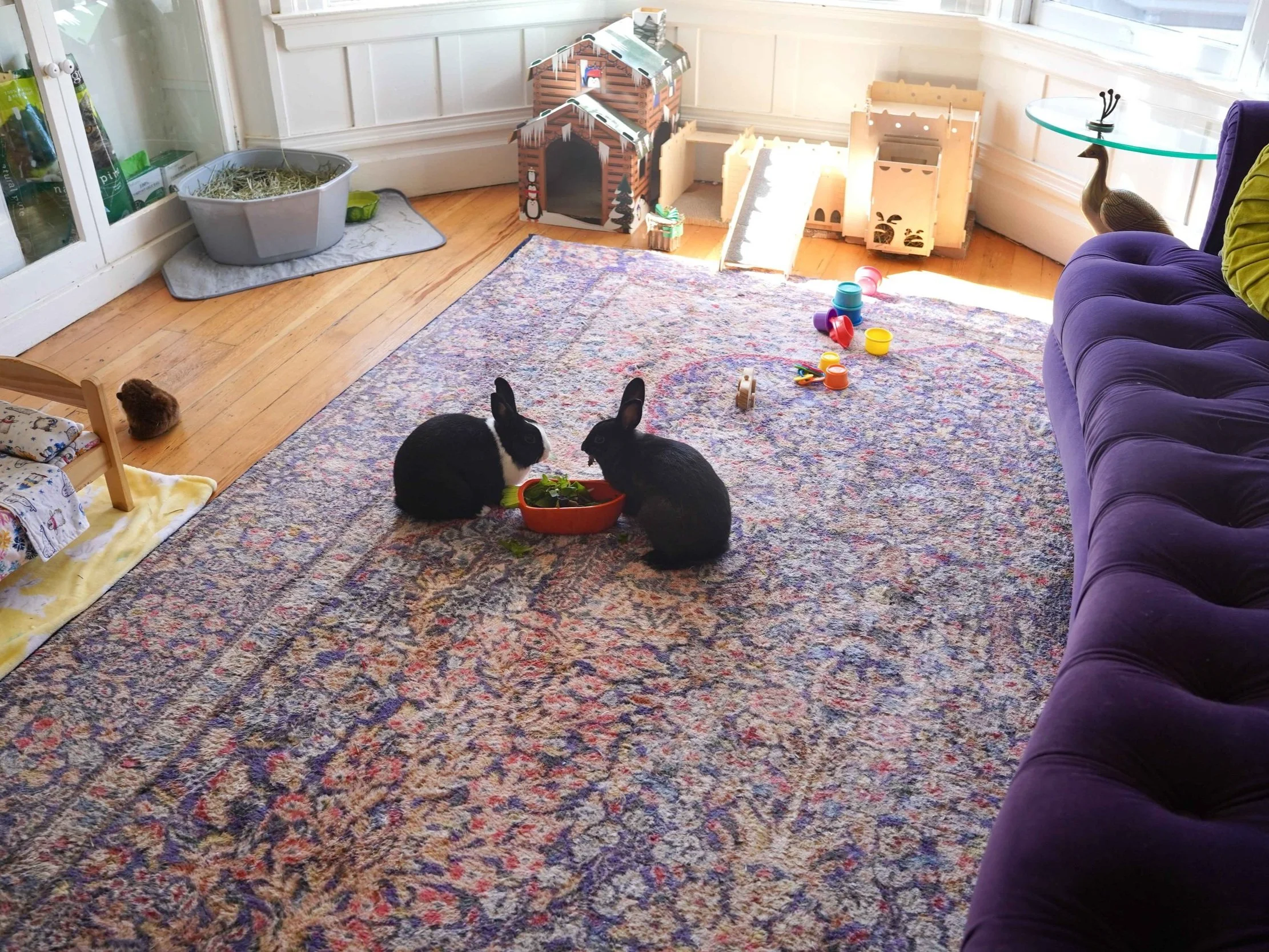
- Rabbits: bonded pairs are often calmer and less destructive. A lonely rabbit commonly invents their own entertainment, and it is usually expensive.
- Guinea pigs: most thrive in same-species pairs or groups, with enough space and resources to prevent squabbles.
If pairing is an option for you, work with a rescue that offers bonding support. It is one of the kindest boredom cures there is.
What the location means
| Behavior | Common cause | Best fix |
|---|---|---|
| Rabbit chewing baseboards | Teeth maintenance plus curiosity, often near a favorite resting spot | Baseboard guards, add a chew station there, increase foraging |
| Rabbit digging carpet corner | Burrowing instinct, frustration, or “this corner feels like a den” | Block corner, place dig box beside it, add rugs or mats |
| Rabbit biting pen bars | Wants out, wants attention, wants more to do | More space, more run time, rotate toys, reinforce calm behavior |
| Guinea pig bar chewing | Small enclosure, predictable routine, stress, or learned attention habit | Bigger habitat, more hay stations, reward quiet, add hides and tunnels |
| Guinea pig chewing at coroplast edge | Texture and access point, sometimes stress | Cover edge, offer chew items, add cover and multiple hides |
Simple 7-day reset
If you feel overwhelmed, try this one-week reset. It is designed to break the loop of “I chew, I get stimulation” by providing better stimulation on purpose.
Daily (Days 1 to 7)
- Refresh hay twice a day and add at least one extra hay pile.
- Do one foraging activity (scatter feed, herb hunt, or stuffed tube).
- Do one movement change (tunnel, box, or rearranged hide placement).
- Redirect chewing to a chew station and reward the swap once or twice.
On Day 1
- Install barriers in the main damage zones (baseboards, cords, carpet corners).
- Create a chew station: a hay mat or cardboard box with applewood and a willow ball.
On Day 3
- Introduce a dig box (rabbits) or a new tunnel configuration (guinea pigs).
On Day 5
- Rotate out half the toys and replace with “new” ones from the closet. Old toys feel new again after a break.
On Day 7
- Evaluate what worked. Keep the top two enrichments and schedule them for busy times of day when chewing usually spikes.
FAQ
Is cage biting always boredom?
Not always. It can be boredom, a too-small setup, a learned attention habit, stress, or anticipation around feeding time. In both rabbits and guinea pigs, sudden onset can also mean pain. If anything else seems “off,” start with a vet check, then upgrade space and enrichment.
What can I put on baseboards to stop my rabbit chewing?
Use physical protection, not bitter sprays. Clear plastic baseboard guards, untreated wood protectors, or NIC grids attached as a barrier work well. Bitter sprays are often ineffective and can irritate sensitive mouths or make the area more interesting.
What are the safest chew toys?
Hay toys, willow, applewood, untreated aspen, and plain cardboard are my go-tos. If you are unsure about a material, skip it. “Natural” does not always mean safe.
My guinea pig chews bars even in a big cage. Now what?
Try adding more cover (hideouts and tunnels), multiple hay stations, and a predictable feeding schedule. Pre-load hay before veggies, then stop rewarding bar chewing with instant attention. Wait for a quiet moment, then approach and reinforce calm behavior with hay or a veggie nibble.
The takeaway
Destructive chewing and digging are usually your pet’s way of saying, “I have needs and I am clever enough to get your attention.” When you add space, variety, and the right outlets, most rabbits and guinea pigs choose the fun, safe option.
If you want a simple starting point, do this today: add an extra hay station, block the most damaged spot, and set up one chew station right where the trouble happens. Small changes, repeated daily, are how you get your peaceful house back and give your tiny roommate a richer life at the same time.