Minimum vs ideal floor space for rabbits and guinea pigs, with practical layouts, storage tips, and common sizing mistakes to avoid.
Rabbit Cove
Bunny-Proofing Your Home
Protect baseboards, hide cords, and secure furniture with rabbit-safe bunny-proofing tips so your free-roam rabbit can explore safely indoors.

Chloe Miller
Chloe Miller is a dedicated small-pet enthusiast and experienced foster parent who has spent over a decade caring for rabbits and guinea pigs. Through her hands-on work with local animal rescues, she shares practical, compassionate advice on housing, nutrition, and daily enrichment to help small pets thrive. When she isn't designing custom indoor enclosures, Chloe can be found coaxing shy rescues out of their shells with fresh cilantro.
Published
October 22, 2026
Updated
October 22, 2026
Many free-roam rabbits are happier, fitter, and frankly much funnier to live with. They are also enthusiastic interior decorators with very strong opinions about your baseboards.
Bunny-proofing is not about making your home sterile. It is about removing the high-risk stuff and giving your rabbit better things to do than nibble the one cord that can take down your Wi‑Fi. Free-roam only works when it is paired with smart barriers, enrichment, and a setup that fits your rabbit’s health and temperament.
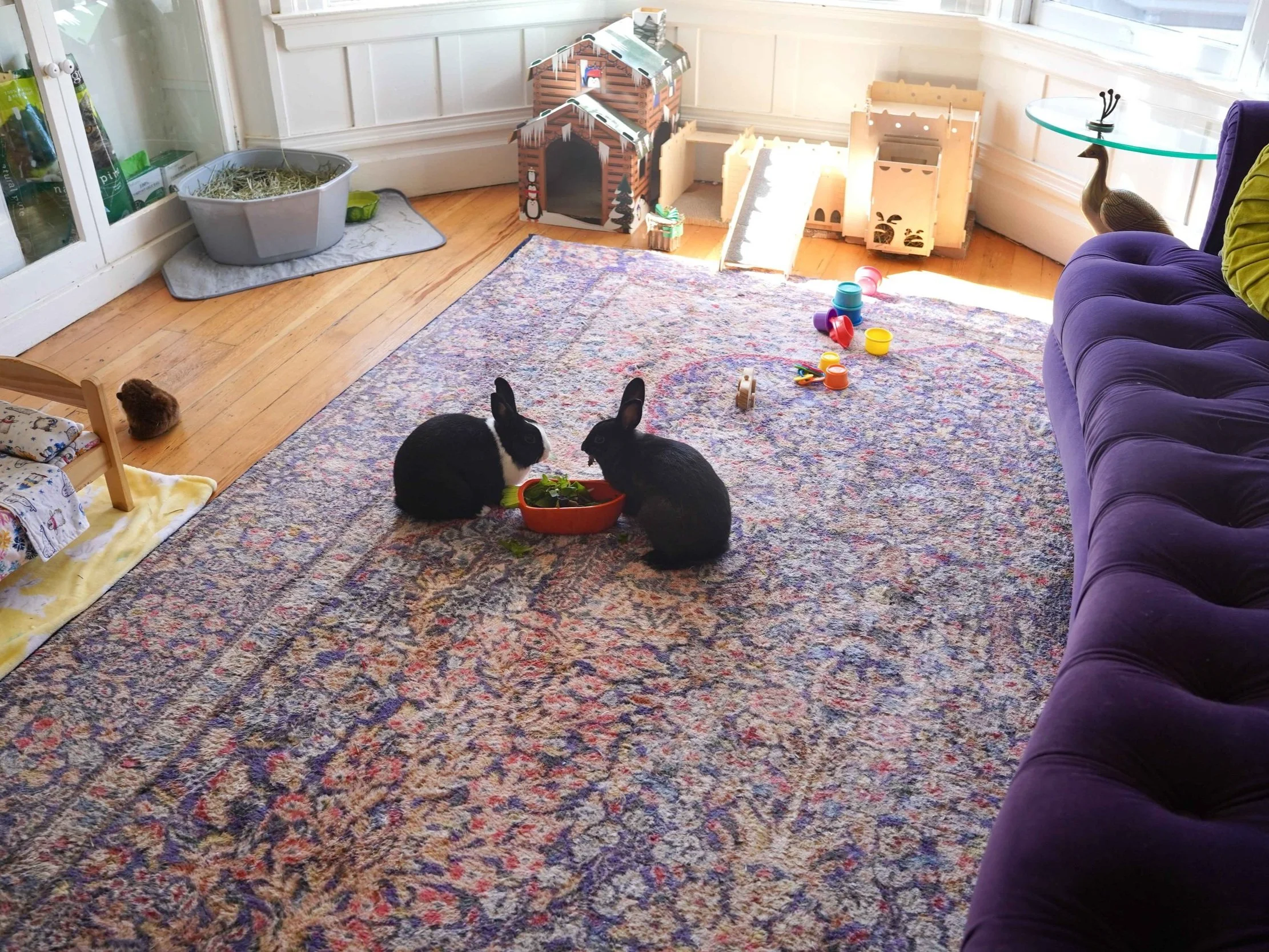
Use this guide as a checklist, then tweak it to match your rabbit. Some buns ignore wood and obsess over carpet. Others are tiny electrical engineers. Most are both, depending on the day.
Start with a quick safety scan
Before you buy supplies, do a five-minute crawl. Literally get down to rabbit height and look for anything chewable, tuggable, or swallowable.
The rabbit eye level checklist
- Cords and chargers: anything dangling or lying on the floor.
- Gaps behind furniture: especially behind the TV stand, desk, and couch.
- Soft plastics: remote buttons, controller grips, storage bin edges.
- Carpet edges and rug corners: prime digging and pulling zones.
- Houseplants: even “just a nibble” can be a big deal.
- Small items: hair ties, kids’ toys, coins, Lego, pen caps.
- Unstable furniture: wobbly bookcases, lightweight floor lamps.
If you foster or have a youngster, assume they will test everything twice. Senior buns can be calmer, but a bored senior can still redecorate with surprising energy.
Electrical cords come first
If you do one thing today, do this. Rabbits can bite through a cord very quickly, and the risk is serious injury or worse. “I’ll watch them” is not a plan. Rabbits move faster than human panic.
Best ways to protect cords
- Route cords up, not across: run cables behind furniture and lift them off the floor using adhesive hooks or cable clips placed out of reach.
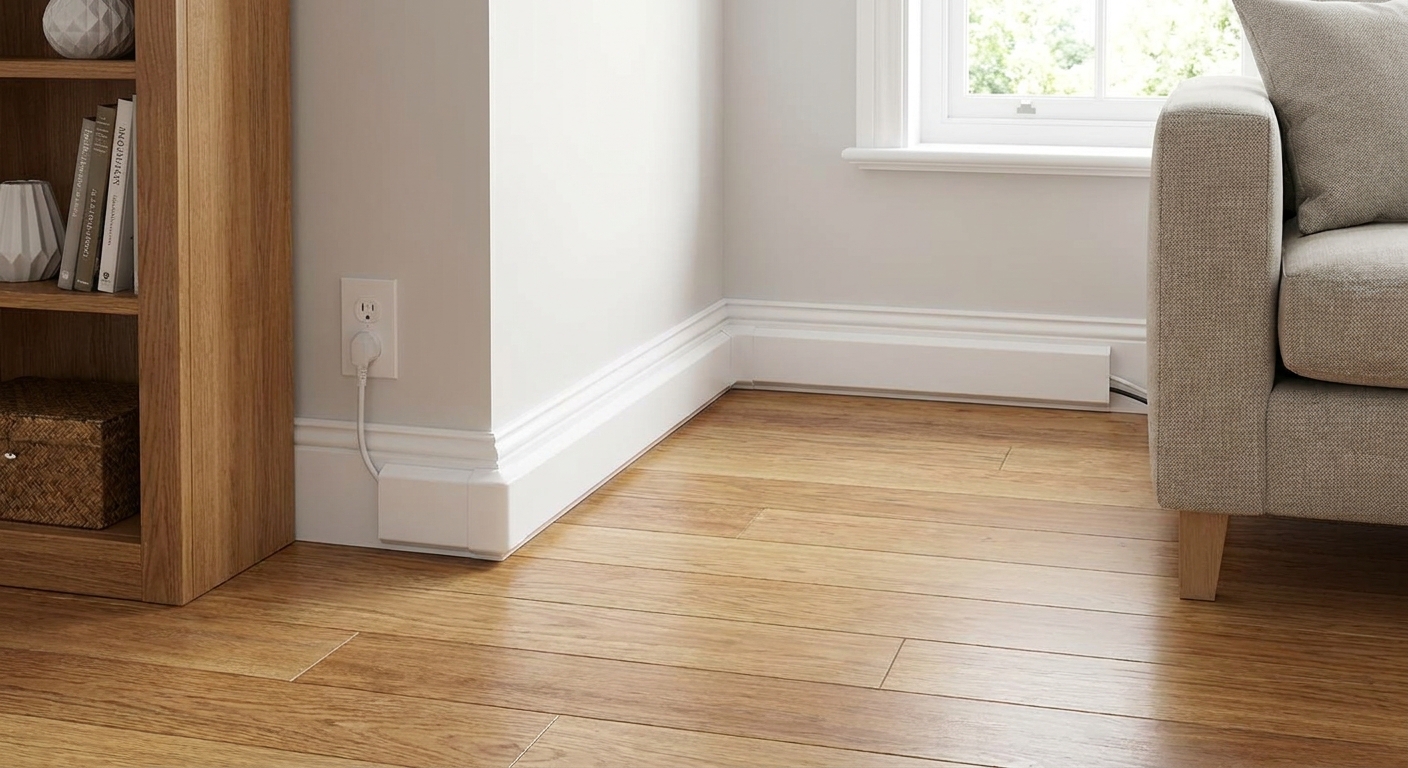
- Use hard cable covers: rigid cord channels along baseboards are harder to chew than soft tubing.
- Split loom as a backup: flexible corrugated tubing can help in a pinch, but some rabbits chew it like pasta.
- Bundle and shorten: excess cord length creates tempting loops. Use Velcro ties and keep slack minimal.
- Block access entirely: a storage bench, a low cabinet, or an x-pen panel can turn a cord jungle into a no-go zone.
High-risk cord zones
- Behind the couch where chargers live
- Under desks where power strips sit on carpet
- Beside the bed where phone cables dangle
- Floor lamps, heated blankets, and recliner cables
- TV consoles with game systems and speakers
Power strips: Mount them to the wall or the back of a desk with screws or heavy-duty mounting tape, then put the whole area behind a barrier. A power strip on the floor is basically a rabbit snack board.
Cover installation tip: If your cord channel uses adhesive, make sure there are no exposed sticky edges. Some rabbits will pick at tape, foam, or glue like it is a side quest.
Baseboards and trim
Baseboard chewing happens for a few reasons: curiosity, stress, boredom, and the simple fact that wood is satisfying. Your goal is to make baseboards inaccessible or uninteresting, while giving better legal chew options.
Baseboard protection options
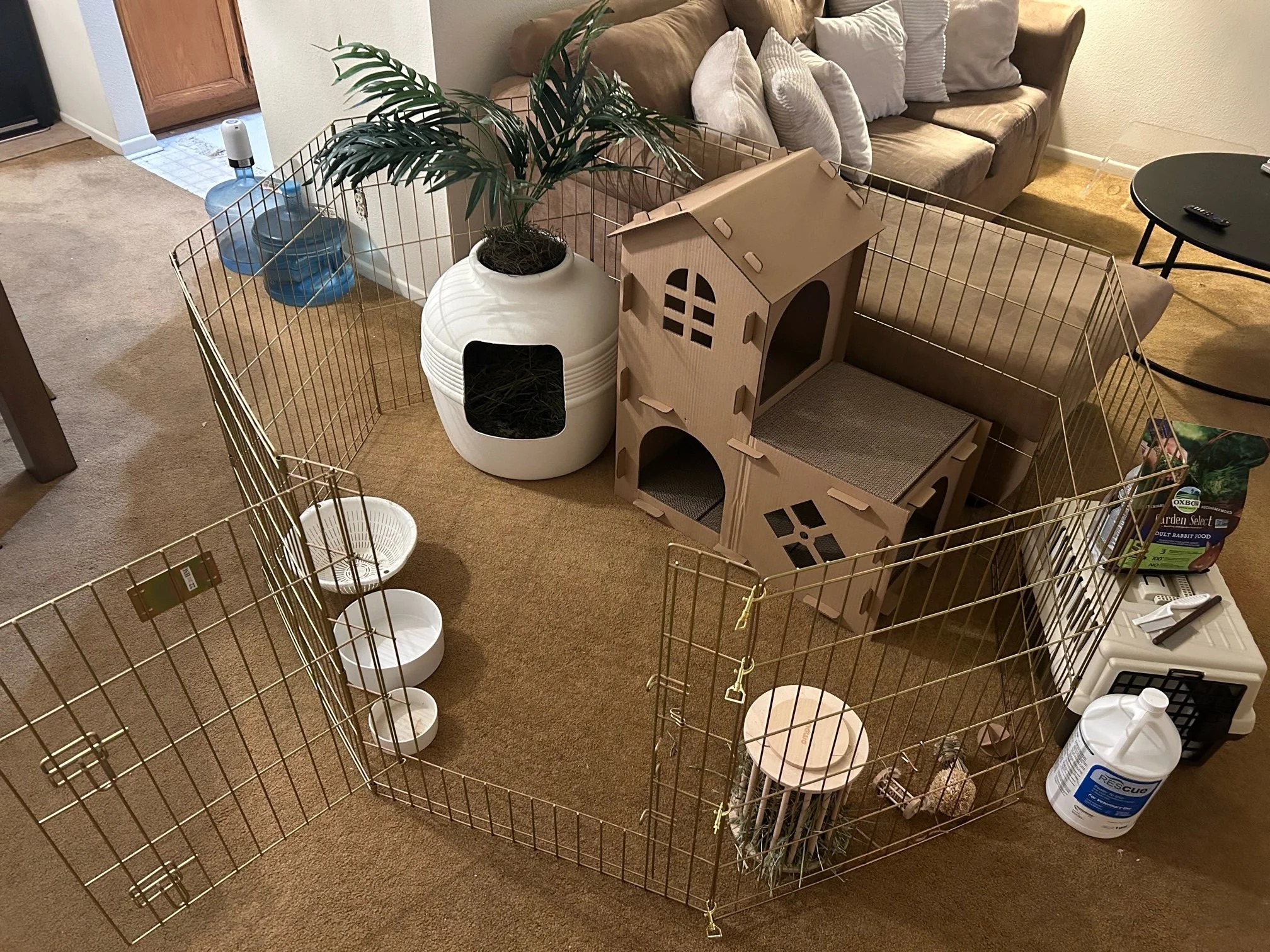
- Wire storage cube panels (NIC grids) or x-pen panels: set a panel a few inches in front of the wall so your rabbit cannot reach the trim at all.
- Clear plastic baseboard guards: these can work well in straight runs. Make sure edges are secured so your rabbit cannot get teeth under the lip.
- Untreated wood sacrificial strips: attach a cheap pine board in front of the baseboard in problem areas. Let them chew the decoy, not the original.
- Bitter sprays: inconsistent and often disliked by humans more than rabbits. Use only as a minor add-on, not your main plan.
Make chewing less likely
- Increase hay access: add an extra hay station near the trouble spot. Many rabbits chew more when they are bored or not spending enough time grazing, but some will still go for trim even with great hay.
- Add legal chews: apple sticks, willow balls, seagrass mats, untreated cardboard.
- Increase traction: slick floors can stress some rabbits. A few runners can make them feel secure and reduce anxious nibbling along walls.
If your rabbit is chewing baseboards obsessively, also check for stress triggers. New pets, construction noise, a moved litter box, too-small home base, or bonding and territory tension in multi-rabbit homes can all show up as “baseboard crimes.”
Furniture and tipping hazards
Rabbits love to wedge themselves behind things. They also love to jump onto things they absolutely should not be on. Bunny-proofing furniture is half chewing prevention and half “please do not crush your rabbit” prevention.
Secure the heavy stuff
- Anchor tall furniture: bookcases and shelving should be strapped to the wall, especially if your rabbit might dig at the base.
- Stabilize floor lamps: swap lightweight lamps for heavy-base versions or block access.
- Close recliners and sofa beds: do not let rabbits free-roam around mechanical furniture unless you are actively supervising.
Block trap zones
- Behind the couch: use x-pen panels, storage bins, or a fitted barrier to prevent access to cords and tight squeeze spaces.
- Under beds: either block it completely or make it rabbit-safe and easy to retrieve them from. “Under-bed bunny” is adorable until it is time for meds.
- Behind appliances: refrigerators and washers can have gaps, wires, and dust. Keep rabbits out of kitchens and laundry rooms when possible.
Floors, rugs, and carpet digging
Some rabbits ignore carpet. Others treat it like a personal landscaping project. Digging and pulling fibers can lead to swallowed material, which you really do not want moving through a rabbit gut.
Rug strategies
- Use low-pile, tight-weave rugs: loops and shag are an invitation.
- Secure edges: rug tape or grippers reduce the corner lift that starts most carpet attacks.
- Cover favorite dig spots: place a seagrass mat, a heavy doormat, or a cardboard dig tile over the exact area they target.
- Offer a real dig box: a shallow storage bin with shredded paper, hay, or clean fleece strips can redirect the urge.
Doorway carpet edges
Door thresholds are high-temptation zones. If your rabbit focuses there, consider a clear floor runner, a sturdy mat, or a barrier panel for that doorway until the habit fades.
Walls and paint
Rabbits can be weirdly into painted walls, especially corners. Usually it starts as licking, then turns into nibbling. If your rabbit is tasting walls, treat it like baseboard chewing.
- Block corners: corner guards or a grid panel set slightly away from the wall works well.
- Clean nearby areas: sometimes residue around litter areas can make a wall more interesting to lick. Keep litter boxes tidy and consider moving them a few inches away from the wall.
- Add enrichment: a rabbit who has nothing to do will invent a hobby, and that hobby is often “wall.”
Plants and toxins
Many common houseplants are irritating or toxic to rabbits. Even plants considered non-toxic can cause stomach upset if a rabbit eats enough of them. The simplest rule is this: if you cannot confirm it is rabbit-safe, assume it is not.
Plant safety options
- Move plants up high: truly out of reach, not on a low stand. Rabbits can jump.
- Use a plant room: keep plants in a closed room your rabbit never accesses.
- Choose rabbit-safe greens to grow: pots of wheatgrass, basil, or cilantro can be a safe alternative, with supervision.
Also watch: bouquets, fallen leaves, and soil. Some rabbits dig and eat potting mix, which can contain fertilizers or perlite.
Hidden household hazards
- Medications and vitamins: human and pet meds, plus gummy vitamins, are a big risk. Store them like you live with a clever toddler.
- Nicotine products: cigarettes, vapes, nicotine pouches, and discarded filters.
- Alcohol and edibles: keep glasses, cans, and anything infused fully out of reach.
- Essential oils and diffusers: oils, reed diffusers, and spills can be irritating or harmful. Keep them out of rabbit areas and avoid letting rabbits access oily residue.
- Scented melts and candles: mainly a burn risk and a curiosity magnet. Keep cords and warmers blocked.
- Pest control: rodent bait, insect traps, ant gel, and foggers. If you must treat, relocate your rabbit and follow product guidance for pets.
- Cleaning products: store securely and never leave wet, freshly-cleaned areas accessible until fully dry.
Kitchen and bathroom boundaries
I love free-roam setups, but I am not a fan of free-roam kitchens. Too many hazards are normal and hard to fully control.
Why these rooms are risky
- Cleaning products and detergents
- Sharp objects, dropped food, and choking hazards
- Appliances with cords and warm motors
- Toilets, buckets, and standing water
- Trash cans and compost bins
Strongly recommended: use baby gates or close doors. If your layout is open concept, an x-pen barrier wall works surprisingly well and looks better once you commit to matching panels.
Litter and bedding safety
Litter boxes are the center of your rabbit’s universe, so it is worth getting this part right.
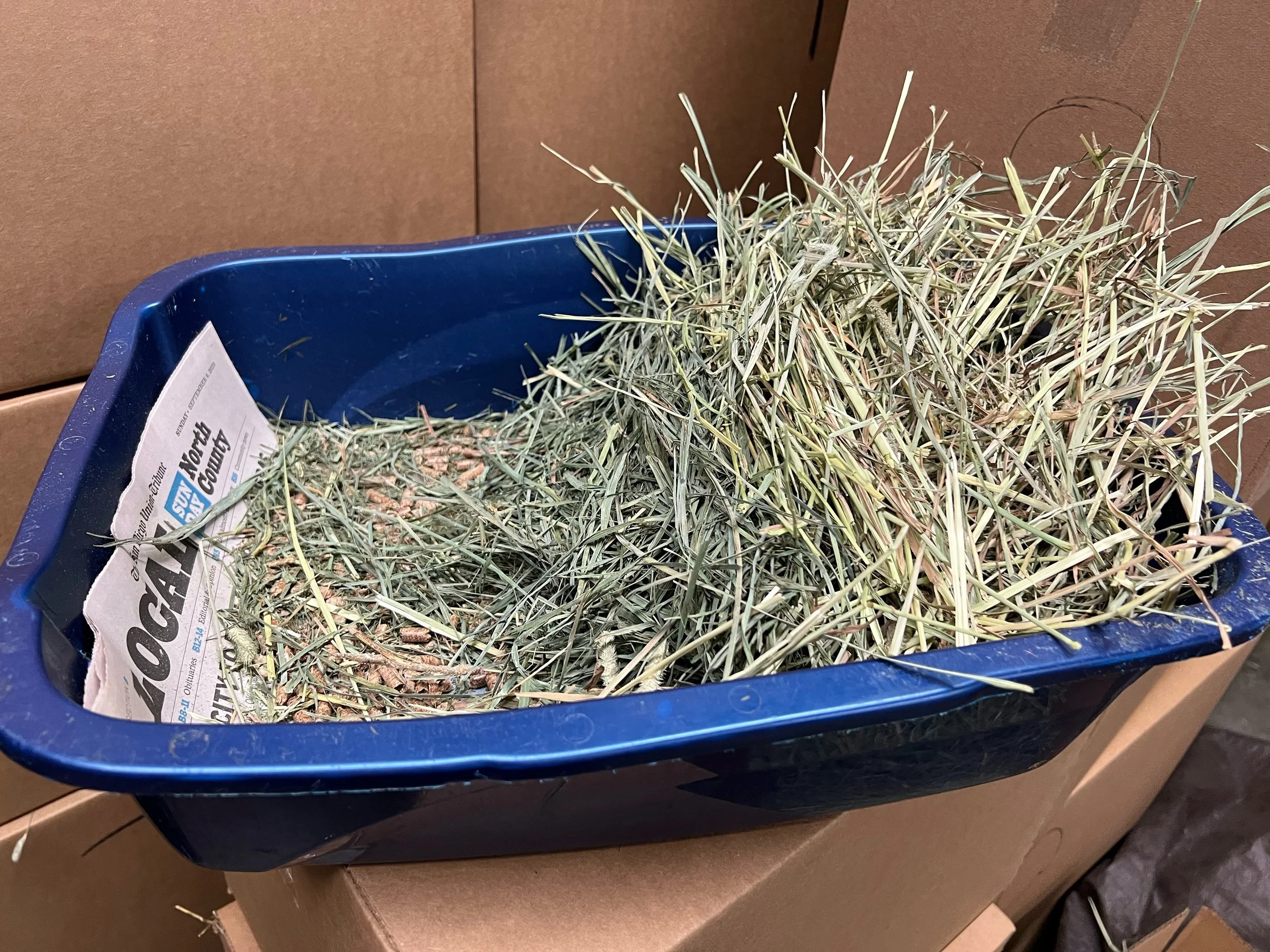
- Skip clumping cat litter: clumping clay litter can be dangerous if eaten and it is not a great fit for rabbit respiratory systems.
- Choose rabbit-appropriate litter: paper-based litter is a common go-to. Kiln-dried aspen can work for many homes, but avoid dusty options and monitor for any irritation.
- Ventilation matters: keep boxes clean, avoid strong fragrances, and aim for low dust overall.
- Hay is not optional: place hay so your rabbit can eat while using the box. That habit is your secret weapon for good litter box behavior.
Windows, balconies, and heat
Indoor rabbits still face environmental hazards.
- Screens are not rabbit-proof: a determined bunny can push through or chew screen edges. Keep windows secured and supervise open-air time.
- Balconies and stairs: block access unless you are completely confident it is safe. A slip can cause serious injury.
- Heat sources: keep rabbits away from space heaters, fireplaces, and hot sun patches that can overheat. Make sure they always have fresh water, shade, and a cooler retreat area.
- Watch for overheating: heavy breathing, lethargy, drooling, and hot ears are red flags. If you suspect heat stress, contact a rabbit-savvy vet promptly.
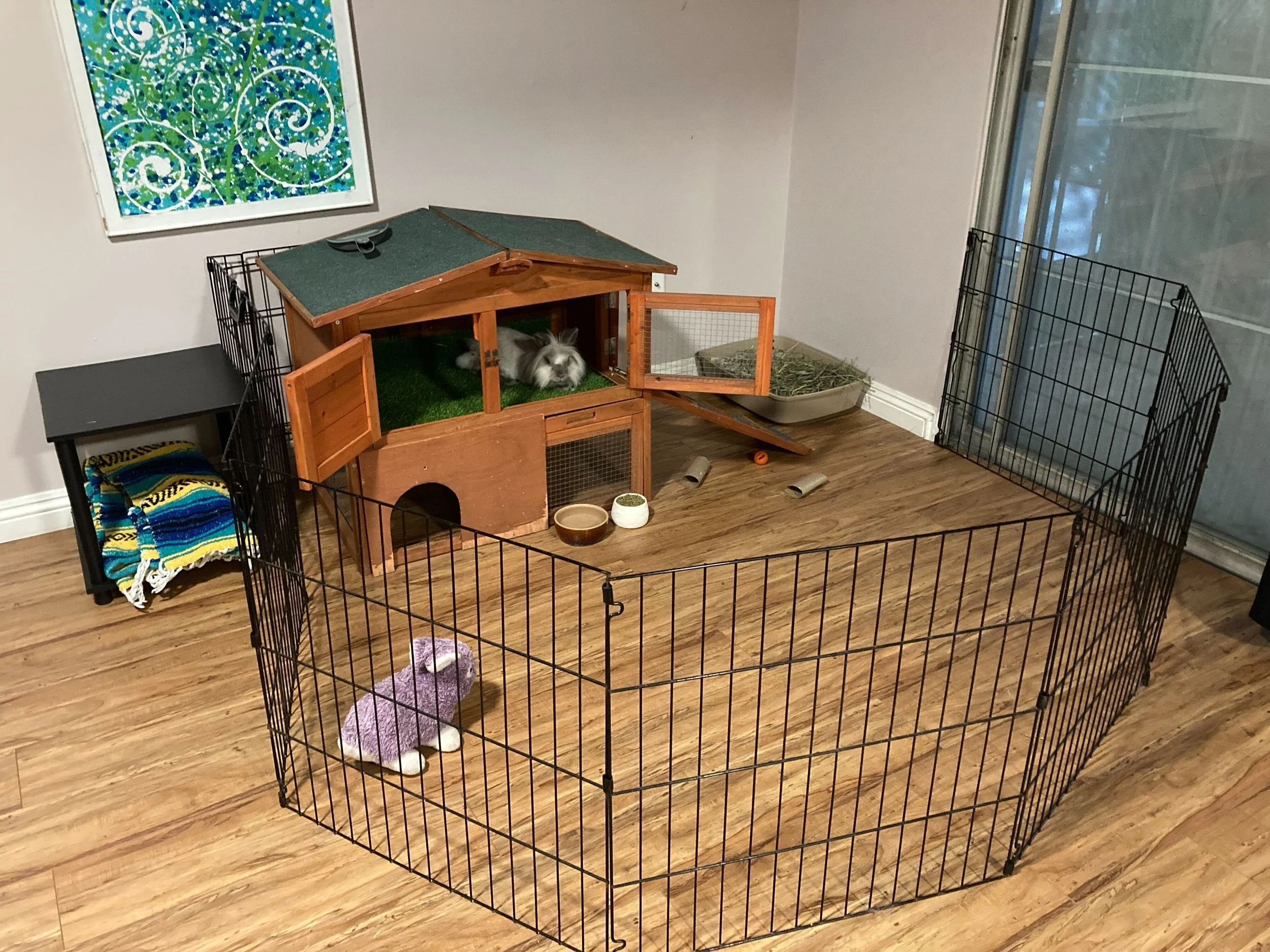
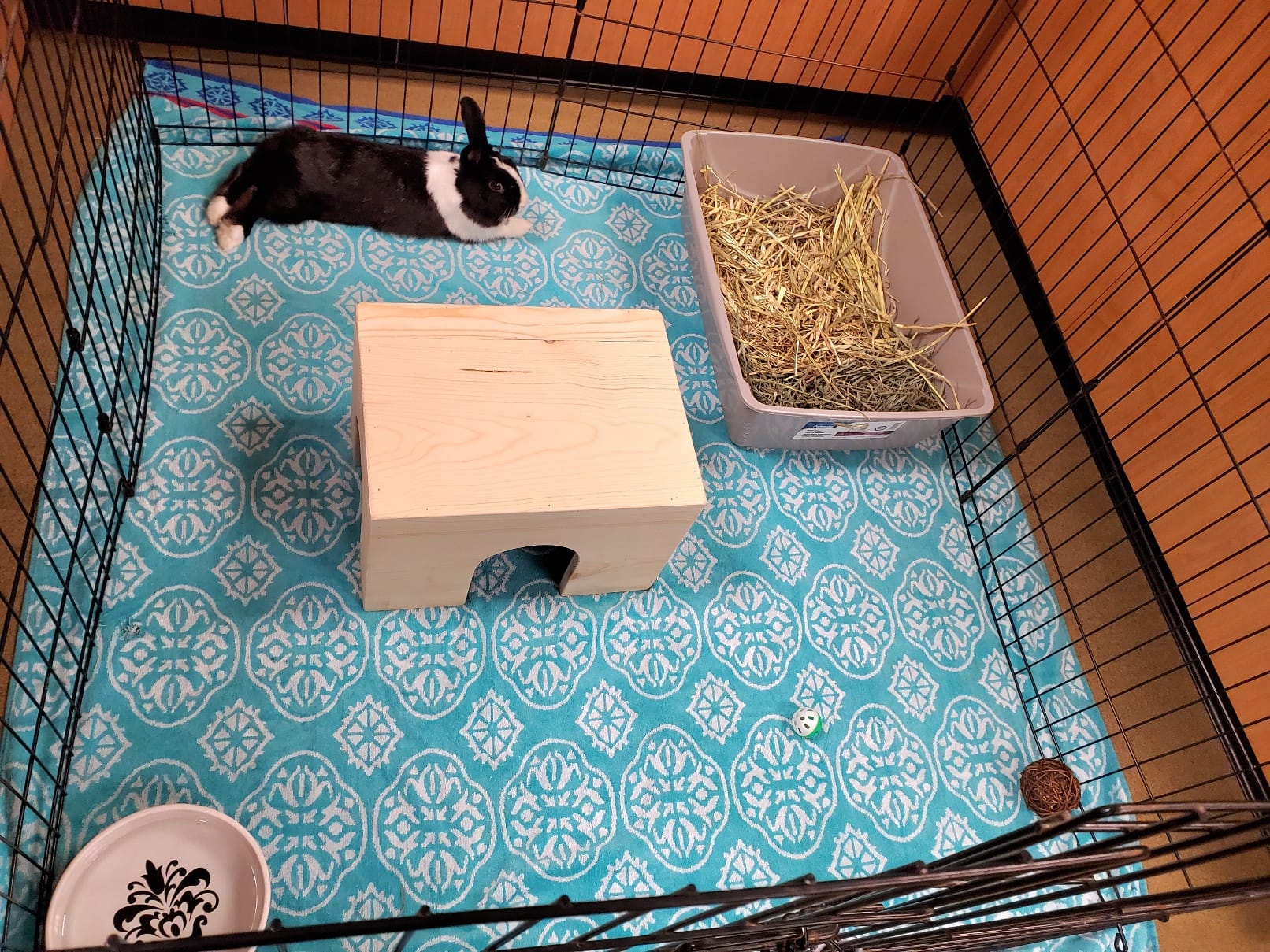
Build a yes zone
One of the biggest mistakes I see is giving a rabbit the whole house before there is enough enrichment. That is like handing a toddler the remote and hoping for the best.
What a strong base looks like
- A litter box that is easy to reach, with hay placed so they can munch while they potty
- At least one hidey house (two if you have two rabbits)
- Water bowl (heavy ceramic is my favorite)
- Chew options: sticks, cardboard, seagrass, untreated wood
- Comfortable traction: rugs or runners on slippery floors
If you are transitioning from a pen to full free-roam, expand territory gradually. Add one rabbit-proofed area at a time, not the entire home in one weekend.
Materials: what is safe?
Rabbits explore with their mouths, so choose materials that are sturdy and lower-risk if nibbled.
Generally safer choices
- Metal x-pen panels and wire storage cube panels
- Untreated wood (kiln-dried pine boards used as guards, apple sticks, willow)
- Seagrass mats
- Heavy ceramic bowls
- Fleece (as bedding or rug covers, if your rabbit does not chew fabric)
Use caution with
- Soft plastics: tubing and flexible protectors can be chewed into pieces.
- Foam mats: many rabbits chew them, and swallowing foam is a real concern.
- Adhesives: keep sticky tape and glue inaccessible. Secure items in ways that do not leave tempting exposed edges.
When in doubt, block access rather than relying on a coating or deterrent.
Room-by-room plan
Living room
- Barrier behind TV console and couch
- Hard cord channels along walls
- Stable furniture, anchored shelving
- Rug corners secured
Bedroom
- No dangling phone chargers
- Block under-bed access or make it fully safe
- Keep laundry and small items in closed bins
Office
- Mount power strip off the floor
- Cable-manage under desk with rigid covers
- Keep paper, envelopes, and books above rabbit reach
Hallways and doorways
- Protect carpet edges at thresholds
- Use gates to block unsafe rooms
- Cover baseboards where corners invite chewing
Troubleshooting
Cords still get targeted
Upgrade to a rigid cord channel, reroute cords upward, and block the entire area with a barrier. Some rabbits will chew any flexible material they can dent. The solution is access control, not a tougher snack.
Toys ignored, baseboards attacked
- Add more hay stations and rotate chew textures weekly.
- Increase exercise and foraging. Scatter a tablespoon of pellets in a snuffle mat or a box of hay.
- Check stress and space. A cramped setup often shows up as destructive chewing.
Carpet digging at night
Nighttime is prime mischief time. Either block access to that room at night or cover the spot with a heavy mat and provide a dig box nearby. If your rabbit is new, limit overnight access until habits are stable.
Emergency notes
Bunny-proofing lowers risk, but accidents happen. Keep your rabbit-savvy vet and an emergency clinic number saved where you can find them quickly.
If a cord is chewed
- Unplug the device immediately, safely.
- Check your rabbit for mouth burns, drooling, pawing at the mouth, or unusual lethargy.
- Call a rabbit-experienced veterinarian right away, even if your rabbit seems fine. Electrical injuries can worsen after the initial bite.
If something non-food is swallowed
- Monitor appetite, poops, and behavior closely.
- Do not wait on gut slowdown signs in rabbits. If eating or pooping changes, contact your vet promptly.
Quick checklist
- All cords routed up and protected with rigid covers
- Power strips mounted off the floor and blocked
- Baseboards protected in problem areas with barriers or guards
- Carpet edges secured, dig box provided
- Plants and common household toxins removed from rabbit access
- Unstable furniture anchored, tight gaps blocked
- Kitchen and bathroom access restricted
- A well-stocked yes zone with hay, litter, hides, and chews
Once you bunny-proof well, free-roam life gets so much easier. Your rabbit relaxes. You relax. And the only thing getting demolished on a random Tuesday is a cardboard box you offered on purpose, like the responsible adult you are.