Know the subtle early symptoms of GI stasis, the red flags that mean “go now,” and the immediate steps that can help save your rabbit or guinea pig’s life.
Rabbit Cove
Safely Restrain and Syringe Feed a Resistant Rabbit or Guinea Pig
Step-by-step, low-stress ways to hold a rabbit or guinea pig for syringe feeding, liquid meds, or Critical Care, including towel burrito wraps and safety checks.

Chloe Miller
Chloe Miller is a dedicated small-pet enthusiast and experienced foster parent who has spent over a decade caring for rabbits and guinea pigs. Through her hands-on work with local animal rescues, she shares practical, compassionate advice on housing, nutrition, and daily enrichment to help small pets thrive. When she isn't designing custom indoor enclosures, Chloe can be found coaxing shy rescues out of their shells with fresh cilantro.
Published
October 22, 2026
Updated
October 22, 2026
If you have ever tried to syringe feed a rabbit or guinea pig who is not in the mood, you already know the truth: these tiny herbivores can summon the strength of a much larger animal when they disagree with your plan. The goal is not to “win.” The goal is to get the medicine or recovery food in safely, with the least fear and the lowest risk of injury or aspiration.
I have had fosters who practically sip meds like a fancy smoothie, and others who act like the syringe is personally offensive. Both deserve the same calm, confident handling. This guide walks you through prep, restraint options, towel wrapping, and the feeding technique that keeps airways protected and digestion supported.
First, make sure syringe feeding is the right move
Syringe feeding can be lifesaving when a rabbit or guinea pig is not eating enough on their own, but it is not a substitute for veterinary care. A resistant pet is often telling you they feel nauseated, painful, dizzy, or very stressed.
Call an exotics vet urgently if you notice
- No poop or dramatically smaller, drier droppings
- Refusing food for more than a few hours, especially if your pet is young, already ill, post-op, or has a history of gut slowdown. Many rabbit-savvy vets treat a rabbit who has stopped eating as urgent.
- Bloating, a tight painful belly, tooth grinding, or hunched posture
- Drooling, wet chin, or obvious trouble chewing (possible dental pain)
- Lethargy, low body temperature, or weakness
- Breathing distress or pale or blue-tinged mucous membranes (an emergency)
Important: Never syringe feed an animal who is limp, severely weak, unconscious, or struggling to breathe. This is a high aspiration risk. They need emergency veterinary support first.
Safety rules that prevent scary complications
1) Keep the head level
Rabbits and guinea pigs do not safely “swallow on command” when their head is extended upward. Feeding with the head tipped back increases the risk of liquid going into the airway.
2) Go slow in tiny amounts
You are aiming for a series of small swallows, not one big push. Many animals do best with very small pushes, then a pause.
3) Use the side of the mouth
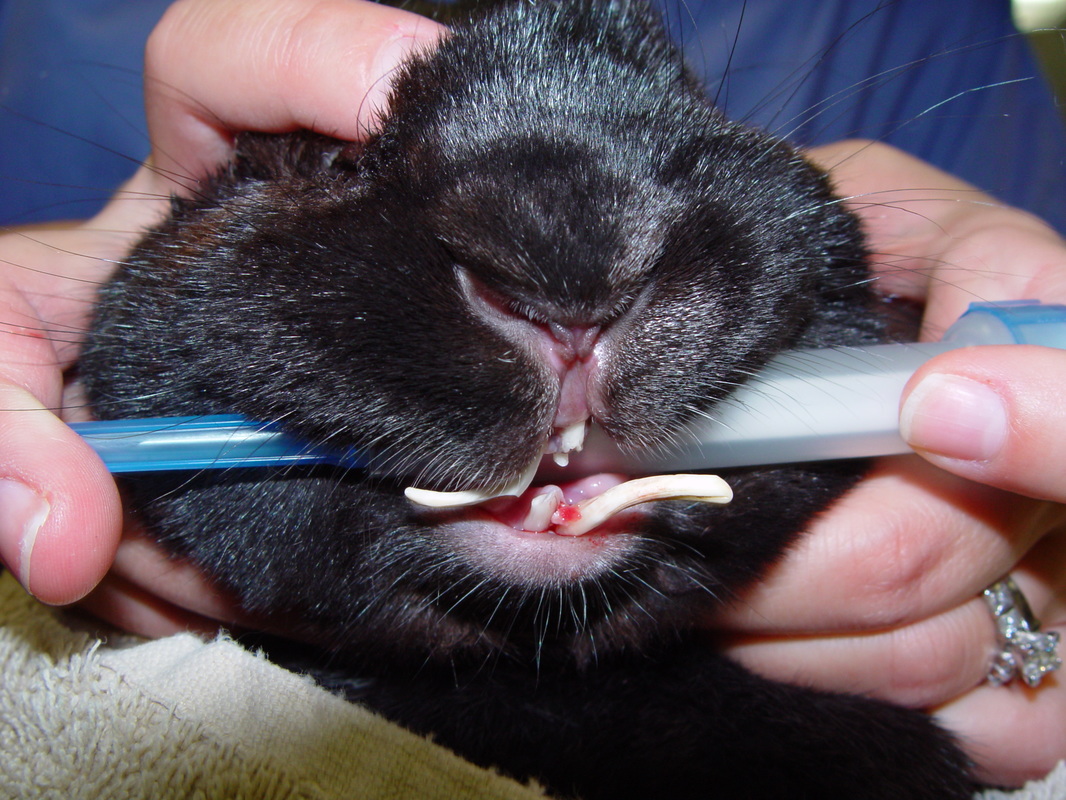
The sweet spot is the gap between front teeth and molars (the diastema). You slip the syringe tip in from the side and aim across the tongue, not straight down the throat.
4) Watch the swallow
Stop immediately if you see coughing, gagging, clicking sounds, fluid bubbling at the nose, wide-eyed distress, or sudden wetness around the nostrils. Call your vet if any of that happens.
Set up before you pick them up
Preparation is half the battle. The smoother you are, the less your rabbit or guinea pig has to panic about.
Supplies
- Appropriate syringe(s): 1 mL for meds, 3 to 10 mL for Critical Care or pellet mash (often easiest with a wider tip).
- Food or medication ready to go: mixed, smooth, and warmed to room temperature.
- Two towels: one for the burrito, one as a lap towel or backup.
- Non-slip surface: a yoga mat, bath mat, or carpeted floor.
- Paper towel or cloth: for chin drips.
- Timer or notebook: to track how much actually went in.
Mix recovery food for easier swallowing
- Start with a texture like thin pudding, not watery soup and not stiff paste.
- Let it sit 1 to 2 minutes to fully hydrate, then stir again.
- If using pellets, soak in warm water until they break down completely and then mash smooth.
Tip: If your pet fights the thicker mix, thin it slightly and use smaller pushes. You can often increase thickness once they accept the routine.
Low-stress restraint options
Not every pet needs a full towel burrito. I work up the ladder, escalating only as needed.
Option A: Ground feeding
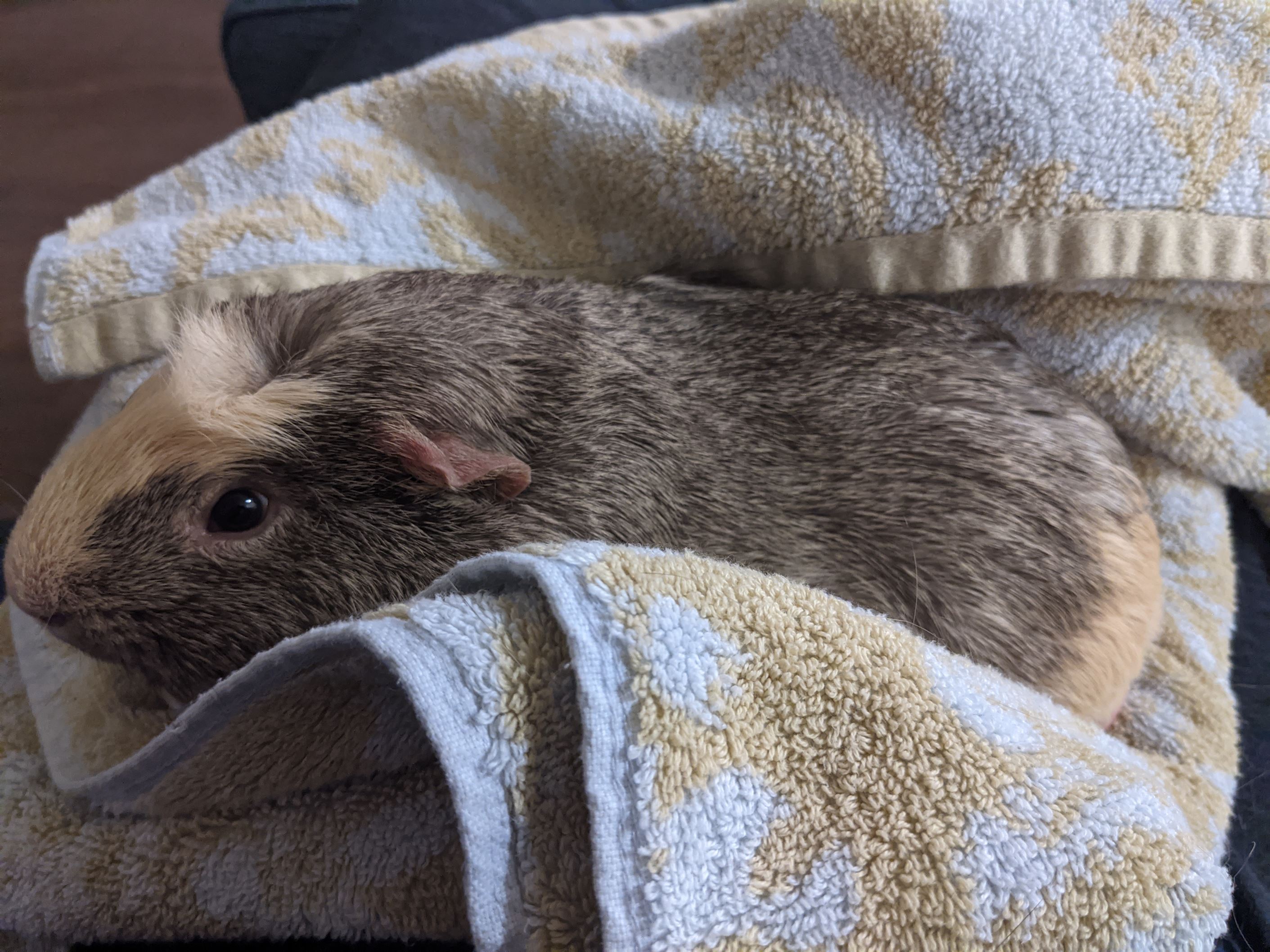
For many guinea pigs, the least stressful method is not lifting them at all. Place them on a non-slip towel on the floor or a table, then gently position your body and forearm to create a cozy corner that limits backing up.
- Keep the chest supported and feet under them.
- Use your non-dominant hand to steady the shoulders.
- Syringe from the side, small pushes.
Option B: Lap feeding
Sit on the floor with knees bent. Place a towel over your lap for grip. Position your rabbit or guinea pig with their chest against your body, feet supported, and head level.
- One hand supports the chest and controls gentle head turns.
- The other hand handles the syringe.
Option C: The towel burrito
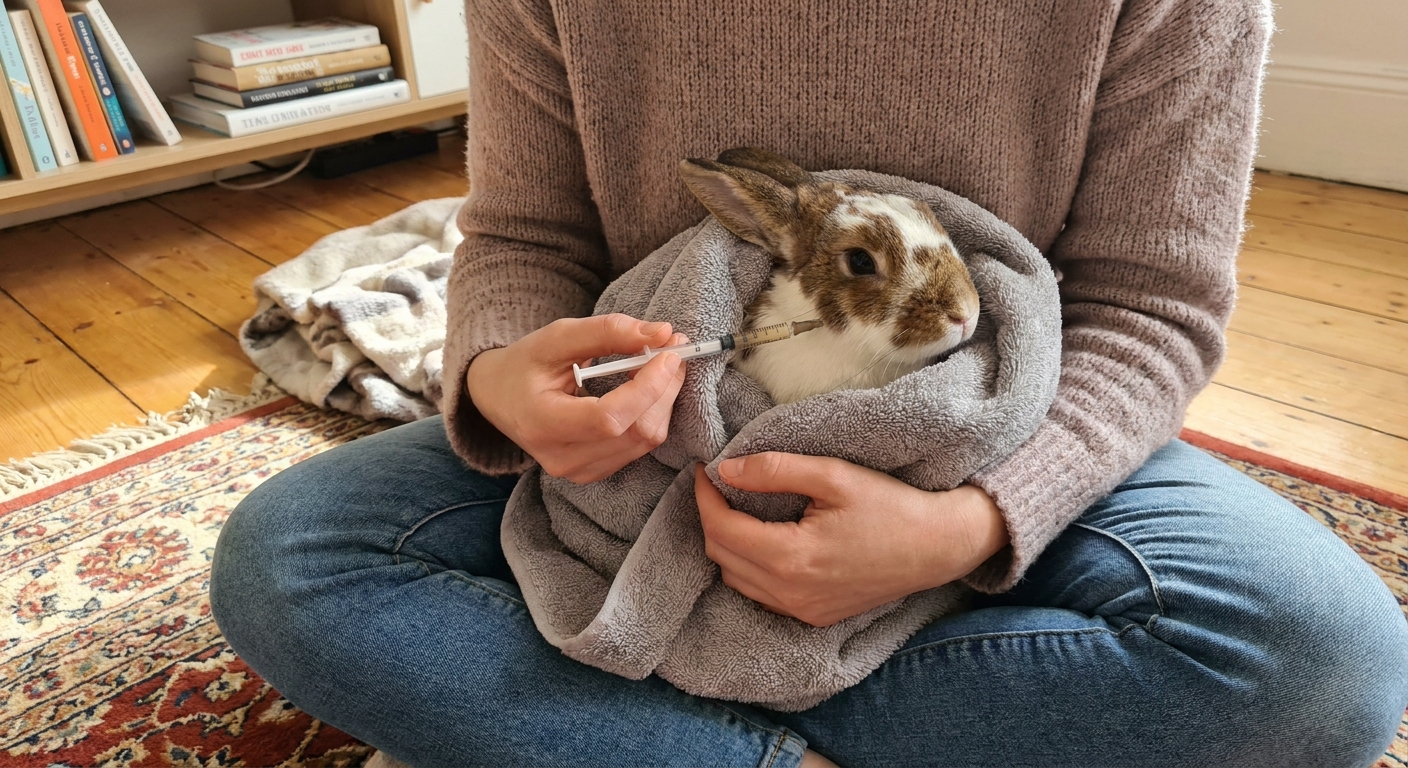
The burrito wrap is not about squeezing. It is about preventing sudden lunges and keeping the spine and legs safe while you feed slowly.
Scale matters: for a tiny guinea pig, you often only need a light wrap to keep feet from scrambling. For a larger rabbit, focus on full-body support and preventing a twisting kick that could injure the back.
How to do the towel burrito
A good burrito is snug around the shoulders and hips, with the head free and the body fully supported. A bad burrito is tight around the throat, restricts breathing, or leaves room for twisting.
Step-by-step wrap
- Lay the towel flat on a non-slip surface like the floor or a grippy mat.
- Place your pet in the center with their body parallel to the long edge of the towel. Keep their head near one end so you have fabric to fold without covering the face.
- Bring one side over the body and tuck it gently under the chest and opposite side.
- Fold the bottom up under the rump if needed, especially for rabbits who try to kick out. Keep it loose enough that hips are supported, not pinned.
- Bring the other side over and tuck snugly under the body. The wrap should prevent backing up and flailing, but you should still be able to slip a finger under the towel at the neck and chest.
- Hold close to your body with the spine supported. Rabbits, in particular, can injure their back if they twist and kick while half-restrained.
Safety checks
- Nose is clear, whiskers free, no towel near the nostrils.
- Chest expands easily with normal breathing.
- Head stays level when you bring the syringe in.
- Feet and hips supported so there is no dangling.
How to syringe feed safely
Where the syringe goes
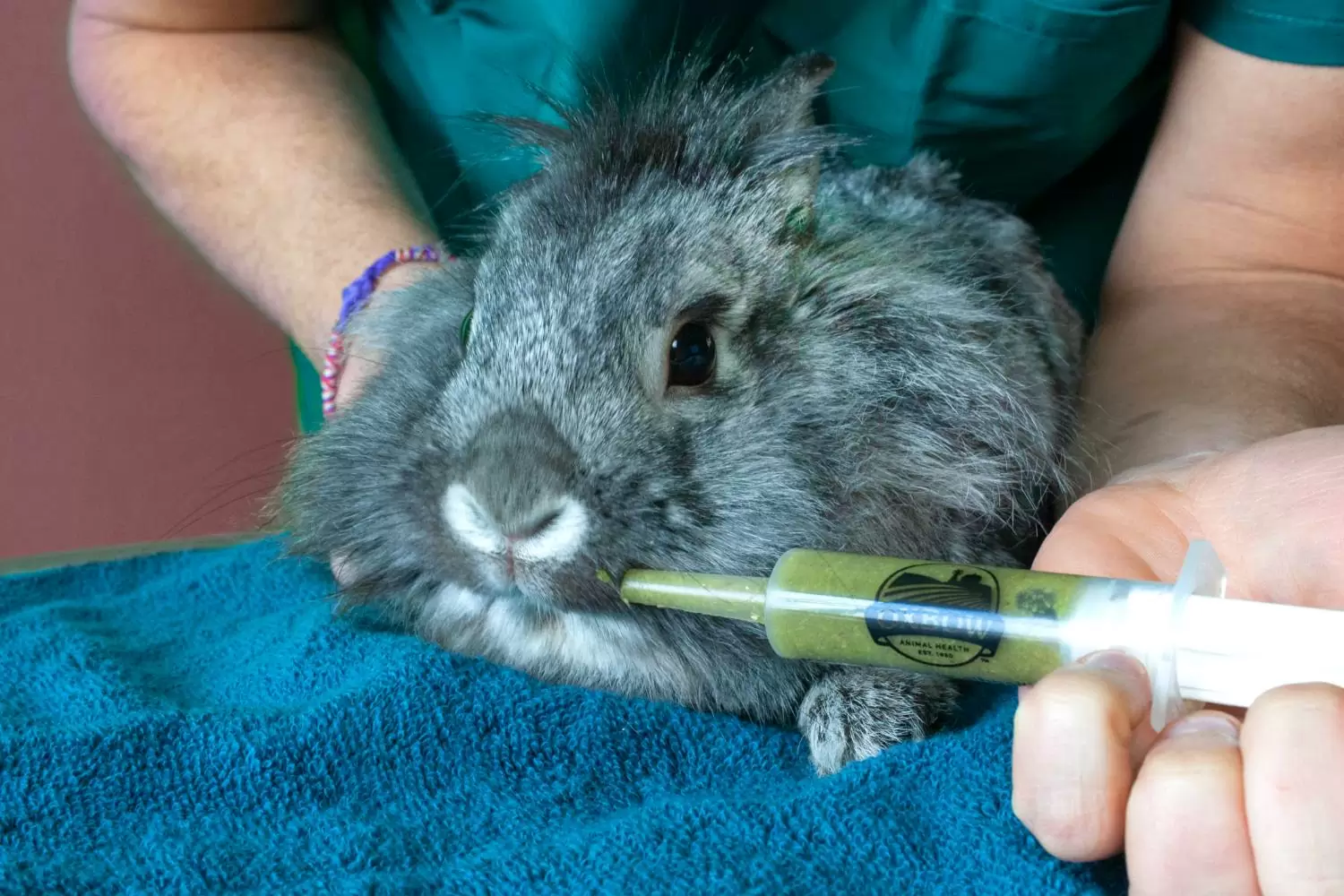
Approach from the side of the mouth and slide the tip into the gap behind the front teeth. Do not force the mouth open wide. Let the lips part around the syringe tip.
How much to push
- Liquid meds: for many small to medium rabbits and guinea pigs, 0.1 to 0.3 mL per tiny push, pausing for swallows. Use less for very small patients.
- Recovery food: for many patients, start with 0.2 to 0.5 mL per push, and only increase if your pet is swallowing calmly. Tiny guinea pigs and very stressed animals may need smaller pushes.
A rhythm that works
- Offer a small amount.
- Pause and watch the throat and jaw for a swallow.
- Let them chew if it is a thicker mix.
- Repeat slowly, aiming for steady progress rather than speed.
What good swallowing looks like
- Relaxed eyes and normal breathing
- Small chewing motions for thicker food
- No wet nose, no coughing, no frantic head tossing
If they clamp their mouth shut: try rubbing a tiny smear of the food on the lips, or offer a single drop at the corner of the mouth. Some rabbits and guinea pigs will start licking once they taste it, and then the syringe becomes less offensive.
Tips for the most resistant patients
Keep the routine predictable
Do the same sequence each time: towel out, wrap, feed, done. Predictability lowers panic.
Use micro sessions
If your pet is escalating, it is often safer to do several short sessions with breaks rather than one long wrestling match. Stress can contribute to appetite loss and gut slowdown, which is the opposite of what we want.
Let them chew and breathe
Especially with rabbits, you will often see a moment where they stop fighting and start chewing. That is your cue to pause and let them work through what is already in the mouth.
Protect the spine and legs
Do not restrain a rabbit on their back for feeding. “Trancing” is stressful for many rabbits, and if they struggle it can increase injury risk. Keep rabbits upright and fully supported against your body or on a stable surface.
Pair meds with something pleasant when allowed
Ask your vet if the medication can be chased with a small bite of something appropriate. For many rabbits, a tiny leaf of cilantro or a sliver of romaine after a dose helps reset the mood. For guinea pigs, a thin strip of bell pepper can work well. If your pet is on a strict diet for medical reasons, skip this and stick to the plan your vet gave you.
How much should I feed?
This depends on species, size, diagnosis, and how much they are eating on their own. Your exotics vet should give a target in mL per day and how often to split it.
As a safety principle, focus on meeting your vet’s daily goal slowly and consistently while encouraging independent eating. Syringe feeding is usually a bridge, not the finish line.
If you do not have a number: call and ask your clinic for a specific mL per day goal, ideally written as mL per kg per day, plus how many feedings to split it into.
Track the three numbers that matter
- Body weight (daily during illness, using a kitchen scale)
- Poop output (quantity and size)
- Actual intake (how many mL successfully swallowed)
If weight is dropping, poop is dwindling, or you cannot get enough in without major struggle, it is time to re-check pain control, hydration status, dental issues, and gut motility with your vet.
Guinea pig notes
Guinea pigs do not tolerate skipped meals well, and they also need adequate vitamin C intake during illness. If your guinea pig is not eating, ask your exotics vet what they want you to do about vitamin C while you are syringe feeding and which foods or supplements fit your pet’s situation.
Keep unlimited grass hay available at all times unless your vet has told you otherwise, and monitor hydration closely. If your guinea pig seems weak, cold, or is producing very little poop, treat it as urgent.
Aftercare
The last 30 seconds matter. If every session ends in a chase and a scary grab, your pet will start running the moment they see a towel.
- Wipe the chin and paws if needed.
- Offer a minute of quiet petting if they enjoy it, or simply sit near them calmly.
- Return them to a warm, familiar space with hay available immediately.
- Clean syringes right away so the next session is quick to start.
Common mistakes
- Mistake: Tilting the head back to “help them swallow.” Instead: Keep the head level and use small pushes.
- Mistake: Forcing the mouth open from the front. Instead: Enter from the side behind the incisors.
- Mistake: One long feeding battle. Instead: Break into short sessions and reassess pain or nausea with your vet.
- Mistake: Wrapping too tight around the neck or chest. Instead: Snug shoulders and hips, clear airway, easy breathing.
- Mistake: Feeding a watery mix that dribbles everywhere. Instead: Mix to a smooth, slightly thick consistency and go slowly.
FAQ
My pet is coughing during feeding. What now?
Stop immediately. Hold your rabbit or guinea pig upright with the head level and allow them to clear their airway. Do not push more food or water. If coughing continues, there is nasal discharge, or breathing seems abnormal, contact an emergency exotics vet right away. Aspiration can lead to pneumonia.
Can I wrap a guinea pig like a rabbit?
Yes, gently. Guinea pigs usually tolerate a smaller, looser wrap focused on keeping feet from scrambling. Keep the chest uncompressed, and feed with the head in a natural position.
Should I add fruit juice to make it taste better?
Usually no. Extra sugar can upset digestion, especially in rabbits. If taste is a problem, ask your vet about flavoring options for medications or whether the drug can be compounded in a more palatable base.
How do I know if I am feeding enough?
Your vet’s plan is the benchmark. At home, the best clues are stable or improving weight, normalizing poop, and a gradual return to independent hay eating.
My pet fights the syringe but licks from a spoon. Is that okay?
Yes, if you can measure the dose accurately and your pet is actually consuming it. Some rabbits and guinea pigs do better licking recovery food from a shallow spoon or dish. For medications, dosing accuracy matters, so confirm with your vet that the full measured amount is being ingested.
When to stop and call for help
If you are doing everything “right” and it still feels unsafe, that is not a personal failing. Some animals need anti-nausea medication, pain control, fluids, a different food texture, or a different dosing schedule before syringe feeding becomes reasonable.
- You cannot get more than a few mL in without escalating stress
- Your pet becomes more lethargic, cold, or weak
- Poop output continues to decrease
- There is any coughing, choking, or nasal fluid during feeding
- You suspect dental pain, bloat, or obstruction
Your exotics vet can demonstrate technique, adjust the plan, and help you choose the safest path forward. You and your little herbivore are a team. Sometimes the most loving thing you can do is get more hands and more tools on the problem.