A calm, step-by-step guide to secure holds for rabbits and guinea pigs, with spine support, kick prevention, and handling tips that reduce stress for both of...
Rabbit Cove
Teaching Kids to Safely Play With Rabbits and Guinea Pigs
Ground rules, safe petting zones, and calm, supervised play ideas that protect kids and fragile rabbits and guinea pigs while building trust and confidence.

Chloe Miller
Chloe Miller is a dedicated small-pet enthusiast and experienced foster parent who has spent over a decade caring for rabbits and guinea pigs. Through her hands-on work with local animal rescues, she shares practical, compassionate advice on housing, nutrition, and daily enrichment to help small pets thrive. When she isn't designing custom indoor enclosures, Chloe can be found coaxing shy rescues out of their shells with fresh cilantro.
Published
October 22, 2026
Updated
October 22, 2026
Rabbits and guinea pigs are tiny prey animals with big feelings. They can be gentle, social, and wonderfully interactive, but they are also fragile, fast, and easily startled. When kids learn the “how” and the “why” of respectful handling, you get the dream outcome: a child who feels confident and a small pet who feels safe.
I have fostered a lot of sweet, nervous little souls over the years, and the pattern is always the same. The kids who do best are not the ones who are the most excited. They are the ones who can slow down, use quiet hands, and follow predictable rules every single time.
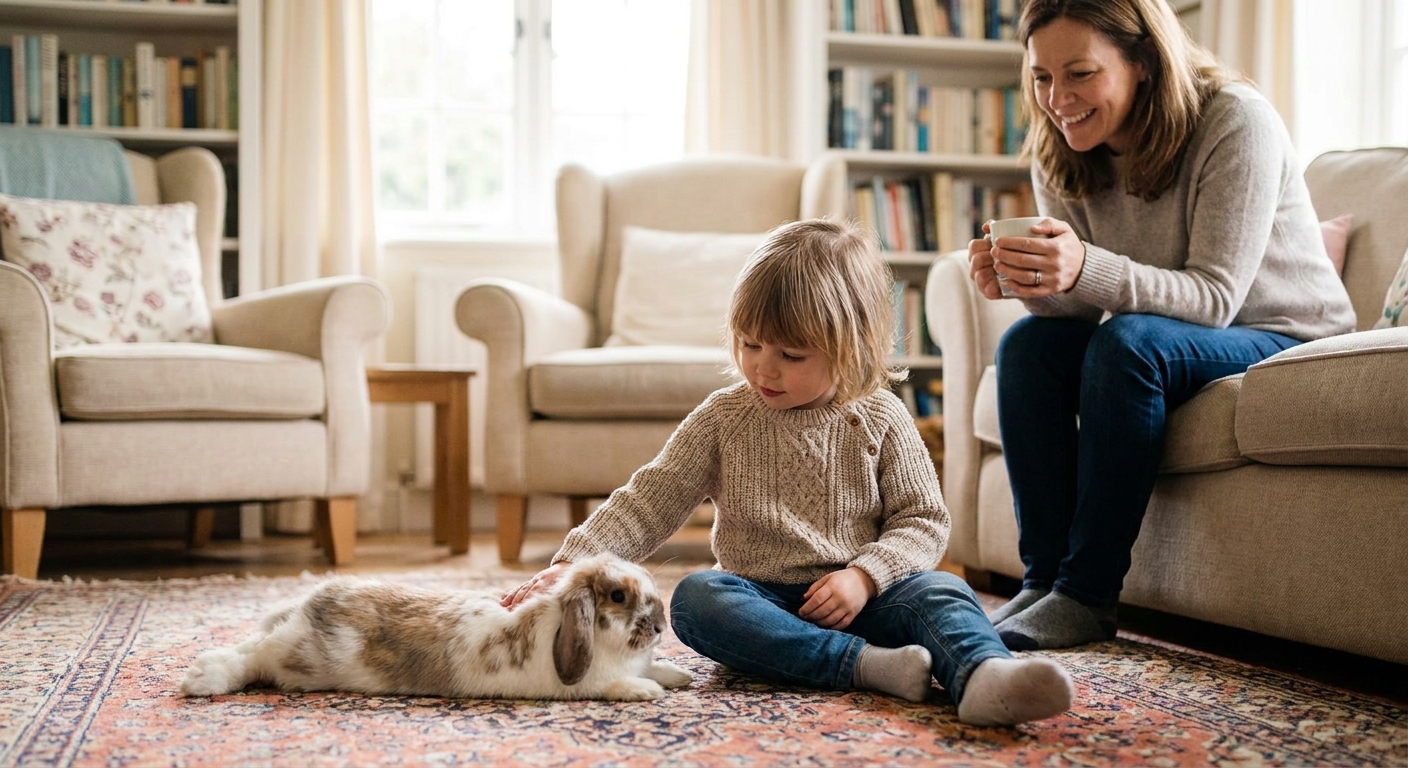
Start with the “why”: prey animals panic fast
Before you teach techniques, teach empathy. Rabbits and guinea pigs are wired to watch for danger. Being chased, grabbed from above, or lifted without warning can feel like a predator attack. That fear can lead to:
- Scratching and kicking as they try to escape
- Stress responses like freezing, teeth chattering (guinea pigs), or thumping (rabbits)
- Injuries, especially if a rabbit kicks while unsupported, or a child drops a squirmy pet
I tell kids: “Our job is to help them feel like nothing scary will happen.” When kids understand that calm equals safe, they usually rise to the occasion.
House rules (kid friendly and pet safe)
Post these rules near the enclosure if you can. Consistency is the secret sauce.
- Sit on the floor to interact. No standing petting sessions. Floor time prevents falls.
- No picking up without an adult. For many families, this becomes “kids never pick up,” and that is perfectly fine.
- Two-finger touch only. When petting, kids use two fingers in a slow stroke. No grabbing, no poking, no “whole-hand squeeze.”
- Hands away from faces. No fingers near eyes, noses, mouths, whiskers, or ears. (Accidental whisker boops happen. Tugging and fussing do not.)
- One voice at a time. No squealing, shrieking, or running near the pen.
- No chasing, cornering, or “hugging.” Affection looks different to prey animals.
- Door and gate check. If an adult is not watching, enclosure doors stay closed.
- Wash hands before and after. Helps protect pets from germs and helps kids avoid hay dust and dander.
If you want a simple phrase kids remember: “Slow hands, low body, soft voice.”
Safe petting zones
For rabbits
Most rabbits enjoy gentle strokes on the head and cheeks once they trust you. Many do not enjoy being touched on their feet, belly, or tail area.
- Usually safe: forehead, cheeks, along the back in long slow strokes
- Often disliked: tummy, feet, tail area, grabbing ears, fussing with whiskers
- Watch their “no”: head ducking away, body tensing, moving off, flicking feet, thumping
For guinea pigs
Guinea pigs often like chin rubs or gentle petting behind the ears. Many are sensitive around their sides and rump until they trust you.
- Usually safe: top of the head, behind the ears, gentle strokes along the back
- Often disliked: squeezing around the middle, poking sides, patting, grabbing fur
- Watch their “no”: freezing, teeth chattering (a warning sign, not normal chewing), quick jerks away, loud alarm squeals
Teach kids a respectful script: “If they walk away, we let them.” That one rule prevents so many bites and scratches.
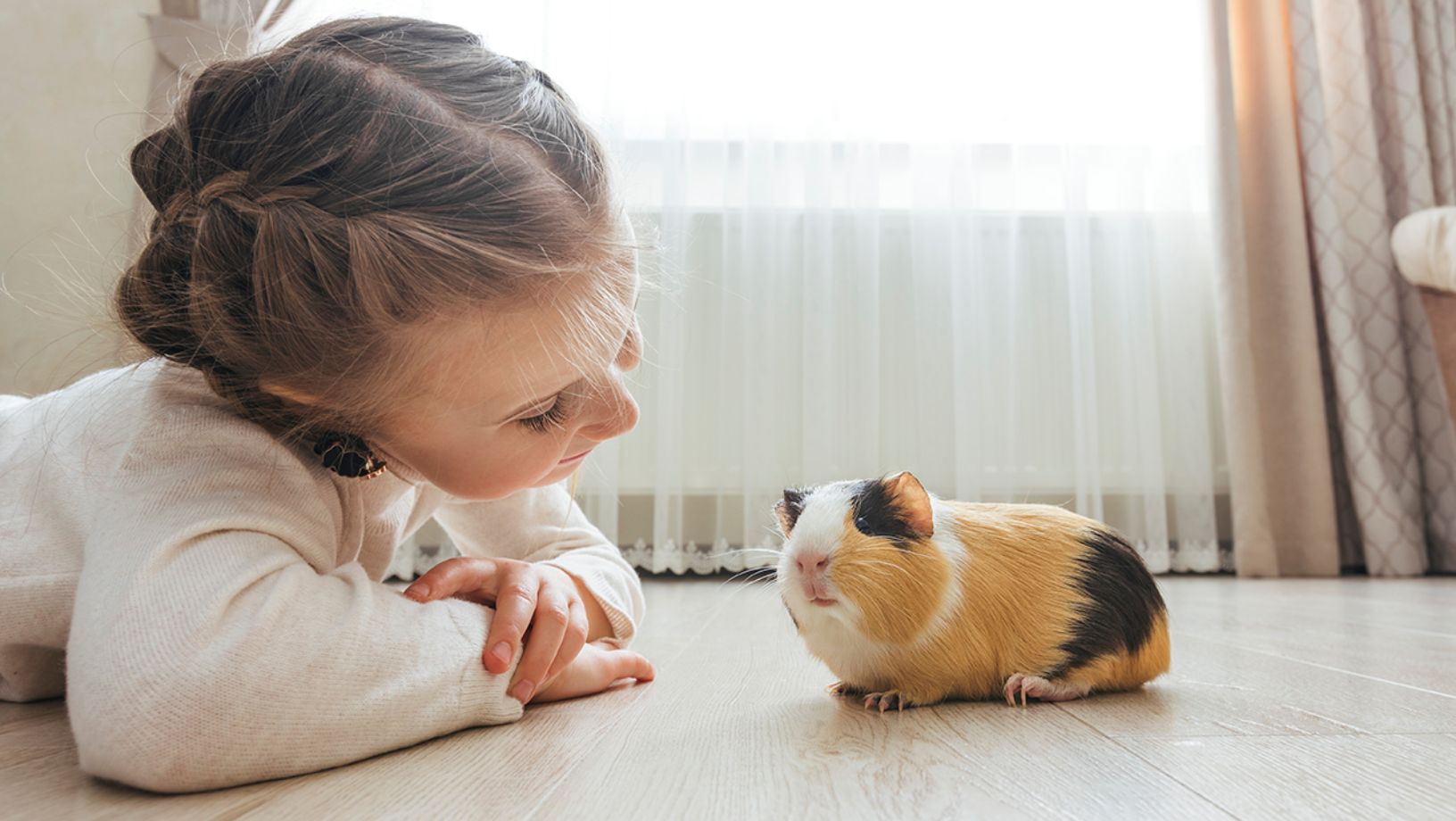
Handling basics (adult-led)
Many rabbits and guinea pigs do not need to be picked up for daily bonding. Floor-level interaction is safer and often builds trust faster. When lifting is necessary, an adult should do it or closely coach it.
Rabbits: support the back end
A rabbit’s spine is delicate. If they twist or kick while their back end is unsupported, they can seriously injure themselves. The goal is steady support, close to your body, for a short trip only.
- Approach from the side, not straight from above.
- One hand supports the chest and front end.
- The other supports the hindquarters immediately, before the rabbit can kick.
- Hold close to your body so they feel stable.
- Move slowly and keep the trip short. Lift, relocate, set down.
Never: pick up by the ears, scruff, legs, or under the armpits. Never let a rabbit kick while its back end is unsupported.
Guinea pigs: scoop and support
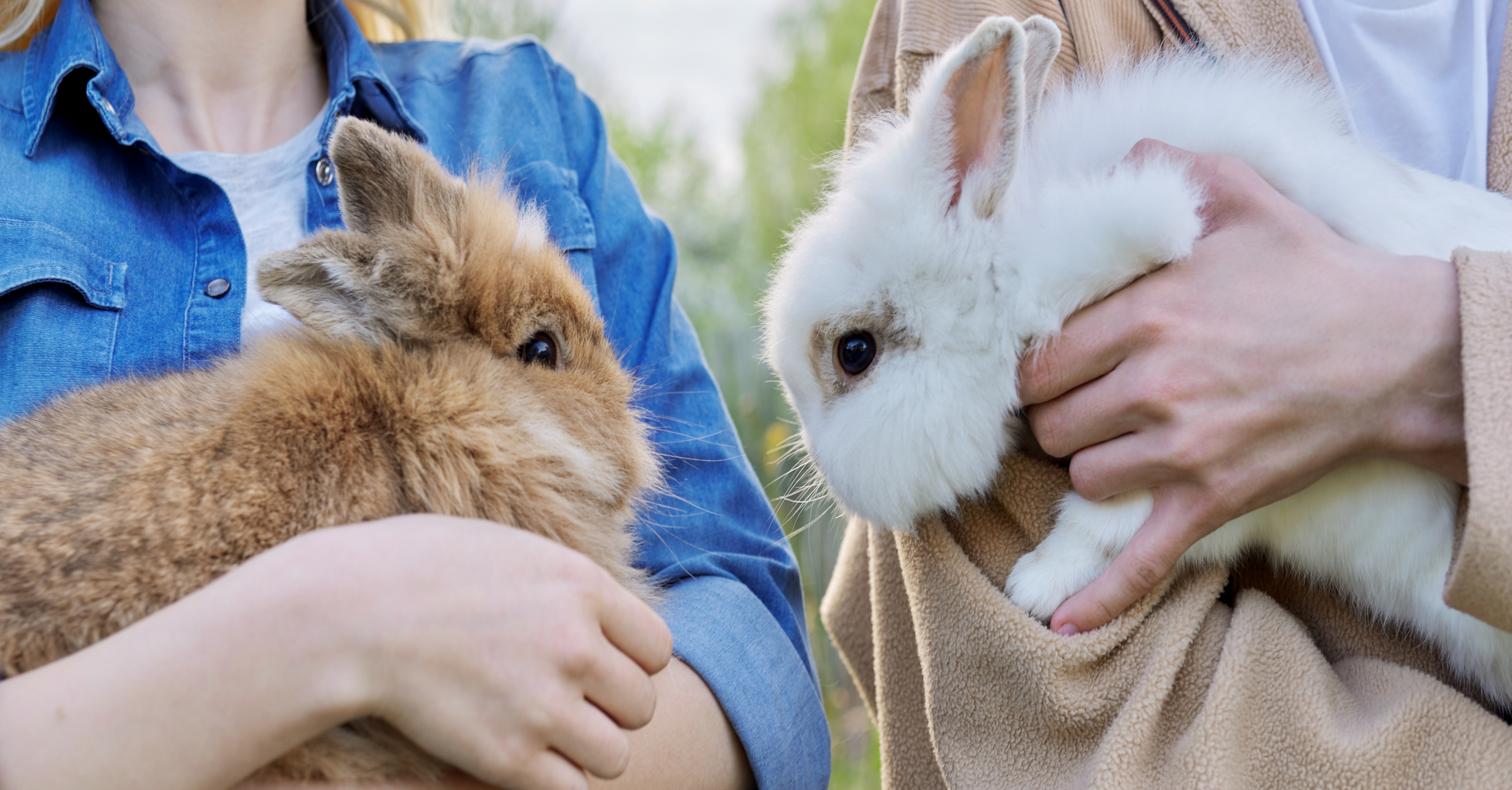
- Scoop from underneath with one hand supporting the chest and front.
- Support the rear with the other hand so the whole body feels “held,” not squeezed.
- Hold against your body so they feel secure.
- Sit down before you lift if you are teaching a child, so the drop distance is basically zero.
One guinea pig reality check for kids: if they are frightened, they may pee or poop. It is not “being naughty.” It is a normal fear response, and it is another reason floor time and short holds matter.
A trick I love for kids learning calm holding: place a folded towel on their lap and have the pet sit on the towel while the child gently makes a tunnel with their forearms. It feels cozy and keeps wiggly feet contained.
Set up the room
Supervision is not just watching. It is creating an environment where problems are less likely to happen.
- Choose a quiet space away from barking dogs, loud TVs, and running siblings.
- Use a non-slip surface like a rug or foam play mat so pets feel stable.
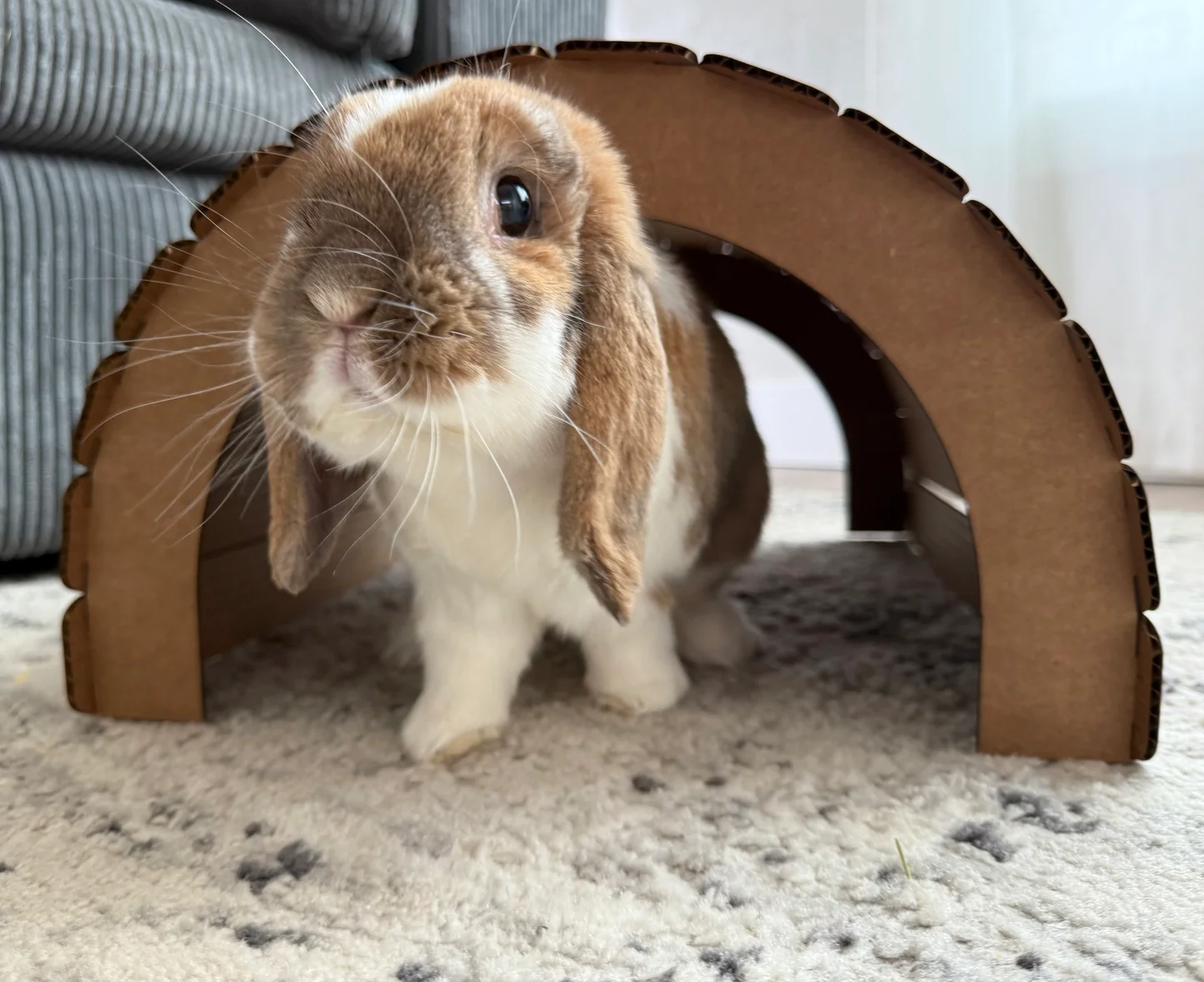
- Create hide options like a cardboard box with two exits, a tunnel, or a fleece drape. A pet that can retreat is less likely to panic.
- Keep sessions short, especially at first. Five calm minutes beats twenty chaotic ones.
- Have supplies ready: a small pile of hay, a few herbs, a dustpan for stray poops, and hand wipes.
Safe play ideas
“Playing” with rabbits and guinea pigs should mean letting them do natural behaviors, not encouraging chasing or rough handling. These are kid favorites that are safe, enriching, and adorable to watch.
1) Hay treasure hunt
Let your child hide small piles of hay around a play area, or tuck hay into paper bags and toilet paper tubes. This encourages foraging without overfeeding treats.
2) Cardboard town
Kids can arrange boxes and tunnels into a simple maze. For rabbits, make sure there are two exits for any hidey spot to prevent feeling trapped. For guinea pigs, keep tunnels wide and low.
3) Gentle gardening
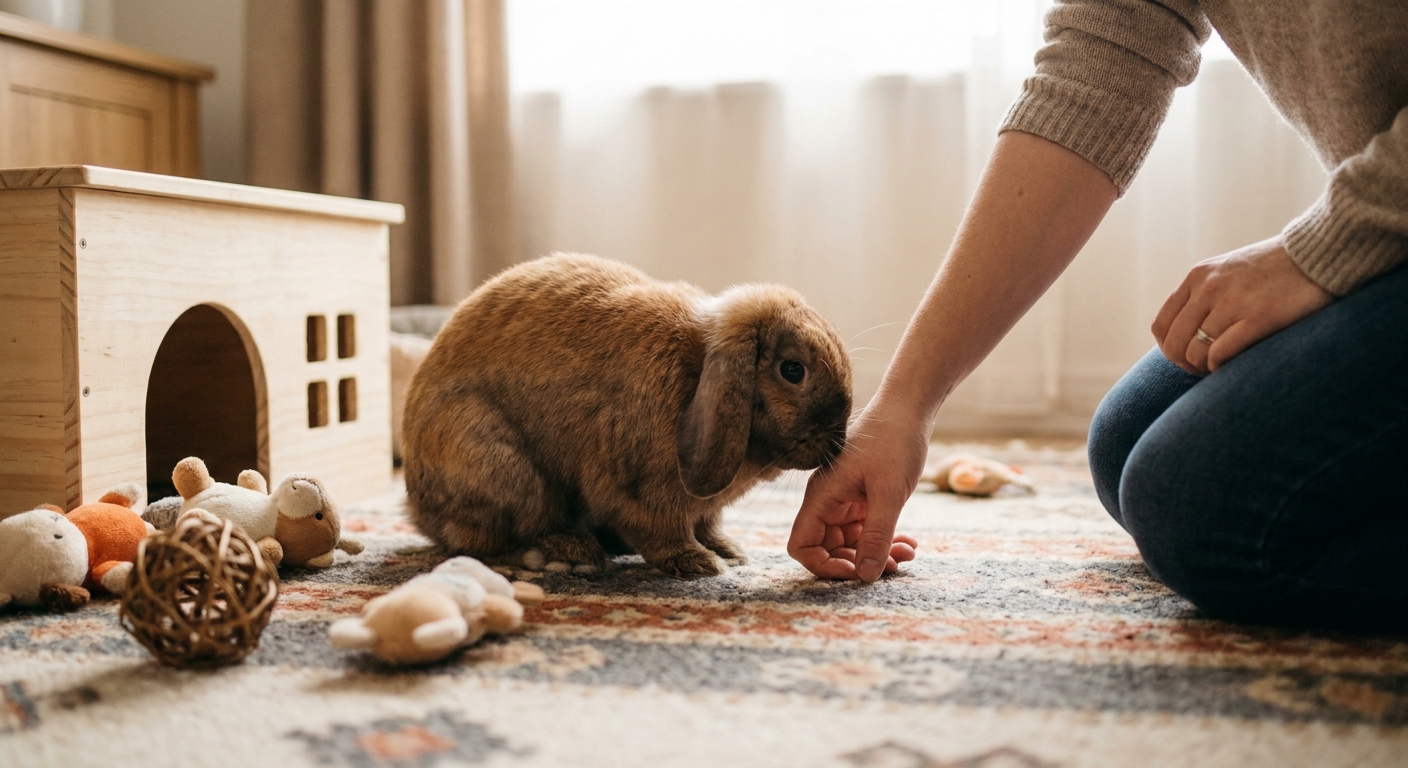
Have your child offer a single sprig of cilantro, romaine, or a bell pepper strip, holding it steady and low. The rule: open palm, still hand. It teaches patience fast.
Food note for parents: safe foods and portions vary by species and by individual health. Skip iceberg lettuce and avoid sugary fruit in excess. When in doubt, ask your vet and keep treats tiny.
4) Storytime nearby
One of my favorites for shy rescues. Your child sits on the floor and reads quietly while the pet explores nearby. No touching required. Trust builds anyway.
5) Target training (older kids)
With adult help, you can teach rabbits simple targeting with a spoon tip or a ball-ended stick and reward with a tiny herb nibble. It turns handsy kid energy into structured, calm interaction.
Skip balls and leashes
If your child asks about exercise balls or leashes, it is a no. These pets do better with safe floor time in a pet-proofed area, plus tunnels, boxes, and gentle enrichment.
Age expectations
Toddlers (under 4)
- Best interaction: watching, helping refill hay with an adult, dropping veggies into a bowl.
- Hands-on: very limited and only with an adult guiding the child’s hand.
Preschool to early elementary (4 to 7)
- Best interaction: floor petting, offering herbs, helping set up tunnels.
- Carrying: generally no, unless your child is unusually calm and you are seated and closely supervising.
Older kids (8+)
- Can learn careful handling routines with repetition and clear rules.
- Can take on daily tasks: refreshing water, topping hay, spot-cleaning, prepping veggies.
One important truth: even a very responsible child can have a moment of distraction. That is not a moral failing. It is why adult supervision stays part of the plan.
Stress signals to watch
If kids can spot stress early, you can end interactions before anyone gets hurt. Here are common signs:
Rabbits
- Eyes wide, body stiff, ears pinned tightly back
- Sudden bolt to a corner, repeated hiding
- Thumping, grunting (sometimes described as growling), lunging, or fast “get away” kicks
Guinea pigs
- Teeth chattering (warning), repeated alarm squeals
- Freezing hard, trying to wedge under furniture
- Rapid breathing, persistent attempts to escape hands
Make a family rule that feels empowering, not scary: “When they say ‘no,’ we give them space so they can feel brave again.”
Common kid mistakes
- Mistake: petting like a dog (fast pats). Teach: slow strokes, one direction, light pressure.
- Mistake: leaning over the pet. Teach: sit beside them, let them come forward.
- Mistake: trying to kiss faces. Teach: “We blow kisses from far away.”
- Mistake: picking up to “show” a friend. Teach: show by sitting quietly while the pet explores.
- Mistake: feeding too many treats. Teach: hay first, tiny herb rewards, adult decides portions.
Safety essentials
Prevent falls
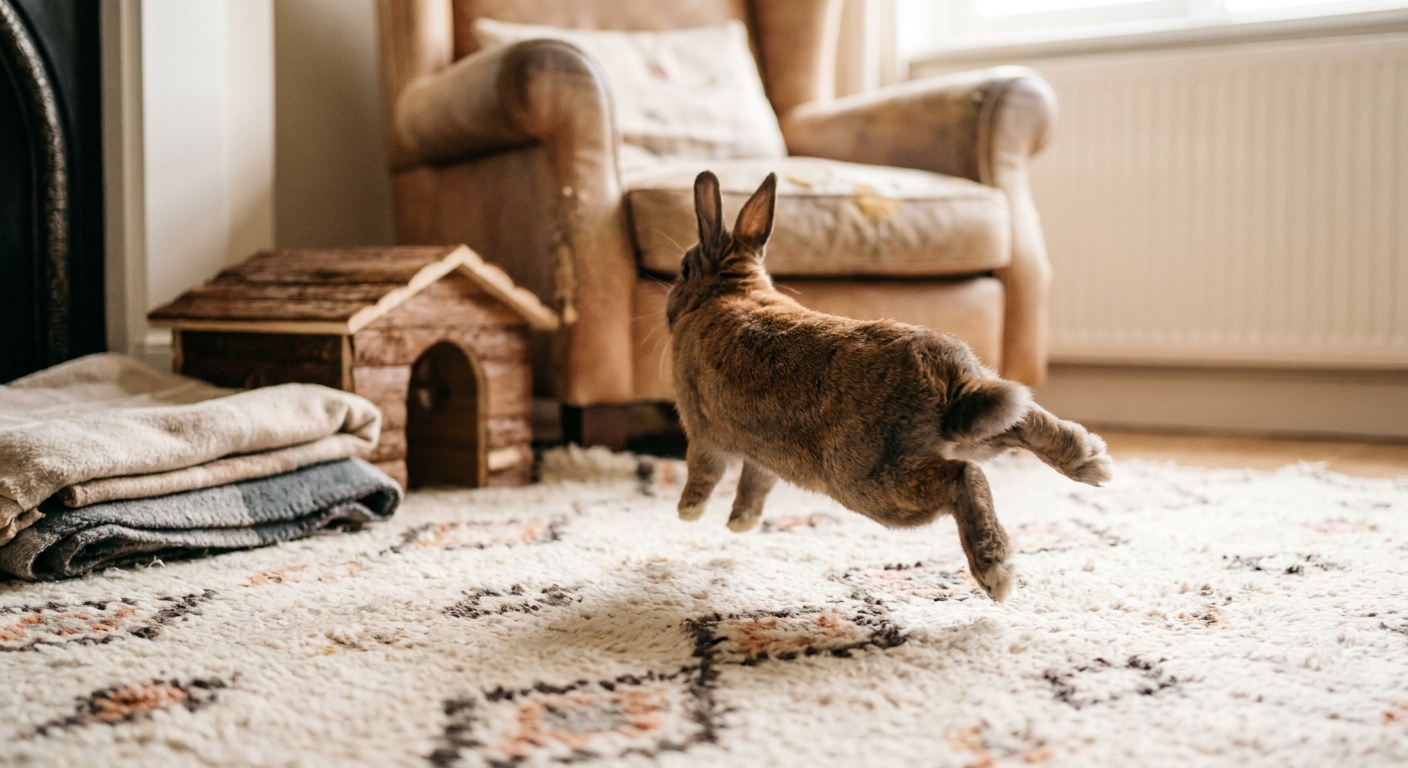
The most dangerous accidents I see are falls. A startled rabbit can kick like a spring, and a guinea pig can do a sudden squirm or jump. Keep interactions at floor level whenever possible.
Know when to pause
- During naptime or when a pet is hiding and not choosing contact
- When kids are hyped up, overtired, or playing rough games nearby
- Right after bringing a new pet home or after a stressful event (vet trip, enclosure change)
Supervision means close
When a child is interacting, an adult should be close enough to intervene in one step, not calling instructions from the kitchen.
Extra hygiene note
If anyone in the household is immunocompromised, pregnant, or very medically fragile, ask your pediatrician and veterinarian for a simple hygiene plan. Most families do great with handwashing and sensible supervision, but it is worth getting personalized guidance.
If a nip or scratch happens
Even friendly pets can nip when scared or mishandled. If it happens:
- Stay calm. Big reactions can escalate fear for both kid and pet.
- Separate gently. Do not punish the animal.
- Wash the scratch or bite with soap and water, and apply appropriate first aid.
- Rewind the moment. Ask what the pet was saying right before it happened: Were they trapped? Picked up? Petting got too intense?
- Adjust the rules. Shorter sessions, more watch-only time, or no lifting.
If a bite breaks the skin deeply, or you are concerned about infection, contact a healthcare professional.
Quick checklist
- Floor time only
- Quiet room, calm voices
- Hide options available
- Adult within arm’s reach
- Petting on safe zones only
- Sessions end while everyone is still happy
FAQ
Should kids ever pick up rabbits or guinea pigs?
In many households, the safest rule is “adults only.” If you choose to teach lifting, do it seated on the floor, with an adult coaching hand placement and supporting the pet the entire time. For rabbits especially, improper support can lead to serious injury if they kick out.
My child wants to hug the bunny. What’s a good alternative?
Teach “ground hugs.” Your child can sit on the floor near the rabbit and gently rest a hand on the forehead or cheeks if the rabbit chooses to stay. For affection, suggest soft talking, quiet sitting, or offering a single herb sprig.
Can rabbits and guinea pigs play together with kids?
Generally, no. Rabbits and guinea pigs have different communication styles and can accidentally injure each other. Keep species interactions separate, and let kids enjoy them one at a time.
What if my pet hides every time my child comes in?
That is information, not stubbornness. Start with quiet parallel time like storytime on the floor, plus predictable routines. Have your child toss a bit of hay nearby and then look away. Let the pet choose the pace.