Learn a stress-free, at-home weekly check to monitor eyes, ears, weight, and body condition, plus red flags that mean it is time to call your exotic vet.
Rabbit Cove
Why You Shouldn’t Bathe Rabbits or Guinea Pigs
Water baths can be risky for rabbits and guinea pigs. Learn the real concerns, when hygiene help is needed, and safe spot-cleaning steps for messy bottoms.

Chloe Miller
Chloe Miller is a dedicated small-pet enthusiast and experienced foster parent who has spent over a decade caring for rabbits and guinea pigs. Through her hands-on work with local animal rescues, she shares practical, compassionate advice on housing, nutrition, and daily enrichment to help small pets thrive. When she isn't designing custom indoor enclosures, Chloe can be found coaxing shy rescues out of their shells with fresh cilantro.
Published
October 22, 2026
Updated
October 22, 2026
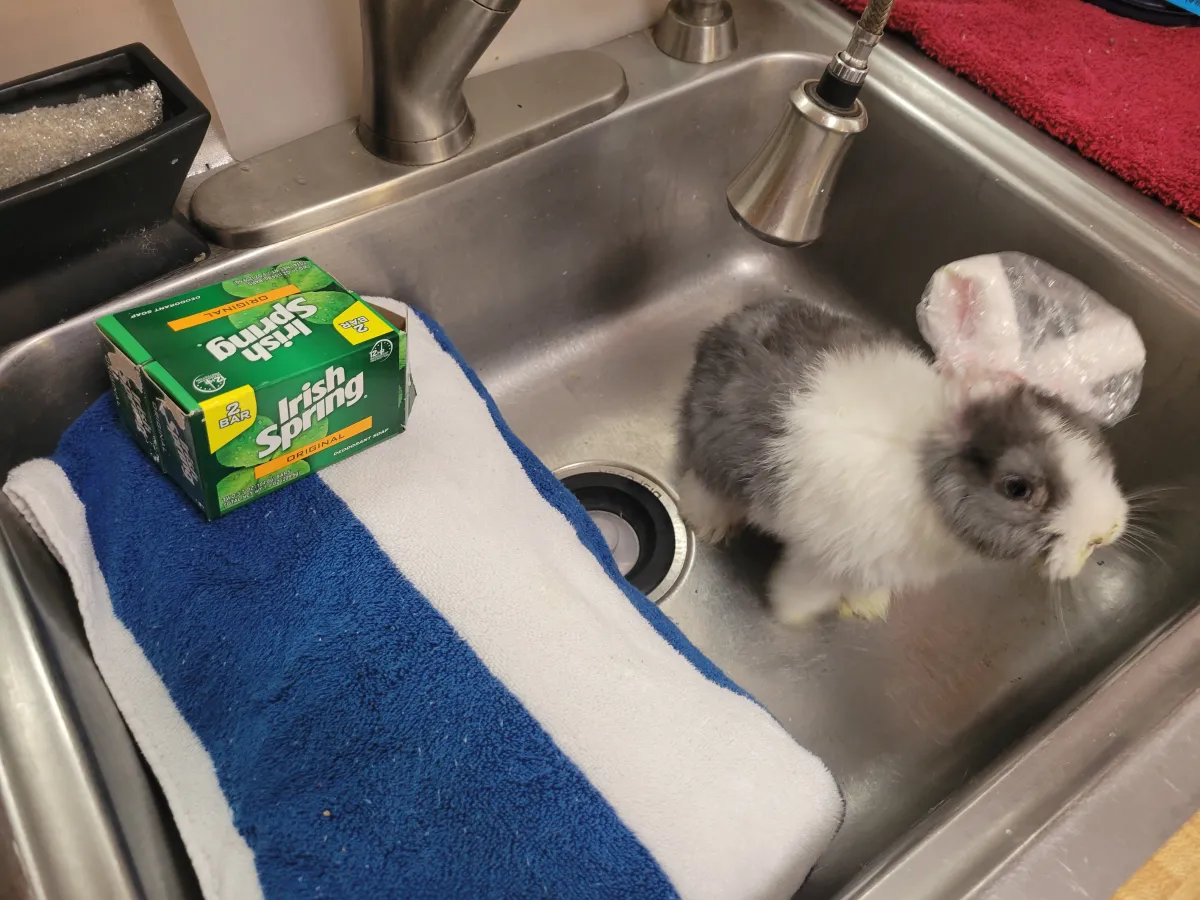
The problem with a quick bath
I get why people reach for the sink. A bunny steps in a cecotrope. A guinea pig sits in a damp corner and suddenly smells like a sock. We humans are wired to think water plus soap equals clean, and pet store advice has not always helped.
But rabbits and guinea pigs are not tiny dogs. A traditional water bath can trigger a stress response their bodies are not built to handle, and it can create problems that last long after the towel comes out.
Why baths can be dangerous
1) Stress and shock
Rabbits and guinea pigs are prey animals. Being restrained, placed in slippery water, and soaked can trigger extreme fear. In rare cases, that level of stress can contribute to shock, which is a rapid, life-threatening crash that can include weakness, low body temperature, collapse, and a sudden decline.
2) Hypothermia happens fast
Small bodies lose heat quickly, especially when wet. Even if your home feels warm to you, a soaked rabbit or guinea pig can chill rapidly. Thick coats trap water close to the skin, and damp fur takes a long time to dry. Hypothermia is an emergency.
3) Respiratory risk
A bath does not magically create an infection, but cold plus stress can weaken the body’s defenses. For guinea pigs, who are already prone to respiratory illness, being chilled and damp may increase susceptibility or make a mild issue worse.
4) Skin irritation and coat damage
Shampoos made for people, dogs, or “all pets” can irritate sensitive skin and disrupt natural oils. Even gentle soaps can leave residue if not rinsed perfectly, and that can lead to itching, dandruff, or inflamed skin. Rabbits also have delicate skin that can tear easily if handled roughly while wet.
5) Slips, spine injuries, and panic scrambles
A frightened rabbit can kick hard. In a slick tub or sink, that can lead to falls, nail tears, or back injuries. Guinea pigs can thrash too, and a wrestling match is not what anyone needs.
Bottom line: for healthy rabbits and guinea pigs, full-body baths are almost never appropriate. When hygiene help is needed, spot-cleaning is safer and usually more effective.
When cleaning help is needed
Most of the time, a healthy small herbivore keeps themselves tidy. If you are seeing repeated mess, it is often a sign that something else needs attention. In warm months, a messy rear also raises the risk of flystrike, which is a true emergency.
- Soft stool or diarrhea: This is urgent, especially in rabbits. True watery diarrhea in rabbits is uncommon, and many “diarrhea” reports are really cecotropes or stool that has lost its normal shape.
- Cecotropes stuck to fur: Often tied to diet imbalance, pain, obesity, or mobility issues.
- Urine scald: Wet fur and irritated skin around the rear, belly, or inner thighs.
- Older or disabled pets: Arthritis, spinal issues, or dental disease can make self-grooming difficult.
- Long-haired breeds: Peruvian guinea pigs and some long-haired rabbits need extra grooming to prevent tangles and soiling.
If your pet is suddenly messy, smelly, or lethargic, cleaning is only step two. Step one is asking why it is happening.
Safe spot-cleaning
Spot-cleaning means cleaning only the dirty area while keeping the rest of the body dry and warm. Think of it like cleaning a toddler’s hands, not giving them a full shower.
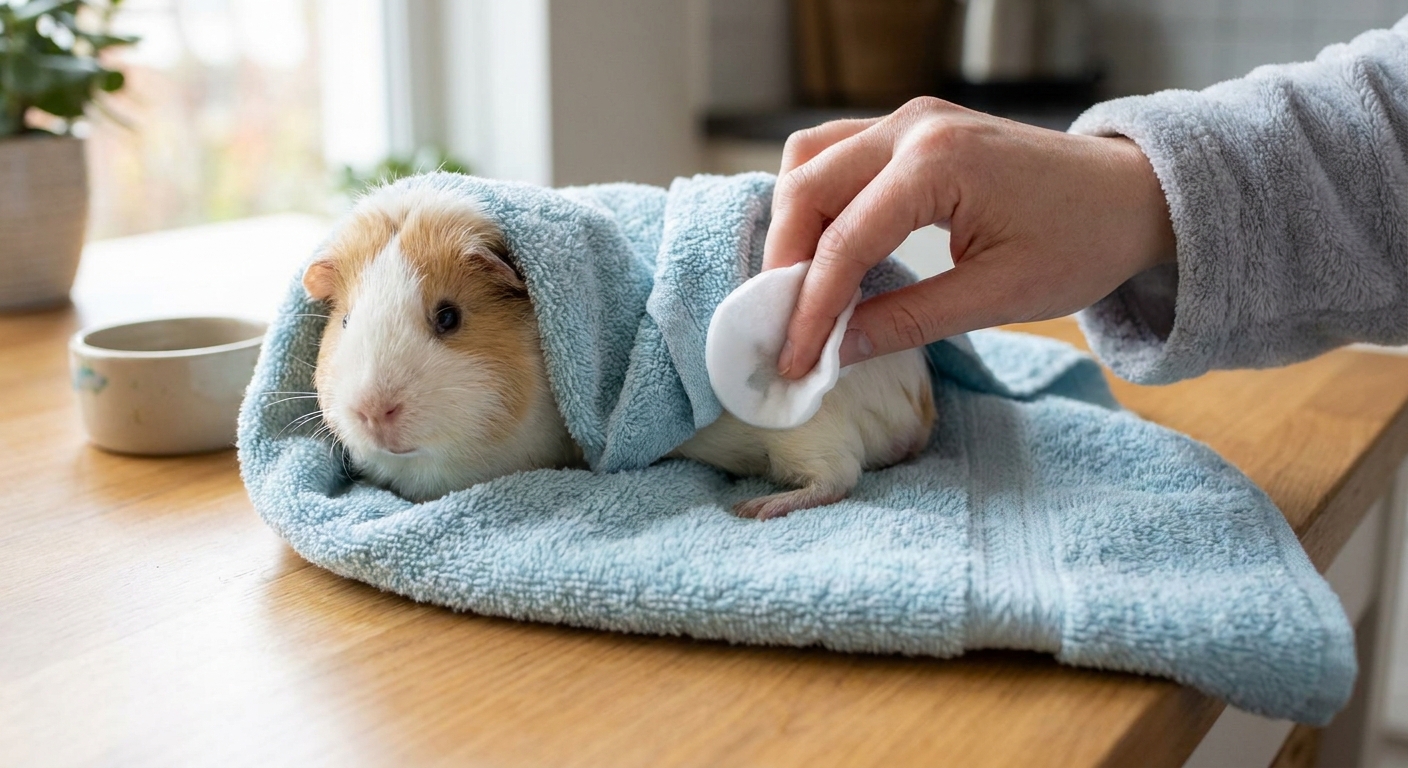
Supplies I keep in my rescue kit
- Soft towels (at least two)
- Plain damp cotton rounds or a soft cloth with lukewarm water
- If using wipes: water-based, fragrance-free, alcohol-free wipes with minimal additives (when in doubt, skip wipes and use plain water)
- A small bowl of lukewarm water
- Optional: sterile 0.9% saline for gentle rinsing
- A fine comb (for guinea pig “butt crusties” or long hair)
- Blunt-tip scissors or small pet trimmers (only if you are confident and your pet is still)
- Optional: plain cornstarch used very sparingly only if you can apply it without creating airborne dust, and kept well away from the nose and mouth
Avoid: flea shampoos unless specifically prescribed, scented wipes, essential oils, talc or baby powder, powders that puff into the air, and anything marketed as “deodorizing.” If the smell is strong, there is usually a medical or husbandry reason.
How to spot-clean a dirty bottom
Step 1: Set up calm and warmth
Close doors, turn off loud noises, and lay a towel on a stable surface. If your pet is wiggly, do this on the floor to prevent falls.
Step 2: Towel wrap, no wrestling
Gently wrap your rabbit or guinea pig like a burrito, leaving the dirty area accessible. You are aiming for secure, not tight. If your rabbit starts kicking hard, pause and reposition. A calm hold beats a firm hold every time.
Step 3: Loosen, do not pull
Use a damp cotton round or soft cloth to soften stuck poop or urine residue. Hold it against the mess for 10 to 20 seconds, then wipe away. Repeat. Pulling at dried feces can rip skin, especially in rabbits.
Step 4: Comb gently if needed
For guinea pigs with crusty bits or long hair, a fine comb can help once the debris is softened. Keep one hand on the skin so you are not tugging.
Step 5: Dry thoroughly
Pat the area dry with a towel. The fur does not need to be salon-perfect, but it should not be damp against the skin.
Step 6: Check the skin
Look for redness, broken skin, swelling, or a sour smell. If you see any of these, it is vet time. Urine scald can worsen quickly and is painful.
Tip from the foster trenches: If the mess is severe, it is often safer to do two short cleaning sessions a few hours apart than one long, stressful session.
Butt baths and shallow soaks
Sometimes you will see advice to place just the rear end in shallow water. I consider this a last resort, not a routine grooming tool, and only when you cannot safely remove the debris with spot-cleaning alone.
If you must do a shallow rear-end rinse:
- Use a sink or basin lined with a towel for traction.
- Use lukewarm water only, and keep the water level very low.
- Keep the session brief.
- Keep the chest and belly dry if possible.
- Dry thoroughly and keep your pet warm afterward.
If your rabbit or guinea pig is weak, cold, breathing fast, or fighting hard, stop and call an exotics vet. Safety is more important than cleanliness in that moment.
Rare exceptions
There are a few situations where water and soap may be necessary, but these are the moments to involve an exotics vet whenever possible, or follow veterinary instructions closely:
- Toxic or sticky substances on the coat that cannot be safely removed dry
- Veterinary-directed medicated bathing for a diagnosed skin condition
- Severe urine scald, fecal impaction, or heavy soiling where skin health is at immediate risk
Even then, the goal is still the smallest amount of wet fur for the shortest amount of time.
Rabbit vs guinea pig basics
Rabbits are generally the least bath-tolerant. Their stress response can be intense, and their risk of injury during a panic scramble is real. Guinea pigs may seem a bit more “washable,” especially long-haired pigs, but routine baths are still a bad default. Most odor and mess problems are better solved with housing, grooming, and health checks than with soaking.
Prevent messy bottoms
Rabbits: fiber and mobility
- Hay first: Unlimited grass hay (timothy, orchard, meadow) should be the bulk of the diet.
- Watch the rich stuff: Too many pellets, fruit, or sugary treats can contribute to sticky cecotropes.
- Healthy weight matters: Overweight rabbits struggle to reach their rear to eat cecotropes and groom.
- Check for pain: Dental issues and arthritis commonly show up as “my rabbit suddenly looks unkempt.”
Guinea pigs: dry bedding and daily checks
- Keep the habitat dry: Change wet spots daily. Damp bedding leads to odors and irritated skin.
- Trim long hair: A sanitary trim around the rear can be a game changer.
- Monitor boars: Some male guinea pigs need occasional help with perineal cleaning, especially as they age.
Call an exotics vet now
Cleaning at home is for minor mess. Call your rabbit-savvy or exotics vet promptly if you notice:
- Diarrhea or very watery stool
- Not eating, fewer droppings, or no droppings
- Lethargy, weakness, or a cold body
- Severe urine scald, open sores, or bleeding
- Flystrike risk (maggots or eggs, or a strong foul odor around the rear)
- Recurring messy bottom despite diet and habitat adjustments
Mess is often a symptom, not the main problem. Getting the cause treated protects your pet far more than any bath ever could.
FAQ
Can I use dry shampoo or deodorizing spray?
No. Sprays and powders can irritate the skin and, more importantly, be inhaled or ingested during grooming. If odor is noticeable, look for wet bedding, urine scald, dental issues, or gastrointestinal trouble.
What if my rabbit stepped in poop?
Let it dry a bit if it is just a small smudge, then gently brush it out, or dab with a damp cotton round and pat dry. Rabbits often handle small messes themselves once they calm down.
Are pet wipes safe?
Sometimes. Choose fragrance-free, alcohol-free wipes with minimal additives, and stop if you notice redness or irritation. When in doubt, use plain lukewarm water on cotton pads or a soft cloth.
My guinea pig smells even after spot-cleaning. Why?
Common causes include damp bedding, boar perineal buildup, skin issues, or respiratory illness. A healthy guinea pig in a clean, dry habitat should not have a strong persistent odor.
The kinder option
Rabbits and guinea pigs do not need baths to be loved. They need steady routines, clean habitats, lots of hay, and a human who notices when something is off. Spot-cleaning keeps your pet comfortable without the risks that come with soaking a small prey animal in water.
If you are stuck in the “my pet is messy and I do not know why” stage, start with a quick health check and a look at diet and housing. And if your gut says this is more than a little dirt, trust that instinct and call your exotics vet.