Feed with confidence: daily-safe greens, limited veggies, and foods to avoid for rabbits and guinea pigs, with simple serving guidance and vitamin C notes.
Rabbit Cove
10 Safe Fruits for Rabbits and Guinea Pigs (With Strict Portions)
Fruit can be a fun treat for rabbits and guinea pigs, but sugar adds up fast. Here are 10 safer fruits and strict portion sizes to protect sensitive tummies.

Chloe Miller
Chloe Miller is a dedicated small-pet enthusiast and experienced foster parent who has spent over a decade caring for rabbits and guinea pigs. Through her hands-on work with local animal rescues, she shares practical, compassionate advice on housing, nutrition, and daily enrichment to help small pets thrive. When she isn't designing custom indoor enclosures, Chloe can be found coaxing shy rescues out of their shells with fresh cilantro.
Published
October 22, 2026
Updated
October 22, 2026
Fruit is the tiny, delicious loophole in a hay-based diet. It smells sweet, it feels like a “special occasion,” and most rabbits and guinea pigs will perform truly impressive gymnastics for a bite. The problem is that fruit is also concentrated sugar, and small herbivores have digestive systems that do best with steady, fibrous foods.
So yes, you can offer fruit, but think of it like a single cookie, not a salad. Below are 10 fruits I feel comfortable using as treats for rabbits and guinea pigs, along with conservative portion sizes that help keep bellies calm and poops boring. Boring poops are the goal.
Before you feed fruit: safety rules
1) Hay first, always
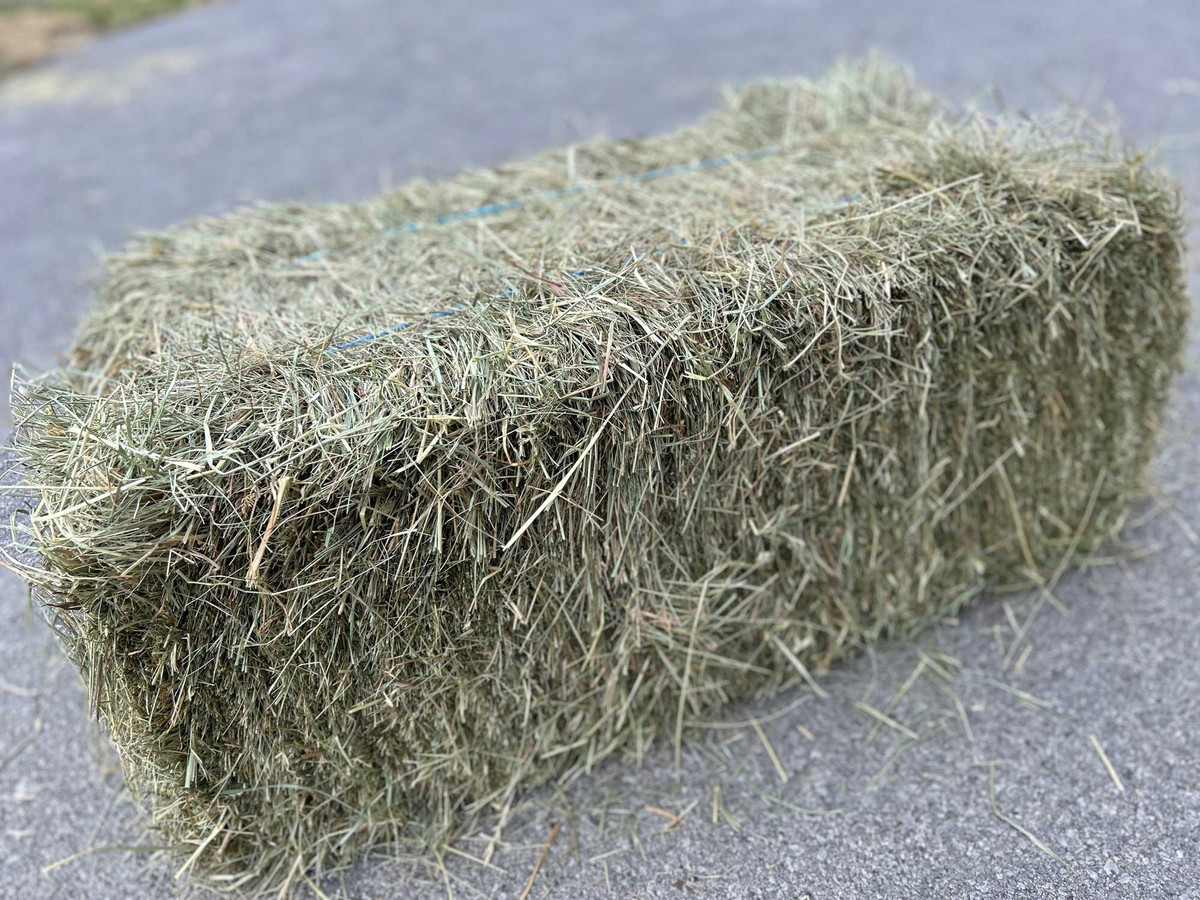
For both rabbits and guinea pigs, unlimited grass hay should be the main event every day. Fruit is a treat, not a fiber source. And while juicy fruit contains water, do not rely on fruit for hydration. If hay intake is low, skip fruit and fix the basics first.
2) Keep fruit portions tiny
Sugar can shift gut bacteria and trigger soft stool, bloating, or appetite changes. The safest approach is small pieces, offered infrequently. These are general, conservative guidelines used by many exotic-savvy caregivers and vets. Individual tolerance varies.
- Adult rabbits: Up to 1 to 2 teaspoons of fruit per 5 lb (2.3 kg) body weight, 2 to 3 times per week.
- Adult guinea pigs: About 1 teaspoon total fruit, 1 to 2 times per week.
If your pet is prone to soft stool, gas, or has a history of stasis, go even smaller or skip fruit entirely.
3) Introduce one fruit at a time
Offer one new fruit, then monitor for 24 to 48 hours. If you see mushy poop, cecotropes smeared around the bottom, reduced appetite, or reduced hay eating, that fruit is not worth it.
4) Wash well, remove pits and risky seeds, and keep it plain
Always rinse fruit, remove stickers, and avoid canned fruit, fruit cups, dried fruit, fruit leather, jams, and yogurt drops. Dried fruit is basically sugar concentrate and is a common cause of tummy drama.
Seed note so it is crystal clear: tiny seeds in berries (like strawberry, raspberry, blueberry) are generally fine. The bigger concerns are pits (stone fruits), cores, and cyanogenic seeds (like apple seeds). When in doubt, remove them.
5) Guinea pig note: vitamin C
Guinea pigs need vitamin C daily, but fruit is not a reliable way to meet that requirement because the sugar cost is high. Use vitamin C rich veggies (especially bell pepper), leafy greens, and a fresh, stabilized guinea pig pellet. Pellets lose vitamin C over time, so check the milling date or expiry and store them properly. Some guinea pigs need a direct vitamin C supplement, which is a great vet conversation.
6) When to skip fruit entirely
Fruit is optional enrichment. I generally skip it (or only use a micro-bite with vet guidance) for pets who are obese, diabetic, prone to chronic soft stool, currently on antibiotics, recovering from GI slowdown or stasis, or struggling with dental disease that affects chewing.
10 safer fruits with strict portions
Portions below are per serving. If you offer fruit, keep the day’s total treat amount within the limits above. When a piece size is mentioned, it is meant to land in the teaspoon range.
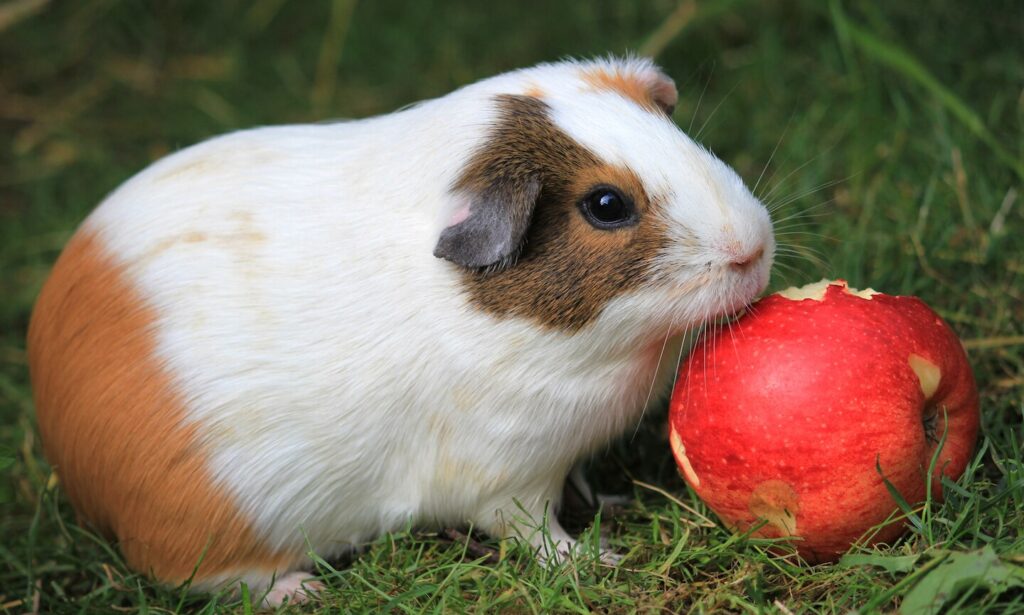
1) Apple (no seeds)
Why it makes the list: Easy to portion and widely tolerated in small amounts.
- Rabbit portion: 1 to 2 small cubes (about 1 to 2 teaspoons total), or 1 very thin slice
- Guinea pig portion: 1 small cube (about 1 teaspoon)
- Prep: Remove core and seeds completely. Apple seeds contain cyanogenic compounds and can be harmful, so I avoid them entirely.
2) Blueberries
Why it makes the list: Convenient, naturally portioned fruit. Also great for timid rescues because you can hand one berry and back away politely.
- Rabbit portion: 1 to 2 blueberries
- Guinea pig portion: 1 blueberry
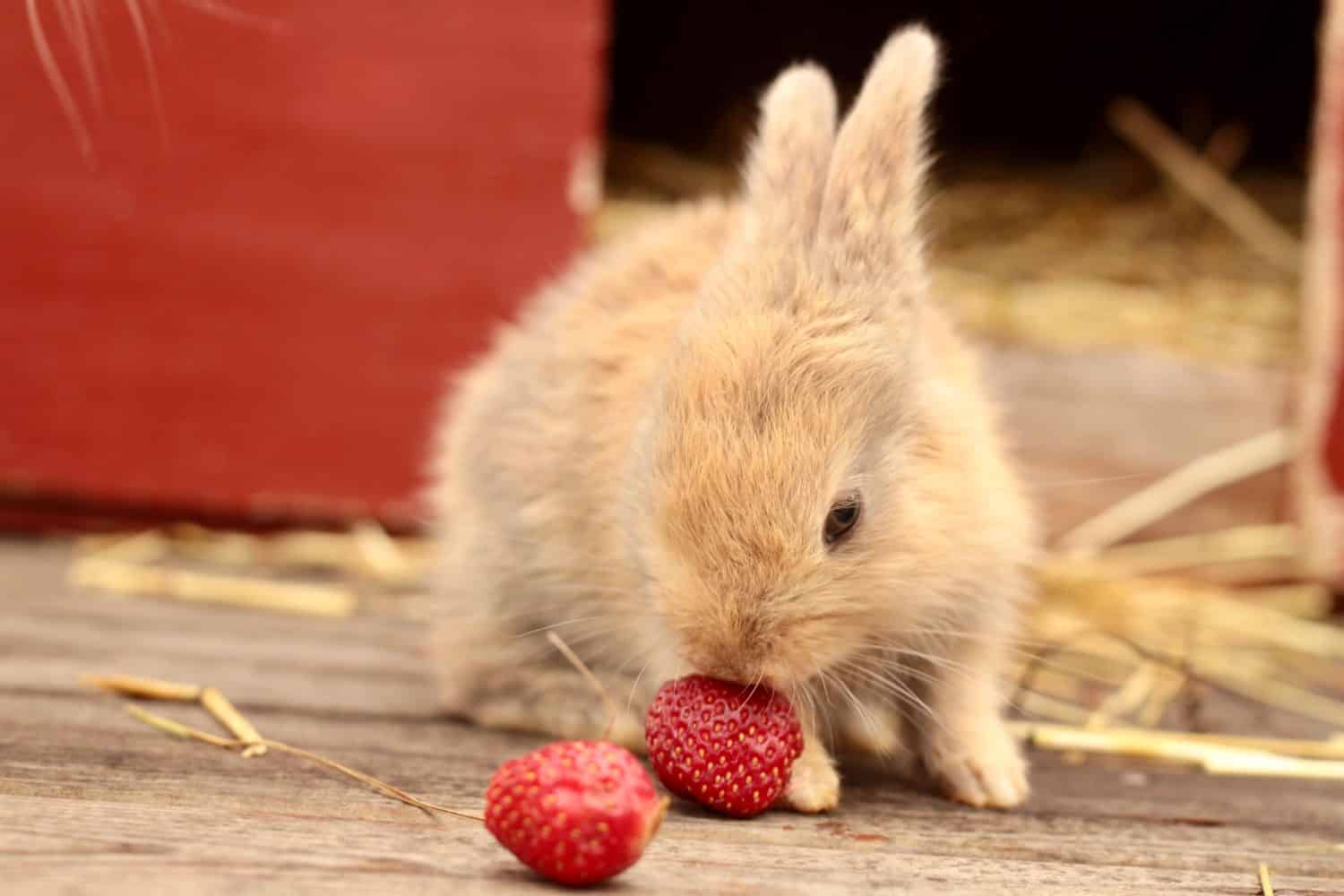
3) Strawberries
Why it makes the list: Often lower in sugar than many tropical fruits, and you can offer a sliver without overdoing it.
- Rabbit portion: 1 to 2 teaspoons of chopped strawberry (roughly 1 large slice, not a whole berry for small rabbits)
- Guinea pig portion: 1 teaspoon (a thin slice)
Tip: The leafy top is fine if it is clean, but the portion size still matters because the red fruit is the sugary part.
4) Raspberries
Why it makes the list: Strong aroma, easy to keep portions small.
- Rabbit portion: 1 to 2 raspberries
- Guinea pig portion: 1 raspberry
5) Blackberries
Why it makes the list: Similar to raspberries, but a little larger and richer, so portion control is important.
- Rabbit portion: 1 blackberry
- Guinea pig portion: 1 half of a blackberry
6) Pear (no seeds)
Why it makes the list: Soft texture and easy to cut into very small cubes.
- Rabbit portion: 1 to 2 teaspoons total (a thin slice or 2 small cubes)
- Guinea pig portion: 1 small cube (about 1 teaspoon)
- Prep: Remove core and seeds.
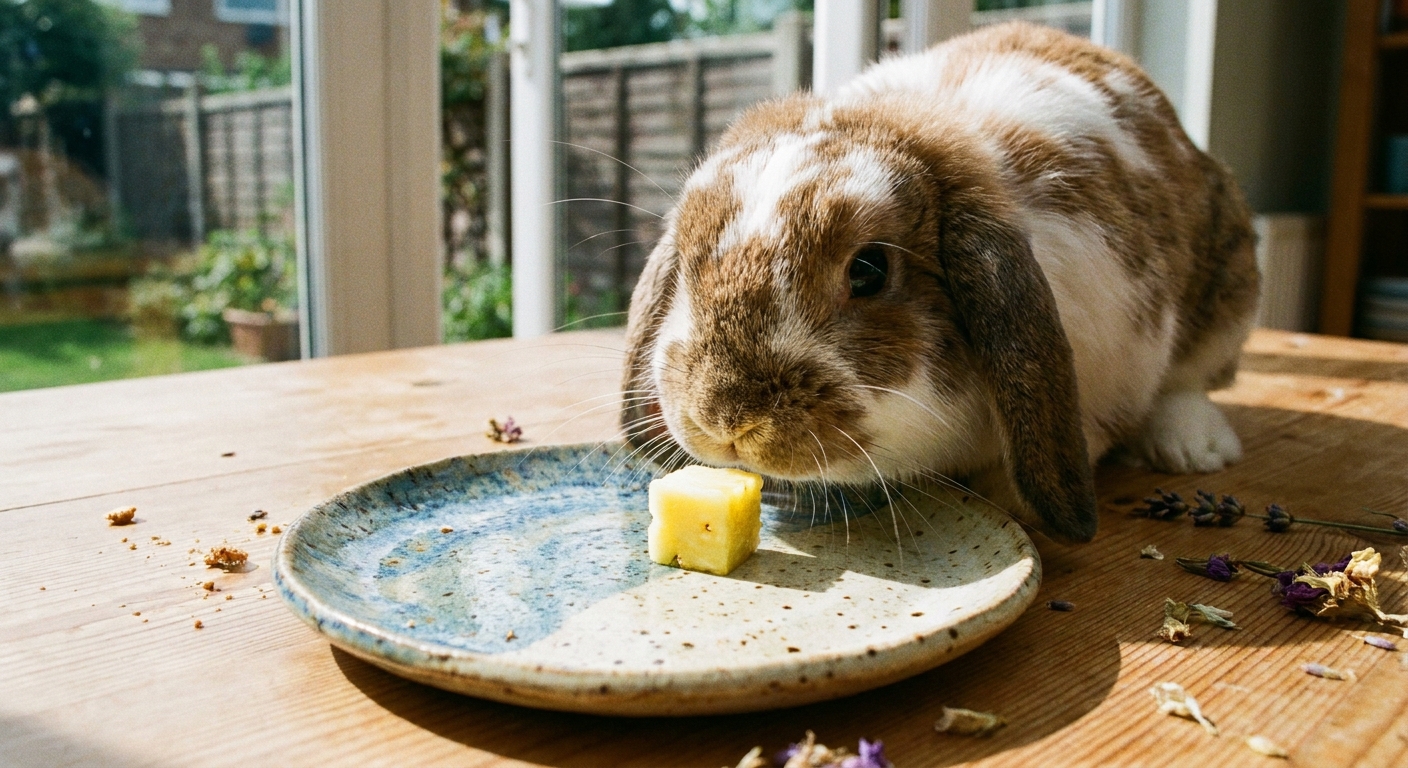
7) Pineapple
Why it makes the list: Fine as an occasional treat. It is not a “hairball cure,” but a tiny bite can be offered safely to many pets.
- Rabbit portion: 1 to 2 teaspoons (a small cube)
- Guinea pig portion: 1 teaspoon (a very small cube)
- Prep: Fresh only, no canned pineapple in syrup or juice.
8) Mango
Why it makes the list: Tasty and soft, but higher sugar, so keep it rare and tiny.
- Rabbit portion: 1 to 2 teaspoons (a small cube)
- Guinea pig portion: 1 teaspoon (a small cube)
- Prep: Remove peel and never offer the pit.
9) Papaya
Why it makes the list: Another highly motivating fruit for picky eaters, but sugar adds up quickly.
- Rabbit portion: 1 to 2 teaspoons (a small cube)
- Guinea pig portion: 1 teaspoon (a small cube)
- Prep: Remove seeds and peel.
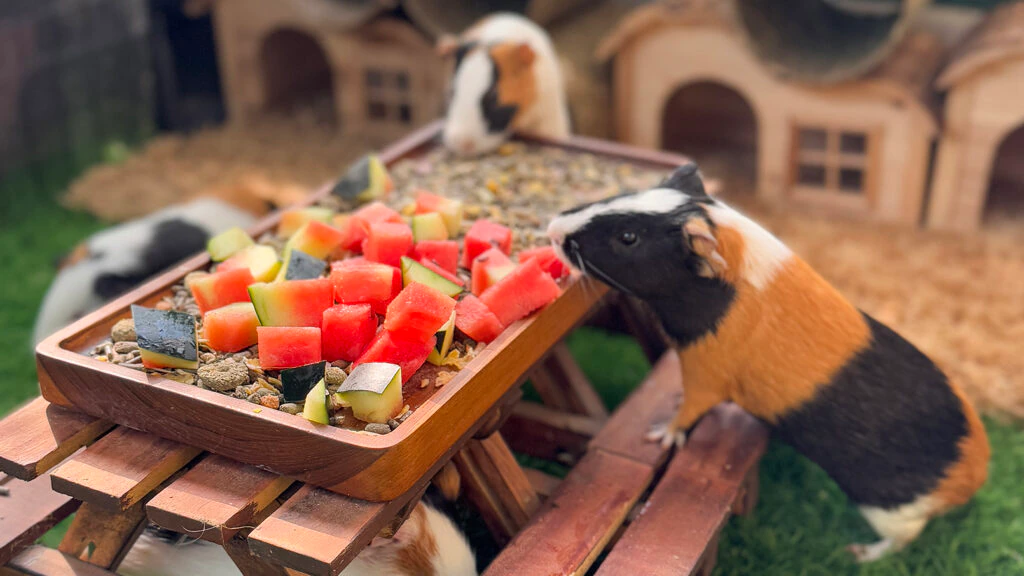
10) Watermelon (seedless)
Why it makes the list: Mostly water, which can make it feel like a bigger treat. Still contains sugar, so keep the piece small.
- Rabbit portion: About 1 to 2 teaspoons (a small cube, not a big chunk)
- Guinea pig portion: About 1 teaspoon total (1 to 2 tiny cubes)
- Prep: Choose seedless when possible. If seeds are present, remove them.
Fruits to be cautious with
Some fruits are not automatically “toxic,” but they are so sugary or so easy to overfeed that they routinely cause soft stool and picky eating. If you offer these at all, keep them very rare and even smaller than the portions above.
- Banana: Extremely easy to overdo. If used, offer a slice no thicker than a coin for a rabbit, and many guinea pigs do better without it.
- Grapes and raisins: Very high sugar. Raisins are dried sugar bombs. If you use a grape, offer one small grape to a rabbit and a tiny sliver to a guinea pig, but I generally pick berries instead.
- Cherries, peaches, plums, apricots: Pits must be removed completely, and these are better left as rare treats for experienced owners who can portion strictly.
- Citrus: Some rabbits tolerate a tiny piece, many do not. Guinea pigs can handle small amounts, but it is not necessary and can cause mouth or tummy irritation in sensitive individuals.
How to serve fruit safely
Use fruit as enrichment
- Hide a blueberry in a hay pile for foraging.
- Use a single raspberry as a “come here” reward during nail trims.
- Scatter tiny apple cubes in a snuffle mat made for small pets.
Pair with normal routines
I like offering fruit after I have seen solid hay eating for the day, not first thing in the morning. It is a small habit that helps keep treats from nudging the diet off course.
Keep it consistent
Digestive systems like routine. One tiny fruit treat a couple times a week is much kinder than random handfuls “because they looked cute today.”
Quick treat size cheat sheet
- Rabbit: Total fruit treat per serving is usually 1 to 2 teaspoons per 5 lb. Berries are typically 1 to 2 pieces.
- Guinea pig: Keep fruit to about 1 teaspoon total per serving, 1 to 2 times weekly.
If your pet is overweight, has a sensitive stomach, or is recovering from GI issues, consider swapping fruit treats for fresh herbs like cilantro or a favorite leafy green instead. Your pet will still act like you invented joy.
FAQ
Can babies or young pets have fruit?
I avoid fruit for young rabbits under 12 weeks and for guinea pigs who are still adjusting to a stable adult diet. Younger animals have more delicate digestion, and it is easier to create picky eating habits early. If you are unsure of age or history (common with rescues), stick to hay, appropriate pellets, and safe leafy greens first.
How often can I give fruit?
For most healthy adults, fruit works best 2 to 3 times per week for rabbits and 1 to 2 times per week for guinea pigs, using the portion limits above. Daily fruit is where I see the most soft stool and “my pet stopped eating hay” complaints.
My rabbit or guinea pig got into fruit. What should I do?
Do not panic. Remove access, offer plenty of hay and water, and monitor appetite and droppings over the next 24 to 48 hours. If you see refusal to eat, very small or absent droppings, bloating, or lethargy, contact an exotics vet promptly.
Is fruit ever necessary?
No. It is enrichment. A healthy rabbit or guinea pig can live a happy life on the basics: hay, measured pellets (species-appropriate), and a variety of safe leafy greens. Fruit is just the fun extra when portions stay strict.