From bar-biting to baseboard damage, boredom behaviors are fixable. Spot the signs, rule out medical issues, and redirect chewing and digging with safe enric...
Rabbit Cove
Foraging Mats and Puzzle Toys for Rabbits and Guinea Pigs
A practical review of safe snuffle mats, treat balls, and puzzle toys for rabbits and guinea pigs, plus what to avoid and how to use them without tummy trouble.

Chloe Miller
Chloe Miller is a dedicated small-pet enthusiast and experienced foster parent who has spent over a decade caring for rabbits and guinea pigs. Through her hands-on work with local animal rescues, she shares practical, compassionate advice on housing, nutrition, and daily enrichment to help small pets thrive. When she isn't designing custom indoor enclosures, Chloe can be found coaxing shy rescues out of their shells with fresh cilantro.
Published
October 22, 2026
Updated
October 22, 2026
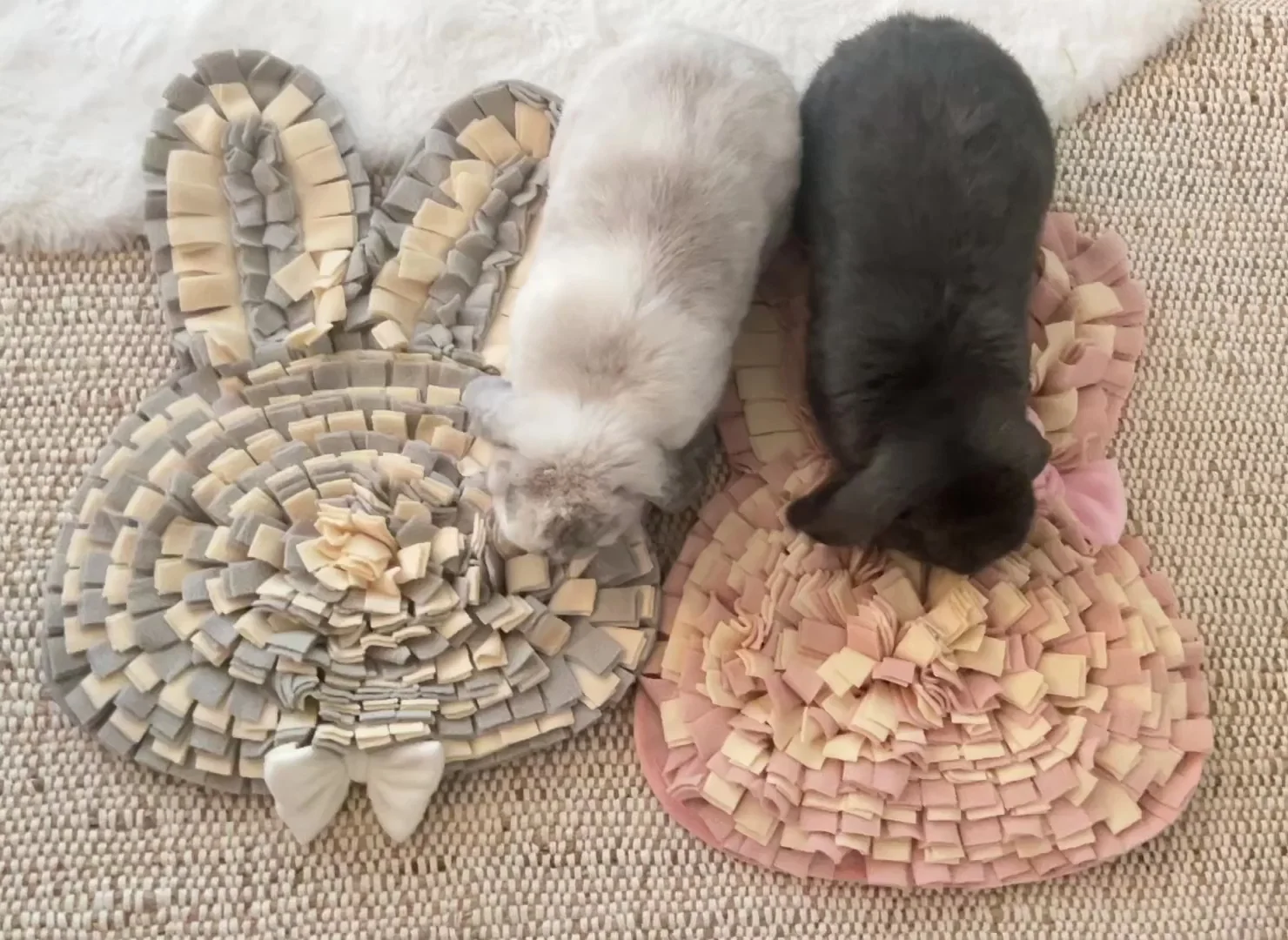
Small herbivores are professional foragers. Even the sweetest couch potato rabbit or the most dramatic guinea pig still has a brain wired to search, sniff, sort, and nibble all day. When we move that lifestyle indoors, mental enrichment matters just as much as a roomy enclosure and a mountain of hay.
Foraging mats and puzzle toys are some of my favorite tools because they tap into natural behaviors without requiring you to reinvent your whole routine. The best ones slow down “treat vacuuming,” encourage exploration, and give shy pets a confidence boost. The wrong ones, though, can turn into a chewing hazard or a snack bomb for sensitive bellies.
Below are the options I reach for most often with foster rabbits and guinea pigs, what makes each one worth it, and how to use them safely.
Quick safety checklist before you buy
Rabbits and guinea pigs explore with their mouths. That is adorable. It is also why I am picky.
- Materials should be chew-safe. Fleece, seagrass, untreated cardboard, hard food-grade plastic, and some kiln-dried pine chew items are commonly used. If you are shopping wood, avoid aromatic softwoods, strongly scented products, and anything resinous or unfinished, and always monitor determined chewers.
- No loose strings, long ribbons, or elastic loops. Anything that can wrap around a foot or be swallowed as a long strand is a hard pass.
- Skip glued-on decorations. Little felt eyes and hot-glued bits are basically a “please ingest me” sign.
- Right size openings. Treat holes should be large enough to release food without frantic banging, but not so large that everything dumps out at once.
- Easy to clean. If you cannot realistically wash it, it will become a mystery odor object and a bacteria hangout.
- Food load matters. The puzzle is enrichment, not a second dinner. With rabbits and guinea pigs, too many rich treats can tip digestion fast.
If your pet is a known fabric chewer, consider flatter fleece mats with tightly bound strips, seagrass options, or cardboard-based puzzles instead of anything plush or shaggy.
When to supervise and when to toss it
I supervise any new enrichment item until I know how that specific animal uses it. Some will forage politely. Some will attempt to eat the entire concept of a toy.
- Retire fleece mats if strips loosen, edges fray, or your pet starts pulling and swallowing fabric.
- Retire woven mats if they shed long strands, develop sharp broken bits, or start smelling musty even after cleaning.
- Retire plastic puzzles if you see cracks, sharp edges, or loose parts. Cracks become teeth-sized shards.
- Retire cardboard toys if they get soggy, heavily soiled, or start shedding gluey layers.
Best foraging mats
Foraging mats shine for indoor enrichment because you can make “finding dinner” feel like a mini adventure. They are also wonderfully adjustable. You control difficulty by how deep you hide hay or greens.
1) Fleece snuffle mats
Why I like them: Soft on feet, quiet, easy to use, and easy to scale. For timid rabbits and guinea pigs, a snuffle mat can be a confidence builder because the reward is immediate and low-stress.
What to look for:
- A thick base that does not curl up easily
- Tightly anchored fleece strips (tug each strip before purchase if you can)
- No foam that can be accessed from the underside
- Machine-washable construction
How to use it safely: Start with hay and a few pellets rather than sugary treats. For guinea pigs, I like to tuck in chopped bell pepper or small cilantro sprigs so they smell it immediately and stay engaged.
2) Hay foraging mats
Why I like them: Anything that increases hay interaction is a win for digestion and helps support dental health through natural chewing. It is not a magic fix for dental disease, but it is still one of the best daily habits you can encourage.
What to look for: Designs that allow you to stuff hay into channels or under flaps, and a sturdy backing so it does not become a portable chew project.
Pro tip: Use two hay types for extra interest, like timothy plus orchard grass. The “new smell” effect is real.
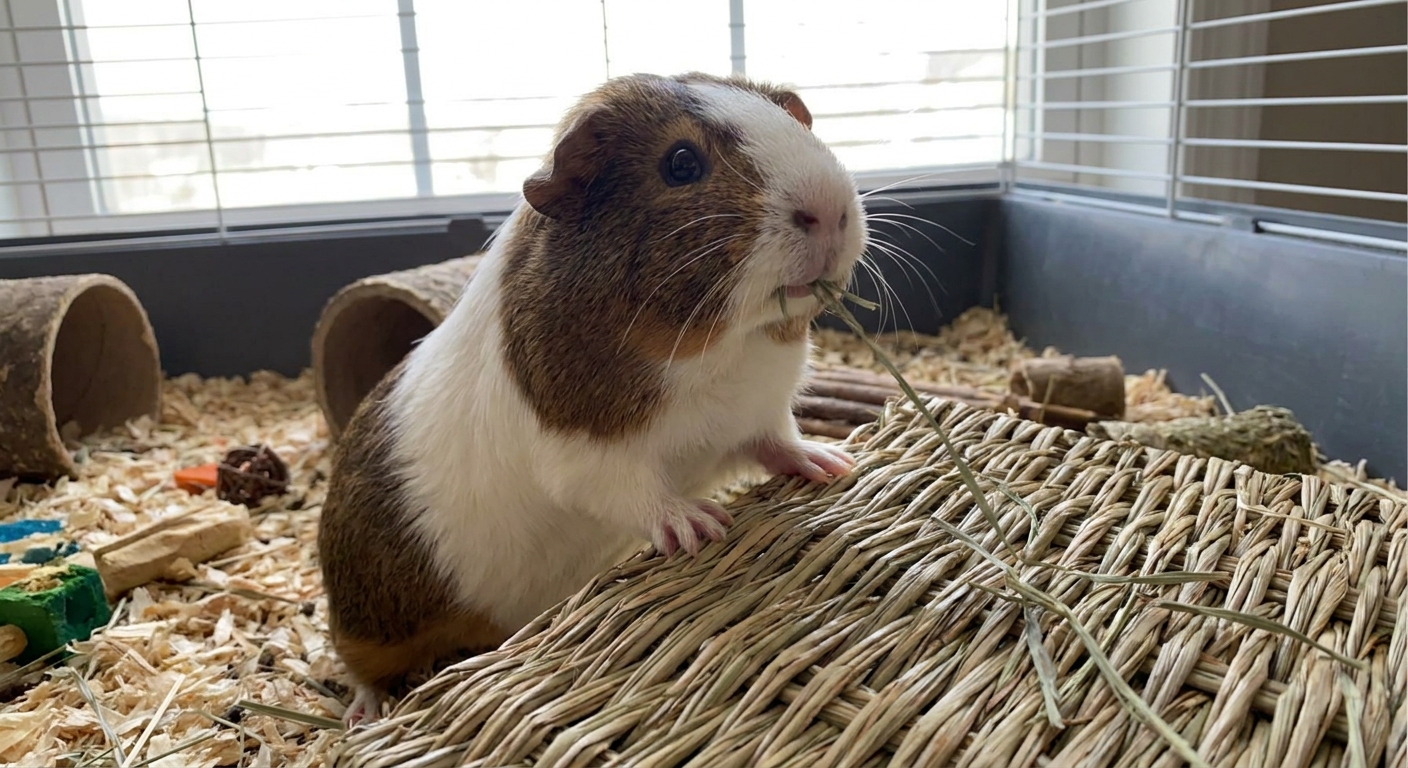
3) Seagrass and palm leaf mats
Why I like them: Many rabbits and guinea pigs who shred fabric will happily work on a woven mat without pulling long strings. Seagrass is also great for harmless destruction.
What to look for: Tightly woven, no wire edging, no dyed sections, and no added fragrance.
How I load it: Press pellets into the weave, tuck hay under the edge, or scatter a small portion of leafy greens across it for a longer “search.”
Best treat balls and rolling feeders
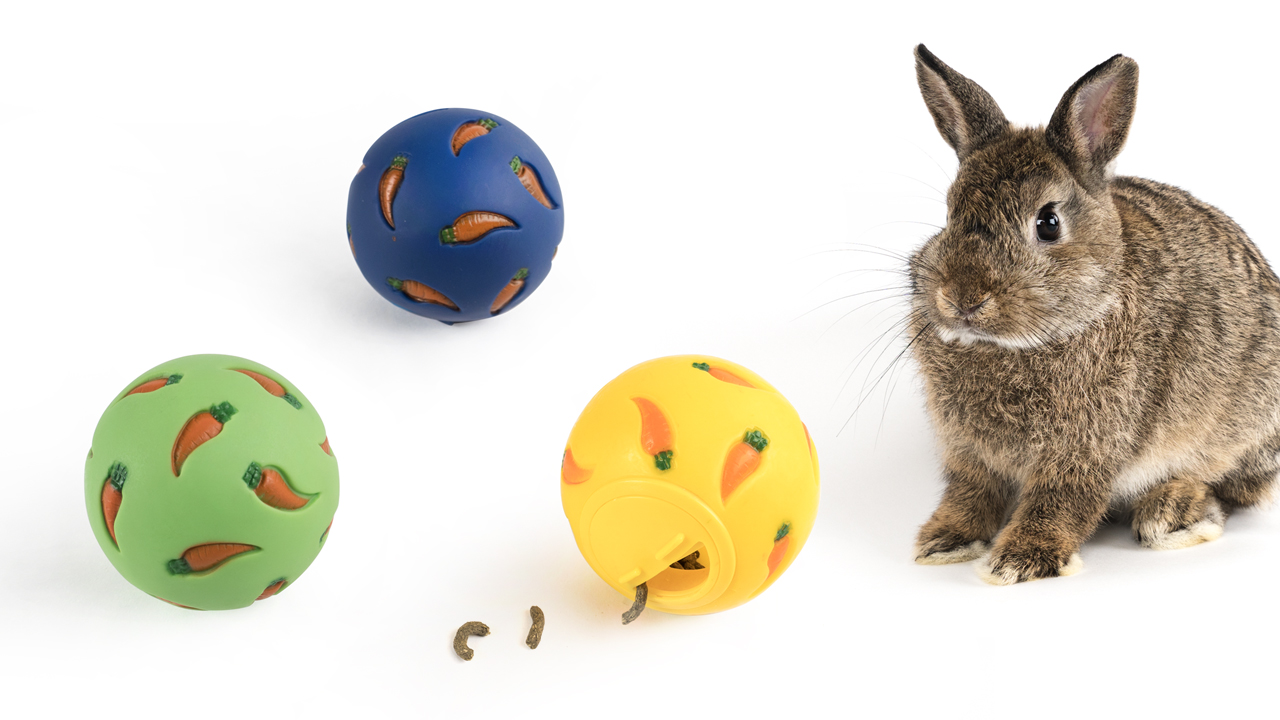
Rolling toys are fantastic for rabbits who like to toss things and guinea pigs who enjoy following a trail. The key is choosing one that releases food slowly and does not encourage frantic slamming.
4) Adjustable treat balls
Why I like them: You can set the opening small so only a few pellets drop at a time. That turns a tablespoon of pellets into a 10-minute project.
What to look for:
- Hard, smooth, food-grade plastic
- An adjustable opening
- A size your pet cannot pick up and hurl into the water bowl like a tiny wrecking ball
Best “treat” to use: Plain pellets. If you add dried fruit bits, you have basically turned it into a candy dispenser. For most rabbits and guinea pigs, sugary add-ins should be a rare bonus, not the default.
5) Rolling pellet cylinders
Why I like them: Cylinders tend to roll in a straighter line than balls, which can be less frustrating in small spaces.
How to set it up: Use it on a rug or foam tile surface, not slippery hardwood. That helps prevent scary slips and awkward strain from scrambling for traction.
6) DIY toilet paper roll tumble toy
Why I like it: Cardboard is cheap, disposable, and customizable. Also, you get to feel smug about recycling.
How to do it: Put a small pellet portion inside a paper towel tube segment, fold the ends inward, and poke 2 to 4 small holes. Start with larger holes and reduce size as your pet learns the game.
Safety note: Use plain cardboard only (no glitter, heavy inks, tape residue, or staples). Supervise if your rabbit eats cardboard like it is a lifestyle choice. Shredding is fine. Eating large amounts is not.
Best logic puzzles
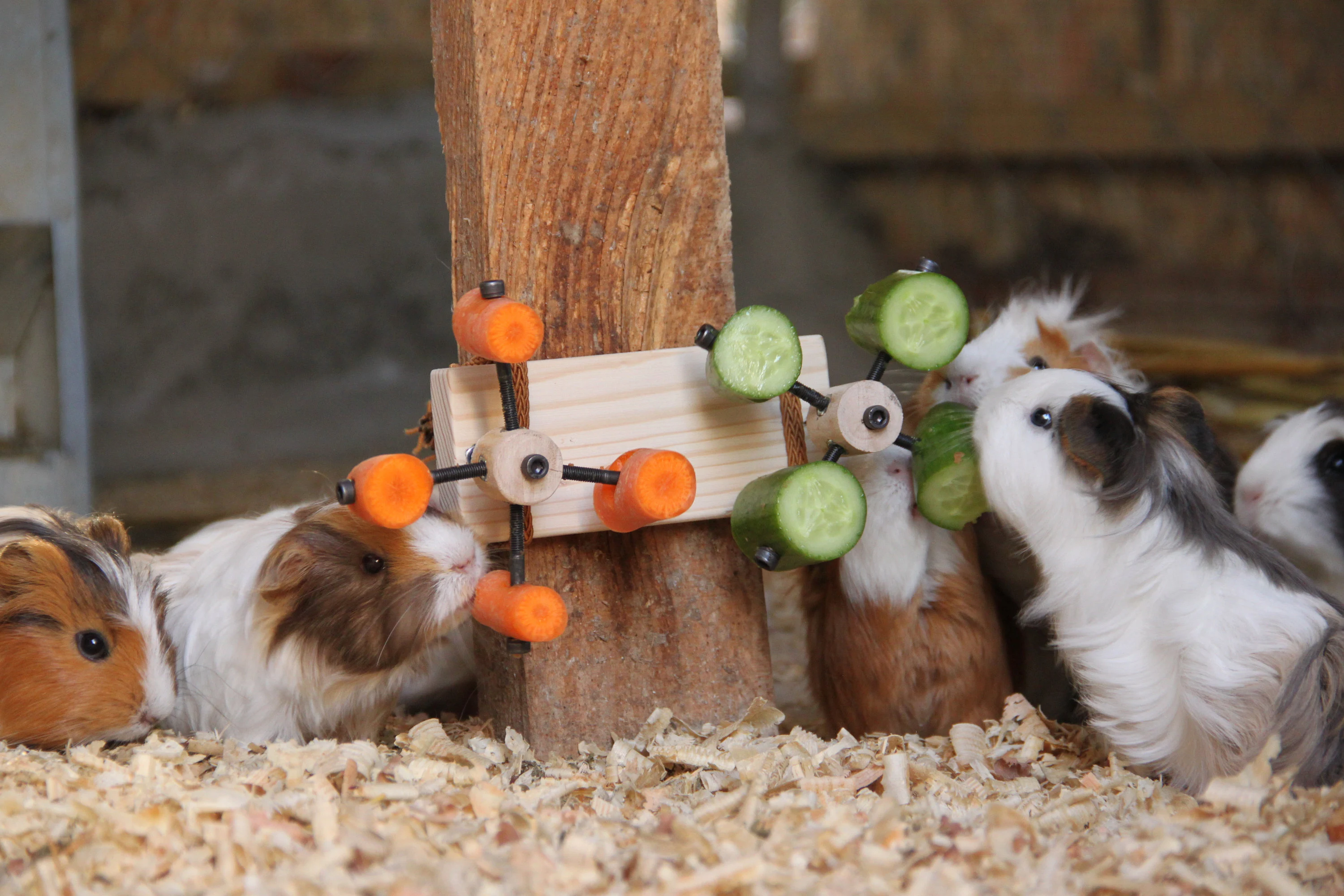
Some rabbits are little engineers. Some guinea pigs will absolutely learn that “push lid, get snack” is a valid use of brain power. The trick is picking puzzles that are simple, sturdy, and not packed with tiny parts.
7) Sliding lid puzzles
Why I like them: Sliding lids mimic natural “move the thing to get the food” behavior. They are usually easier than flip-cups for guinea pigs.
What to look for:
- Large compartments that fit leafy greens or pellets
- Thick, durable pieces that do not snap into chewable shards
- A base that does not tip easily
Beginner setup: Leave some lids partially open at first so your pet gets a quick win. Then close them more as they catch on.
8) Flip-top or cup puzzles
Why I like them: Rabbits often enjoy lifting and flipping. Guinea pigs vary. Some are enthusiastic. Some stare at it like you have insulted their ancestors.
Tip for guinea pigs: Use lighter cups and start by placing a favorite herb under one cup only, with the edge slightly propped.
9) Stacking cups and nesting toys
Why I like them: They encourage nosing, tipping, and patience without requiring advanced mechanics.
How I use them: Hide a few pellets under the bottom cup and place the stack on a towel so it does not slide away.
How to load puzzles without tummy trouble
I love treats. My rabbits love treats more. That does not mean treats belong in every enrichment activity.
Rabbit-friendly fillers
- Measured daily pellets (choose a species-appropriate rabbit pellet, typically timothy-based for adults)
- Hay, hay, and more hay
- Leafy greens like romaine, green leaf lettuce, cilantro, parsley
- Very small bits of higher-sugar produce used sparingly, like a blueberry split in half
Guinea pig-friendly fillers
- Measured pellets (guinea pig pellets only, with stabilized vitamin C)
- Hay
- Bell pepper, cilantro, small cucumber slices
- Occasional tiny bits of fruit as a rare bonus, not the default
Portion rule I use in foster homes: Enrichment should mostly redistribute food they would get anyway, not add a bunch of extra calories on top.
What to avoid
- Seed and nut mixes marketed as “treat blends”: too rich, easy to overfeed, and not a great fit for either species.
- Yogurt drops and sugary commercial treats: popular, but not worth the digestive drama.
- “Edible” hide glues on wood toys or compressed treat logs: many are sticky, sugary, and encourage gulping.
- Soft rubber toys made for dogs: tempting to chew, too easy to shred.
- Rope toys or anything with tassels: string ingestion risk.
- Small removable pegs and mini parts: choking hazard and “I swallowed it” hazard.
- Anything that requires a lot of force to dispense food: encourages stress behaviors and hard slamming.
If a puzzle makes your pet frantic, switch to an easier option. Mental enrichment should be engaging, not rage-inducing.
Easy rotation ideas
The secret is not owning a toy store. It is novelty.
- Monday: Hay mat with pellets sprinkled deep
- Tuesday: Treat ball with the day’s pellet portion
- Wednesday: Cardboard tube tumble toy
- Thursday: Sliding lid puzzle with leafy greens
- Friday: Seagrass mat with hay tucked underneath
- Weekend: Scatter feed in a snuffle mat plus a paper bag full of hay (supervised)
Even swapping location can refresh a toy. Put the snuffle mat near a favorite hide, or set the puzzle on a different rug. Small brains love small changes.
Cleaning and maintenance
Snuffle mats
- Shake out hay daily.
- Machine wash on gentle with fragrance-free detergent as needed.
- Air dry fully before returning to the enclosure to avoid mildew smells.
Plastic puzzles and treat balls
- Wash with hot water and mild dish soap weekly, more often if greens get stuck.
- Check seams for cracks. Cracks turn into sharp edges.
Woven mats
- Spot clean and sun-dry when possible.
- Replace once they start shedding strands or getting musty.
FAQ
Can rabbits and guinea pigs use the same puzzle toys?
Often yes, as long as the toy is the right size and the challenge level matches the animal. Guinea pigs generally do better with simpler mechanics and easy-access rewards. Rabbits are more likely to lift, toss, and shove.
How long should a foraging session last?
For most pets, 10 to 20 minutes of engaged foraging is plenty. You can offer multiple short sessions rather than one marathon. If your pet loses interest, that is fine. Foraging should feel optional, not like homework.
My rabbit eats the mat. What now?
Switch away from fleece or plush textures and try a seagrass mat, cardboard-based puzzles, or a heavy hay feeder setup. And always supervise new enrichment until you know how your individual pet interacts with it.
Are snuffle mats safe for guinea pigs?
They can be, especially for pigs who nose and root rather than chew fabric. Choose a sturdy mat with tightly attached strips, skip long strands, and start with hay and veggies. If your guinea pig starts tugging and ingesting fleece, retire it.