A practical, rescue-tested guide to choosing hay for rabbits and guinea pigs by age, weight, and health, plus shopping tips and common mistakes to avoid.
Rabbit Cove
Daily Feeding Schedule for Adult Rabbits and Guinea Pigs
A simple, repeatable daily routine for adult rabbits and guinea pigs that balances unlimited hay, fresh leafy greens, and the right amount of pellets, plus timing tips and portion guides.

Chloe Miller
Chloe Miller is a dedicated small-pet enthusiast and experienced foster parent who has spent over a decade caring for rabbits and guinea pigs. Through her hands-on work with local animal rescues, she shares practical, compassionate advice on housing, nutrition, and daily enrichment to help small pets thrive. When she isn't designing custom indoor enclosures, Chloe can be found coaxing shy rescues out of their shells with fresh cilantro.
Published
October 22, 2026
Updated
October 22, 2026
If you have ever found yourself holding a salad bowl at 9 p.m. thinking, “Did I already feed pellets today or was that yesterday?”, you are in excellent company. Adult rabbits and guinea pigs do best with a predictable routine built around unlimited hay, measured pellets, and fresh greens served in a way that supports their digestion and natural grazing habits.
This guide gives you a clear, actionable daily schedule you can stick to, plus portion ranges that work for most healthy adults. I will also point out the biggest “pet store myths” I see in rescue intakes, so your routine stays both structured and truly species-appropriate.
The non-negotiables
For both species: hay is the main course
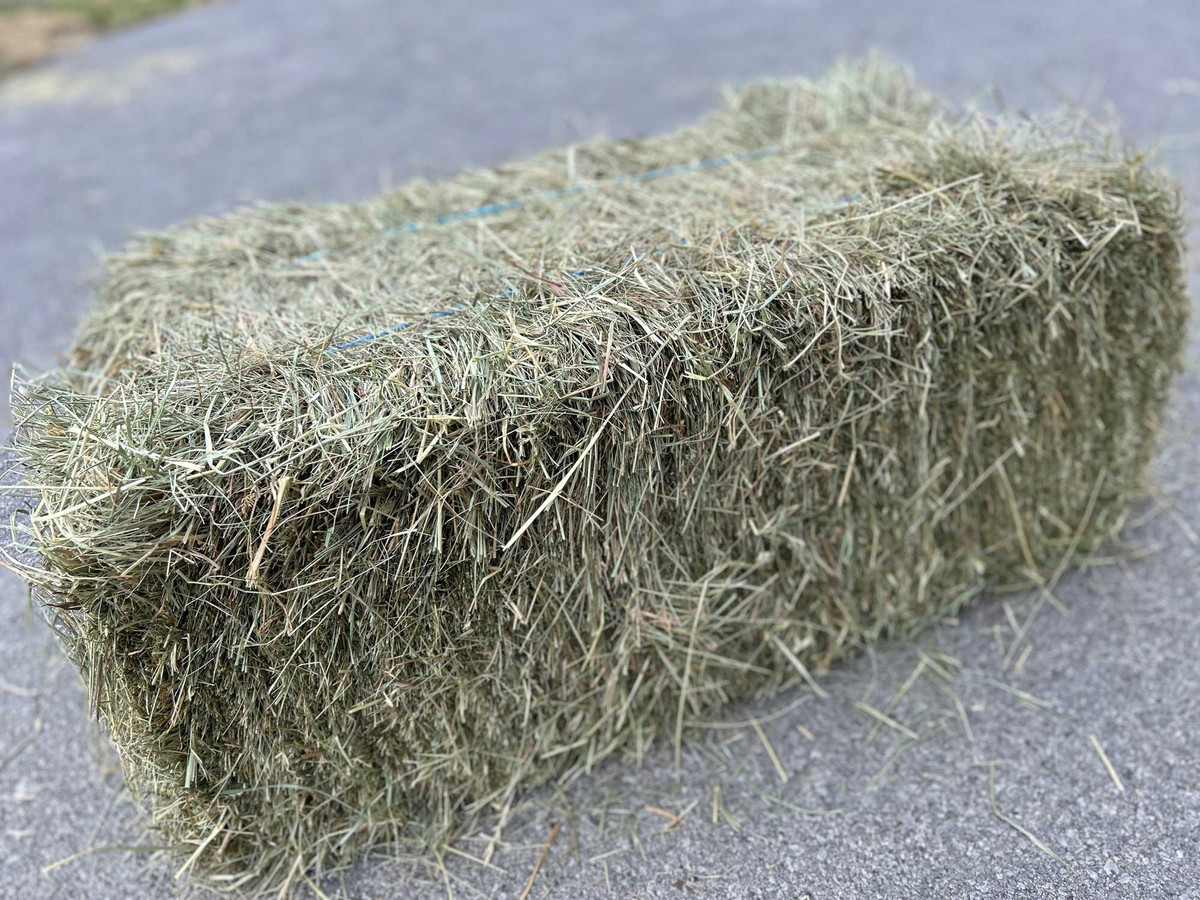
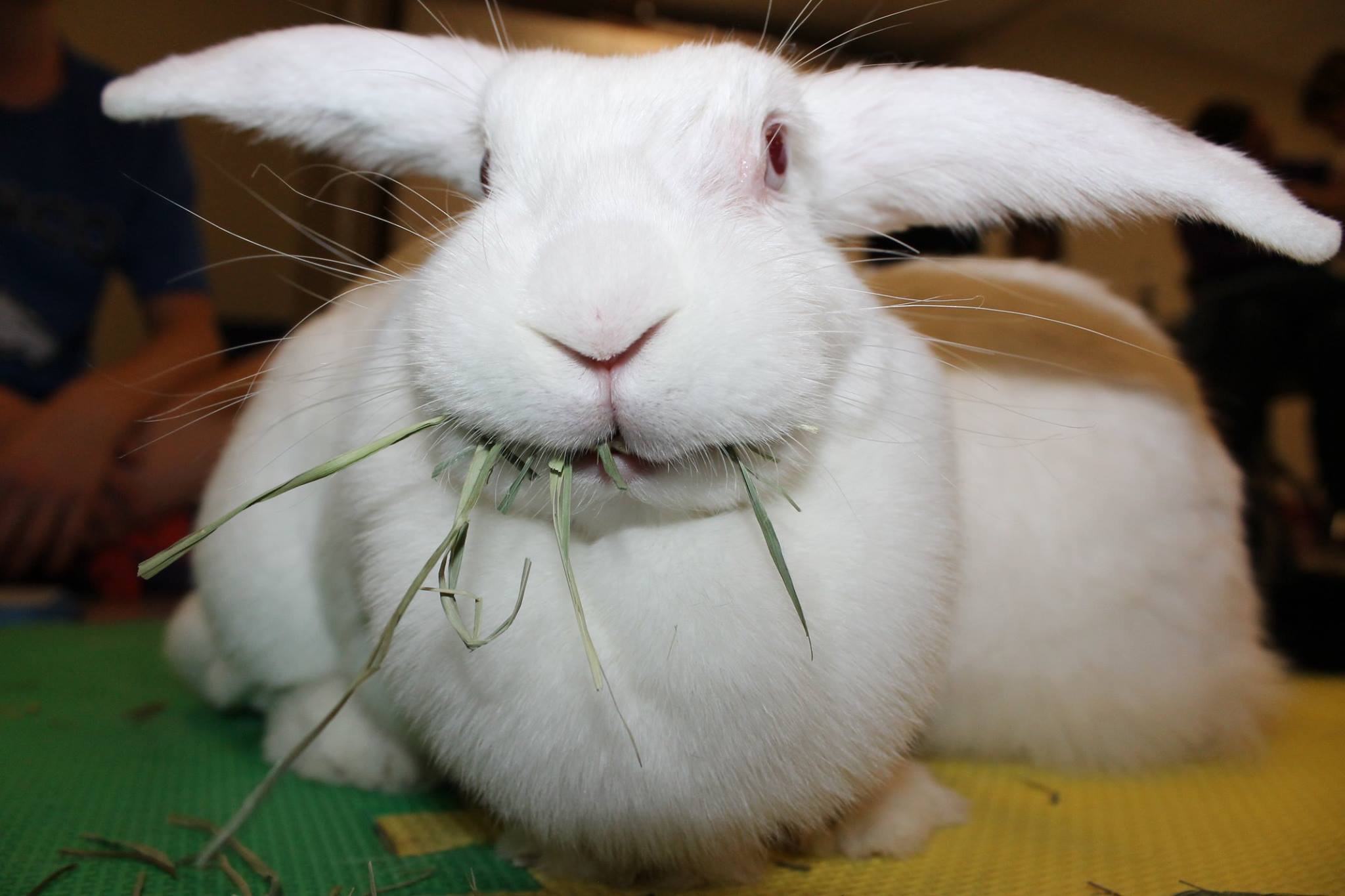
Adult rabbits and guinea pigs are built to graze. Their teeth and gut motility depend on steady fiber. That is why grass hay should be available 24/7, refreshed at least twice a day. If the hay rack is empty for hours, the schedule is not “tight”, it is risky.
What “unlimited” looks like in real life: hay is always present where they like to rest and eat, and there is enough on hand that you are topping off because it got eaten, not because it vanished. Larger enclosures and multi-pet setups usually do best with more than one hay station.
- Best everyday hays: timothy, orchard grass, meadow hay, bluegrass (choose one or rotate)
- Use alfalfa as a treat or special-case hay only: it is generally too rich for healthy adults (exceptions exist for certain underweight seniors under vet guidance)
Fresh greens: daily, but thoughtfully
Greens provide hydration, micronutrients, and enrichment. The goal is a varied mix of leafy greens, not a single staple forever, and not a huge pile of watery vegetables that crowds out hay.
- Rabbits: a daily salad, adjusted to stool quality and body condition
- Guinea pigs: daily greens plus a reliable vitamin C source (more on that below)
Pellets: a measured supplement
Pellets are useful for vitamins and consistency, but overfeeding them is one of the fastest ways to end up with picky eaters, weight gain, softer stools, and less chewing. For most healthy adults, pellets should look like a small measured serving, not an all-day buffet.
One more stability tip: if you switch pellet brands or hay types, do it gradually over 7 to 14 days. Sudden changes can upset some animals, especially guinea pigs.
A simple daily schedule
There is more than one “right” routine, but the best schedules share three traits: consistency, hay-first priorities, and measured pellets. Here is a structure that works beautifully in most homes.
Morning (7 a.m. to 10 a.m.)
- Hay check and top-off: remove any damp or trampled hay, add a fresh handful or two (more if you have multiple pets)
- Fresh water refresh: rinse and refill bowls and bottles, whichever you use. Many rabbits and guinea pigs drink more readily from a heavy bowl, but either method can work if it stays clean and accessible.
- Greens meal: serve about half the day’s leafy greens
- Guinea pig vitamin C anchor: include a high-C item in the morning salad
Afternoon (optional mini-check, 2 p.m. to 5 p.m.)
- Quick hay fluff: shake out the hay pile or stuff a rack to encourage grazing
- Spot clean feeding area: especially important for guinea pigs, who love to redecorate their kitchens
Evening (6 p.m. to 9 p.m.)
- Pellet serving: give measured pellets during the evening for easy routine building and training
- Second greens meal (or the full salad if you prefer once daily): many rabbits and guinea pigs are naturally most active around dusk and will happily graze
- Final hay top-off: set them up to graze overnight
Rescue foster tip: If you have a rabbit who is prone to gulping pellets, split the pellets into two smaller servings (morning and evening) or use a treat ball to slow things down.
Portion guidelines
Every adult is an individual, and your vet’s advice comes first, especially for dental issues, bladder sludge history, obesity, or GI sensitivity. These ranges are a solid starting point for healthy adults, and then you fine-tune based on body condition, appetite, and stool quality.
Adult rabbits
- Hay: unlimited, always available
- Leafy greens: a common starting range is 1 to 2 packed cups per 2 pounds of body weight daily, split into 1 to 2 meals. If stools soften or cecotropes go uneaten, scale back and simplify the mix.
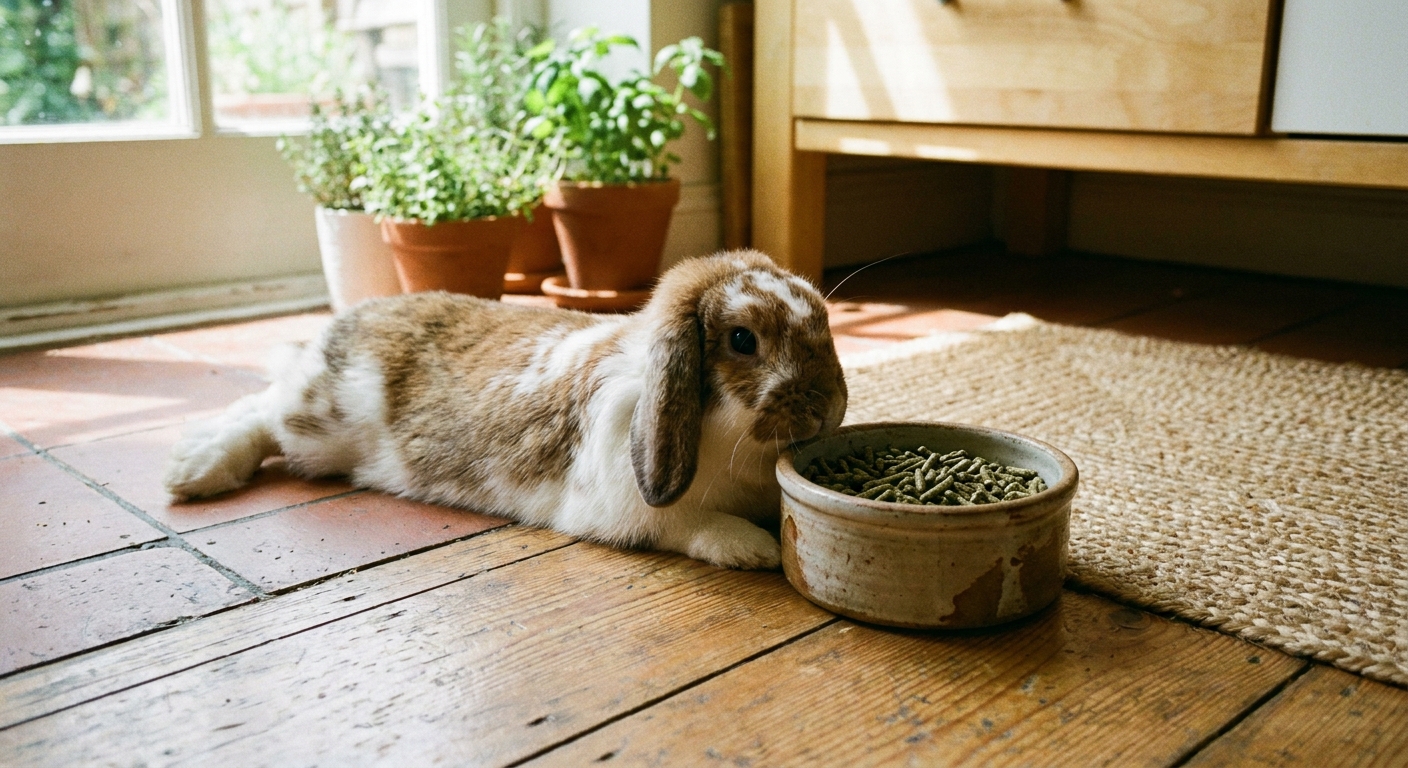
- Pellets: often around 1/8 to 1/4 cup per 5 pounds of body weight daily, but pellet density varies a lot by brand. Use your pellet bag’s weight-based guideline as a baseline, then adjust to maintain an ideal body condition (many indoor adults do best on the lower end).
Pellet quality matters: choose plain, timothy-based pellets with no colorful bits, seeds, nuts, or dried fruit. Those mixes are basically “trail mix for herbivores” and tend to cause selective eating.
Adult guinea pigs
- Hay: unlimited, always available
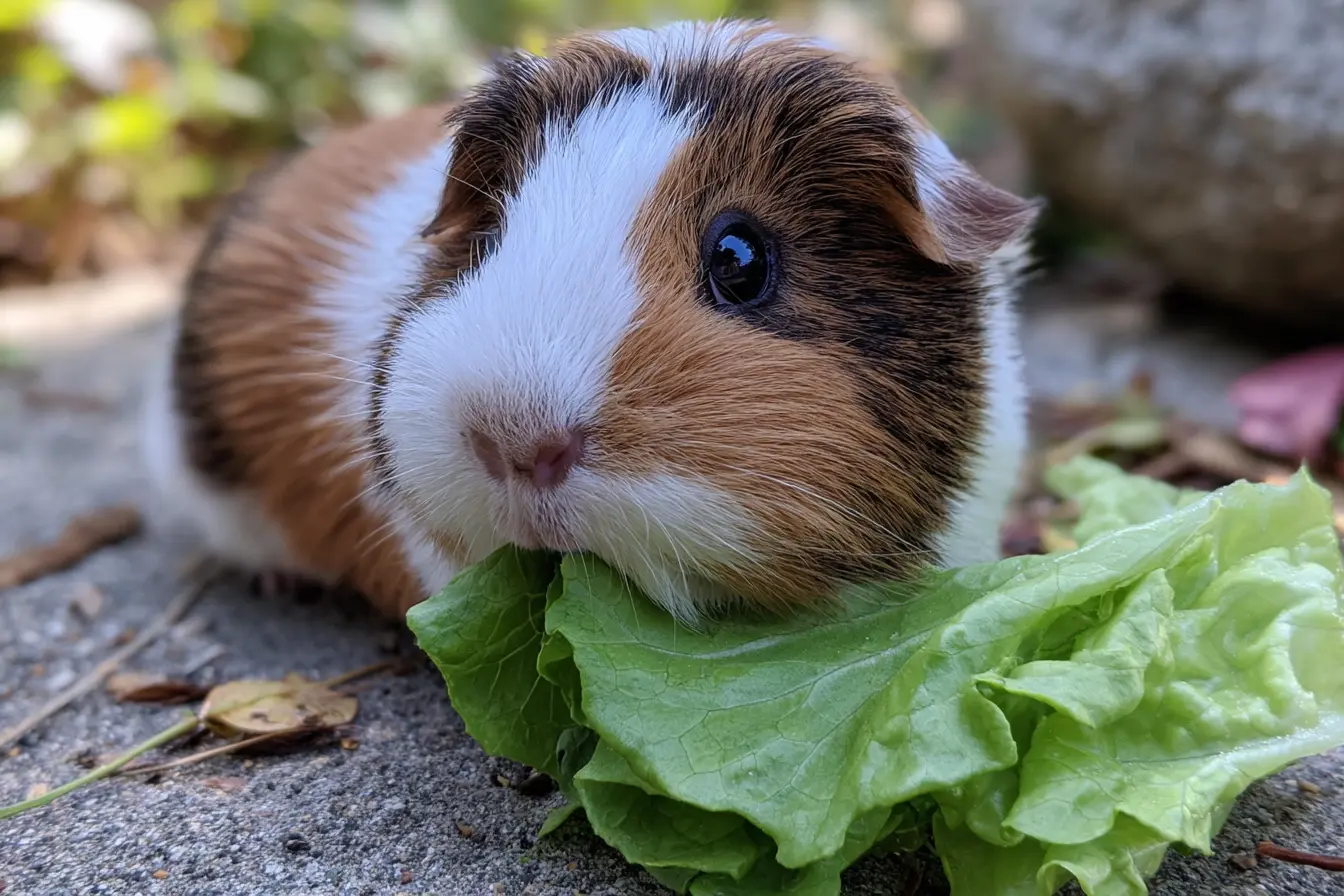
- Leafy greens: about 1 cup per pig per day as a starting point, more for larger pigs if weight and stool stay ideal
- Pellets: about 1/8 cup per pig per day of a vitamin C fortified, plain timothy-based guinea pig pellet (follow the bag’s guidance and adjust to body condition)
- Vitamin C: aim for a dependable daily source. Many adult guinea pigs do well in a typical range of about 10 to 30 mg per day, with higher needs in pregnancy, illness, or stress as advised by a vet.
Please skip vitamin C drops in water as your primary plan. They can degrade quickly and can change water taste, leading to less drinking. Food-based vitamin C and quality pellets are usually more reliable.
Greens made easy
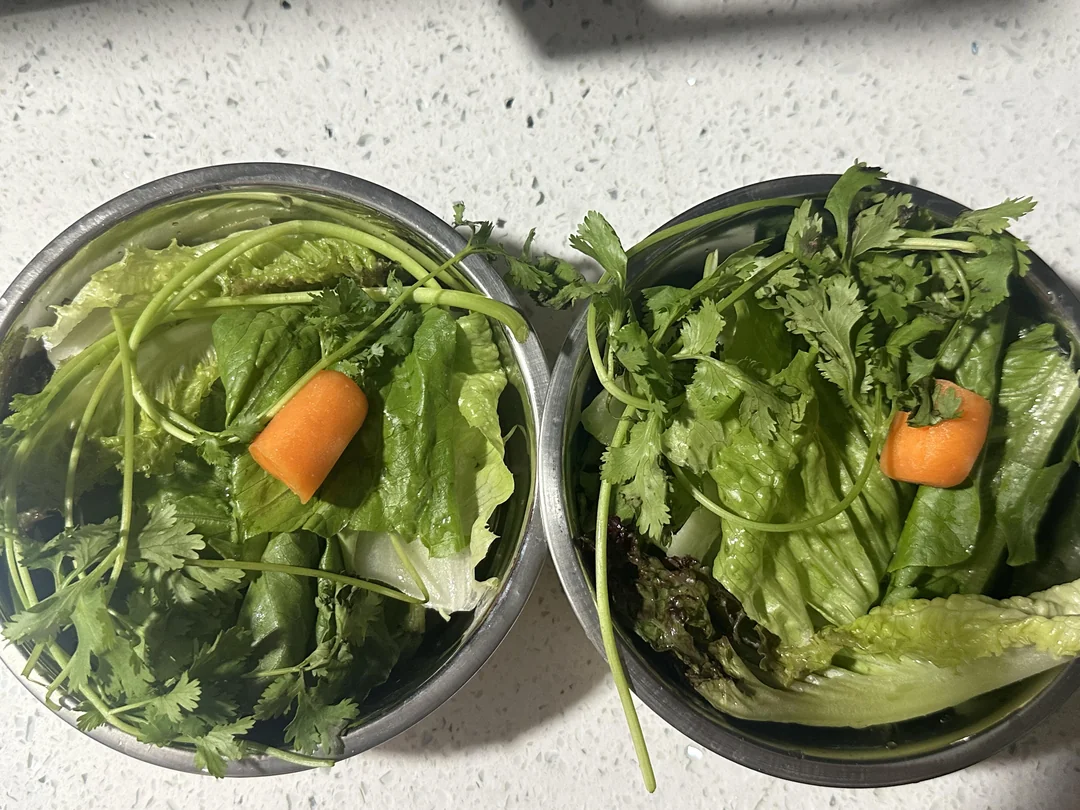
Reliable everyday greens
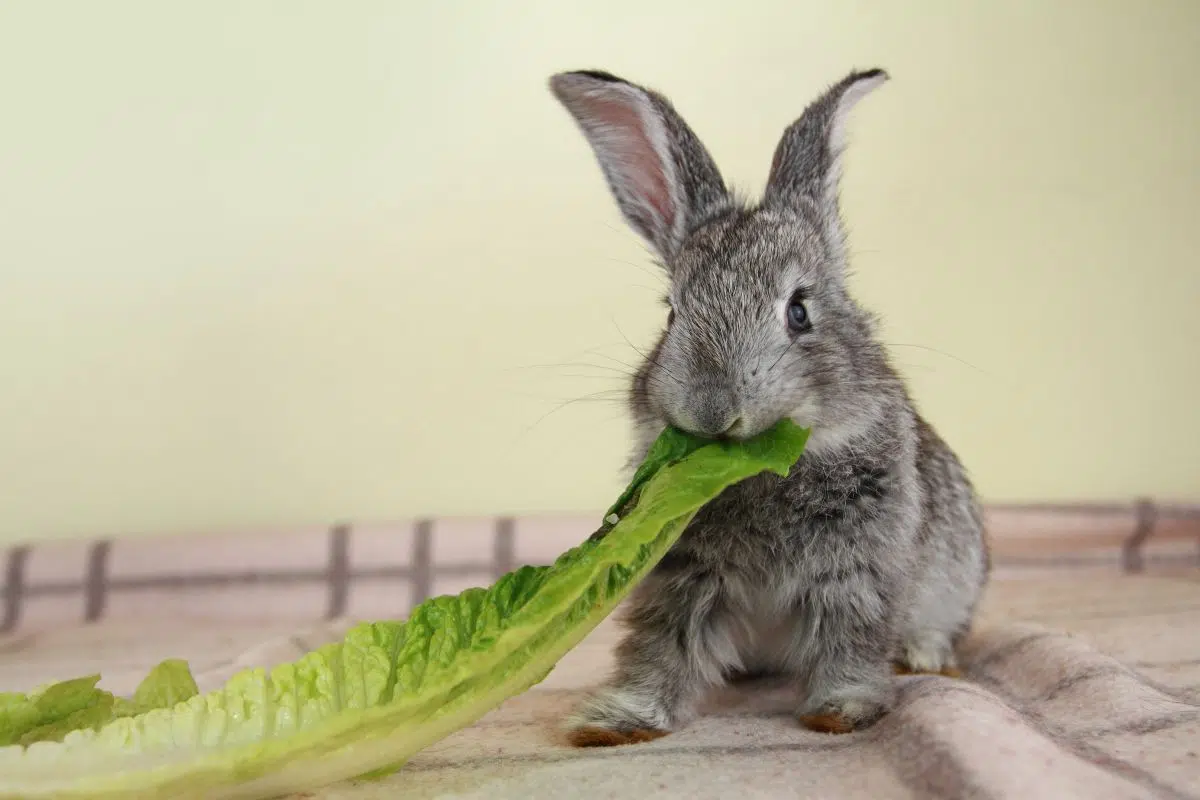
- Romaine
- Green or red leaf lettuce
- Cilantro
- Parsley (richer, so rotate rather than make it the only green)
- Dill
- Endive or escarole
- Spring mix without spinach-heavy blends
Rotate-in greens
- Kale (nutrient-dense, can be gassy for some, rotate)
- Spinach (higher oxalates, use occasionally)
- Mustard greens or dandelion greens (some pets handle them often, others do better with rotation)
- Carrot tops (usually loved, rotate)
Guinea pig vitamin C all-stars
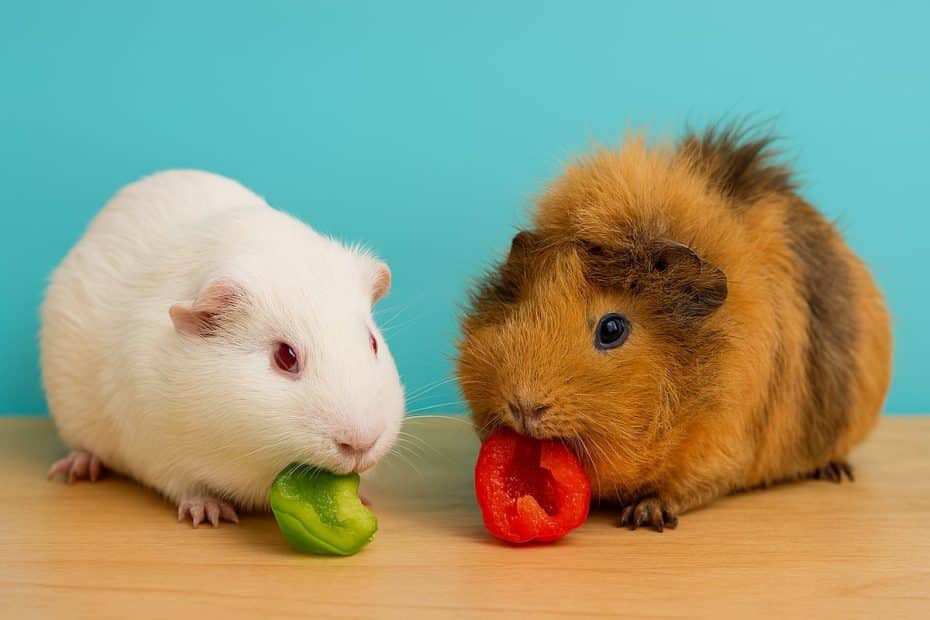
- Bell pepper (especially red)
- Small amounts of broccoli
- Small wedge of orange or a strawberry as an occasional treat (watch sugar)
Introduce changes slowly: If you are adding a new green, start with a few leaves and increase over several days. Sudden salad overhauls are a common trigger for soft stool in both rabbits and guinea pigs.
Timing details
Feed hay before pellets
If your pet rushes pellets and ignores hay, shift pellets later in the day and offer fresh hay first. When pellets are not the headline event, many pets increase hay intake naturally.
Use meals as a health check
Mealtime is when you can quietly confirm everything looks normal:
- Appetite is steady
- Water intake seems typical
- Droppings are plentiful (especially critical for rabbits)
- No wet chin, messy bottom, or sudden pickiness
Quick rabbit poop clarity: “Soft poop” can mean two very different things. True diarrhea is an emergency. More commonly, people are seeing uneaten cecotropes, which are softer, clustered droppings that should normally be eaten. Both are worth addressing, but true diarrhea or a sudden stop in normal poops needs urgent vet help.
Rabbit red flag: A rabbit that stops eating, produces very few poops, or sits hunched can become an emergency quickly. Contact a rabbit-savvy vet right away.
Keep treats on a schedule
Treats are easiest to manage when they are small and predictable. Schedule “treat time” after the evening pellets, when it is easy to avoid overdoing it.
- Rabbit treats: a thumb-sized piece of banana, a few blueberries, or a small slice of apple occasionally
- Guinea pig treats: a thin slice of apple or a strawberry piece occasionally
A treat should not replace hay or greens, and it should never be the reason a pet refuses dinner like a tiny, dramatic roommate.
Two sample routines
One adult rabbit
- 8 a.m.: refresh hay and water, serve half the daily greens
- 7 p.m.: measured pellets
- 8 p.m.: remaining greens, final hay top-off
Two adult guinea pigs
- 8 a.m.: refresh hay and water, serve morning greens with bell pepper
- 6 p.m.: measured pellets, second greens portion
- Before bed: hay top-off
Common problems and fixes
“My rabbit will not eat hay”
- Cut pellets back to an appropriate amount (gradually)
- Offer a fresher hay brand or a different grass hay type
- Make hay convenient: stuff litter boxes with hay, not just a rack
- Rule out dental pain with a rabbit-savvy vet if refusal persists
“My guinea pig gets soft stool after greens”
- Reduce watery vegetables and simplify to a few safe greens
- Introduce variety more slowly
- Confirm hay intake is strong and constant
- If lethargy or appetite changes occur, contact an exotics vet
“They act starving all the time”
Healthy adults can be extremely persuasive about snacks. Instead of adding more pellets, add more hay opportunities and enrichment:
- Multiple hay piles
- Paper bags stuffed with hay (remove handles and watch for chewing)
- Foraging toys with a few pellets hidden inside
Safety notes
- No seed or nut mixes for either species
- Limit fruit due to sugar
- Avoid iceberg lettuce as a main green: it offers little nutrition and, because it is mostly water, it can contribute to softer stools in some pets. Choose darker leaf lettuces instead.
- Do not let hay run out, especially overnight
- Use plain pellets formulated for the species (rabbit pellets are not the same as guinea pig pellets, largely due to vitamin C needs)
- Skip “treat” foods that do not belong in an herbivore diet: bread, crackers, cereal, chocolate, candy, and yogurt drops
- Avoid allium foods like onion, garlic, chives, and leeks
Quick FAQ
Is one greens meal a day okay, or should I split it?
Both can work. Splitting greens into morning and evening often reduces begging and keeps grazing steady, but a single daily salad is fine if hay is always available and stools stay normal.
Should I feed in the morning or at night?
Rabbits and guinea pigs are often most active at dawn and dusk. Many households find a morning greens and evening pellets routine is easiest and encourages hay intake between meals.
Do adult rabbits need pellets at all?
Some healthy adults can maintain a great body condition on mostly hay and greens with minimal pellets, but many do well with a small measured serving. If your rabbit gains weight easily, pellets are usually the first thing to reduce, not hay.
Can rabbits and guinea pigs share the same feeding plan?
The structure is similar, but guinea pigs must have dependable vitamin C and species-appropriate pellets. Also, they do not always tolerate the same greens in the same amounts. They are generally not recommended as cage mates, so plan on separate enclosures and separate bowls, and follow your exotics vet or experienced rescue guidance for your specific situation.
The goal: boringly consistent
The perfect schedule is the one you can repeat daily without stress, while still adjusting for your individual pet. Keep hay unlimited, keep pellets measured, rotate greens thoughtfully, and use mealtimes as your built-in wellness check.
If you want to get extra organized, pick two “default salad mixes” you rotate through the week. Your pets will feel like the menu is exciting, and you will feel like a responsible adult who totally has it together. Mostly.