A practical, gentle plan to get rabbits and guinea pigs comfortable with their travel carrier so vet days are safer and far less stressful.
Rabbit Cove
Hard-Sided vs. Soft-Sided Carriers for Rabbits and Guinea Pigs
Hard-sided or soft-sided? Learn which travel carrier is safest for rabbits and guinea pigs, plus what to look for in ventilation, doors, top-loading access, and secure latches for vet trips.

Chloe Miller
Chloe Miller is a dedicated small-pet enthusiast and experienced foster parent who has spent over a decade caring for rabbits and guinea pigs. Through her hands-on work with local animal rescues, she shares practical, compassionate advice on housing, nutrition, and daily enrichment to help small pets thrive. When she isn't designing custom indoor enclosures, Chloe can be found coaxing shy rescues out of their shells with fresh cilantro.
Published
October 22, 2026
Updated
October 22, 2026
For a ten-minute vet run, a carrier can feel like an afterthought. Then you hit a pothole, your rabbit does the world’s strongest back kick, or your guinea pig decides the zipper is a personal challenge, and suddenly “good enough” does not feel good enough.
The safest carrier is the one that keeps your pet contained, well-ventilated, and supported during sudden stops, while still letting you lift them in and out without a wrestling match. Below is how I choose between hard-sided and soft-sided carriers for rabbits and guinea pigs, and the specific features that matter most.
The quick answer
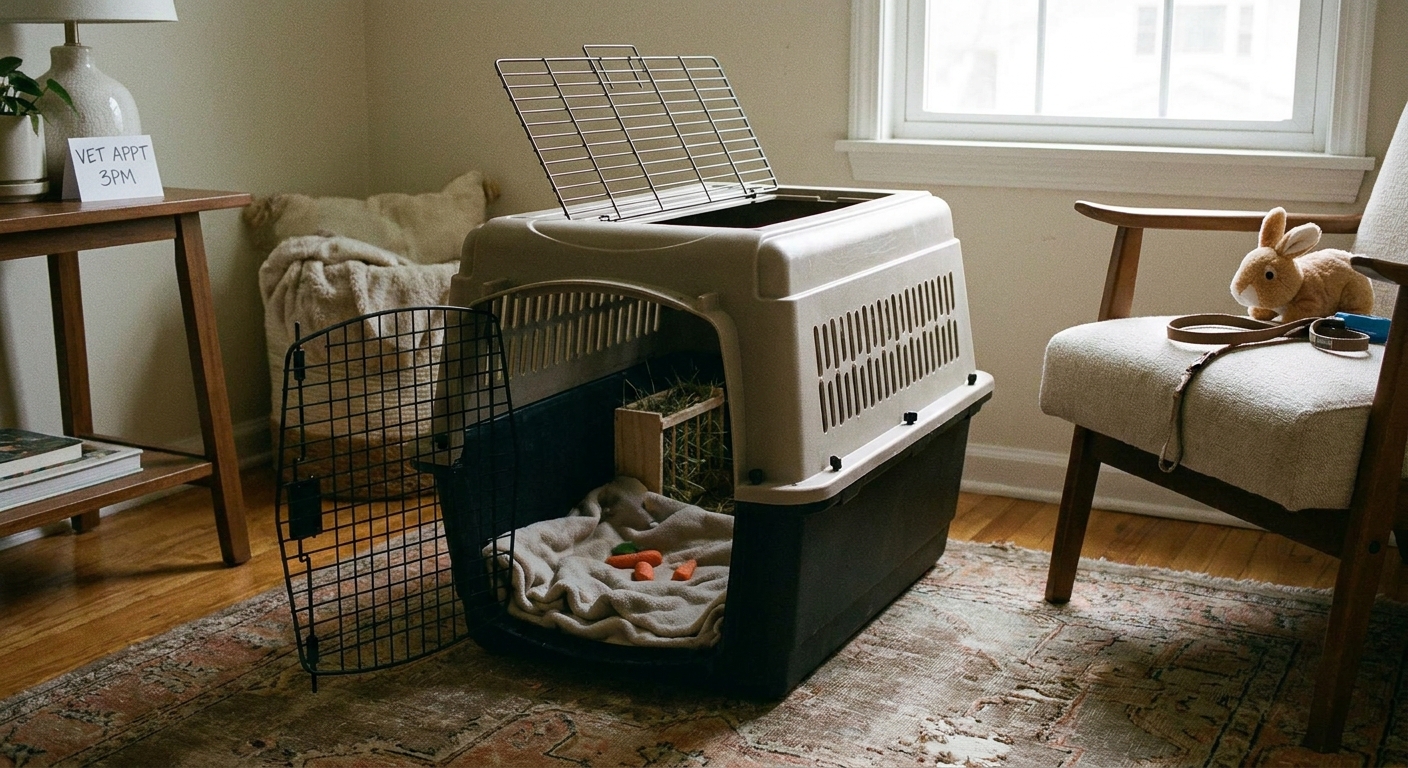
If you want the simplest “buy once, use for years” option for vet visits, a hard-sided carrier with excellent ventilation and a top-loading door is usually the safest choice for both rabbits and guinea pigs.
- Rabbits: Hard-sided, rigid, and easy to open from the top so you can lower them in smoothly and lift them out without tipping the carrier.
- Guinea pigs: Hard-sided is still my default, but a well-made soft-sided carrier can work if it has rigid structure, secure zippers, and tough mesh.
Soft-sided carriers are not automatically unsafe. They just have more ways to fail if the materials, zippers, and ventilation are not excellent, or if your pet is a determined chewer or panicker.
Hard-sided carriers
Pros
- More impact protection (in general): Rigid plastic usually offers better protection than fabric if something bumps the carrier, you set it down too hard, or it slides in the car.
- More escape-proof: No zippers to pop open, fewer seams, and usually sturdier door hardware.
- Easier to disinfect: This matters for rabbits and guinea pigs because some infectious agents can linger on porous surfaces. A hard shell is simpler to wash and fully dry.
- Chew-resistant: Many rabbits can turn a fabric seam into a project in one car ride. Plastic is far less interesting.
Cons
- Heavier and bulkier: Not ideal if you rely on public transit or you have mobility limits.
- Some models have poor airflow: Small vent slits are often not enough for a stressed prey animal who is breathing fast.
- Front-door-only models can be stressful: Sliding a rabbit out the front is how you get the “all feet, no cooperation” routine.
What to look for
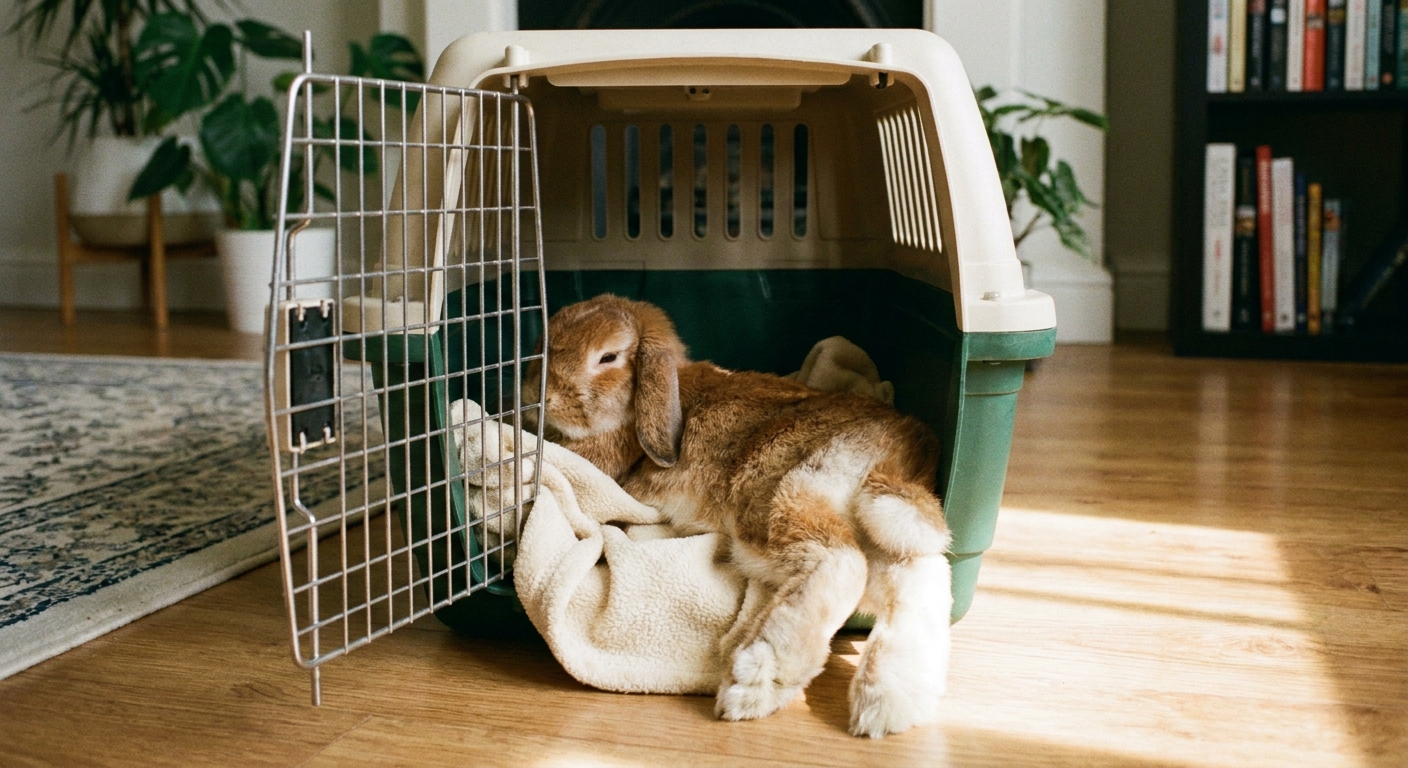
- Top-loading door (high priority): A top opening lets you lift your rabbit straight up and out, supporting the chest and rump. For guinea pigs, it makes transfers faster and less scary.
- Solid latch hardware: Prefer a door that locks with a real latch mechanism, not flimsy plastic tabs that can pop.
- Ventilation on multiple sides: Aim for vents on at least two sides, ideally three. Good airflow reduces overheating risk and stress breathing.
- Flat, stable base: If the base bows or flexes, your pet is constantly correcting their footing.
- Easy carry position: A secure handle centered on top helps keep the carrier level. Excess swinging increases motion stress.
For rabbits, a top-loading hard carrier is one of those purchases that pays you back every single vet visit. Your rabbit will still be annoyed, but you will be less likely to strain their spine by tipping and tugging.
Soft-sided carriers
Pros
- Lighter to carry: Helpful for stairs, transit, and long walks into a clinic.
- Often quieter and less jarring: Fabric can absorb small vibrations better than rigid plastic.
- Some pets settle faster: A darker, den-like interior can calm nervous guinea pigs.
Cons
- Zippers and seams are failure points: A stressed animal can push, claw, or chew in exactly the wrong spot.
- Chewing risk: Rabbits in particular can chew mesh or fabric quickly, especially if stuck in traffic.
- Less protection if dropped or bumped: Soft sides do not prevent compression the way hard plastic does.
- Harder to sanitize deeply: Even “wipeable” fabric can hold odors and moisture in seams and stitching. That is why lining and routine cleaning matter.
What to look for
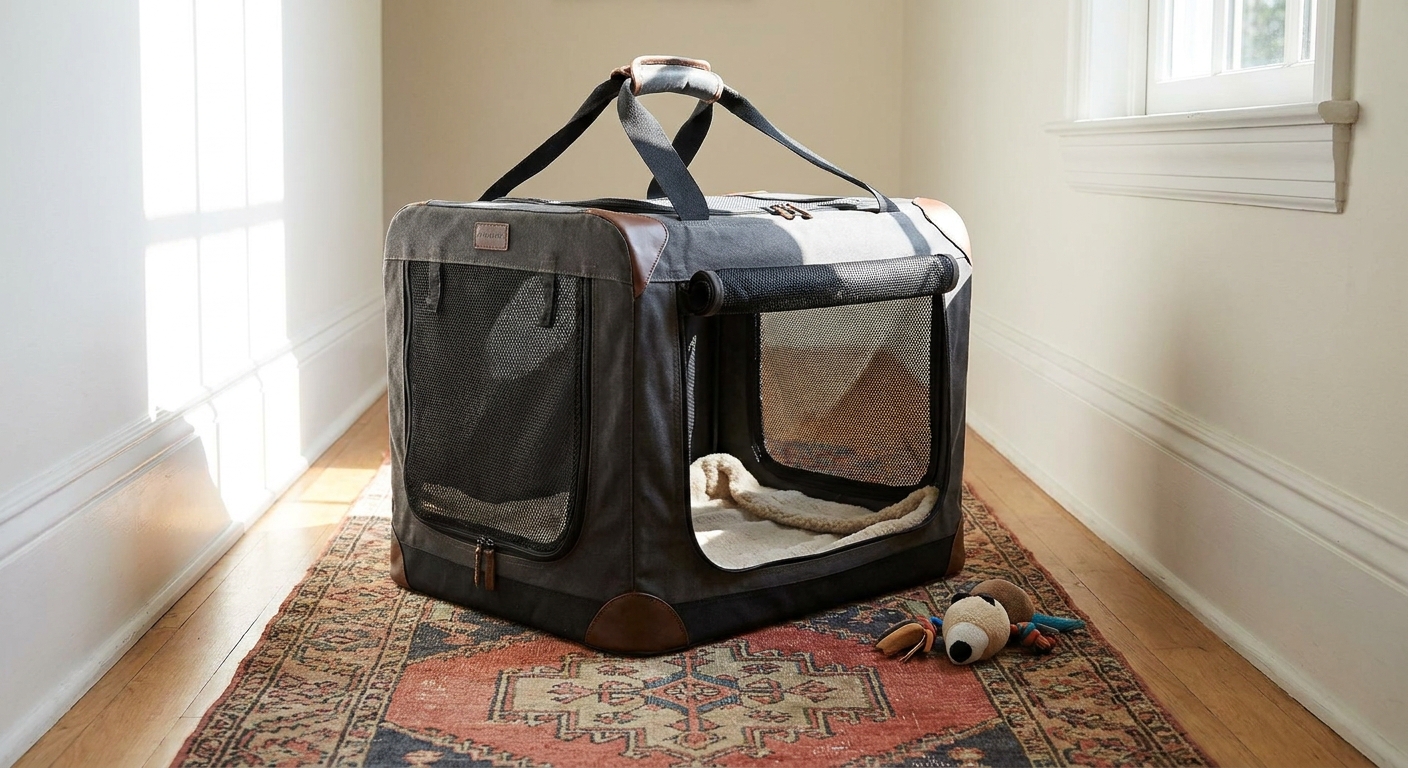
- Rigid frame or structured panels: It should hold its shape when empty. If it collapses, skip it.
- Locking zippers: Bonus if the zippers clip together or have a locking mechanism so they cannot drift open.
- Tough mesh: Look for thick mesh that springs back and is tightly anchored. Thin mesh can tear.
- Top-loading access: Same logic as hard-sided. For rabbits, it can be the difference between calm handling and chaos.
- Water-resistant, removable base insert: Accidents happen. A removable base that can be scrubbed is sanity-saving.
Ventilation
Rabbits and guinea pigs are prey animals, and neither handles heat well. Stress often shows up as fast breathing, stillness, or sudden struggling. Good airflow is not just comfort, it is part of basic safety.
What good ventilation looks like
- Cross-ventilation: Air can enter from one side and exit another, not just a single vent strip.
- Openings that stay open: Some soft carriers sag, pressing mesh against your pet’s face or blocking airflow when the carrier is lifted.
- No direct drafts in cold weather: Ventilation is good, but you do not want a winter wind tunnel. If it is chilly, cover part of the carrier with a light towel while keeping vents partially open.
Overheating warning signs
- Rapid breathing or open-mouth breathing (emergency for rabbits)
- Drooling, extreme lethargy, or weakness
- Overall heat plus distress (warm ears can be one clue in rabbits, but do not rely on that alone)
If you ever see open-mouth breathing in a rabbit, treat it as urgent and contact a vet immediately.
Top vs. front loading
Many carriers are designed for cats and dogs, and they assume your pet will politely walk out the front. Rabbits and guinea pigs have other plans.
Why top-loading helps
- Less twisting and pulling: You can support the body properly, especially for rabbits who need firm support under the chest and hindquarters.
- Less chance of a backward launch: Rabbits can explode backward out of a front door surprisingly fast.
- Easier for nervous guinea pigs: A quick, gentle scoop is often calmer than coaxing them forward.
If you only have a front door
You can still make it work, but plan ahead:
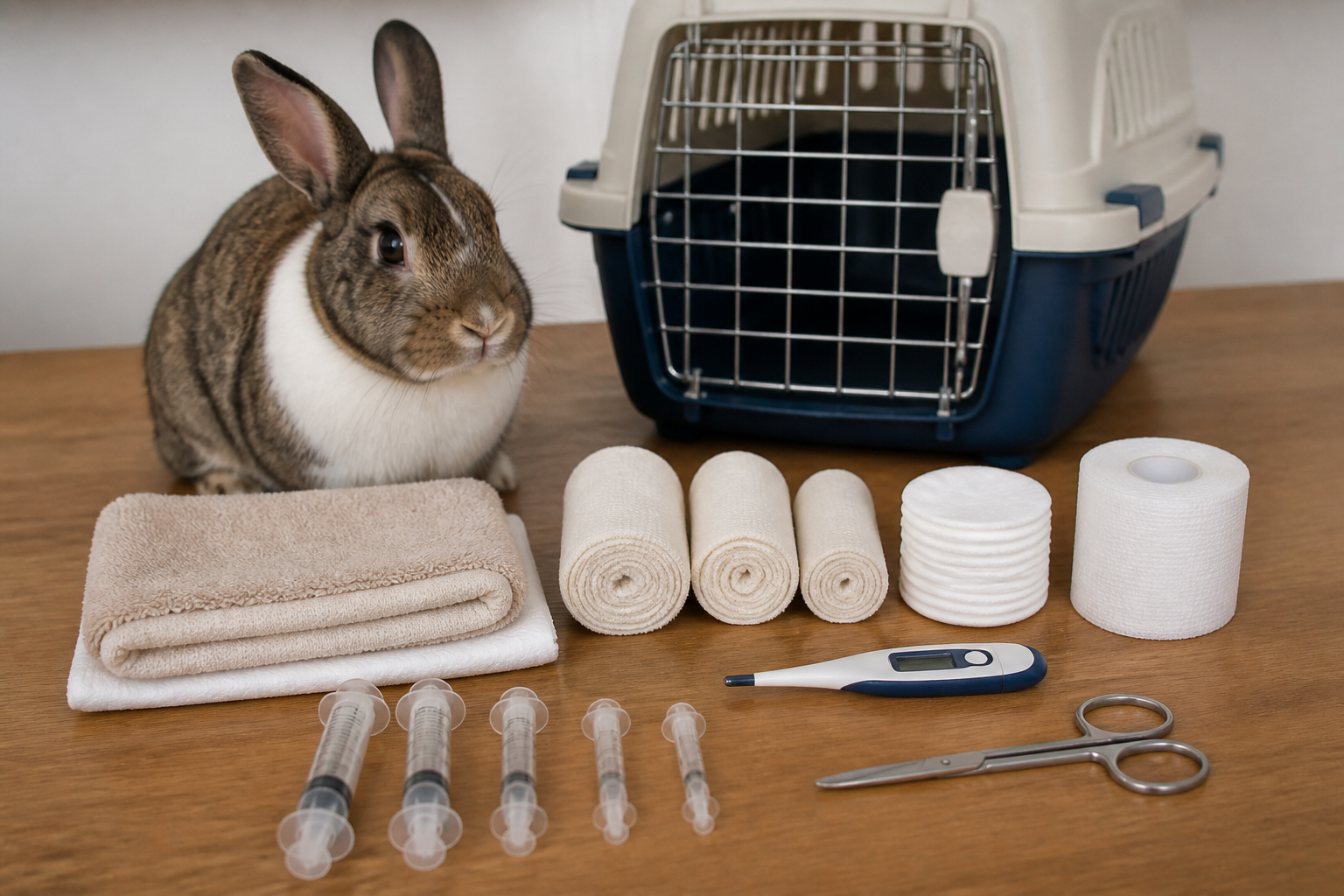
- Bring a towel so you can create a “bunny burrito” if needed for safe transfers.
- Ask the clinic if you can place the carrier on a table and open it slowly, rather than holding it in your lap.
- Consider choosing a carrier with a large front opening, not a tiny door that forces awkward angles.
Size and setup
For travel, bigger is not always better. You want enough room for your pet to sit comfortably and turn around, but not so much room that they slide and get tossed during turns.
What I aim for
- Rabbits: Enough space to sit upright with ears in a natural position (or comfortably tucked for lops), and to turn around slowly.
- Guinea pigs: Enough room to reposition and lie down, without skating across the floor of the carrier.
What to put inside
- Non-slip base: A towel over a pee pad, or a fitted fleece piece, helps prevent sliding.
- Hay: A generous handful is both food and comfort. Having hay available can help them keep nibbling, which supports normal gut motility in rabbits.
- Hide option for guinea pigs: A small fleece tunnel or draped hand towel can help them feel less exposed.
- Avoid loose heavy bowls: They become projectiles. Offer watery greens after arrival instead, unless your vet advises otherwise.
- Skip fraying fabrics and loose strings: Anything with loops or dangling threads can catch nails or get chewed.
Bonded pairs: Many bonded rabbits and guinea pigs travel better together, but only if both are calm and there is no history of squabbling in tight spaces. If one tends to bully the other, separate carriers are safer.
Small safety details
Latches, zippers, and door strength
- Hard-sided: Check that the door cannot flex outward and that the latch fully engages. Give it a firm push test before you trust it.
- Soft-sided: Choose chunky, smooth-running zippers. If the zipper track looks delicate, it will not improve with a panicked rabbit.
Handle and carry stability
- Carriers that tilt when lifted can make a rabbit scramble, which increases the chance of injury.
- If the handle is off-center, consider carrying with two hands underneath for extra stability.
Noise and visual stress
Some rabbits do better when the carrier is partially covered. I often bring a light towel to drape over part of the carrier, leaving plenty of ventilation. It turns the world down a notch.
Car travel basics
The best carrier in the world is still unsafe if it becomes a flying object during a sudden stop.
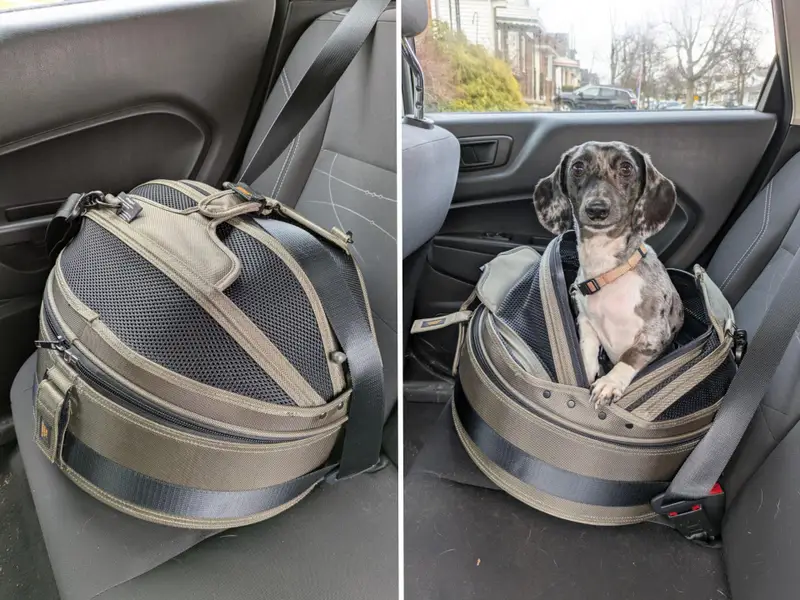
- Seatbelt it in: Thread the seatbelt through the handle or around the carrier so it cannot tip.
- Keep it level: Place it on the back seat or on the car floor behind the front passenger seat, as long as airflow and temperature are safe.
- No front seat airbags: Do not place a carrier in front of an active airbag.
- Pre-cool or pre-warm the car: Rabbits and guinea pigs are heat-sensitive. Start the climate control before loading them up.
- Never leave them in a parked car: Even mild days can turn dangerous fast.
Choose by situation
Routine vet visits
Best pick: Hard-sided with top-loading and strong ventilation. It is fast to handle, easy to clean, and holds up to repeat use.
Post-surgery or mobility issues
Best pick: Hard-sided with a wide top opening, plus a non-slip padded base. You want minimal jostling and minimal lifting gymnastics.
Public transit or long walks
Best pick: A structured soft-sided carrier can be reasonable for guinea pigs, and sometimes for very calm rabbits, if zippers are secure and the frame is rigid. For rabbits who spook easily or chew, I still prefer hard-sided even if it is heavier.
Emergency readiness
Best pick: Hard-sided, easy to sanitize, clearly labeled, and quick to open from the top. In a real emergency, you will be grateful for simple, sturdy, and familiar.
What to avoid
- Cardboard carriers: They are easy to chew through and do not handle moisture or stress well.
- Backpacks with minimal airflow: Some look cute, but ventilation can be poor and heat builds fast.
- Tiny plastic “critter totes”: Often too small, with weak lids and poor airflow.
- Soft carriers with lots of sag: If the roof can press down onto your pet when carried, pass.
- Carriers that force a jump down: Rabbits should not have to hop out onto a table from height. Top-loading prevents that awkward moment.
FAQ
Is a cat carrier okay for a rabbit or guinea pig?
Often, yes. Many cat carriers are actually better built than “small animal” carriers. Just prioritize ventilation, a secure door, and ideally top-loading. Make sure the size is appropriate and the base is non-slip.
Should I put bedding in the carrier?
For vet trips, I skip loose shavings or deep bedding because it can shift and get messy fast. I prefer a pee pad under a towel or fleece, plus hay. For guinea pigs who get carsick or very anxious, a thicker fleece layer can add traction and comfort.
Can I use a soft-sided carrier for a rabbit?
Sometimes, but I am cautious. If your rabbit chews, panics, or has ever tested a zipper with their teeth, go hard-sided. If you do choose soft-sided, pick a rigid-frame model with locking zippers, tough mesh, and top-loading access.
How do I get my rabbit into a carrier without stress?
My go-to is the “lower in” method: open the top door, support your rabbit firmly against your body, then lower them in hind end first so they feel stable and are less likely to kick. Add hay inside, keep movements slow, and cover part of the carrier if they are visually stressed.
What about two guinea pigs in one carrier?
Bonded guinea pigs usually travel best together for short trips. Choose a carrier large enough for both to lie down without climbing over each other, and add plenty of hay and a little cover. If either pig tends to mount, guard resources, or start fights in tight spaces, separate them for safety.
How can I reduce stress at the clinic?
If your clinic sees dogs and cats, ask if there is a quieter corner or an exotics waiting area. Keep the carrier elevated and close to you, and away from nose-level dog traffic. A light towel over part of the carrier can also help, as long as ventilation stays open.
Quick checklist
- Rigid structure or hard shell that does not flex
- Ventilation on multiple sides
- Secure latch or locking zippers
- Top-loading access (strongly preferred)
- Non-slip base with room for a towel and hay
- Easy to clean surfaces
- Fits your car seating and can be seatbelt-secured
If you are standing in a store deciding between two models, choose the one that feels boringly sturdy. Your rabbit and guinea pig do not need fancy. They need secure, breathable, and easy to handle when everyone is a little nervous.