A calm, step-by-step guide to secure holds for rabbits and guinea pigs, with spine support, kick prevention, and handling tips that reduce stress for both of...
Rabbit Cove
Carrier Training for Calm Vet Trips
Teach your rabbit or guinea pig to feel safe in their carrier before you need it. Simple steps for choosing the right carrier, desensitizing, and traveling calmly.

Chloe Miller
Chloe Miller is a dedicated small-pet enthusiast and experienced foster parent who has spent over a decade caring for rabbits and guinea pigs. Through her hands-on work with local animal rescues, she shares practical, compassionate advice on housing, nutrition, and daily enrichment to help small pets thrive. When she isn't designing custom indoor enclosures, Chloe can be found coaxing shy rescues out of their shells with fresh cilantro.
Published
October 22, 2026
Updated
October 22, 2026
Most carrier “drama” happens because the carrier only appears when something scary is about to happen. The good news is you can flip that association. With a little practice, your rabbit or guinea pig can learn that the carrier is just another cozy hide, not a panic box.
This guide walks you through setting up the right carrier, building positive routines, and handling vet day in a way that is safe, quick, and as calm as small herbivore hearts can manage.
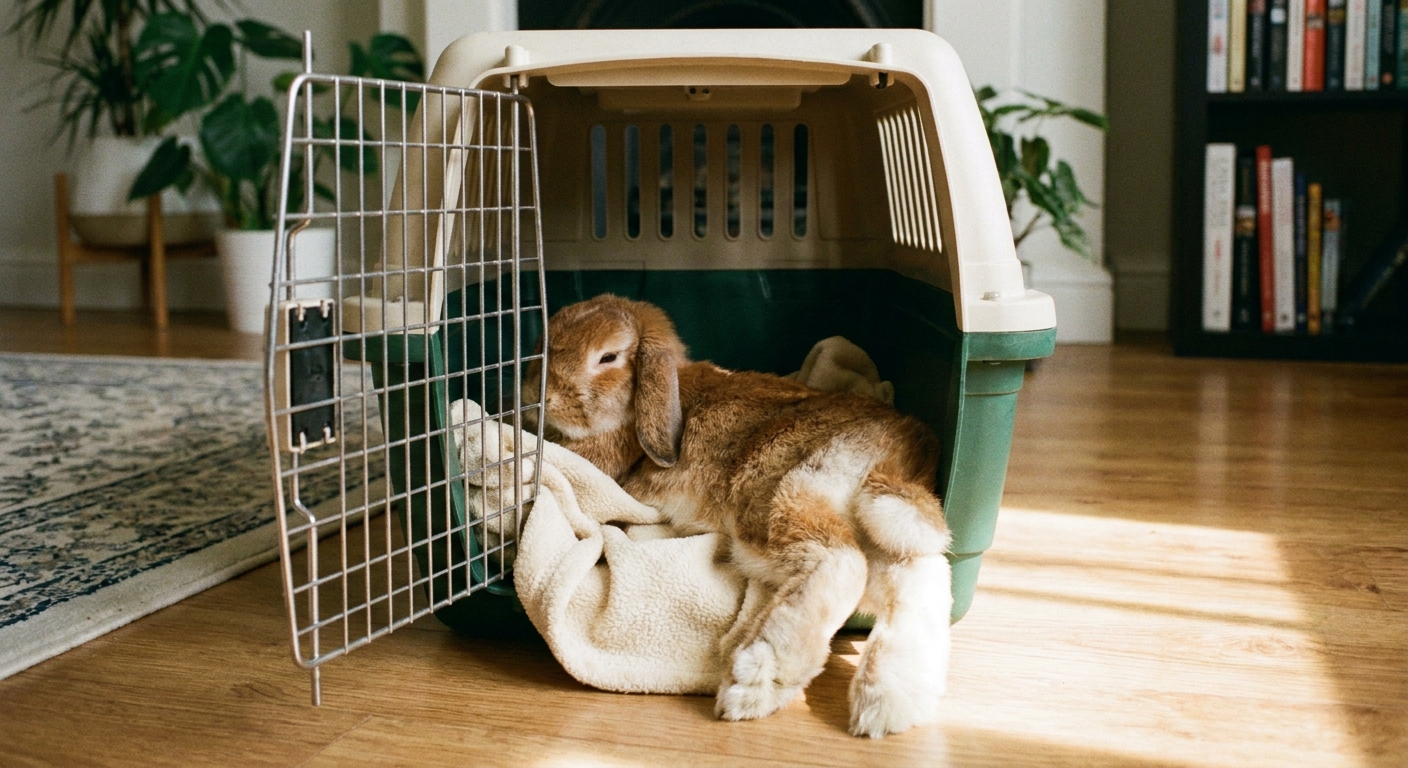
Why carrier training matters
Rabbits and guinea pigs are prey animals. Being chased, grabbed, and placed into a small box can feel like being caught by a predator. When we carrier-train ahead of time, we reduce:
- Scrambling and injury risk during capture and loading
- Stress that can contribute to gut slowdowns, especially in rabbits that are prone to GI stasis
- Time spent wrestling when you are already anxious about the appointment
- Vet-day chaos like refusing treats, overheating, or frantic thumping
It also helps in true emergencies when you do not have time to negotiate with a very opinionated bunny.
Pick the right carrier first
Training goes faster when the carrier is comfortable, stable, and easy for you to use.
For rabbits
- Hard-sided carriers are often the most stable and protective in the car. That said, a high-quality soft-sided carrier can work if it holds its shape, has excellent ventilation, and can be secured so it will not collapse or tip.
- Top-loading option is a game-changer for rabbits who hate being “pushed” through a front door. You can lower them in gently.
- Size: big enough to sit and turn around, not so big they slide around with every stop.
- Non-slip base: line with a fleece towel or bath towel that will not bunch up.
For guinea pigs
- Hard-sided or sturdy soft-sided carriers both work, as long as airflow is good and the sides do not collapse.
- Size: enough room to lie down and shift positions. If you are transporting bonded pigs, a little extra space helps, but avoid a carrier so large that they get tossed around.
- Easy-clean interior: guinea pigs will almost always pee on the way. Plan for it.
Lining and “travel furniture”
Keep it simple and safe:
- Bottom layer: towel or fleece for traction
- Absorbency: optional pee pad under the fleece if your pet tends to soak the world
- Hay: for most trips, yes. A small pile is comfort and nutrition, and chewing helps them cope. If your vet has given specific instructions (for example after certain dental procedures), follow those instead.
- Hides: for guinea pigs, a low-profile fleece hide can help, but skip anything rigid that could shift in a sudden stop. For rabbits, many prefer an open space so they can brace themselves.
Step-by-step carrier training plan
Think of this as teaching “carrier = safe snack place.” Go at your pet’s pace. If they freeze, bolt, or refuse treats, you are moving too fast.
Step 1: Make it normal
Set the carrier in their normal space with the door open. For rabbits, I like it near a favorite “base camp” spot. For guinea pigs, place it beside the cage or playpen during floor time.
- Keep it open and stable so it does not wobble.
- Let them investigate without an agenda.
- Refresh the towel so it smells familiar, not like plastic and stress.
Step 2: Feed near it, then in it
Start by placing a few high-value goodies right at the entrance, then gradually deeper inside.
- Rabbits: herbs like cilantro or parsley, a small piece of greens, or a tiny bit of pellet ration.
- Guinea pigs: bell pepper, cilantro, cucumber, or a favorite veggie.
If your rabbit is the type who acts like cilantro is a legally binding contract, use that to your advantage.
Step 3: Make “in and out” a game
Once they are hopping or walking in willingly:
- Toss a treat inside.
- Let them go in, eat, and come right back out.
- Repeat a few times, then stop while they are still confident.
Short sessions beat long ones. Aim for 1 to 3 minutes a day.
Step 4: Add gentle door movement
When your pet can relax inside, begin moving the door without closing it.
- Touch the door.
- Swing it partway.
- Latch it for one second, then open immediately and reward.
Gradually increase closed time to 10 to 30 seconds while you calmly talk. If you want to reward, drop the treat into the carrier or offer it once the door is opened again. Do not poke fingers through the door if your pet is likely to nip when nervous.
Step 5: Practice lifting and setting down
This is where many pets decide the carrier is suspicious again, so go slow.
- Close the door.
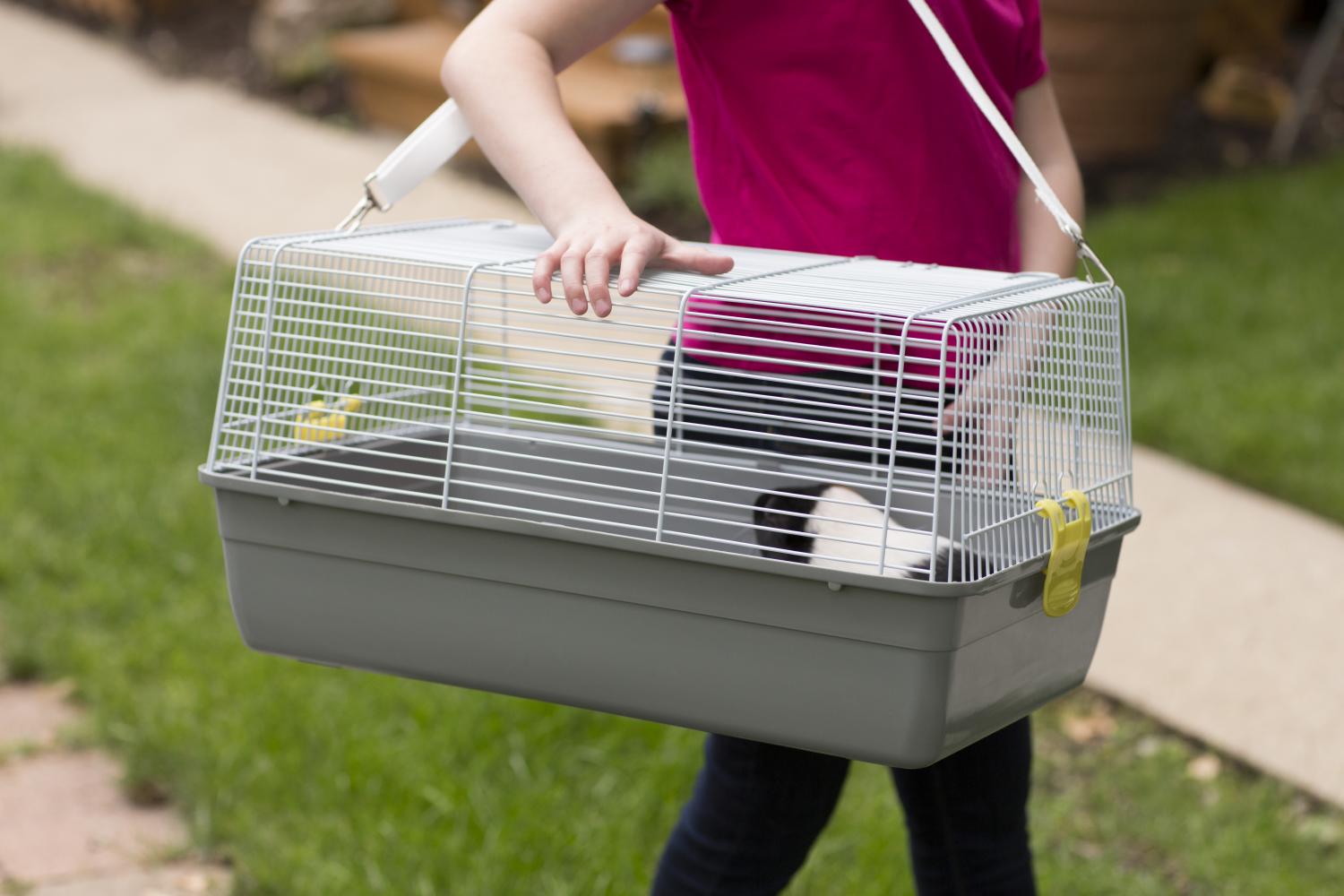
- With two hands, lift the carrier one inch, then set it down. Reward.
- Lift and hold for 2 to 3 seconds. Reward.
- Take one step, then set down. Reward.
Keep the carrier level and close to your body. Support it from underneath. No swinging. No dramatic power-walk. Calm, steady, boring.
Step 6: House “field trips”
Do a lap from living room to hallway and back. Set the carrier down, open the door, and let them exit on their own. Then immediately do something normal and pleasant, like scatter-feeding hay or offering veggies.
Quick safety note: do these practice trips away from dogs, cats, and loud kid traffic. You want “boring and safe,” not “surprise predator audition.”
Step 7: Car practice (engine off first)
Before you ever drive to the vet:
- Bring the carrier to the car.
- Sit with them for 1 to 2 minutes.
- Go back inside and reward.
Next sessions: buckle the carrier in, close the doors, then start the engine for a few seconds without moving. Work up to a short trip around the block.
How to load without a chase
Even with training, you want a plan that avoids “grab, panic, repeat.” Here are low-stress options I use in foster homes.
Rabbits
- Walk-in loading: set the carrier on the floor, door open, and lure with greens.
- Top-load (gentle lower-in): support chest and hindquarters, lower into the carrier rear-first so feet land securely, then close calmly.
- Hidey-house transfer: if your rabbit has a favorite box or hide, sometimes you can lift the hide and slide it into a top-opening carrier. Only do this if it is stable and your rabbit is not likely to jump.
Avoid scooping a rabbit by the belly or lifting by scruff or ears. If you are not confident in safe handling, ask your rabbit-savvy vet team to demonstrate at your next visit.
Guinea pigs
- Two-hand scoop: one hand under the chest, one supporting the rear, then place into the carrier.
- Tunnel method: encourage them to walk into a tunnel or hide, then gently move the tunnel to the carrier opening and let them step in.
With guinea pigs, speed helps, but roughness does not. Aim for smooth, confident movements.
Vet day setup
What to pack
- Hay (a generous handful for most trips)
- Familiar towel or fleece
- A small portion of favorite greens for the waiting room
- Extra towel in your bag in case of messes
Temperature and airflow
- Keep it cool: rabbits and guinea pigs overheat easily. Avoid leaving the car parked, even “just for a minute.”
- Skip direct sun on the carrier in the car. Use car shades if needed.
- Cover with care: a light towel can help in a busy lobby, but never wrap the carrier so tightly that airflow is reduced, especially in warm weather. If you cover, leave plenty of ventilation open.
- Drive smoothly: gentle acceleration and braking reduces sliding and fear.
Where the carrier goes in the car
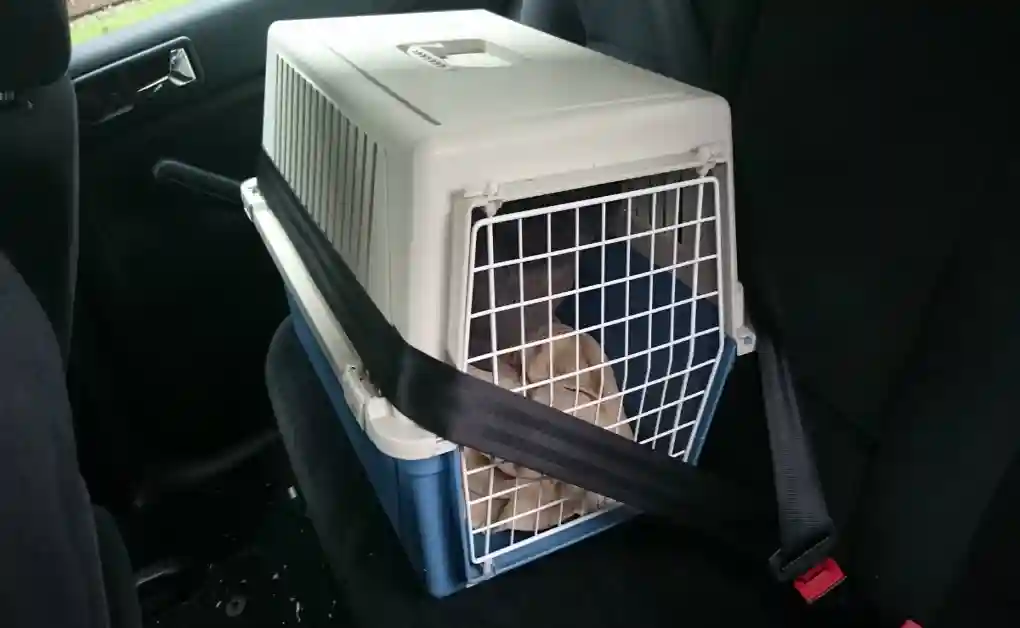
Secure the carrier with a seatbelt so it cannot tip or slide. Avoid the front passenger seat where an airbag could be dangerous. The footwell can be stable for some setups, but only if the carrier fits snugly and cannot shift. In most cases, a buckled back seat is the simplest, safest option.
Common hiccups
“My rabbit refuses to go near it.”
Back up a step. Move the carrier farther away, scatter a few pellets or herbs around it, and reward any glance or approach. Some rabbits need a week of “carrier exists, nothing happens” before they are ready to interact.
“My guinea pig freezes inside and will not eat.”
That is a stress signal. Shorten the session and offer a favorite veggie right at the doorway. Many guinea pigs do better when they can hide under a small piece of fleece inside the carrier.
“As soon as I touch the door, they bolt.”
Practice door movement when they are outside the carrier first, then return to closing for one second only. Reward heavily. The door noise can be surprisingly scary.
“They panic when I lift the carrier.”
Try lifting smaller amounts and for shorter times. Some pets do better if you keep one hand against the side to prevent sway while the other supports the bottom. Keep your movements slow and predictable.
“It only works until the actual vet visit.”
That is normal. Vet visits come with new smells, dogs in the lobby, and handling. The goal is not “zero stress,” it is “manageable stress.” Keep practicing with neutral trips that end in something good at home.
How often to practice
- Week 1: carrier left out daily, treats near and inside, 1 to 3 minutes per session
- Week 2: brief door closure and gentle lifts, a few times per week
- Ongoing: one quick “carrier game” weekly, plus a monthly car sit or short drive if your pet tolerates it
If your pet has a chronic condition and you go to the vet often, keeping the carrier in the living area all the time can be a huge stress reducer.
When to skip training
If your rabbit or guinea pig is truly unwell, do not let “perfect carrier manners” delay care. Signs like severe lethargy, breathing trouble, bloating, collapse, or a rabbit that is not eating or pooping are urgent. Use the safest, fastest loading method you can and get to your exotic vet.
Safety notes
- Never travel with loose bedding that can shift or get dusty. Towels and fleece are safer.
- Water in the carrier: for most short trips, skip water bottles because leaks can chill quickly. For longer travel, ask your exotic vet what they recommend. Many owners offer water during stops using a small, spill-resistant dish, and bring extra greens, but greens alone are not a reliable water plan for long journeys.
- Do not fast rabbits or guinea pigs for routine vet visits unless your vet gives specific instructions. Sedation or anesthesia appointments can have different rules, so follow your clinic’s directions.
- Separate animals if needed: bonded pairs often do best together, but if one is painful, aggressive, or extremely stressed, separate carriers can prevent scuffles. When in doubt, ask your vet.
Quick FAQ
How long does carrier training take?
Some confident guinea pigs will walk in within a few days. Many rabbits need 1 to 3 weeks of short practice to look truly relaxed. Shy rescues may take longer, and that is okay.
Should I cover the carrier?
Sometimes. A light cover can help anxious pets feel hidden, especially in a busy waiting room. Make sure airflow stays good and the carrier does not overheat.
What if I only bring out the carrier for emergencies?
In emergencies, do what you must to get them safely into the carrier. Afterward, rebuild the positive association with easy practice sessions and favorite foods. The carrier can recover its reputation, I promise.
A calm carrier helps everything
Carrier training is one of those unglamorous skills that pays off for years. It protects your pet’s body, lowers stress, and turns “vet day” from a wrestling match into a routine. Start small, keep it positive, and celebrate tiny wins. The first time your rabbit hops in for a sprig of cilantro like it is no big deal, you will feel like you just unlocked a secret level of pet ownership.