A step-by-step C&C cage tutorial: planning, measuring, cutting coroplast, assembling grids, and making it chew-safe and easy to clean for guinea pigs and rab...
Rabbit Cove
Safe Cage Ramps for Rabbits and Guinea Pigs
Choose safer enclosure ramps with the right slope, traction, and side rails. Learn materials to avoid, sizing tips, simple DIY upgrades, and fall prevention for delicate joints.

Chloe Miller
Chloe Miller is a dedicated small-pet enthusiast and experienced foster parent who has spent over a decade caring for rabbits and guinea pigs. Through her hands-on work with local animal rescues, she shares practical, compassionate advice on housing, nutrition, and daily enrichment to help small pets thrive. When she isn't designing custom indoor enclosures, Chloe can be found coaxing shy rescues out of their shells with fresh cilantro.
Published
October 22, 2026
Updated
October 22, 2026
Ramps are one of those “tiny detail, huge impact” supplies. The wrong ramp can turn daily life into a slip-and-fall routine, especially for seniors, long-bodied guinea pigs, or rabbits with delicate hocks. The right ramp, though, gives your pets safe access to a loft, a hideout (hidey), or a second level without stressing joints or risking a tumble.
This guide breaks down what actually matters: materials, incline (slope), traction, and fall prevention. I will also share easy upgrades for common store-bought ramps, because most of them need a little help.
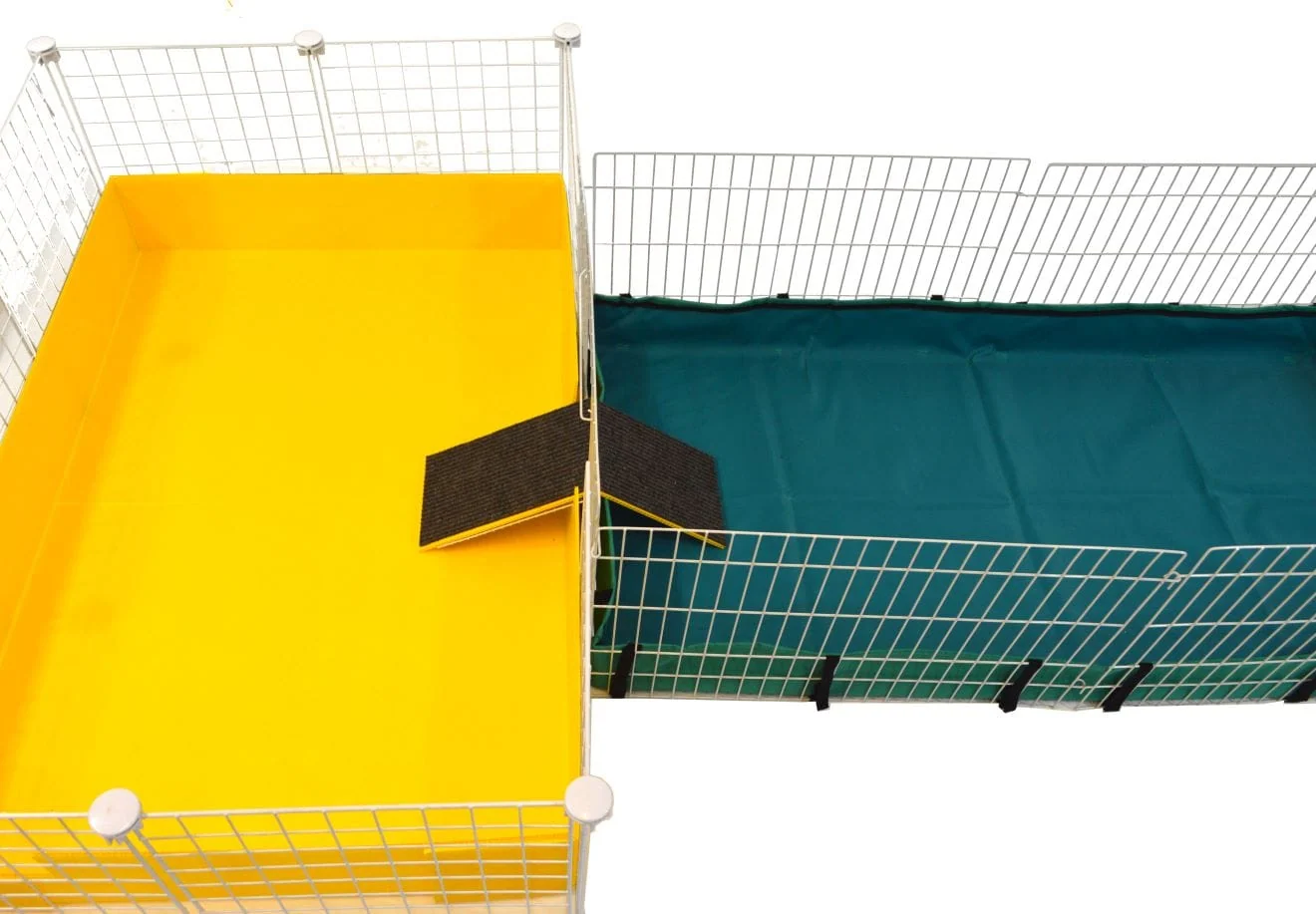
What makes a ramp safe
A safe ramp does three jobs at once:
- It is gentle on joints: a manageable slope with stable footing.
- It is grippy: claws and foot pads can catch without snagging.
- It prevents falls: side rails or walls, plus a secure landing at the top and bottom.
For rabbits and guinea pigs, safety is not just about preventing dramatic wipeouts. Repeated small slips can contribute to sore wrists, strained shoulders, awkward twists, or simple reluctance to use the loft at all. If your pet starts camping downstairs, the ramp is often the reason.
Ramp slope: how steep is too steep?
When in doubt, go flatter than you think you need. A ramp that looks “reasonable” to us can feel like a cliff to a guinea pig, and rabbits can launch themselves up a steep ramp until one day they do not stick the landing.
Practical slope targets
Published recommendations vary, and traction matters as much as the number. Treat these as starting-point guidance, not hard standards, and adjust based on how your individual pet moves.
- Guinea pigs: aim for a gentle incline, roughly 15 to 20 degrees. Many pigs struggle with anything steeper, especially smooth ramps.
- Rabbits: many healthy adults can handle roughly 20 to 25 degrees if traction is excellent and the ramp is wide. Seniors or rabbits with mobility issues do better closer to guinea pig angles.
An easy way to sanity-check your ramp
If you do not want to measure degrees, use this rule of thumb:
- Longer ramp = safer ramp. If you are increasing height, increase ramp length more than you think you have to.
- If your pet hesitates, bunny-hops awkwardly, scrabbles, or slides, treat that as your answer. The ramp is too steep, too slick, or both.
Pro tip from the foster room: When I build loft access for foster animals, I start comically long. If the animals use it confidently for a week, I can shorten later. Starting steep and hoping they “learn” is how you end up with a sprain and a ramp nobody trusts.
Best ramp materials (and what to avoid)
Most ramp injuries I have dealt with in foster setups come from two things: slick surfaces and unstable construction. Here is how common materials stack up.
Great base materials
- Sealed wood (as the base): sturdy, easy to customize, and quiet. If you seal wood, use a low-odor, water-based polyurethane and treat it as a finishing product, not a chew toy coating. Let it fully cure per the manufacturer (often several days or longer), air it out until there is no smell, and block access if your rabbit is a dedicated wood chewer. Add traction on top, because sealed wood alone is slippery.
- Coroplast (as the base for C&C builds): lightweight and easy to cut, best when supported underneath so it does not flex. Always add traction.
- Sturdy plastic ramps with side walls: can work if they are wide and you can add a grippy cover that stays put.
Materials I avoid for the walking surface
- Bare wire or mesh: high risk for foot injuries, twisted toes, and sore hocks. If your enclosure came with a wire ramp, cover it fully and securely or replace it.
- Hard, smooth plastic without texture: looks easy to clean, but it is basically a slide.
- Unsealed, absorbent wood: urine soaks in, odors build, and cleanup gets frustrating fast. Also, damp wood can warp, creating wobble.
- Exposed foam or soft rubber: tempting to chew, easy to ingest, and not worth the obstruction risk. If you use rubber shelf liner, keep it under a fabric cover where it cannot be accessed.
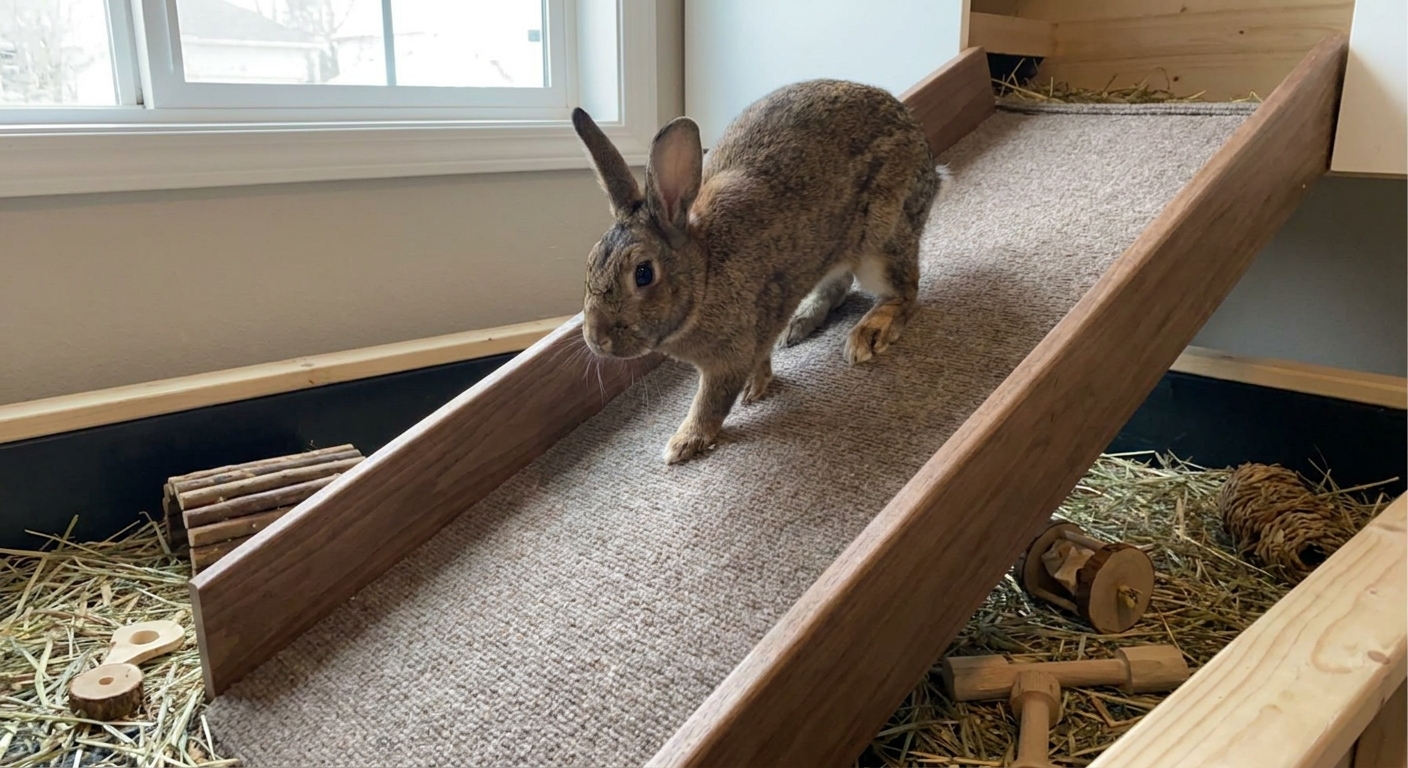
Traction: grip that is safe for feet
Traction is the difference between “my rabbit flies up the ramp” and “my rabbit slips halfway and bails.” For guinea pigs, good traction is what makes the ramp usable in the first place.
Best ramp coverings
- Fleece: soft, washable, and gentle on sensitive feet. Use anti-pill fleece pulled snug. For extra grip, place an absorbent layer under it (like a towel or U-Haul furniture pad) and secure it tightly so it cannot bunch.
- Low-pile carpet runner: offers excellent grip, especially for rabbits. Choose something tight-woven so nails do not snag. Avoid loops that can catch toes.
- Rubber shelf liner under a fabric cover: helps prevent the fabric from sliding around and adds cushioning. Make sure it stays fully covered and inaccessible to chewers.
Use caution with adhesives
Peel-and-stick surfaces can peel at the edges, and chewers will absolutely find that edge. If you must use adhesive, keep it fully covered so there is no accessible sticky strip. Mechanical attachment is usually safer.
Attachment hardware: keep it outside
Staples, binder clips, and zip ties are practical, but they need one rule: no exposed metal or sharp ends where a pet can rub, snag fur, or chew. If you have a rabbit who mouths everything, assume they will test every clip.
- Staples: effective for wood ramps, but ensure all staples are fully sunk and inaccessible. Cover edges with trim if needed.
- Binder clips: great for coroplast or grid-based ramps, but position them on the outside edge so nobody rubs against the metal arms. If you cannot keep them out of reach, choose another method.
- Velcro: use on the underside of covers when pets are not likely to chew it. If your rabbit is a Velcro connoisseur, skip it.
- Zip ties: useful on wire or grid ramps, but clip ends flush and rotate the cut edge outward so there are no sharp points.
Add steps safely
For steeper ramps, adding little horizontal grips can help, but only if they are built safely.
For rabbits
Thin slats (often around 1/4 inch to 3/8 inch thick) under a cover can create gentle ridges that help push off. The exact size depends on ramp width and your rabbit’s stride. Keep spacing consistent, keep the profile low, and make sure anything you add is fully padded or covered so it does not create pressure points.
For guinea pigs
Many guinea pigs do better with a fully grippy surface rather than pronounced rungs. If you use rungs, keep them very low-profile and test carefully. A nervous pig that catches a foot can panic and flip.
Fall prevention: rails, width, landings
Even a grippy ramp needs guardrails. Rabbits binky at inconvenient times, guinea pigs freeze and pivot, and both can lose balance if startled.
Side rails
- Height: aim for side rails tall enough to prevent an accidental step off the edge. For many setups, 3 to 6 inches of solid side wall makes a big difference.
- Style: solid walls are best. If you use grid sides, ensure openings are not a place where legs can slip through.
Ramp width
“Wider is safer” is true, but here are practical minimums to start with:
- Guinea pigs: aim for 6 to 8 inches wide for comfortable single-file travel. Go wider if you have large pigs, pigs that pass each other, or a ramp with a turn.
- Rabbits: aim for 8 to 12 inches wide, and wider for large breeds or bonded pairs that like to squeeze by each other. If your rabbit looks “pinched” between sides, scale up.
Landings at top and bottom
One of my favorite upgrades is adding a small flat landing at the top, especially for rabbits. It reduces awkward leaps onto the platform. At the bottom, make sure the ramp does not end in a slippery zone. Put a rug, a fleece pad, or another grippy surface right where they step off.
Loft height and platform safety
If you are adding height, build in safety on the loft itself:
- Limit the drop where you can, especially for seniors and uncoordinated pigs.
- Add perimeter guards on the loft edges so a startled pivot does not become a fall.
- Keep the top exit calm: the ramp should meet a stable, non-slip area, not a narrow ledge or a sharp edge.
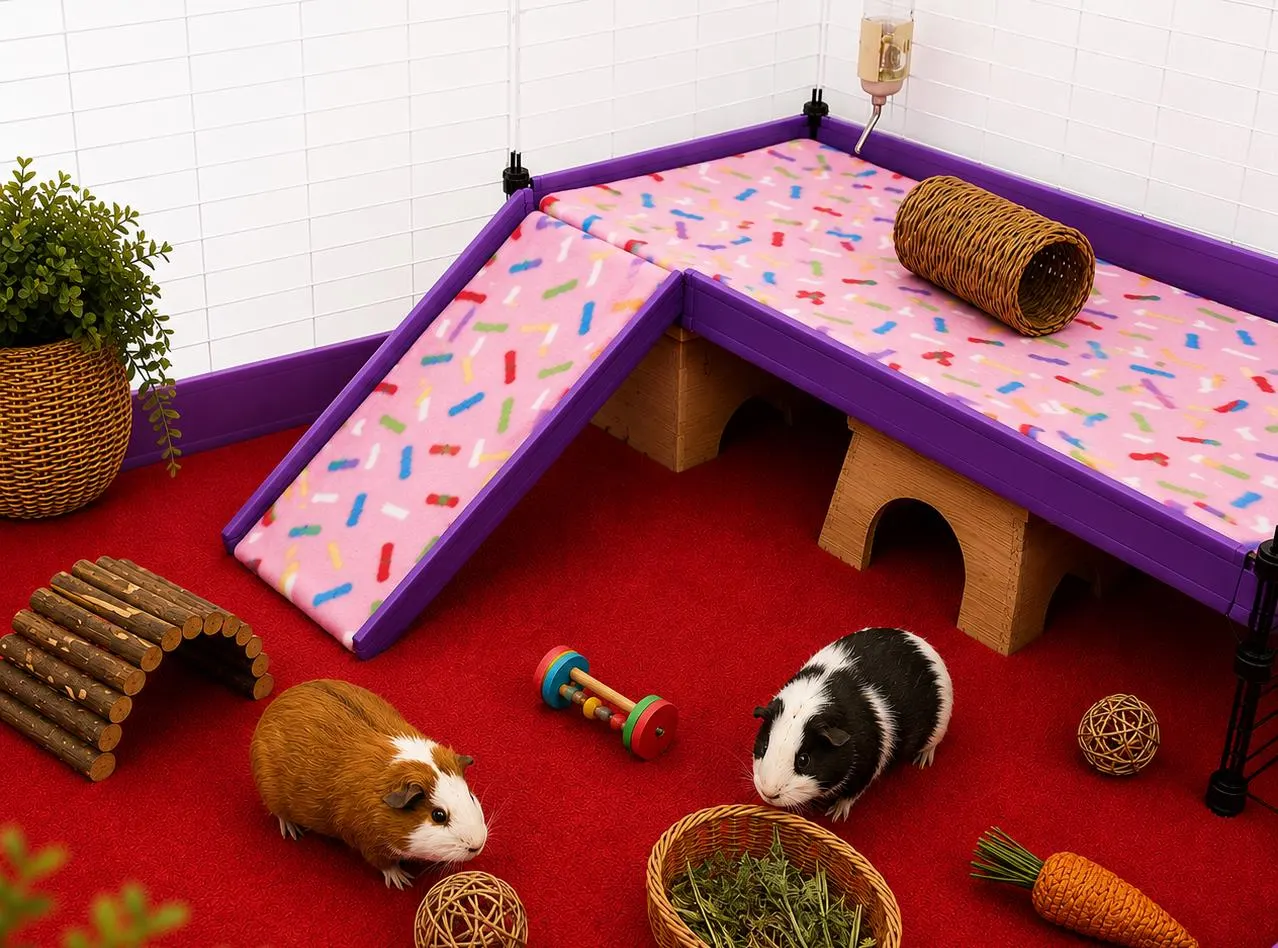
Shopping checklist
If you are buying rather than building, look for these features before you click “add to cart”:
- Low slope or adjustable height, or enough length to create a gentle incline.
- Wide walking surface with no narrow bottleneck.
- Side rails or walls that can be added.
- Stable base that will not wiggle when stepped on.
- Easy to cover with fleece or a runner without leaving exposed sticky edges.
- No exposed wire where feet will land.
- Hardware can be kept out of reach so there are no chewable clips, staples, or sharp zip tie ends.
Also, check how it attaches to the platform. A ramp that pops loose is worse than no ramp at all.
Common ramp mistakes
- Too short and steep, especially when the loft is high.
- Cover that shifts or bunches, which turns “grippy fleece” into a moving rug.
- Flexy ramps that bow under weight and make pets lose confidence.
- Slick landing zones at the top or bottom.
- Unstable attachment that wobbles or slides.
- Exposed hardware where fur, skin, or mouths can meet metal.
Simple upgrades for common ramps
Store-bought plastic ramp
- Wrap with fleece pulled tight and clipped underneath, with clips positioned outside the enclosure when possible.
- Add a rubber shelf liner layer under the fleece to stop sliding, and keep it fully covered.
- Create side rails using coroplast strips attached along the edges.
Wire ramp that came with a cage
- Cover the entire ramp with a stiff base (coroplast or thin sealed wood) so feet are never on wire.
- Add a grippy cover on top.
- Block gaps at the sides and top so there is no place to slip off.
DIY coroplast ramp for C&C cages
- Support underneath with grids or a stiff brace so it does not flex.
- Use binder clips on the outside edges to secure the fleece, or swap to a tie-on cover if clip placement is hard to keep safe.
- Add coroplast side walls and tape only on the outside, where it cannot be chewed.
Seniors and mobility issues
Older rabbits and guinea pigs, plus anyone with arthritis, spinal issues, or prior injuries, need extra caution.
- Go flatter than standard recommendations.
- Increase padding under fleece for softer footing.
- Increase ramp width to reduce wobble and panic turns.
- Consider removing the ramp entirely if it is not essential. Single-level living is perfectly valid, and many seniors are happier without the “daily mountain.”
If your rabbit has recurring sore hocks or your guinea pig is reluctant to move, check with an experienced exotic vet. Housing adjustments help, but pain needs proper medical support too.
Chewing and material safety
Rabbits, in particular, can turn “ramp upgrade” into “snack project.” If your pet chews, prioritize setups that fail safely:
- Avoid exposed adhesive edges, foam, or rubber.
- Block access to finished wood edges if your rabbit eats wood, even if the finish is fully cured.
- Choose covers you can replace, and inspect daily for strings, holes, and loosened corners.
Cleaning and maintenance
Ramps get gross faster than you think, especially in piggy homes where hay is a lifestyle choice.
- Have two covers so one can be in the wash while the other is in the cage.
- Spot clean daily where pee collects, especially near the top landing.
- Check for looseness weekly: wobbles, peeling corners, exposed staples, sharp zip tie ends, chewed edges, and any hardware that migrated into reach.
A ramp that was safe last month can become a hazard after one good chew session.
Quick FAQ
Do rabbits and guinea pigs need ramps at all?
No. If your pet is thriving on a single level with plenty of floor space, that is often safer than adding height. Ramps are most useful when a loft adds meaningful space or helps separate zones (hay, kitchen, lounging) without shrinking the main run.
Can I use sandpaper tape for grip?
I do not recommend it for most setups. It can be abrasive, collect debris, and irritate feet over time. Fabric covers or tight-woven runners are usually kinder.
My guinea pig jumps off the loft instead of using the ramp. What now?
First, lower the height if possible and block tempting jump-off points with coroplast walls or grids. Then make the ramp easier: flatten the slope, add better grip, and add a roomy landing. Some pigs also do better if the ramp ends near something “safe,” like a hideout or a hay pile.
How do I know if my ramp is too slippery?
Watch for scrambling, splayed feet, hesitation, or a quick retreat halfway up. Also check the cover itself. If it shifts under their feet, it is effectively slippery even if the fabric feels grippy to your hand.
The takeaway
A safe ramp is not about fancy accessories. It is about gentle slope, reliable traction, sturdy support, and fall protection. If you get those four right, your rabbit or guinea pig will use the ramp confidently, and you will stop hearing that heart-stopping slip in the middle of the night.
If you want a simple starting point: build or buy the longest, widest ramp you can fit, add a snug fleece cover, include solid side rails, and keep all hardware out of reach. Your pets’ joints will thank you, and so will your stress level.