A practical, rescue-tested guide to choosing hay for rabbits and guinea pigs by age, weight, and health, plus shopping tips and common mistakes to avoid.
Rabbit Cove
Safest Hay Racks for Rabbits and Guinea Pigs
Choose a hay rack that helps protect heads, legs, and jaws. Learn how to assess opening size, mounting gaps, capacity, and feeder styles to avoid for rabbits and guinea pigs.

Chloe Miller
Chloe Miller is a dedicated small-pet enthusiast and experienced foster parent who has spent over a decade caring for rabbits and guinea pigs. Through her hands-on work with local animal rescues, she shares practical, compassionate advice on housing, nutrition, and daily enrichment to help small pets thrive. When she isn't designing custom indoor enclosures, Chloe can be found coaxing shy rescues out of their shells with fresh cilantro.
Published
October 22, 2026
Updated
October 22, 2026
Hay is the daily bread of rabbits and guinea pigs. It should be easy to reach, clean, and always available. But the wrong “cute” hay rack can turn snack time into a preventable emergency. Entrapment risks often come down to simple mechanics: openings that are just the wrong size, swing or wobble that creates shifting gaps, and pinch points that appear when a feeder moves.
I have fostered enough small herbivores to say this plainly: a safe hay feeder is less about aesthetics and more about physics. Openings, angles, and mounting points matter. This guide will walk you through what to look for, what to measure, and which popular styles I recommend avoiding for rabbits and guinea pigs.
What safe means
A safe hay rack does four jobs well:
- Prevents entrapment: no head, jaw, or limb should fit into an opening that could trap them if they turn, pull back, or panic.
- Supports natural posture: easy to eat without twisting the neck or pulling at odd angles.
- Keeps hay cleaner: reduces hay-as-bedding and hay-as-litter problems, especially when paired with a litter box.
- Stays put: it cannot wobble, tip, swing, or create shifting gaps against the enclosure bars.
For most homes, the safest “hay rack” is actually one of two setups: a roomy hay box with a wide access opening, or a rigid wall-mounted feeder with openings sized appropriately for the animal in front of you.
Openings and spacing
When animals get stuck, it is usually because the feeder openings land in the danger zone: big enough for entry, but small enough to catch at the cheeks, jaw, or shoulders when they try to back out.
If you remember one principle, make it this: either openings are too small for entry, or access is wide enough that nothing can wedge. Danger lives in between.
What to look for
- Avoid ladder-like gaps that invite climbing or full head insertion.
- Prefer consistent openings that do not narrow, taper, or funnel.
- Choose smooth edges around access points to reduce the chance of lip or gum scrapes.
Measurement basics
If you can, use a ruler and measure the narrowest part of any opening your pet can reach, plus any gaps created between the feeder and the enclosure wall.
Important: sizes vary wildly (juveniles, small adults, big breeds), so I am cautious about “universal” numbers. Still, here are practical, conservative targets to help you evaluate common designs:
- For guinea pigs: aim for very small, consistent openings that discourage feet from going through at all. As a general screen, openings around 1 inch (2.5 cm) or smaller tend to reduce “foot-through” temptation in many setups, but individuals vary. If you are unsure, a hay box or a solid-front feeder with a controlled eating window is usually the safer bet.
- For rabbits: avoid openings that allow full head entry. Many rabbits yank, leverage, and climb, which can turn “probably fine” into “suddenly not fine.” As a general screen, once an opening approaches 2 inches (5 cm) or larger, it may start to look like “head-sized” for some rabbits, especially smaller adults and juveniles. When in doubt, choose a wide, non-trapping access window (hay box style) or a feeder with smaller, consistent openings.
Because those ranges still cannot account for your animal’s skull width and habits, the safest approach is to measure your specific animal. If the design blocks head entry entirely, great. If it allows entry, make sure it is not narrow enough anywhere to wedge at the cheeks or jaw.
Quick safety checks
Before you mount any feeder, do these checks:
- Rule of thumb check: If you can easily fit two adult fingers through an opening and wiggle them around, treat it as a potential foot hazard for guinea pigs and a toe-hooking hazard for rabbits. Finger size varies, so use this as a quick screen, not a guarantee.
- Turn check: Imagine your pet has pushed their head in and then rotates slightly. If the opening shape narrows or catches at the cheeks, it is not a safe geometry.
- Snag check: Run a cotton ball along edges and weld points. If fibers snag, fur and lips can snag too.
If you are between sizes, choose smaller, consistent openings that discourage entry and climbing. If smaller openings would force awkward pulling or frustrated yanking, switch to a hay box with a wide access cutout instead.
Rabbit vs guinea pig risks
- Rabbits: more likely to climb, pull hard, and use leverage. Look for stability and designs that do not act like ladders.
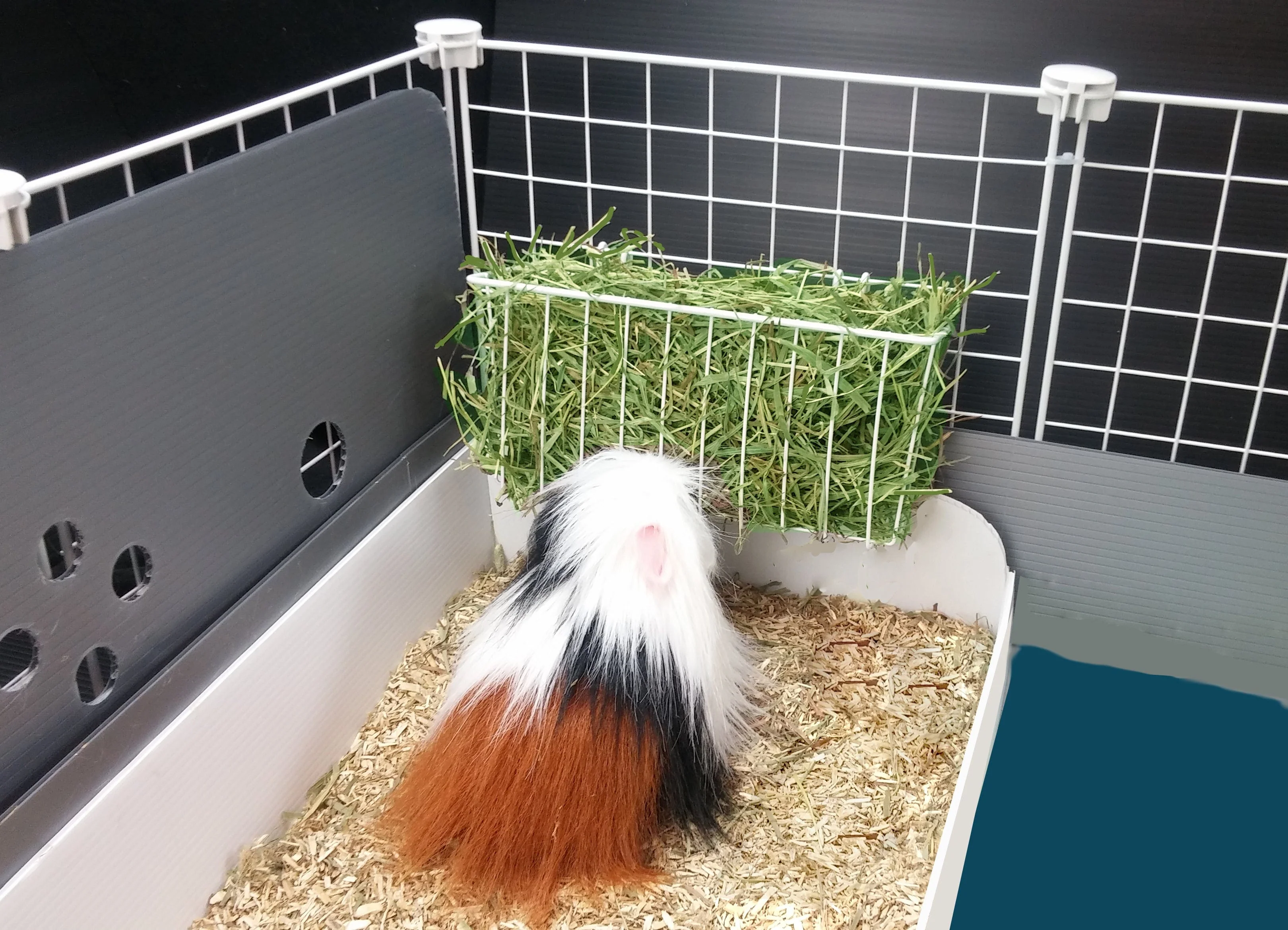
- Guinea pigs: more likely to get a foot into a gap and struggle. Many guinea pigs also prefer low, easy access, although individuals vary.
Safer styles
1) Hay box or hay bin
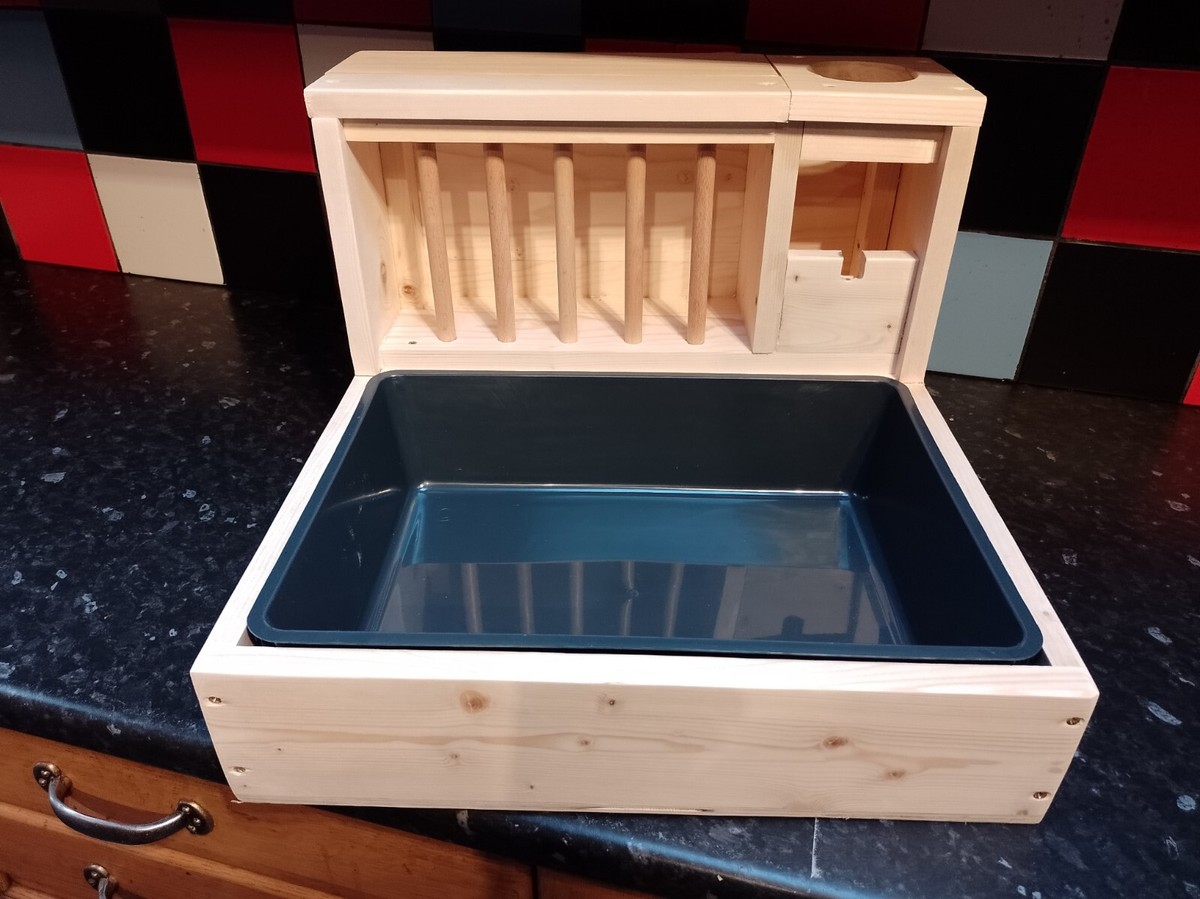
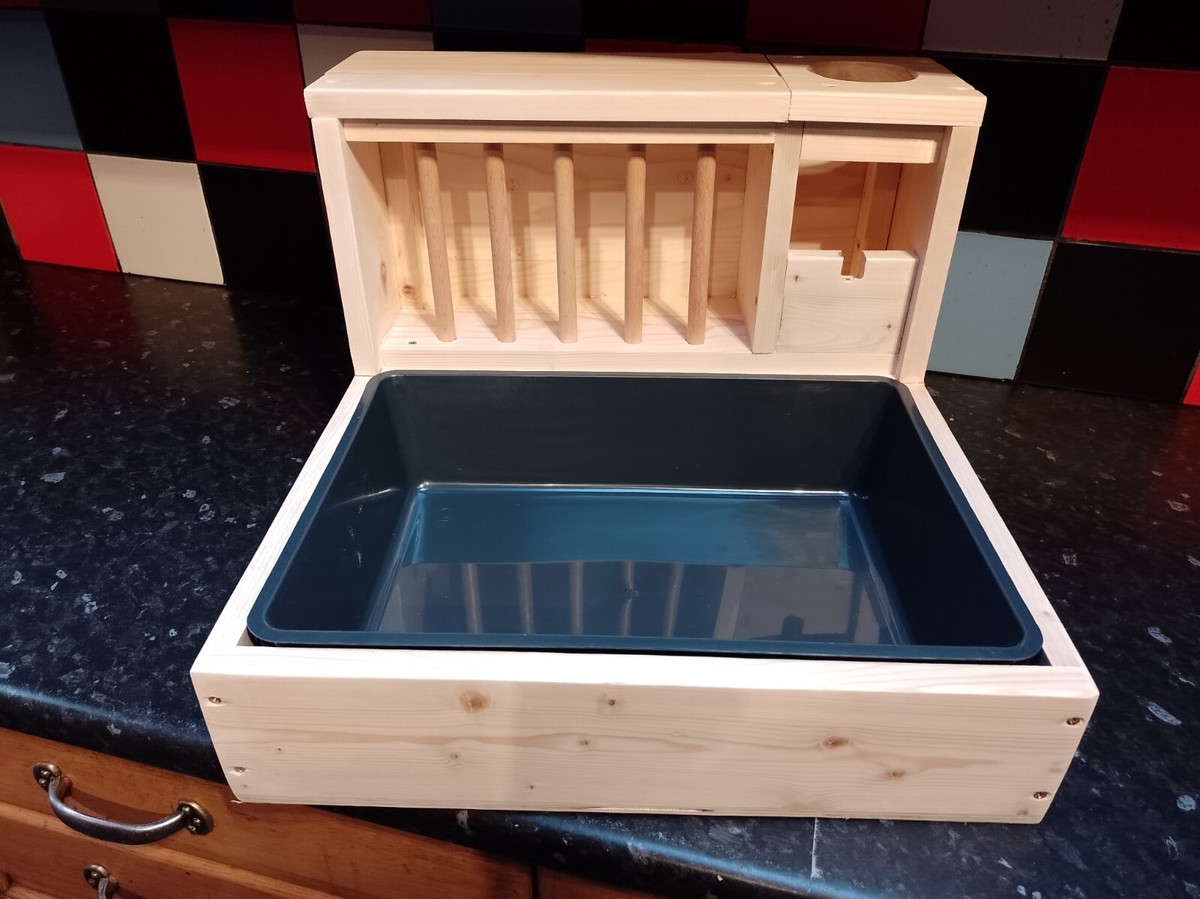
A hay box is a container that holds a large amount of hay with a wide, non-trapping access opening. It can be as simple as a sturdy plastic storage bin with a large U-shaped cutout, or a wooden box with a broad front opening. The point is that your rabbit or guinea pig can eat without threading their head through bars.
- Best for: big hay eaters, messy eaters, multi-pet habitats, rabbits with strong pulling habits.
- Safety perks: fewer trapping points, less climbing temptation, usually higher capacity.
- Watch-outs: keep edges smooth; if using plastic, monitor for chewing and replace if gouged.
2) Rigid wall-mounted metal feeder
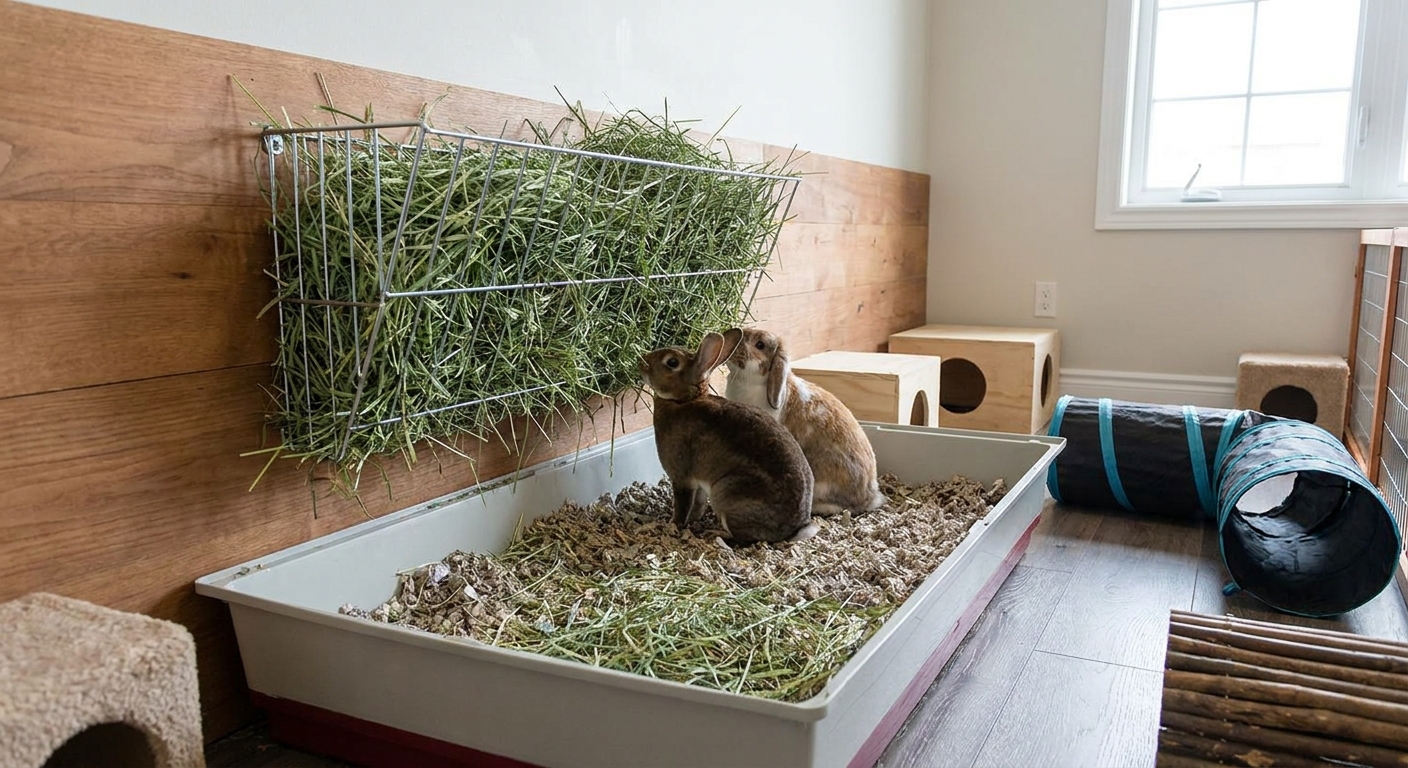
A well-made metal feeder that mounts firmly to the side of an enclosure can work beautifully, especially above a litter box for rabbits. Look for sturdy construction, smooth welds, and openings that discourage head entry.
- Best for: adult rabbits who do not climb, guinea pigs when openings are appropriately small.
- Safety perks: stable, chew-resistant, easy to clean.
- Watch-outs: avoid feeders that create a gap between feeder and cage bars where a head or leg can wedge.
3) Solid-front window feeders
Some modern feeders use a solid front with a controlled eating window. These can be very safe because they remove the bar-ladder effect. Make sure the eating window is wide and smooth, and that screws or hardware are inaccessible from the inside.
- Best for: owners who want to reduce hay scatter while keeping access easy.
- Watch-outs: rabbits can chew many plastics; if your rabbit is a determined remodeler, choose metal or thick chew-resistant materials and inspect often.
Styles to avoid
Wire ladder racks
These are the classic pet-store hay racks: angled wire baskets with large rectangular gaps. They are inexpensive, common, and in my opinion not worth the risk. Rabbits may push their head in too far or hook a leg while pulling hay. Guinea pigs can get a foot through surprisingly small openings, then panic and twist. Entrapment incidents can also lead to injuries like snagged or torn nails, or mouth scrapes from struggling against wire.
Why I avoid them: the openings invite climbing and head insertion, and the angle can encourage awkward pulling.
Hanging hay balls
Round, cage-like hay balls are marketed as enrichment, but many versions have openings that can trap jaws or allow a foot to slip through. They also swing, which creates shifting gaps and encourages yanking.
Why I avoid them: motion plus bars plus small animals is a risky combination, especially for guinea pigs.
Dangling hardware
Anything that dangles where a rabbit can catch a tooth, or where a guinea pig can tangle a foot, is a no from me. Even without entrapment, you can see small mouth injuries from grabbing at hardware while trying to get hay.
Why I avoid them: unpredictable movement and snag points.
Door-mounted feeders
Some feeders hook over cage doors or clamp to panels. If they shift when the door opens or closes, they can leave a triangular gap between the feeder and the enclosure wall. That gap is exactly where heads and paws find trouble.
Why I avoid them: shifting fit, pinch points, and inconsistent positioning.
Wood slat racks
Wood can be great when it is built well. But many slatted wooden racks have openings large enough for a rabbit to wedge a head through. Chewing can also change the shape of the openings over time, quietly turning a safer rack into a risky one.
Why I avoid many of them: chewing changes geometry, and slat spacing is often not tested for safety.
Capacity and shape
Capacity sounds like a convenience issue, but it is also a safety and hygiene issue. A too-small feeder can encourage frantic pulling and digging, which raises the odds of snagged toes and torn nails. A too-deep feeder can make animals climb in, especially if it is boxy and low.
Capacity tips
- For rabbits: aim for a feeder that holds at least a day’s worth of hay for your rabbit, and more if you will be away for a workday. Bigger is usually better if it stays stable.
- For guinea pigs: multiple smaller stations can reduce crowding, especially with dominant personalities who like to park themselves in the best spot.
- For pairs and groups: add a second hay access point rather than forcing everyone to share one opening.
Shape tips
- Wide access beats narrow access: it reduces the reach-and-twist posture.
- Skip sharp corners: corners collect dust and can jab noses if animals push in.
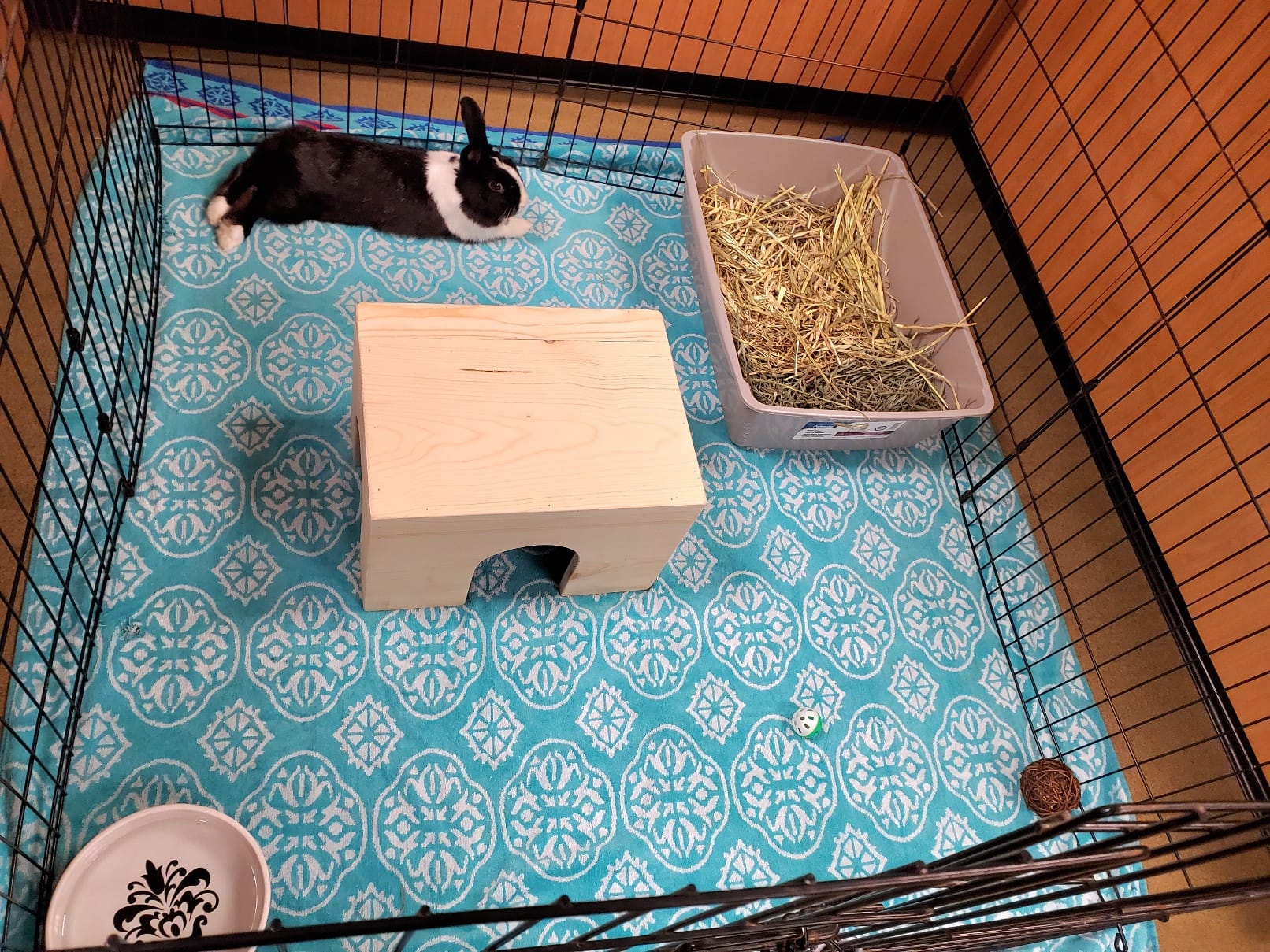
- Pair with a litter box for rabbits: many rabbits love to munch while they potty, and it keeps waste where it belongs.
Mounting and placement
A perfectly safe feeder can become dangerous if it is mounted poorly. I look for three things: stability, no gaps, and a sensible height.
Stability
- Mount so the feeder cannot swing or bounce when your pet tugs hay.
- If it attaches with hooks, ensure the hooks are fully closed or secured so the feeder cannot pop free.
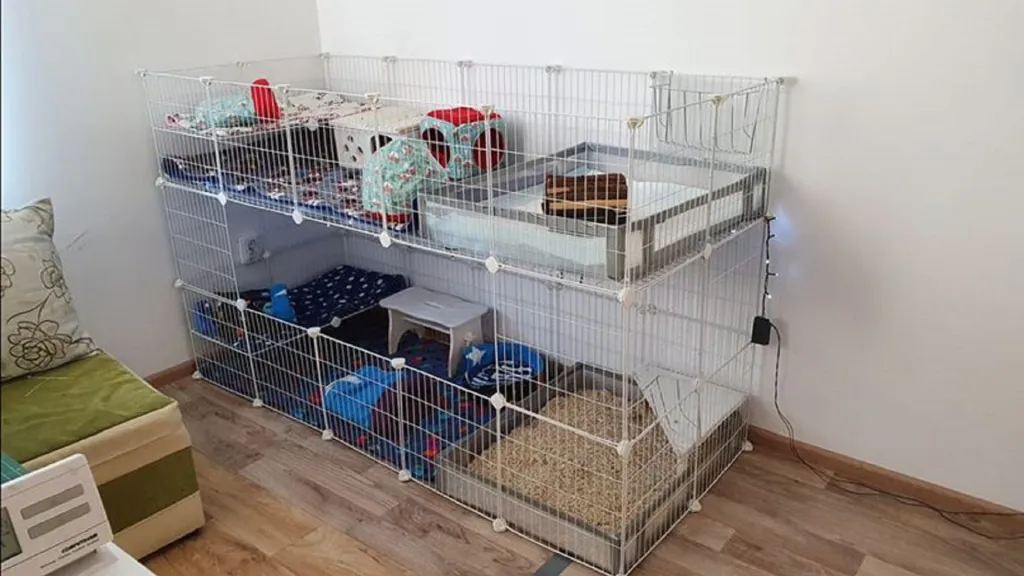
- For C&C enclosures, use multiple attachment points (zip ties or cage-safe fasteners) so the feeder sits flush and does not flex.
No gaps
If your feeder sits 1 to 2 inches away from the enclosure wall, you have created a slot that a curious animal will explore with their face. Choose a feeder that sits flush, or adjust mounting so the gap cannot form.
Height
- Rabbits: place hay so they can eat with a neutral neck. A little lift is fine, but avoid making them stretch upward repeatedly.
- Guinea pigs: keep access low and easy. Many prefer not to reach up much, and low access supports steady hay intake.
Materials and cleaning
Metal
Metal is often the most durable and easiest to sanitize. Look for smooth welds and coatings that do not flake. If you see rust anywhere your pet can lick, chew, or where hay sits, retire the piece or replace the affected part.
Plastic and acrylic
These can be fine if thick and well-finished, but monitor for chewing. Deep tooth grooves are bacteria magnets and can leave sharp edges.
Wood
Wood can be safe when designed thoughtfully, but it absorbs moisture and odors. If the wood is getting peed on, replacement is usually the simplest and safest option.
If you choose to seal wood, be picky. Some finishes marketed as “pet-safe” are not meant for surfaces that will be constantly chewed or licked. Use a finish only if you can keep sealed surfaces out of reach of teeth, allow full cure time, and you are confident it is appropriate for animal enclosures.
Cleaning reality
If a feeder is annoying to clean, it will get cleaned less. Choose something you can shake out daily and wash regularly without turning it into a whole project.
Hay dust and air
Cleaner hay is not only about tidiness. Dusty hay and dirty feeders can irritate sensitive noses, especially for guinea pigs. A design that keeps hay out of the litter and stays easy to clean makes it more likely you will refresh hay often, shake out dust, and spot problems early.
Checklist
- Openings block head entry, or the access area is wide enough that nothing can wedge.
- No sharp edges or rough welds anywhere an animal can touch.
- Stable mounting with no swinging and no shifting when pulled.
- No gaps between feeder and enclosure wall where a head or leg could become trapped.
- Appropriate height for relaxed posture and easy access.
- Enough capacity to reduce frantic pulling and competition.
- Wear check: no rust in contact areas, no chewed edges that change opening shapes.
If they get stuck
It is terrifying, and your pet will panic because prey animals are wired that way. Your job is to become the calmest creature in the room.
- Do not yank. Pulling can worsen injuries.
- Stabilize the feeder or cut it away. If it is wire, use wire cutters if you have them. If it is plastic, sturdy scissors may help. Free the animal by removing the obstacle, not by twisting the pet.
- Check for bleeding, limping, swelling, or mouth injury. If you see any of these, call an exotics vet promptly.
- Replace the feeder. If it happened once, it can happen again.
FAQ
Do they need a hay rack?
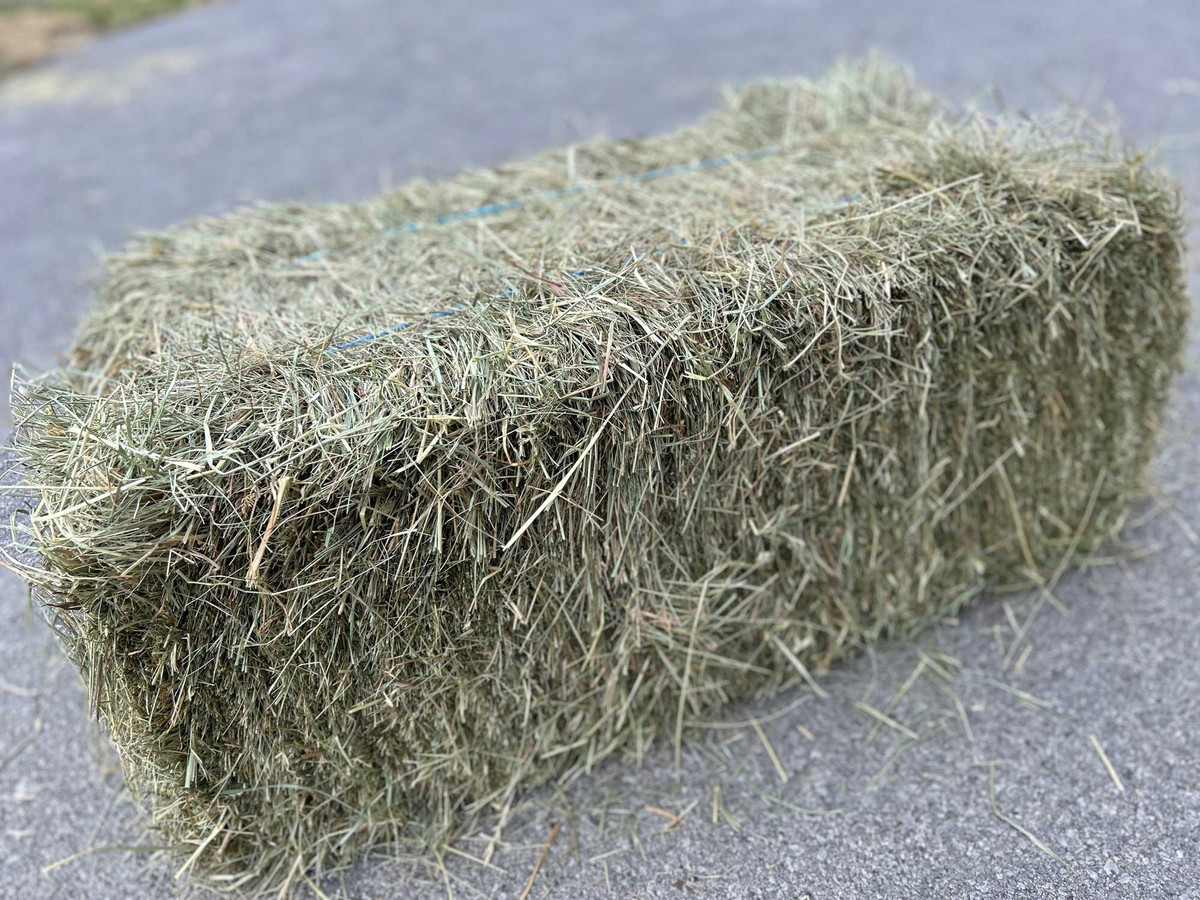
No. They need clean, unlimited hay. A hay rack is one way to keep hay cleaner and reduce waste. Many households do best with a hay box or a big hay pile in a clean litter area that is refreshed often.
Is it safe for guinea pigs to pull hay through bars?
It can be, if the openings are small and the feeder is stable. Guinea pigs are impressively good at getting feet into places you would not expect, so I prefer designs with controlled access windows or very small, consistent openings.
My rabbit climbs the hay rack. What now?
Assume the rack is acting like a ladder. Switch to a hay box or a solid-front feeder that does not provide footholds. Climbing is not “just silly,” it is how nails get torn and legs get caught.
Where should the feeder go?
Most rabbits love hay directly beside or above a litter box. It encourages good litter habits and keeps the mess contained. Just ensure the feeder is mounted securely and does not create gaps your rabbit can push into.
Should I ask a vet or rescue?
If you are unsure about a feeder design, have a very small juvenile, or your pet has mobility issues, an exotics vet or reputable rescue can help you choose a safer setup for your exact animal and enclosure.
Bottom line: the safest hay rack is the one your pet can use without fitting their head or limbs into anything that could trap them. When in doubt, choose a roomy hay box, keep edges smooth, and prioritize stability over style. Your rabbit or guinea pig will still act like the hay is the best thing that has ever happened to them, and that is exactly what we want.