A practical, rescue-tested checklist for cooling small pets: ventilation, frozen ice pods, safe fans, shade, and what to do fast if you suspect heatstroke.
Rabbit Cove
Winter Warming Supplies for Rabbits and Guinea Pigs
A practical winter supply guide for rabbits and guinea pigs: safe microwavable snuggle pads, thermal cage covers, and draft-blockers, plus exactly how to use them without overheating or chewing hazards.

Chloe Miller
Chloe Miller is a dedicated small-pet enthusiast and experienced foster parent who has spent over a decade caring for rabbits and guinea pigs. Through her hands-on work with local animal rescues, she shares practical, compassionate advice on housing, nutrition, and daily enrichment to help small pets thrive. When she isn't designing custom indoor enclosures, Chloe can be found coaxing shy rescues out of their shells with fresh cilantro.
Published
October 22, 2026
Updated
October 22, 2026
Cold weather can sneak up on indoor pets too, especially if your home gets drafty at night or your buns and piggies live in a room that is a few degrees cooler than the rest of the house. The goal in winter is not to turn your rabbit or guinea pig into a toasted marshmallow. It is to block drafts, keep bedding dry, and offer a gentle warm option they can move away from.
This guide walks you through three winter staples I rely on in foster setups: microwavable snuggle pads, thermal cage and hutch covers, and draft-blockers, plus the safety checks that matter most for curious chewers.
Before you buy: quick winter safety checklist
If you remember nothing else, remember this: rabbits and guinea pigs need choice and ventilation. Warmth should always be optional, and air should always be able to circulate.
- Choose warmth they can leave: heat sources should cover only part of the enclosure, never the whole living area.
- Avoid electrical cords in reach: chewing is fast and silent. If a cord is accessible, assume it will be tested.
- No direct contact with very hot surfaces: use a cover layer like fleece, and always test with your wrist before offering it.
- Keep everything dry: damp bedding plus cold air is where trouble starts, and guinea pigs can be especially sensitive when drafts, humidity, and ventilation are not ideal.
- Maintain airflow: covers should block drafts, not trap stale air or ammonia.
- Watch for heat stress: rapid breathing, drooling, weakness, or acting “flattened” and miserable near heat can mean it is too warm. Warm ears alone are not a diagnosis, but very warm ears plus other signs is a reason to remove the heat source and reassess.
Microwavable snuggle pads
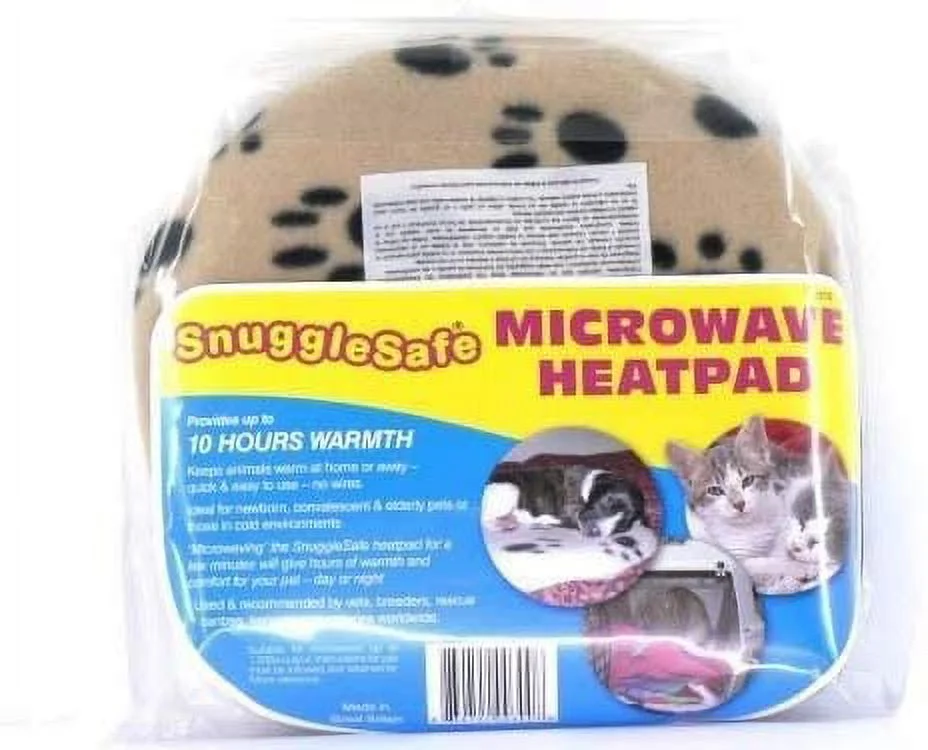
For most homes, a microwavable pad is my favorite winter “extra.” It is cord-free, predictable, and easy to remove if your pet decides it is not their vibe.
What to look for when shopping
- Pet-specific microwavable pads with a sturdy casing. Nothing is truly chew-proof, but hard casings are generally safer than fabric heat sacks or gel pads.
- Useful heat duration over “gets blazing hot fast.” Real-world warmth can range from a few hours to 8 to 10 hours for some products, depending on the pad, your microwave, and how cold the room is.
- No scented fillings and no added aromatherapy.
- A washable cover or the ability to wrap it in fleece. Terrycloth and loose-weave fabrics can snag nails.
- Size matters: for guinea pigs, a smaller pad or half coverage is often ideal. For rabbits, a larger pad placed beside a favorite hide can work well.
How to use a microwavable pad safely
- Microwave exactly as directed for your wattage. Overheating can warp casings and create hot spots.
- Knead or rotate if instructed to distribute heat evenly.
- Test with the inside of your wrist for several seconds. It should feel comfortably warm, not “ouch.”
- Wrap in fleece or use the manufacturer cover, especially for rabbits that like to dig and for guinea pigs that burrow.
- Place it outside the main traffic lane, ideally beside a hide or under a corner of a fleece forest so they can snuggle or walk away.
- Never trap them against it: do not wedge it in a way that blocks the only doorway of a hide.
- Check it before bed and again in the morning for chew attempts, cracks, or any dampness under the cover. If you find moisture, remove it and let everything dry fully before re-use.
My foster-house rule: if a rabbit or guinea pig is in a heavy chewing phase, the pad only goes in under direct supervision, or it stays out entirely.
Thermal cage and hutch covers
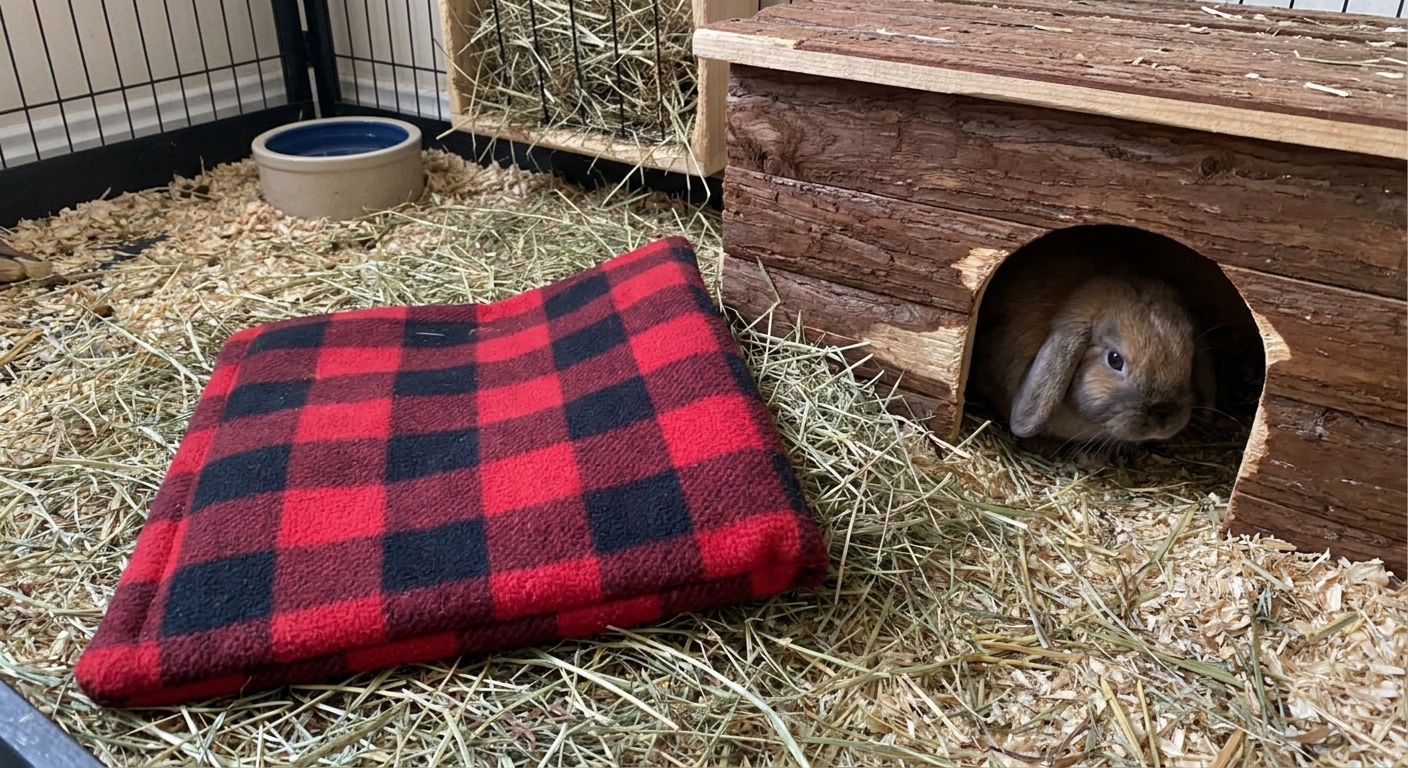
Covers are about draft control more than “heating.” Think of them as a windbreaker for the enclosure, not a blanket you seal up tight. (If you skim the rest of this guide, keep repeating this to yourself: draft control plus airflow.)
Best uses for rabbits vs guinea pigs
Indoor rabbits: A partial cover can help if your rabbit’s pen sits near a sliding door, older windows, or a hallway with a constant draft.
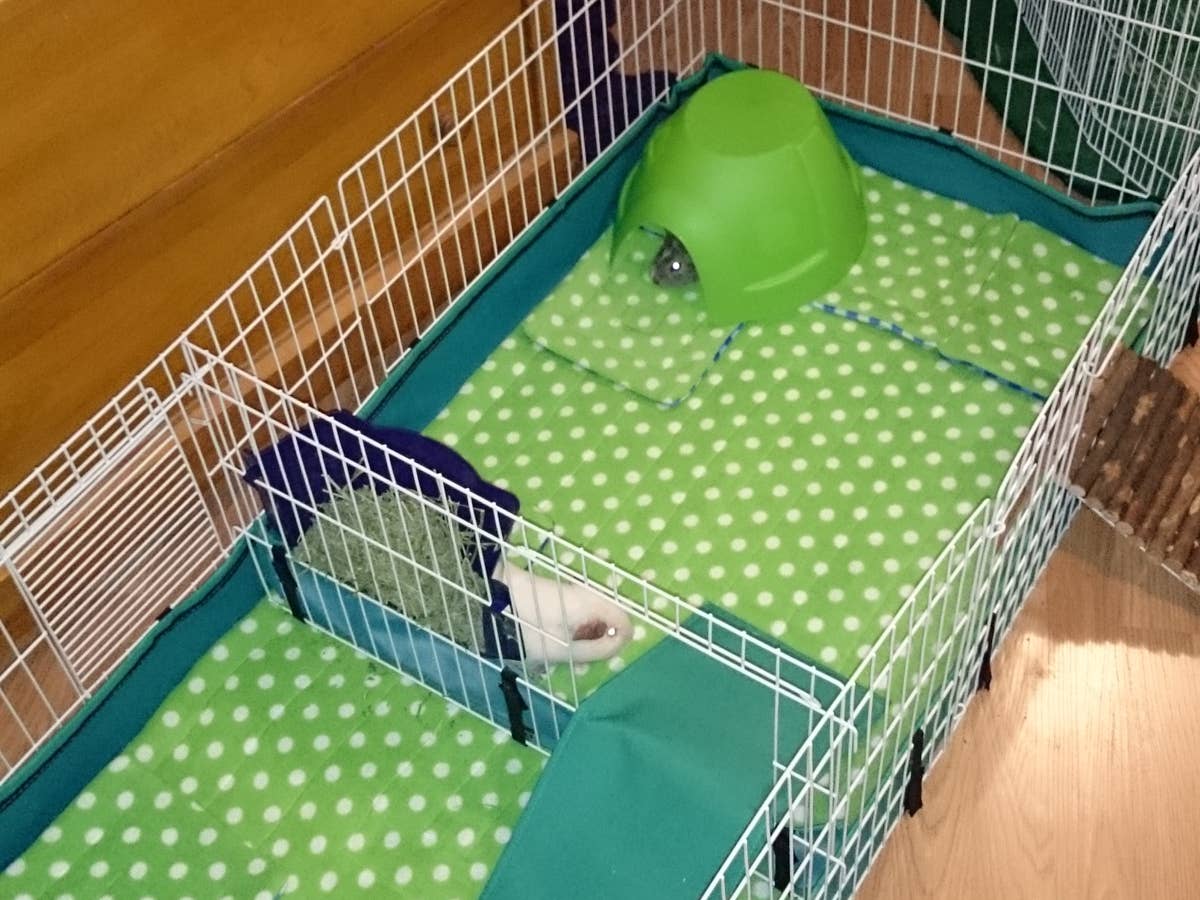
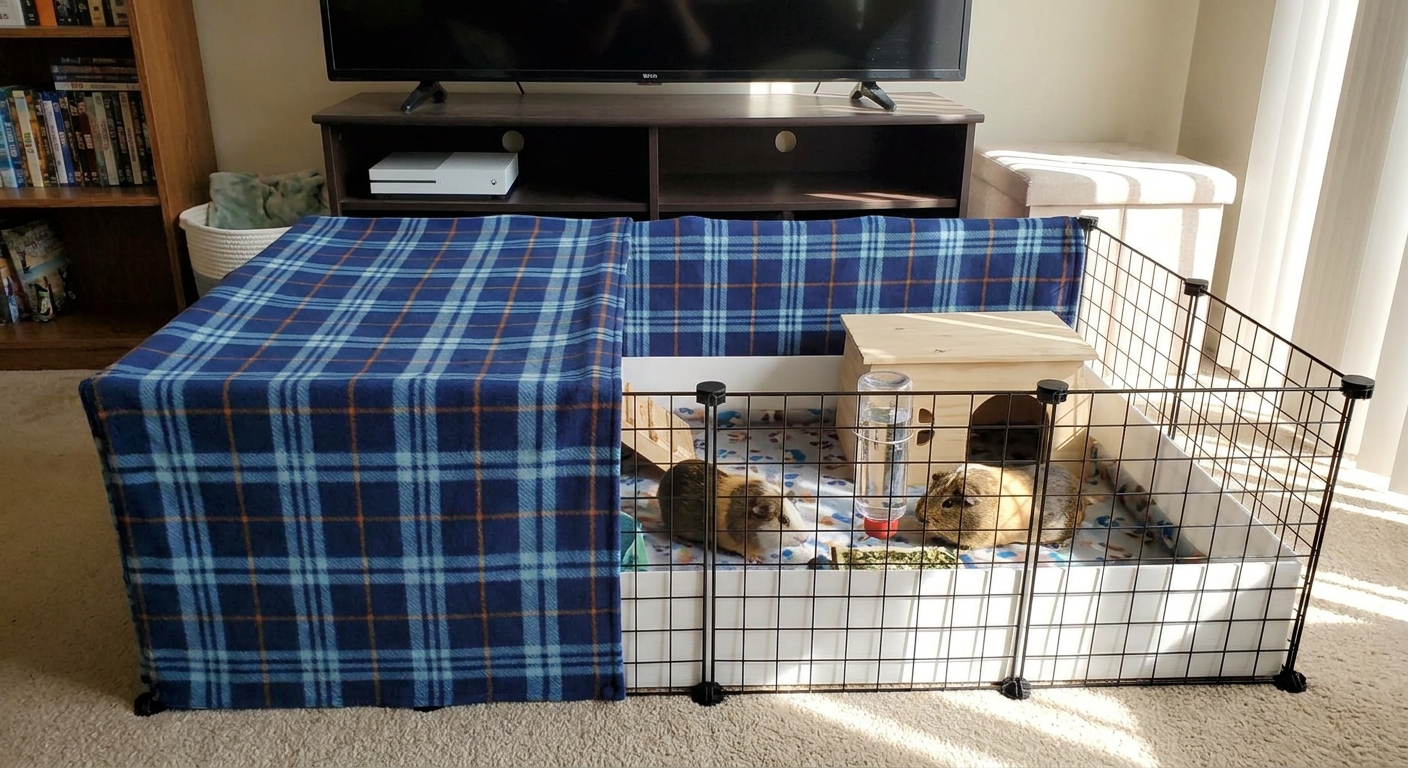
Indoor guinea pigs (C&C cages): Guinea pigs feel drafts quickly. A well-placed cover panel on the windward side can make a noticeable difference without affecting ventilation. (C&C stands for cube-and-coroplast, the common modular grid cage style.)
Outdoor housing: If your rabbit or guinea pig lives outdoors, please be cautious. In many climates, outdoor winter housing requires more than a cover and a snuggle pad. Temperature swings, predators, and moisture become much bigger risks. If you must house outdoors, focus on wind and moisture protection, keep the hutch elevated off cold ground, and check water daily for freezing. In truly cold conditions, bringing them indoors is often the safest move.
What to look for when shopping
- Breathable, water-resistant outer layer for outdoor hutches. Waterproof is great, but it must still allow airflow at openings.
- Insulated or quilted panels that attach securely and do not flap against the cage.
- Clear window panels can be helpful for outdoor hutches so you can check on pets without lifting the cover.
- Easy access points for feeding doors and cleaning trays.
- Chew-safe placement: any fabric within reach is a chew toy. If it will be inside the pen, assume it will be nibbled.
How to use covers without creating a stale air tent
- Cover the back and one side first. Leave the front mostly open.
- Create a top gap for warm, moist air to escape. Ammonia buildup is harder on little lungs than cool air.
- Keep bedding changes frequent. A covered enclosure holds humidity longer, especially with guinea pig cages.
- Do a sniff test. If you can smell urine quickly, ventilation needs improving right away.
Draft-blockers that actually help
Most winter discomfort I see in rescues is not because the room is “too cold.” It is because there is a constant low draft at floor level. Fix the draft and suddenly everyone looks a lot more comfortable.
Simple, safe draft-blocking ideas
- Door draft stoppers (the fabric tube kind) placed outside the pen area.
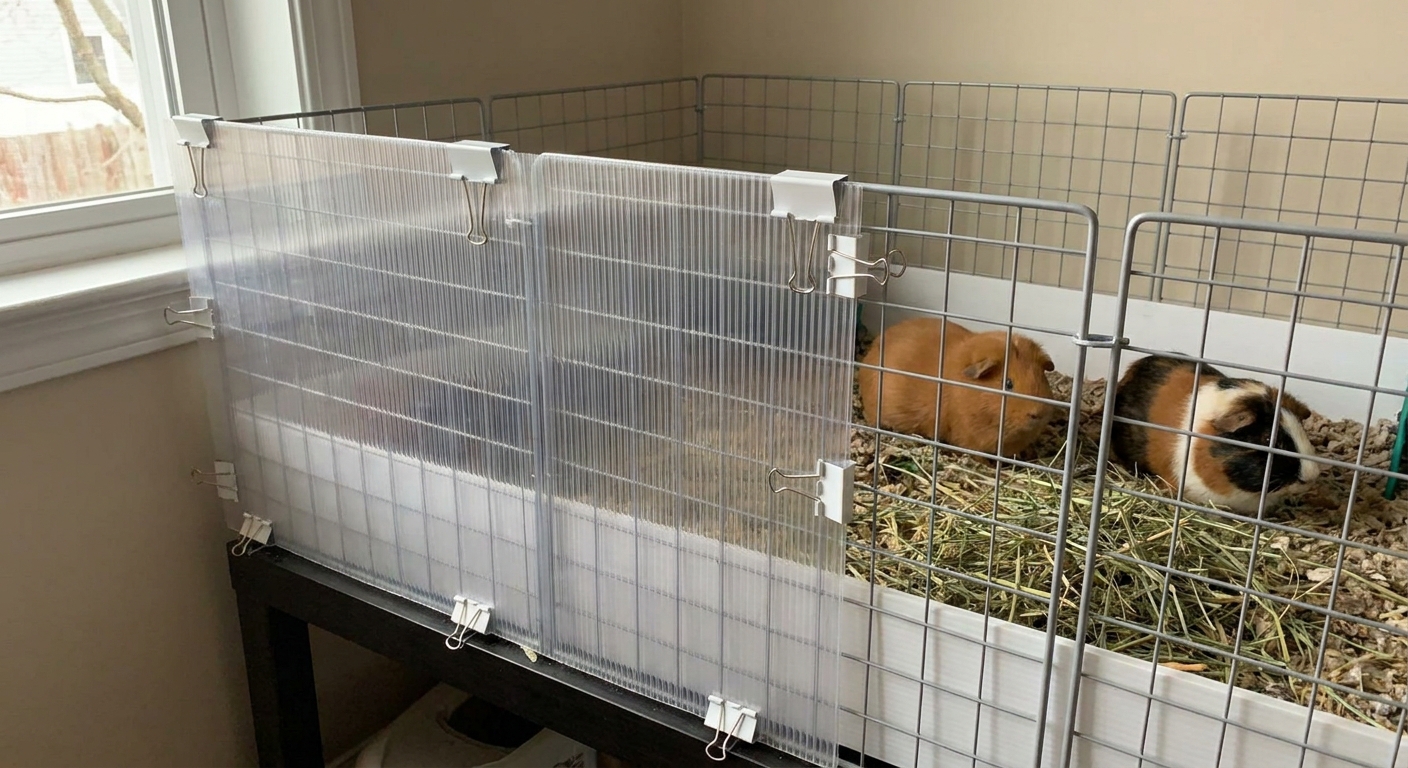
- Coroplast or plexi panels clipped to the outside of a C&C cage on the drafty side. This is one of my favorite fixes because it is sturdy and wipeable.
- Moving the enclosure a few inches away from windows or exterior doors. Tiny adjustments matter.
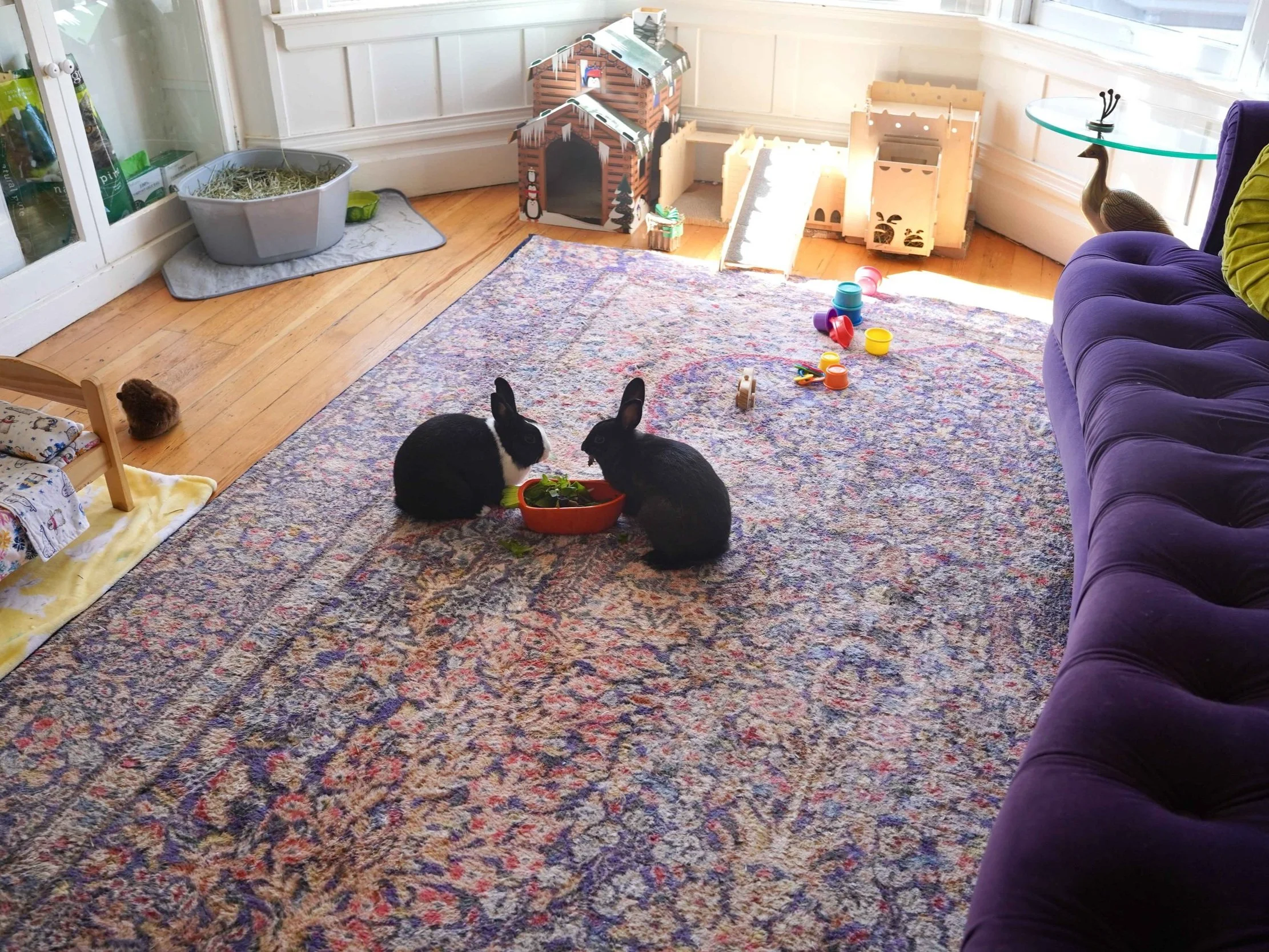
- Thick rug under an exercise pen (with a washable layer on top) to reduce cold floor seepage.
- Baseboard gap checks: if you can feel air moving at floor level, block the source in the room, not inside the cage.
What to avoid
- Space heaters aimed at the enclosure: they can create hot spots fast, overheat one area while leaving another chilly, and add burn and fire risk.
- Plug-in heating pads made for humans: many do not have chew-resistant cords, and temperature control is not designed for small animals.
- Sealing the cage with blankets: it is tempting, but it can trap humidity and ammonia.
- Loose-fill warming bed stuffing: anything a rabbit can shred and ingest is a no from me.
My winter setup, step by step
If you want a simple plan that works for most indoor homes, here is the order I use when a cold snap hits:
- Check the room, not just the cage: close gaps, move the pen away from exterior doors, and add a draft stopper.
- Add an extra dry layer: for guinea pigs, extra fleece liners or more frequent swaps; for rabbits, a thicker layer of hay in a favorite corner and a cozy hide.
- Use a partial cover: back and one side only, leaving the front open.
- Offer a microwavable pad: placed beside a hide, wrapped in fleece, covering no more than a portion of the resting area.
- Observe behavior: if they avoid the pad entirely, that is fine. If they sprawl on it and seem uncomfortable or breathe fast, remove it and rely on draft control instead.
Room monitoring (quick win)
If your pets live at floor level, measure at floor level. A cheap thermometer, or a thermometer-hygrometer combo, placed near the enclosure can tell you a lot about why they seem suddenly grumpy at night. I also try to avoid rapid swings, like letting the room drop hard overnight and then blasting heat in the morning. Steady and draft-free beats “hot, then cold” every time.
FAQ
Can I leave a microwavable heat pad in all night?
If it is a pet-specific microwavable pad in good condition, wrapped in fleece, and placed so your rabbit or guinea pig can move away from it, overnight use is usually fine. The bigger question is chewing. If your pet is likely to gnaw the casing or cover, use it only when you can supervise.
Do rabbits need extra heat in winter indoors?
Most healthy indoor rabbits do not need added heat if the home stays in a typical comfortable range and drafts are controlled. Seniors, very young rabbits, and rabbits recovering from illness may appreciate a warm option, but always provide choice and monitor closely.
Are guinea pigs more sensitive to cold than rabbits?
In my experience, yes. Guinea pigs are closer to the floor, smaller-bodied, and can be more affected by drafts and damp bedding. Draft-blocking and dry, warm fleece layers make a big difference.
Is it safe to cover the cage at night?
It can be, as long as you are not sealing it up. Aim for partial coverage that blocks drafts while keeping the front or top open for airflow. If odors build up faster with the cover on, ventilation needs improvement.
What temperature is too cold?
Comfort varies with health, humidity, and drafts. Many rescues and exotics vets will give you a target range based on your setup, but the practical red flags are more important than the number on the thermostat. If you notice shivering, hunched posture, lethargy, cold feet, or a pet refusing to move from a single warm corner, treat it as a warning sign and warm the environment safely. When in doubt, contact a rabbit-savvy or exotics veterinarian for guidance tailored to your pet’s age and medical history.
Winter shopping list (quick recap)
- Microwavable snuggle pad (pet-specific, sturdy casing) plus a fleece cover
- Thermal cover panel or fitted hutch cover designed to allow airflow
- Coroplast or clear panel clips for C&C cages to block drafts
- Door draft stopper for the room
- Extra washable liners to keep bedding dry
- Spare hide or cozy tunnel so they can choose shelter
Winter care is mostly about thoughtful setup, not fancy gadgets. Block the draft, keep things dry, and offer gentle warmth as an option, and your rabbit or guinea pig will handle the season like the tiny, opinionated house herbivore they are.