A practical, rescue-informed list of hideouts that are safer for chewing and lounging, and which popular “cute” hides can be risky for small herbivores.
Rabbit Cove
Play Tunnels and Tubes for Rabbits and Guinea Pigs
Choose safe play tunnels and tubes for rabbits and guinea pigs with the right diameter, chew-safe materials, and sturdy designs that won’t collapse or raise obstruction risk.

Chloe Miller
Chloe Miller is a dedicated small-pet enthusiast and experienced foster parent who has spent over a decade caring for rabbits and guinea pigs. Through her hands-on work with local animal rescues, she shares practical, compassionate advice on housing, nutrition, and daily enrichment to help small pets thrive. When she isn't designing custom indoor enclosures, Chloe can be found coaxing shy rescues out of their shells with fresh cilantro.
Published
October 22, 2026
Updated
October 22, 2026
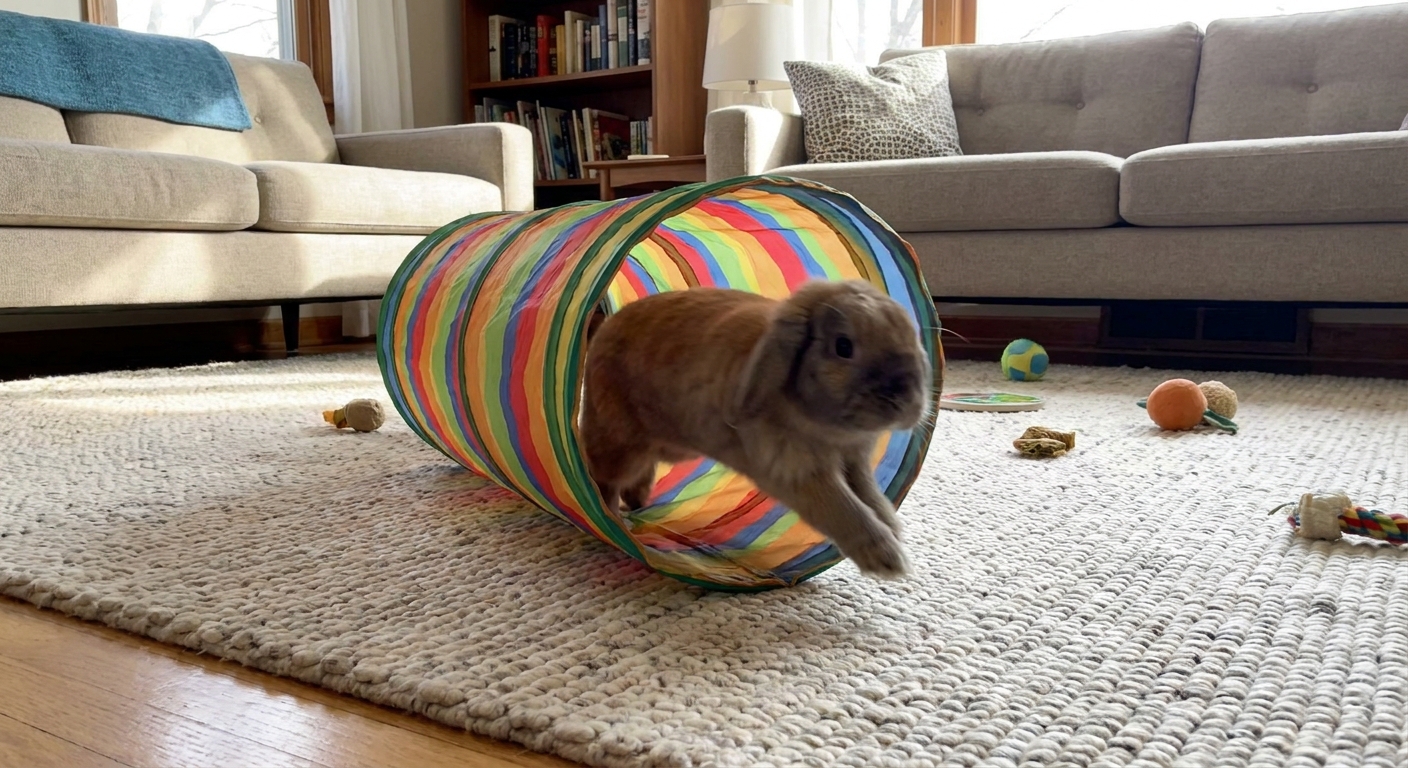
Tunnels are one of those rare everyone-wins enrichment staples. Rabbits get a safe place to zoom, hide, and flop dramatically. Guinea pigs get a cozy runway that makes them feel covered from above, which is basically their love language. The trick is picking a tunnel that is roomy enough to prevent getting stuck, sturdy enough not to pancake mid-sprint, and made from materials that will not cause problems if a dedicated little chewer decides it is also a snack.
Start with safety: what can go wrong
Most tunnel mishaps fall into three buckets: getting stuck, collapse and panic, and chewing something that should not be swallowed. If you shop with those three risks in mind, it gets much easier to compare options.
- Too small: Your pet squeezes in, then cannot easily turn around or back out. This is especially risky for larger rabbits and for guinea pigs with very round “I found the pellet bowl” figures.
- Flimsy: Some pop-up tunnels fold inward if a rabbit launches into them at full speed. A sudden collapse can spook them into bolting or scrambling, which is when accidents and injuries can happen.
- Unsafe materials: Many rabbits chew for entertainment. Some guinea pigs also chew, especially if the tunnel is in their favorite corner. Ingested plastics, foam, rubber, carpet fibers, or heavy glues can irritate the gut and raise the risk of a GI obstruction.
If your rabbit is a known “I will eat the house” type, assume any tunnel will be chewed and choose accordingly.
Perfect sizing: diameter and length
The safest tunnel is the one your pet can move through confidently without scraping sides or rubbing whiskers. When in doubt, size up.
Quick sizing starting points
These are typical starting points many owners find work well. Individual pets vary, so measuring your own animal is the best move.
- Guinea pigs: Aim for an inside diameter of about 6 to 8 inches. Smaller pigs often love 6 inches. Larger adults and fluffy breeds usually do better with 7 to 8 inches.
- Small to medium rabbits (most adults): Aim for an inside diameter of about 8 to 10 inches.
- Large rabbits (Flemish, French Lop sized bodies): Aim for an inside diameter of about 10 to 12+ inches.
How to measure your pet
You do not need anything fancy. Do this once and you will shop with so much more confidence:
- Measure body width at the widest point (usually shoulders for rabbits, chest or belly for guinea pigs) while your pet is standing normally.
- Add 2 inches for guinea pigs or 3 to 4 inches for rabbits. That is your minimum comfortable inside diameter.
- Check turning space: If the tunnel will be a hangout spot, choose a diameter that allows an easy turn-around. If it is a short dash tunnel, turning room matters a bit less, but bigger is still safer.
Length and layout tips
- Guinea pigs often prefer shorter tunnels (about 12 to 24 inches) they can dart through repeatedly, plus at least one hide with two exits.
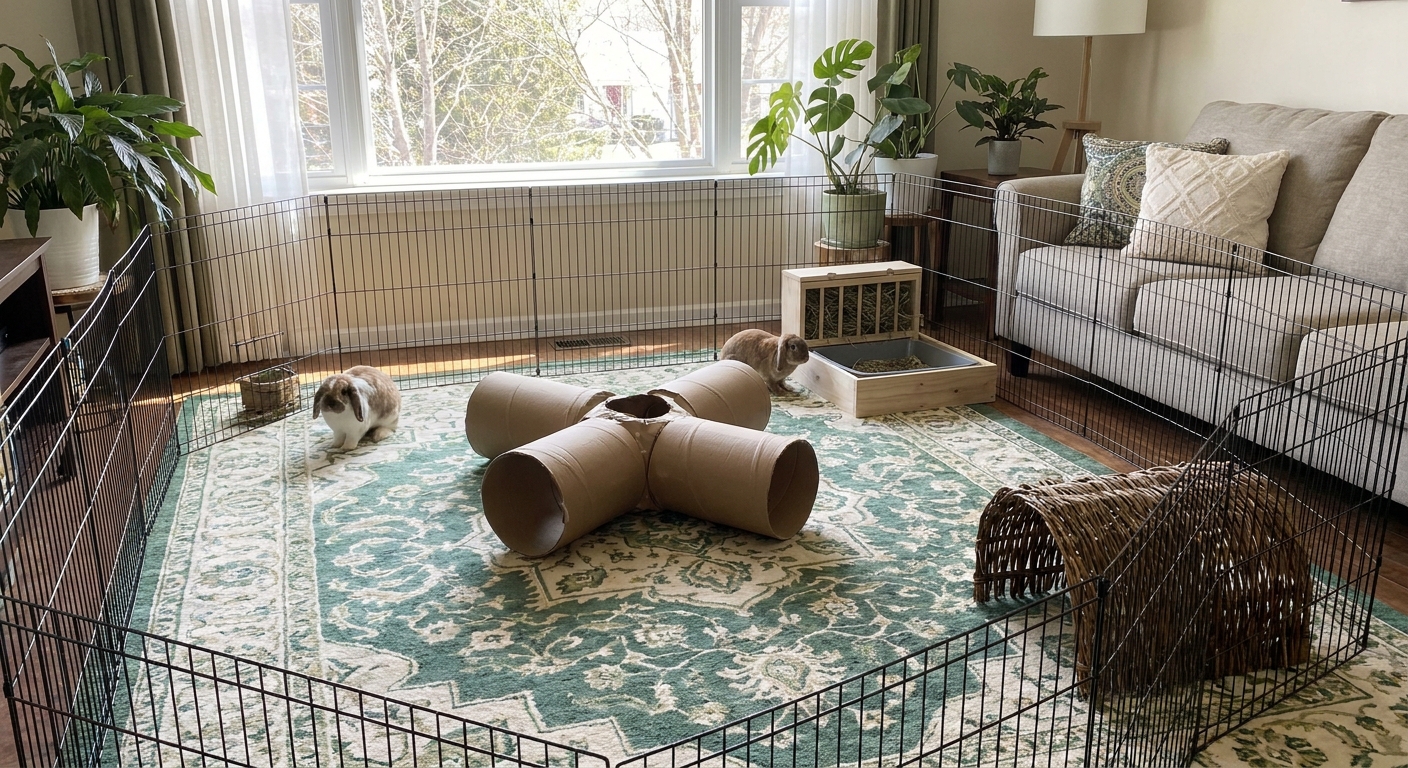
- Rabbits often enjoy longer tunnels (about 24 to 48 inches) for zoomies, especially when you connect them to a cardboard castle or place them along a wall for race track vibes.
- Two exits are best. Avoid tunnels that dead-end unless they are extremely roomy. A second exit helps prevent “I am trapped” panic and reduces traffic jams for bonded pairs.
Material choices: cardboard, fabric, plastic
No single material is perfect for every household. The best choice depends on your pet’s chew habits, your cleaning needs, and whether the tunnel will live indoors full-time or rotate as enrichment.
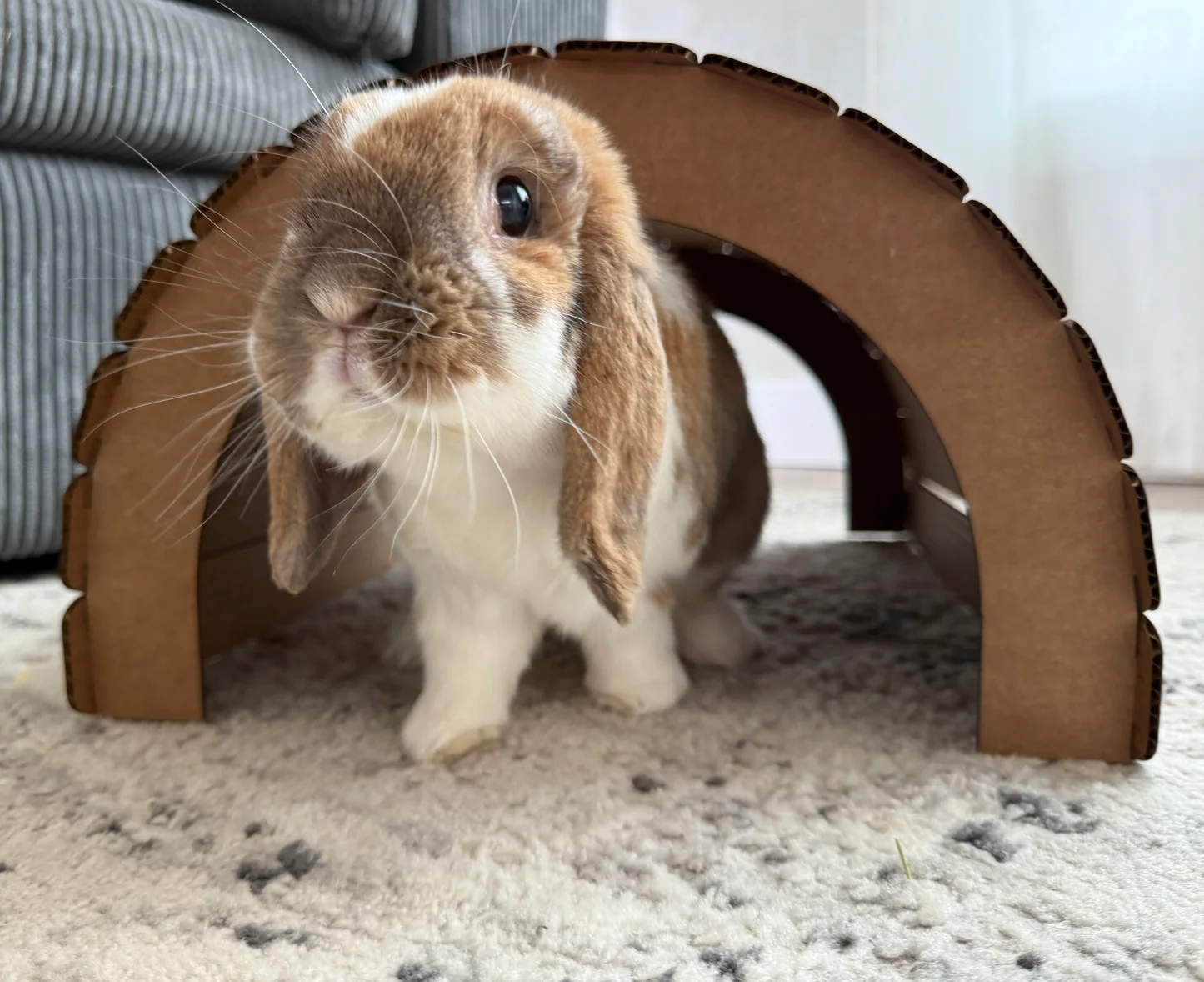
Cardboard tunnels
Best for: Chewers, budget setups, rotation enrichment, rabbits who like to remodel everything.
Why I like them: Plain cardboard is often a lower-risk choice than plastic or foam if your pet nibbles tiny bits. That said, any swallowed material can become a problem if enough is eaten. If you notice reduced appetite, fewer droppings, or a painful belly, treat it as urgent and contact an exotics vet.
What to look for:
- Plain, uncoated cardboard. Avoid glossy coatings and heavy dyes.
- Minimal glue. Prefer folded construction over thick glued seams.
- No dangling tape. Remove all packing tape completely.
- Wide diameter. Many shipping tubes are too narrow for adult rabbits.
Durability reality check: Cardboard is meant to be replaced. If your rabbit turns it into confetti in 48 hours, that is not failure. That is enrichment.
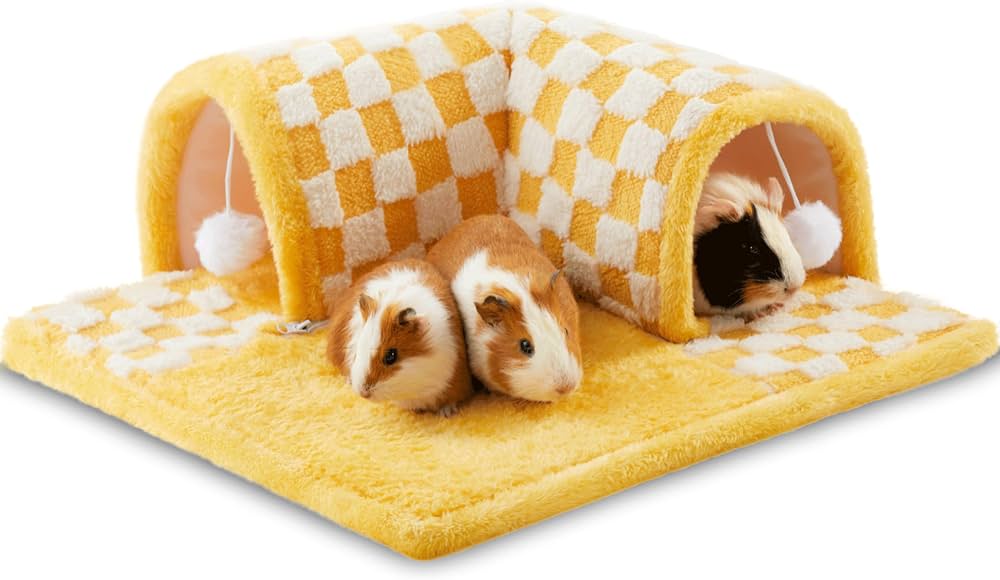
Fabric tunnels (polyester, canvas, fleece-lined)
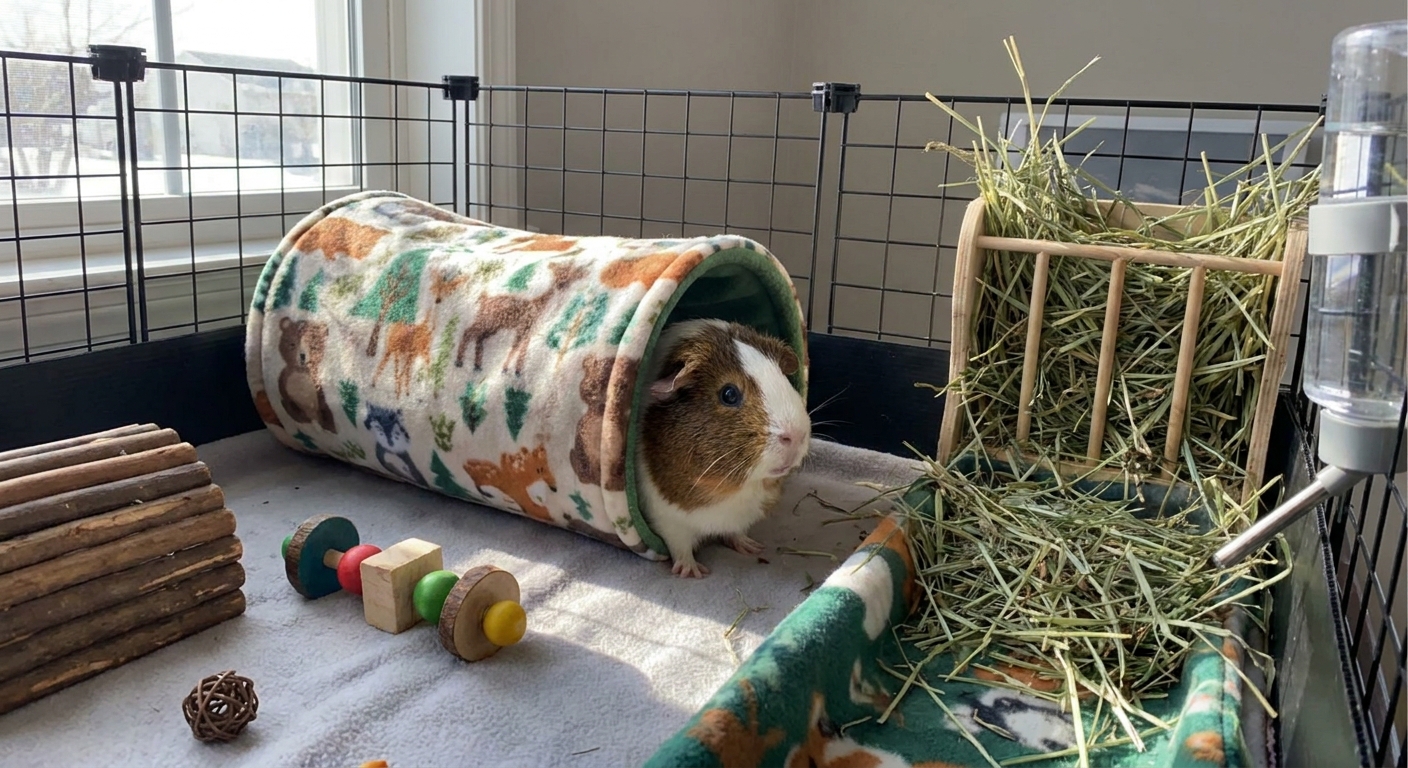
Best for: Pets who nibble lightly or not at all, households that want washable gear, guinea pigs who adore soft cozy spaces.
Pros: Quiet, comfy, easy to fold and store. Many have built-in spring frames that hold shape well.
Cons: Fabric tunnels can become unsafe if your rabbit chews holes and starts swallowing strings, lining, or any internal structure.
What to look for:
- No exposed foam or padding that can be pulled out.
- Sturdy stitching and reinforced seams.
- Fully enclosed frame: If there is a wire or spring frame, it should be completely sealed inside the fabric so it cannot poke out if chewed.
- Machine-washable fabric and a design that dries fully (mildew is not a vibe).
- Crinkle material caution: If a tunnel has a crinkle layer, make sure it is fully enclosed and cannot be accessed by chewing.
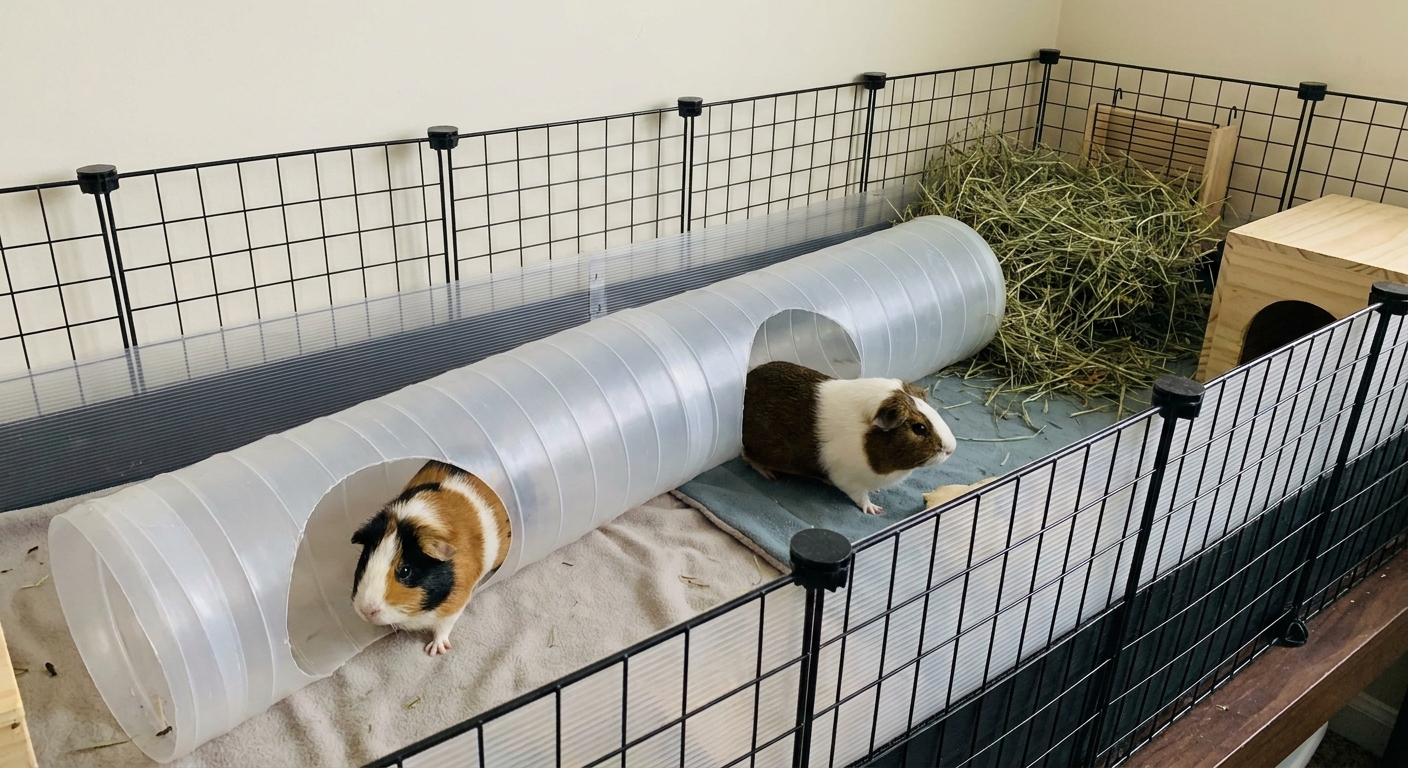
Plastic tunnels (hard plastic, flexible plastic coils)
Best for: Non-chewers, outdoor runs where cardboard would melt into mush, owners who need wipe-clean options.
Big caution: Plastic and rabbits are not always a happy pairing. If your rabbit chews plastic, skip it. Swallowed plastic fragments do not break down and can raise the risk of a serious GI obstruction.
What to look for:
- Wide, smooth interior with no sharp edges.
- Ventilation holes if the tunnel is long, so air moves through and heat does not build up.
- Thick, rigid plastic that does not crack into shards.
- No strong chemical smell out of the package. Let it air out and wash before use.
Materials to avoid (or supervise closely)
Here is the short list I use when I am helping adopters set up a safe play space. If your pet chews, be extra strict.
- Foam (including foam-lined tunnels): easily torn and swallowed, and pieces can clump together in the gut.
- Rubber and latex: tempting to chew, not meant to be ingested.
- Carpet or fuzzy “sheepskin” tunnels: can shed long fibers that tangle in mouths and stomachs.
- Loose threads, fringe, tassels: string ingestion is a very real emergency risk.
- Heavily dyed, glossy, or laminated cardboard: more additives, more questionable chew safety.
- Metal wire frames that can be exposed: if the fabric tears, the frame can poke or scratch.
If you cannot confidently say, “If my rabbit takes a bite, this will not turn into a gut problem,” choose a different tunnel.
Durability features that matter
“Durable” does not just mean thick material. It means a tunnel that holds shape during a sprint, survives cleaning, and does not create new hazards as it wears.
For rabbits
- Shape retention: Look for pop-up tunnels with a firm spring frame or structured rings so they do not collapse.
- Traction: Slippery tunnels skid, especially on hardwood. A rubbery exterior is not ideal for chewers, so I prefer placing any tunnel on a rug, fleece blanket, or foam mat.
- Replaceable mindset: If your rabbit is a heavy chewer, plan on cardboard as the main tunnel and treat fabric tunnels as supervised special toys.
For guinea pigs
- Washability: Fleece tunnels are wonderful, but only if you can wash and dry them thoroughly.
- Structure without stiffness: Guinea pigs like a snug feel, but you still want enough width for easy passing and no belly drag.
- Low entry lip: Avoid tunnels with thick, raised edges that make older pigs trip.
Placement and supervision
You can improve safety with setup alone, even with a basic tunnel.
- Anchor it: Wedge cardboard tunnels between a hide and a wall, or tuck the ends under a heavy fleece to prevent rolling.
- Keep it dry: Wet cardboard can collapse and can grow mold. Replace if it gets soiled.
- Create traffic flow: In shared spaces, add multiple tunnels or multiple exits to reduce squabbles.
- Supervise new items: For the first few sessions, watch for chewing intensity, fear reactions, and whether your pet can turn around comfortably.
- Do not let it be the only hide: Especially for guinea pigs, aim for multiple hides so one bossy roommate cannot claim the only “safe” spot.
- Separate if guarding starts: If you see chasing, teeth chattering, or repeated blocking at the entrance, add more tunnels or remove the tunnel until things settle.
If a rabbit starts methodically shaving plastic or pulling threads like they are being paid per strand, that tunnel is not a good match.
Cleaning and replacement
Cardboard
- Spot clean by removing soiled sections.
- Replace when it is soft, damp, heavily soiled, or collapsing.
- Retire it if chew holes create sharp edges or snag points.
Fabric
- Wash with fragrance-free detergent.
- Skip fabric softeners and dryer sheets.
- Dry fully to prevent mildew.
- Replace if seams open, stuffing shows, or threads become accessible.
Plastic
- Wash with warm water and mild, unscented soap, then rinse well.
- Replace if cracked, sharp, or if chew marks are deep enough to flake.
Buyer checklist
- Diameter: at least 2 inches wider than your guinea pig’s widest point, or 3 to 4 inches wider than your rabbit’s widest point.
- Two exits: preferred, especially for bonded pairs.
- Chew test: if your pet chews, avoid plastic, foam, rubber, loose threads, and any stuffing.
- Structure: holds shape when pressed gently with your hand.
- Surface: not slick on your flooring, or placed on a non-slip surface.
- Cleanability: washable fabric or easily replaceable cardboard.
FAQ
Are tunnels safe for guinea pigs?
Yes, as long as they are wide enough, do not trap heat, and do not have loose threads. Guinea pigs generally do best with soft, washable tunnels or sturdy cardboard, plus at least one hide that has two exits.
Are plastic coil tunnels safe for rabbits?
Only for rabbits who do not chew plastic. Many rabbits will test-chew anything new, and plastic fragments are a higher obstruction risk than plain cardboard. If you see chewing, remove it and switch to cardboard or a tightly woven fabric tunnel used under supervision.
My rabbit pees in the tunnel. What should I do?
For fabric tunnels, wash promptly and make sure it fully dries. For cardboard, replace it. If it is happening repeatedly, place the tunnel farther from the litter box corner they use as a bathroom, or offer a different hide that feels more private so the tunnel stays a hallway instead of a room.
Can two rabbits share one tunnel?
They can, but give them options. In bonded pairs, I like at least two tunnels or one tunnel plus two roomy hides, so no one gets cornered. Choose wider diameters and avoid dead-end designs.
What is the safest tunnel for a heavy chewer?
Plain, uncoated cardboard with no tape is usually the safest starting point. It is replaceable, provides great enrichment, and is generally less risky than plastic, foam, or stringy fabrics if tiny bits are swallowed. Still, any swallowed material can cause trouble, so monitor chewing and call an exotics vet if you notice appetite or poop changes.